
NEWS
Buhari’s Speech on New Year

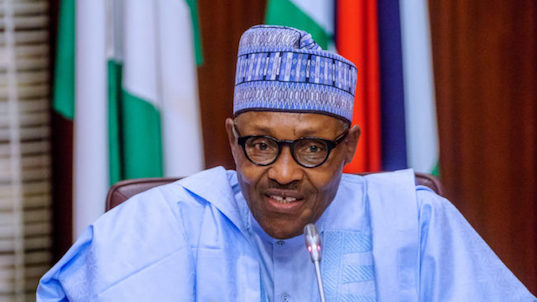
NEW YEAR SPEECH BY HIS EXCELLENCY, MUHAMMADU BUHARI, PRESIDENT OF THE FEDERAL REPUBLIC OF NIGERIA 1ST JANUARY 2021
My fellow countrymen and women,
First, I would like to thank and praise the Almighty who saw us through the year 2020 and has given us the opportunity to witness the start of another new year.
We especially thank God because the year 2020 was one of the most trying years since our existence as a Nation.2. This can also be said about all other nations around the world, due to the challenges posed on our collective humanity by the novel COVID-19 pandemic.
3. While acknowledging that 2020 was a very tough year, we saw this year put to test our national resilience and ability to survive these tough times and also gave renewed hope that we will again brave any storms that lay ahead in 2021 and beyond.
4. As we celebrate the opportunity before us in this New Year 2021, we must also acknowledge the passing away of our brothers and sisters who didn’t make it into this New Year. May their souls rest in perfect peace.
5. We must remember that we also celebrated the historic occasion of our sixty years as an independent and sovereign country on October 1st 2020. In the spirit of hope and gratitude, I would like to remind us again that as a country on the difficult journey to nationhood and greatness, we have confounded the many pundits at home and around the world who never gave the newly-born country that emerged unto the world stage on 1st October 1960 a chance of surviving much longer than a few years.
6. Yet, here we are, 61 years by the next anniversary in October, and not only are we here, we are standing tall in the comity of nations as one country united under the will of God and also actively growing that indivisible Nigerian spirit that has enabled us, year after year, decade after decade, to weather all stormy waters and emerge stronger and better where others have fallen and disintegrated. This nation, this Nigeria will survive and thrive.
7. In this journey to nationhood, we have experienced the highs and lows. 2020 indeed came with a lot of challenges ranging from security and economic issues across the regions to understandable protests that were mainly led by our youths and served notice to the demand for police reforms and accountability. This government heard, this government listened and this government is committed to fulfilling the five demands of our youths, fully understanding that we all wish well for Nigeria.
8. In the midst of all these challenges, I had initially pledged that as your elected President and Commander-in-Chief, I would ensure that these ongoing challenges will be faced head-on with renewed determination and with all the appropriateness and urgency required. Your voices have been heard and we would continue to listen to you, and all the key stakeholders who are committed to the unity of Nigeria to ensure that every region of this nation is safe for us all, while guaranteeing that the future is also secure for the coming generation.
9. I wish to also use this occasion of New Year to reaffirm my commitment to the people of Nigeria, especially the youth who need our collective encouragement and support. In securing this nation we need to secure the future of our youth.
10. Our young people are our most valuable natural resource, at home and abroad. Their ingenuity, creativity, innovation and entrepreneurial spirit is evident to all. Many of our young people are excelling in various spheres of life including sports, entertainment, information and communication technology, commerce and are globally recognized as achievers.
11. As a Government we are committed to actively engaging with the creative energies of our young people. In this regard, we will partner with the legislature to develop an enabling environment to turn their passions into ideas that can be supported, groomed and scaled across regions. This will create vast opportunities in fintech, agriculture, business process startups and in the entertainment industry.
12. The year 2021 will indeed be a year where we will work to reinforce the hopes of fellow Nigerians in the vision of a united and progressive Nigeria. This administration would continue focusing on delivering key strategic priorities under our “SEA” – (Security, Economy and Anti-Corruption) Agenda. Some of the key priority areas we would direct our attention and strengths to include:
ON THE SECURITY:
13. Re-energizing and reorganizing the security apparatus and personnel of the armed forces and the police with a view to enhance their capacity to engage, push back and dismantle the operations of both internal and external extremist and criminal groups waging war against our communities in some parts of the country.
14. In line with the current security challenges, we are facing as a Nation, I would like to reiterate the promise I made recently when over 300 of our boys abducted from Government Science Secondary School, Kankara were successfully rescued by our security operatives.
15. The professionalism shown by our Security Forces and the collaboration from all stakeholders across both State and Federal Governments that led to the successful rescue of the boys is proof that Nigeria has the internal capacity to decisively deal with terror attacks on our citizens.
16. However, we recognize that we rapidly have to move to a more proactive and preemptive posture to ensure that these sorts of traumatic incidents do not become a norm. Our administration is fully aware of the responsibility we have to protect the lives and property of all Nigerians, and we will not relent in learning and adapting to changing threats to our national security and civic wellbeing.
ON THE ECONOMY:
17. Our focus is on revamping the economy through the national economic diversification agenda that supports the primary goal of national food self-sufficiency. This has helped reduce the growing food related inflationary figures and have in considerable measure positively impacted our food security status during the long months of the pandemic lock down.
18. We are also currently rebuilding our national infrastructure base and, in the process, introducing transformation through the rehabilitation, modernization, and expansion of the railway system, national roads and bridges both in rural and urban centres, alongside the airports and seaports.
19. The reforms we have put in place in the power sector would guarantee increased efficiency in our drive to significantly expand the generation and distribution of electricity for use in homes and factories.
20. As an administration we are currently undertaking a series of special interventions designed to boost job creation and support the entrepreneurial drive of our youths.
21. With the recent opening of our borders, we expect that the pent-up demand of legitimate cross-border and international trade will boost the fortunes of the many small businesses and agricultural enterprises that depend on Nigeria’s trade and commerce.
22. The message to our West African neighbours is that Nigeria is once again fully open for those willing to conduct business in a fair and equitable way.
ANTI-CORRUPTION:
23. On the anti-corruption drive of our administration, we have recorded substantial gains so far and this year, we are committed to continuing along the path of eradicating corruption, through collaboration with all the arms of Government to effectively prosecute this fight.
24. While we would be working with the Legislature to enact laws that would strengthen this fight, we would also be looking at reviewing some of our laws which would ensure that this fight is more effective. On the part of the executive, we would ensure the diligent and timely prosecution of corruption cases, while appealing to the judiciary to ensure that corruption cases are dispensed with expeditiously.
25. The persistence of various forms of violence has meant that in the most affected parts of the country, the fabric of inter-communal harmony woven through years of investment of effort at building trust, mutual respect, and harmony has been threatened.
26. Insecurity as a challenge has direct repercussions on our national economic stability, growth, and development, setting us back at critical points through the destruction of public and private investments.
27. In parts of the country where chronic poverty, social exclusion, and disillusionment among sections of the youth were already a problem, the cycles of violence that have been unleashed by mindless groups like Boko Haram and others have thwarted the efforts of government to undertake the social policy and associated investments that could make a huge difference in the quality of life of our citizens.
28. I am aware that for some of our compatriots, the progress we have registered since the inception of this administration is not nearly as fast or as sufficient as they would wish. I do not begrudge them their views in so far as they signify a wish, in which we all share, for only the very best for our country.
29. Nevertheless, I call upon all Nigerians to carefully recall the circumstances of our coming to office, the facts on the ground and the resources at our disposal since 2015 with the accomplishments of this administration.
30. As a people, we have shown admirable resilience in the face of every adversity, an unmatched capacity to recover speedily from every setback, an unparalleled generosity of spirit when we resolve our differences, and a constant readiness to invest faith and hope in the destiny we share as a united country built on the diversity of its peoples.
31. It is these attributes that underpin the Nigerian spirit of “can do, will do” that gives me hope that we shall yet get to destination and fulfill our calling together, especially with the solid resolutions we are setting in this new year.
32. Keeping our country on a forward march is a duty which we all have and share. In this regard, keeping our country safe from a resurgent cycle of COVID-19 as this administration finalizes its plans to procure and efficiently and effectively distribute the COVID-19 vaccines, I urge you all fellow citizens to observe strict COVID-19 prevention protocols.
33. As your elected President, my pledge to you is the same as it has always been; I will play my part fully and without fear or favour. I invite all of us to do the same. It is what we owe to the founding generation of our beloved country and also to the coming generation. It is what we desire for national prosperity for all demands.
34. Long Live the Nigerian spirit of oneness, togetherness, and unity. Long Live the Federal Republic of Nigeria. I wish you a Happy and prosperous New Year.
May God bless the Federal Republic of Nigeria.



From Attah Ede Makurdi
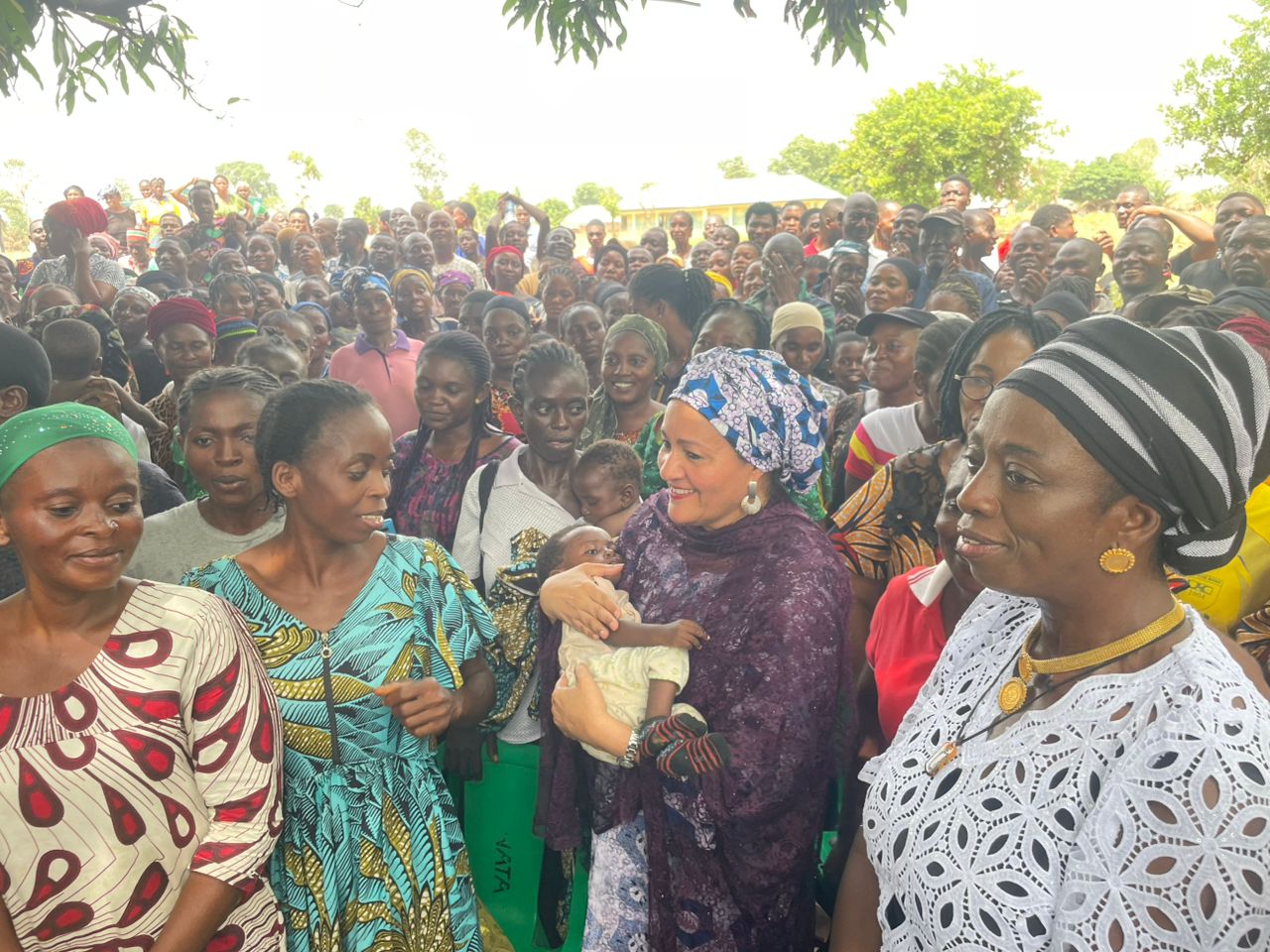
United Nations Deputy Secretary-General Dr. Amina Mohammed, on Friday condemned the incessant conflicts killings in Nigeria, particularly in Benue State, saying that it continue to cause wider pressures felt in very immediate ways, shaping the context in which communities are pursuing peace, recovery and resilience, progress, priorities and potentials.
Dr Mohammed made the remarks when she visited Yelewata and Mega camp Internally Displaced Persons(IDPs) in Mbayongo in Guma LGA of the State.
She particularly expressed condolences to the families of those killed in the recent attacks in Benue State, including in Mbalom, in Gwer East Local Government Area, and in Yelwata, and expressed solidarity with all affected communities, including those newly
displaced.
She lamented that at the moment, there is profound global uncertainty, as conflict, climate shocks, economic pressures and displacement are
converging and placing growing strain on communities around the world.
She noted that the war in Iran is a stark reminder of how quickly conflict can escalate, with consequences that reverberate far beyond any one country or region, stating thay UN welcomes the ceasefire as an important step towards deescalation and diplomacy.
According to her, across the region, these intersecting pressures
are testing resilience, deepening vulnerabilities and reinforcing the importance of inclusive development, strong institutions and social
cohesion.
The former Nigeria Minister for Environment observed that in spite of these challenging times, the direction, Benue State Government is setting deserves recognition, noting that the state 2026 Budget of Rural Development,
Livelihood Support and Sustained Growth sends an important signal of commitment to improving lives, expanding opportunity and anchoring development where it matters most.
Said she, “the human toll of insecurity is profound. Itdisrupts lives, weakens livelihoods, erodes trust and undermines the foundations for peace and development.
“What is required is not only a security
response, but a broader commitment to
peacebuilding that starts at the grassroots—strengthening early warning and early response, rebuilding trust across communities, and creating the conditions for reconciliation to take root”.
Dr. Amina stressed that Benue holds enormous potential as Nigeria’s
food basket, which plays a critical role
not only in feeding the country, but in
generating livelihoods, enterprise and broader prosperity.
The UN Deputy Secretary-General acknowledged the efforts being made to pursue durable solutions for displaced families—including through access to agricultural land and opportunities for self-reliance—reflect the kind of joined-up leadership this moment demands.
“This is how the Sustainable Development Goals, SDG are advanced in practice through integrated action that connects humanitarian response to long-term development, restores agency, reduces dependency and leaves no one behind.
“With sustained leadership, stronger partnerships and continued investment in livelihoods and value chains, Benue is well placed to translate its assets into more inclusive and resilient growth.
“The United Nations stands ready to support these efforts in ways that are practical, coordinated and aligned behind State priorities.Insecurity, reconciliation and peacebuilding.
“Justice and accountability are also essential.Without them, peace remains fragile and reconciliation incomplete.
We must also be mindful of the risks that come when complex crises are reduced to narrow or simplified narratives.
“Oversimplified narratives can inflame tensions, strain the social fabric and make the work of peacebuilding and reconciliation even harder.
“This is why responsible leadership, careful language and a commitment to dialogue and social cohesion are so important at this moment.
“Benue’s launch of the BRACE-UP initiative is an important step in bringing unenrolled children into school and protecting every child’s right to education. In communities affected by conflict and displacement, this imperative becomes even greater.
“Children who have already experienced
disruption and loss must not be left further behind, and continued support will be essential to ensure their safe integration into host schools and their access to learning materials and opportunity, She emphasized.
Speaking on the significance of the visit the United Nations Children’s Fund, UNICEF, Representative in Nigeria, Wafaa Saeed Abdelatef, said, “it is about the partnership between the United Nations team led by the Deputy Secretary General and the state government bringing hope, sustainable development to bring change. So we affirm our commitment to support to the state. And we really acknowledge the leadership of the Governor of the state”.
In his remark, Benue State Governor, Rev Fr Hyacinth Alia, noted that as the food basket of the nation, the state stability is directly linked to the stability of Nigeria’s food systems and, indeed, West Africa’s broader supply chains.
According to him, Benue people also at the frontline of complex challenges; farmer–herder conflicts, climate-induced vulnerabilities, and the realities of over 500,000 internally displaced persons across our communities”.
- From Seyi Tayese, Yenagoa
The National Conference of Ijaw Traditional Rulers and Elders (N-CITRE-INC) has suspended the Ijaw National Congress (INC) elections till further notice.
The N-CITRE, after its meeting in Yenagoa deliberated extensively on all issues that led to the impasse in the INC elections, including petitions received.
The group, therefore, unanimously agreed to suspend the conduct of the INC elections and directed the electoral committee to stop all forms of electoral duties.
N-CITRE, which is empowered by the INC constitution to resolve all disputes, has also set up a seven-man Dispute Resolution Committee (DRC) to investigate all petitions.
The resolutions read in part ‘’ That the elections into the National Executive Council of the Ijaw National Congress (NE-INC), which were rescheduled for Monday, 13th April, 2026, by the National Electoral Committee, Ijaw National Congress(N-ELECO-INC), have been temporarily suspended until N-CITRE directs further after all pending disputes have been settled. N-CITRE-INC, as the appointing authority for N-ELECO-INC, also holds the constitutional power to resolve all disputes within the Congress
‘’ Consequently, N-ELECO-INC has been directed to stop performing any electoral functions until otherwise subsequently directed by N-CITRE.’’
The N-CITRE has directed the DRC to resolve the lingering dispute and probe all petitions, including the petitions against the n-ELECO- INC.
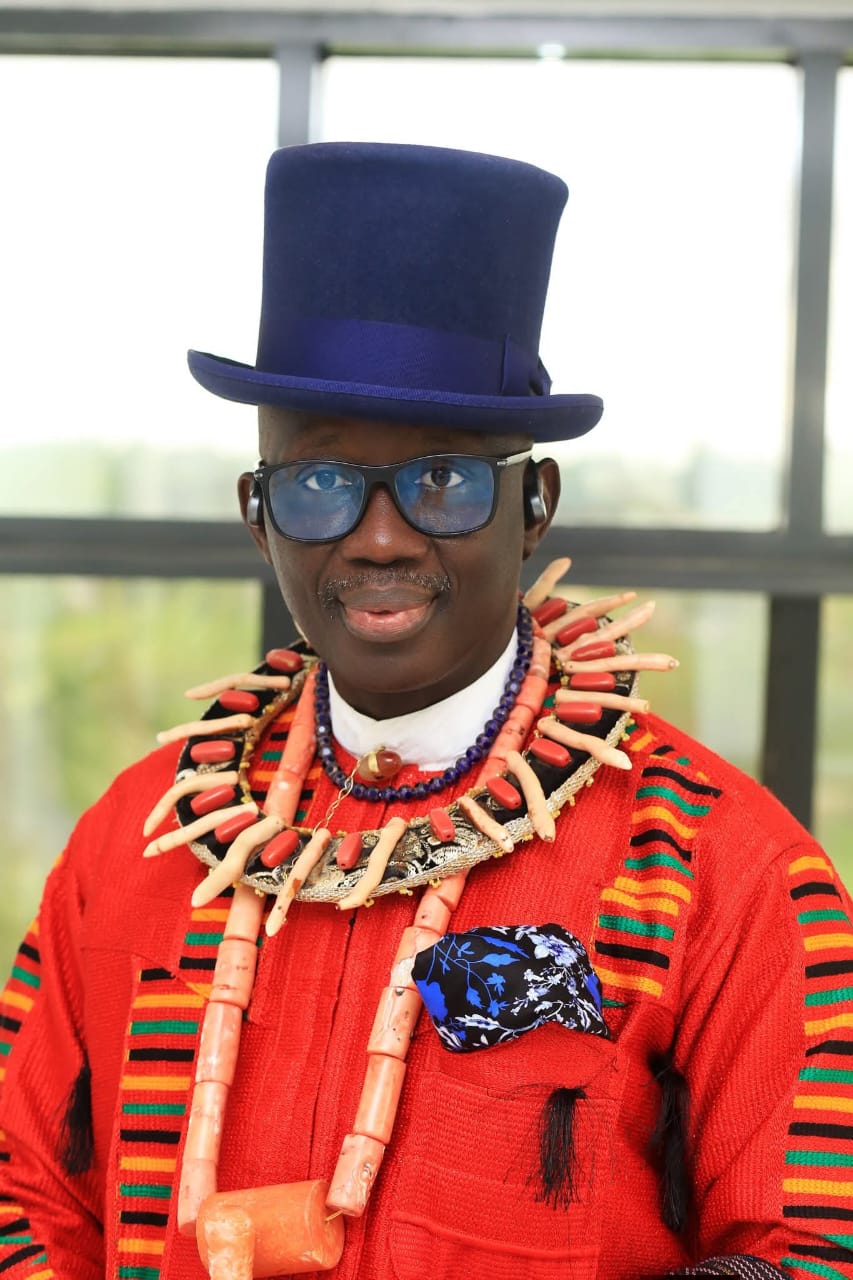
The DRC is headed by HRM, King Bubaraye Dakolo Agada IV, Ibenanaowei of Ekpetiama Kingdom, Chairman of Bayelsa Traditional Rulers Council, and Chairman of N-CITRE.
Other members are HRM, King Dr. Brig-Gen Bright Ateke Fiboinumama (Rtd), Chief Dr. Silas Eneyo (representing Eastern Zone), Dr. Loveth Ige (representing Central Zone), HRM, Pere Luke Kalanama III, HRM, Dr. Ekiomi Oweigbe John (Gbisa I) representing Western Zone, and Zonal Chairman of N-CITRE.
N-CITRE, which reminded all stakeholders of the principle of honesty that guides the Ijaws, therefore appealed for cooperation to achieve peace.
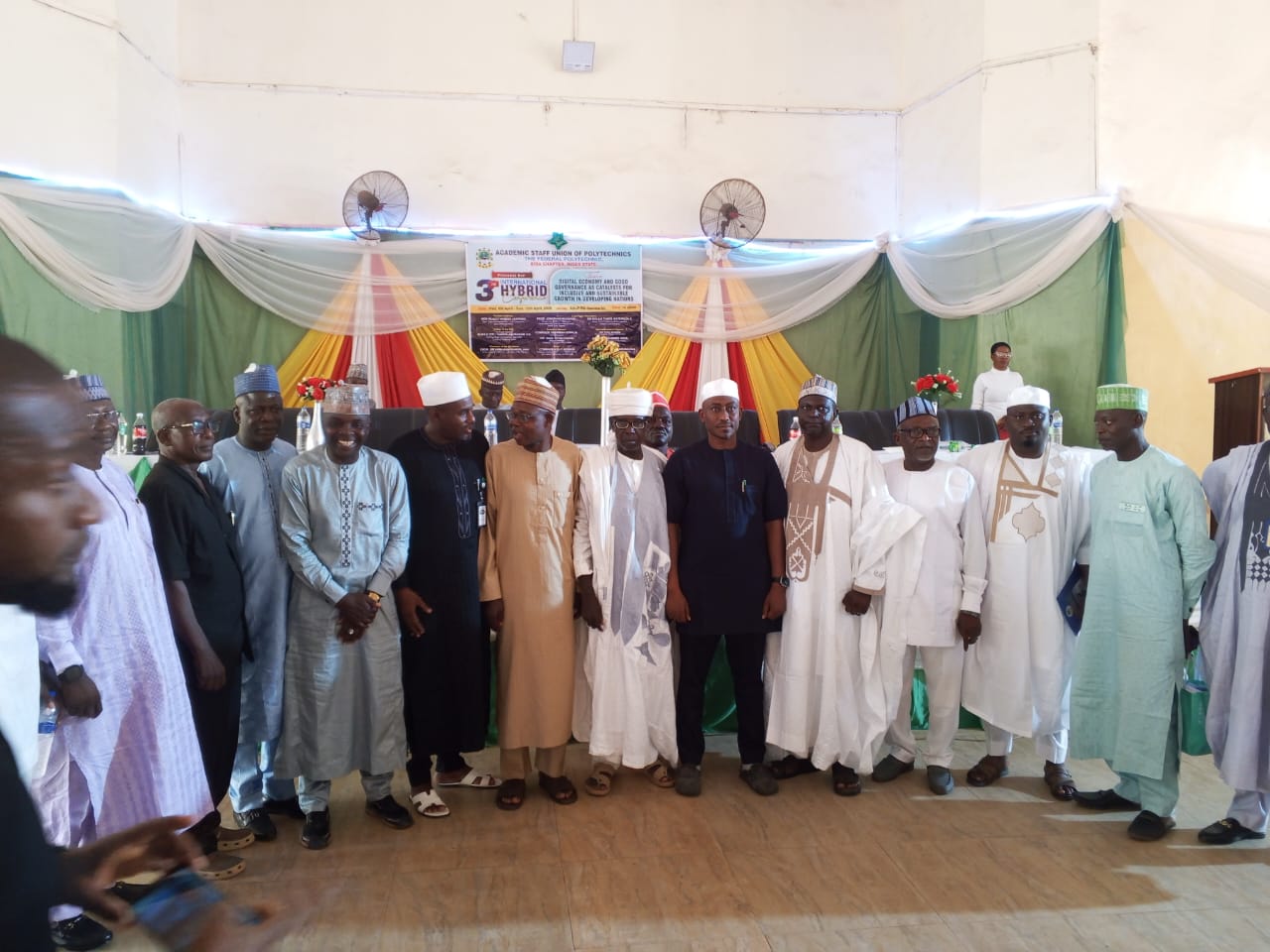
By David Torough, Abuja
Stakeholders at the 2026 Academic Staff Union of Polytechnics (ASUP) International Conference in Bida have called for urgent adoption of digital economy strategies and strengthened governance systems as critical tools for achieving inclusive and sustainable growth in developing nations.
Delivering the lead paper at the conference held at the Federal Polytechnic Bida, Professor Jonathan Atsua Ikughur emphasized that while technological advancement has transformed global systems, many developing countries, including Nigeria, have yet to fully harness its benefits due to weak institutions and inconsistent policy implementation.
He contrasted the inefficiencies of the past—marked by long banking queues, unreliable communication systems, and risky cash transactions with the current opportunities offered by digital innovation, noting that such advancements can significantly reduce economic and social costs.
Ikughur stressed that development must be viewed beyond mere economic growth, encompassing equitable resource distribution, improved living standards, and social well-being.
He warned that without deliberate planning and strong governance, many nations risk remaining trapped in poverty, inequality, and economic stagnation.
Painting a sobering picture of Nigeria’s development challenges, he cited high poverty and unemployment rates, weak institutional capacity, corruption, and overreliance on borrowing as major constraints to growth despite the country’s abundant natural resources.
The professor identified poor infrastructure, weak judicial systems, lack of transparency, and low investment in human capital as common features of many developing economies.
He urged policymakers to adopt data-driven strategies that integrate digital innovation with governance reforms to drive long-term prosperity.
Complementing this perspective, a research paper presented by Dr. Bolaji Tunde Matemilola highlighted the growing impact of digital financial inclusion on firms in emerging economies.
The study, which examined 475 firms across 15 countries, found that digital financial inclusion significantly boosts firms’ access to credit and drives business growth by reducing borrowing costs and information gaps.
However, the study also raised concerns about rising corporate debt levels, noting that while increased access to finance supports expansion, it may pose sustainability risks if not properly managed.
In his keynote address, Niger State Commissioner for Local Government and Chieftaincy Affairs, Hon. Muazu Hamidu Jantabo, described the digital economy as both a policy imperative and a generational opportunity for Africa.
He noted that digital transformation, when supported by strong governance, can reduce transaction costs, enhance transparency, and expand economic participation.
Jantabo highlighted ongoing reforms in Niger State, including investments in broadband infrastructure, digital literacy programmes, and e-governance systems aimed at improving service delivery and accountability.
He stressed that digitalization must be inclusive, warning that uneven access—particularly in rural areas—could deepen existing inequalities.
He further underscored the role of local governments as critical drivers of grassroots digital transformation, noting ongoing efforts to digitize administrative processes, improve revenue systems, and strengthen community engagement.
Earlier in his welcome address, ASUP Bida Chapter Chairman, Comrade Kolo Joshua, described the conference theme as timely, noting that the combination of digital economy and good governance remains essential for sustainable development in developing nations.
Across presentations, speakers converged on a common message: that digital transformation alone is insufficient without strong institutions, transparency, and accountability.
They called for coordinated efforts among governments, academia, and the private sector to align innovation with inclusive policies.
“The task before us is not just to embrace change,” Ikughur noted, “but to deliberately harness it for the collective good.”


UN Secretary General Visits Benue Condemns Incessant Attacks On Communities, Killings.
ShareFrom Attah Ede Makurdi United Nations Deputy Secretary-General Dr. Amina Mohammed, on Friday condemned the incessant conflicts killings in Nigeria,...

President Tinubu commissions 60 megawatts gas turbine, other projects in bayelsa
ShareFrom Mike Tayese, Yenagoa The much awaited 60 megawatts Gas Turbine embarked upon by the administration of Governor Douye Diri...

Ijaw Traditional Rulers, elders suspend INC elections
Share The National Conference of Ijaw Traditional Rulers and Elders (N-CITRE-INC) has suspended the Ijaw National Congress (INC) elections till...

Experts Advocate Digital Economy, Governance Reforms as Pathway to Inclusive Growth
ShareBy David Torough, Abuja Stakeholders at the 2026 Academic Staff Union of Polytechnics (ASUP) International Conference in Bida have called...

Digital Economy, Good Governance Key to Unlocking Inclusive Growth in Developing Nations — Expert
ShareBy David Torough, Abuja At the 2026 Academic Staff Union of Polytechnics (ASUP) National Conference held at the Federal Polytechnic...

UNILAG Alumni awards scholarship to 28 indigent students
ShareBy Laide Akinboade, Abuja The University of Lagos Alumni Association, Federal Capital Territory (FCT), chapter on Thursday, awarded scholarship to...


JAMB Releases 2026 UTME Examination Slips for Candidates
ShareThe Joint Admissions and Matriculation Board (JAMB) has announced that candidates who registered for the 2026 Unified Tertiary Matriculation Examination (UTME) can now print...
Lobi Stars Target Promotion to NPFL in 2026/2027 Season
ShareThe Chairman of Lobi Stars Football Club of Makurdi, Simon Ikya, said the club’s sole target is to gain promotion...


Gambia Appoints British Barrister to Prosecute Gruesome Jammeh-era Crimes
ShareBritish barrister Martin Hackett has been appointed as The Gambia’s first special prosecutor to try those responsible for human rights abuses carried out...


Court Frees Terror Victim, Jails another 10 Years
ShareJustice Peter Lifu of the Federal High Court, Abuja, on Thursday, sentenced a Boko Haram victim, Ali Kolo, to nine years’ imprisonment...