
OPINION
Buhari’s Suspicious N10b Request for Bello

By Danusa Ocholi
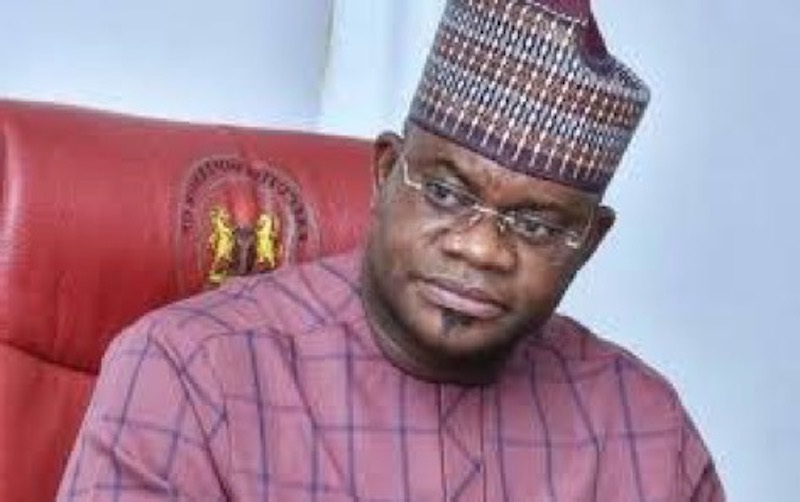
Ordinarily, the people of Kogi state would have spontaneously in their hundreds, possibly in their thousands trooped out to hold march pasts in Lokoja the state’s capital, and even in Abuja to thank President Muhammadu Buhari for his decision last week to seek Senate approval for “refund” of more than 10billion Naira to the state government under the leadership of Governor Yahaya Bello.
for the “rehabilitation” of Federal roads in the state.But the timing of the refund of fund meant to be the Federal roads in the state has heightened suspicion of the people of the state and concerned rest of Nigerians with conscience and goodwill. With a crucial governorship election coming up on Saturday, November 16 and with Governor Yahaya Bello and his running mate Edward Onoja overtly desperate to retain power and to continue their oppression of the people of Kogi state and profligacy of the state’s resouces, the President’s move ,in conjunction with the Senate is seen as a desperate attempt by the ruling All Progressives Party, APC, to make easy and underserved money available for their good boy in Kogi, to buy votes, hire thugs and manipulate the electoral process. For a government that prides itself with integrity and fight against corruption, for which it has been commended nationally and internationally, the APC-controlled government’s action is a corruption at the highest level. It should be condemned by the lovers of this country and truth.In the first place, as a citizen of the state, I know the ordeal my people and I go through the so-called Federal roads which have become death traps. Is it the Lokoja-Ganaja-Itobe road or the Lokoia-Okene road that hasve become impassable as a result of their deplorable conditions? No area has the poverty and the underdevelopment of Kogi state come into focus more than the federal roads. The Lokoja-Itobe , Itobe-Okene, roads have not only become death traps, but are now veritable grounds for robbers and kidnappers to operate. Some of the journeys on these roads that took average of one hour to make before, now take not less than four hours. Since I don’t claim to know all, and I am open to learn, Gov. Bello and his team should courageously tell Nigerians and the people of the state the roads his government has improved or worked upon to justify this huge request through the back door. The tragedy of Kogi’s administration in the last four years of Gov. Yahaya Bello’s administration is that while he has perfected the art of maintain good relation, and appearing to be a good boy to President Buhari and , the APC leaders like Bola Tinubu, Adams Oshiomhole, and the APC chieftains at the Abuja secretariat, he is a monumental disaster at home. I stand to challenge Bello and his commissioners to show the world a single project he inherited for which he even completed. Not to talk of him embarking and completing one. Ridiculous enough the roundabouts which his predecessors constructed to add beauty to Lokoja were all dismantled on puerile excuse that they served as fetish grounds of his predecessors. Imagine such a reasoning from a man entrusted with the administration of a highly endowed state like Kogi.. Up until today, Bello has not repaired the roundabouts in question, no done anything to elicit the attention and confidence of the people of the state. The issue of salary payment is an area that makes many people of the state to weep. For a man that inherited a salary arrear of just two months, today his government has backlog of 15 months and in some places 20 months, For the civil servants who are lucky to be paid, they are given in piece meals, in percentages.
A leader like Adams Oshiomohole owes the oppressed people of Kogi state apology for calling Gov. Bello a “trusted and tested” governor. I am not really surprised because Bello has been his loyal and trusted governor, whose modus operandi is working hard to keep the APC leaders in Abuja happy, without caring if those at home starve and die in the process. And actually Kogi has recorded civil servants starving and in penury because of the insensitivity of the present governor. A number of civil servants have taken their lives because of suffering visited on them by Gov.Bello.
It is a tragedy of our nation, of the leadership of the country to initiate moves to give money for a project that is no where on the ground. If the APC at the Federal level goes ahead to foist Bello on the people, they can only do this in some undemocratic and anti.people manner: Employing the security personnel to intimidate voters to pave way for Bello and his co travellers to rig; using INEC to falsify results, and employing money to buy the votes of hungry and deprived people of the state. Of course not to rule out Bello’s stock in trade, enganging thugs to intimidate voters, snatch ballot voters and kill even the innocent ones.With the desperation and Bello and Onoja, they will no doubt mind if blood of Kogites is shed to ensure they are returned to power. We must guide against this to avoid incurring the wrath of God that created these innocent persons. If Bello had done his part of he had, embarked on meaningful projects for the people of the state, he will not even need to be running to his god fathers in Abuja to devise dubious means to help him retain power. His achievements would have spoken for him. The Igalas, the Okuns, the Nupes, the Ebiras would have all stood in unison to give him the required support. Rather he frittered away the people’s goodwill by arrogantly turning an oppressor of the same people.Today he is resorting to employing ethnicity and other forms of sentiment to retain power. The coming election is going to be a big mountain to climb for Bello. If there is no interference from Abuja, using money as Buhari is contemplating to possibly buy the votes of hungry and depressed people of Kogi, using the army and police to intimidate, maim and kill the people, there will be no way the incumbent will win this election. I pray the APC government at the Federal level will not do anything untoward in allowing the will of the people of Kogi to prevail. The rest of Nigerians and the international community are watching.
| ReplyReply allForward |


By Hajia Hadiza Mohammed
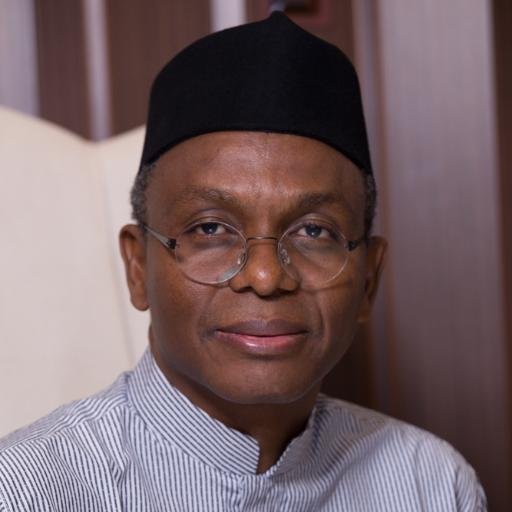
It is no longer news that Mallam Nasir El-Rufai, a chieftain of the African Democratic Congress (ADC), is having a raw deal in the hands of the Nigerian security operatives right now. El-Rufai travail began on February 12 at Nnamdi Azikiwe International Airport, Abuja where he was accosted by security operatives and had his international passport seized upon his return to Nigeria from Egypt.
Shortly after, he was arrested by the operatives of the Economic and Financial Crime Commission (EFCC) on the allegation of corruption and fraud to the tune of N440 billion allegedly committed between the 2015 and 2023 during the time he was governor of Kaduna State.
By Wednesday evening after he had spent over 48 hours in the EFCC cell, he was released but was immediately re-arrested by the Officials of the Independent Corrupt Practices Commission (ICPC). As he is being detained, his house has been invaded and ransacked by the operatives of the Department for State Services (DSS).
Mallam El-Rufai is being charged for cyber security offences by the DSS over his interview in Arise TV program wherein he said that he and others still at large intercepted the telephone of the National Security Adviser (NSA), Mr. Nuhu Ribadu.
Just like many Nigerians, I have no sympathy for El-Rufai on account of his travails because he was one of those that foist the current evil regime on us before he fell out with his Lagos-boy’s friend. He was Tinubu’s honcho man who had threatened foreign election observers with body bags during the last election. He was Tinubu’s chief spokesman at the Chatham House charade in London in 2022. But this is not the purpose of this essay. The purpose is to highlight the dangerous trend of persecuting members of the opposition as the build up to 2007 election begins.
Since grabbing power in 2023, Tinubu and his men have wasted the resources of the state fighting to suppress civil advocacy and opposition. Propaganda, lies and rumors were unleased through media hirelings with the aim of hoodwinking members of the public. And now they have moved to the next level of using state security apparatus to hound and distract members of the opposition. All these I have highlighted in my earlier articles.
El-Rufai left office almost 3 years ago. Why will it take them that long to discover the alleged fraud and arraign him? If El-Rufai is still in All Progressives Congress (APC), will he be arraigned? Late last year, Dr. Chris Nwabueze Ngige, the former minister of Labor and Employment and one-time governor of Anambra State was arrested and arraigned by the EFCC on 8-count charge of conspiracy and fraud to the tune N2.2 billion.
Again, Abubakar Malami the former Attorney General of the Federation (AGF) and Minister of Justice together with his son Abubakar Abdulaziz Malami are being hounded on charge bordering on conspiracy and laundering proceeds from unlawful activities using proxies to conceal the origin of funds, acquiring properties in Abuja, Kano and Kebbi states and holding 46 bank accounts. They are also being charged for abetting terrorism financing, failing to prosecute suspect terrorism financiers and illegal storing of fire arms in his Kebbi residence.
I am not against the prosecution of offenders especially those that have abused public trust but I am strongly opposed to elective justice. A look at these few mentioned here and others are those not “working” for the present regime.
The question is: if these men were still in APC working for Tinubu, will they be arrested and arraigned? Sometime in 2023, Alhaji Yaya Bello, the former governor of Kogi State was haunted by the EFCC on a 19-point charges of money laundry and misappropriation of N80.2 billion while in office. But, the moment he decided to be a “good boy”, his case was played down. Now, it is in the news that he is permitted to travel abroad for medical tourism.
There are many others with financial crimes cases that have their charges dropped because they crossed over to the APC or are working for the president. It was the loud-mouthed Adam Oshiomole, the former APC chairman that told us that whenever anyone facing corruption charges crosses over to the APC his sins are forgiven.
Tinubu and his acolyte must know that power is transient. What goes around comes around. Before now, specifically from 1999 till 2 years ago, El-Rufai was one of the strongest political figures in the country, talking tough and acting with impunity.
From the position of the Chairman of the Bureau for public Enterprises (BPE) to FCT Minister to the position of the Governor of Kaduna State, Mallam El-Rufai wielded power like an emperor whose words were law, his frail little frame notwithstanding. Today, El-Rufai is on the other side and he is being hounded like a common criminal.
Members of the APC are very short-sighted in their dealings with the opposition. The APC gang thinks that they are winning by using the state apparatus to fight members of the opposition but they are actually destroying the rudiments of democracy; thereby inviting anarchy into the polity.
What the APC is doing shows that they have failed the nation. They have no visible achievement in the last three years to campaign with and hence the resort to hounding members of the the opposition but they are actually stoking the fire that may consume them later.
Hajia Hadiza Mohammed, An actress, social activist, politician. London, UK. hajiahadizamohammed@gmail.com
By Wole Olaoye
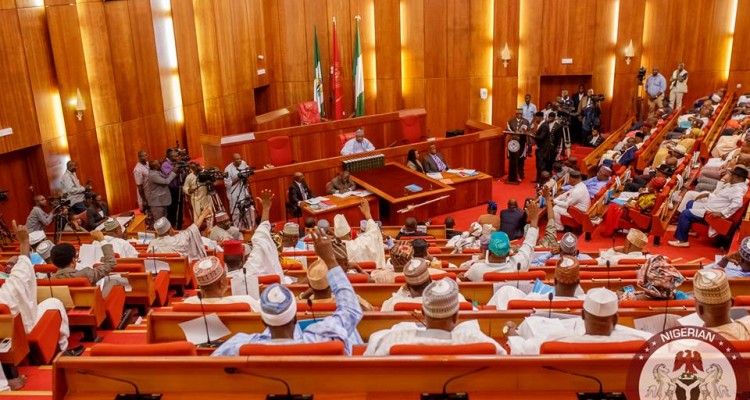
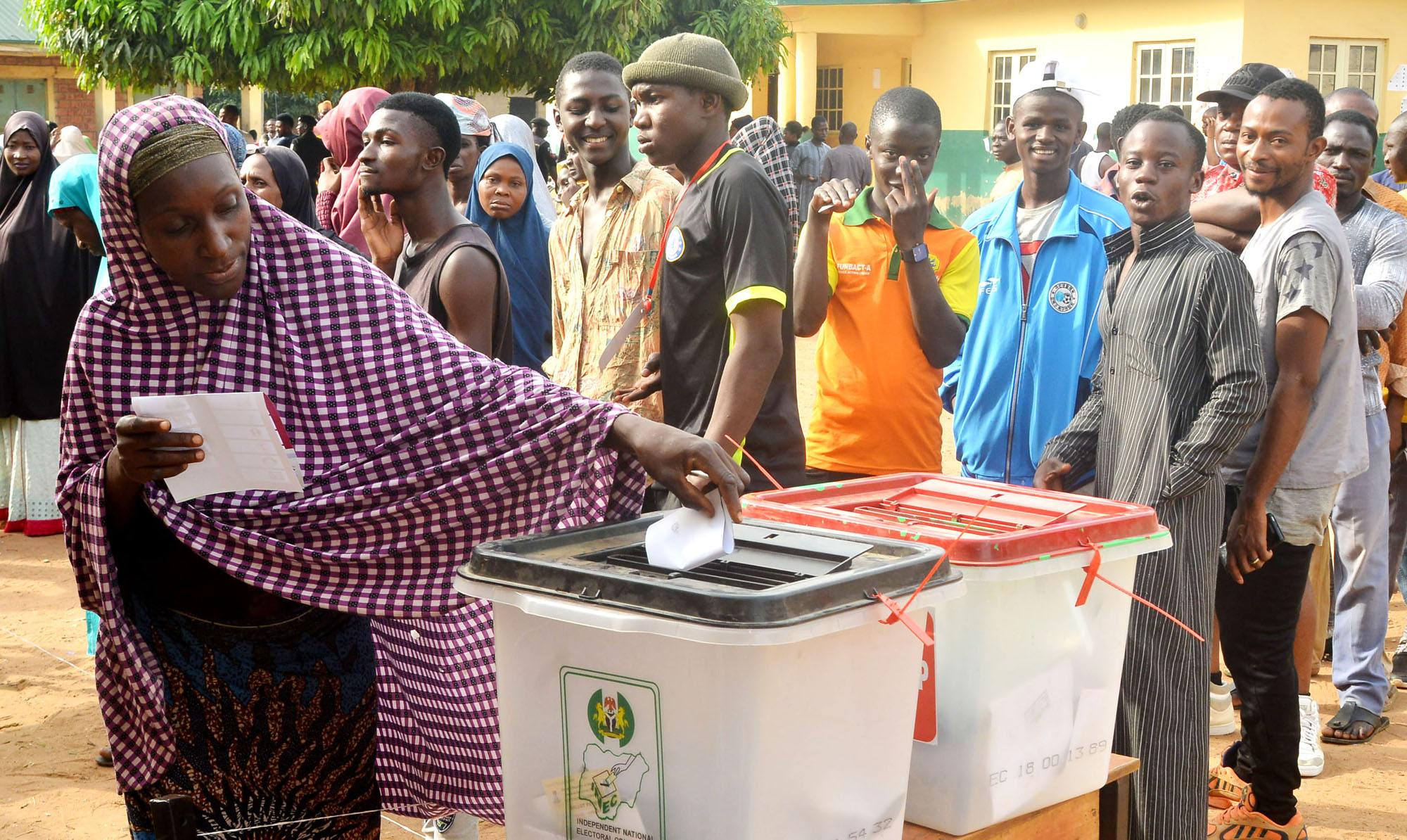
We have recently witnessed spirited protests and media controversies on the electoral bill then in the works and now signed into law by President Bola Tinubu. If you immerse yourself too deeply in the emotive tragicomedy, you may miss the tragedy of how politics has torn the fabric of brotherhood down the middle or the comedy of electoral mathematics in which two plus two equals whatever some electoral officer says it is.
The good book says that there is nothing new under the sun.
Whatever is, had been before. It was Joseph Stalin who famously said, “The people who cast the votes decide nothing. The people who count the votes decide everything.” Following up on that theme, the American writer, humorist and essayist Mark Twain declared, “If voting made any difference, they wouldn’t let us do it.”Looking through history, there is nothing unprecedented about our peculiar electoral processes. Politicians all over the world—with possibly a few exceptions—could be avaricious, self-centred and as worthy of trust as a woman of easy virtue. We want the best for our land, but we shouldn’t beat ourselves up too much in the illusion that any particular issue is of apocalyptic significance. There is nothing new under the sun!
Happenings in some other parts of the ‘developed’ world have shown us that our politicians may not be worse than their counterparts elsewhere. As much as we like to celebrate Western democracy, we have seen how, in some climes, it has aided racism, dehumanisation, genocide and the ascendancy to power of certified idiots. That aberration did not start today. In a society governed passively by free markets and free elections, says US journalist and author Matt Taibbi,
Organised greed always defeats disorganised democracy.
Kidnapping the Dead
Duke Henry of Bavaria was not a Nigerian. In 1022, he made what could very well be the most drastic attempt to gain political power anywhere in the world. After the death of Emperor Otto III, Henry abducted his corpse and also kidnapped the archbishop who had the spiritual duty of swearing in a new leader. Eventually, Duke Henry was crowned King of Germany and went on to become the Holy Roman Emperor.
Remember, during President Yar’Adua’s illness, there was an attempt by some Nigerian politicians who were benefiting from the situation to physically prevent those outside the power loop from having access to the comatose president. In those twilight days when no outsider could vouch for the consciousness of the former leader, budgets were signed, presidential directives were given, billions of dollars were spent based on indeterminate authorisation.
Holy Electors
When politics enters holy places, the odds can be foreboding. Take the case of the Catholic Church when Pope Clement IV died in 1268. The cardinal electors spent two indecisive years at a complete standstill. They couldn’t put aside their political differences to cast the required vote unanimously. Two whole years! The frustrated people of Viterbo, who had become tired of watching the futile drama, “reportedly trapped the indecisive cardinals in their locked chambers, removed the roof, and only delivered bread and water.”
Even then, the obstinate cardinals held on for another year. After a year of captivity and the death of three cardinals, the remaining men finally agreed unanimously to elect Pope Gregory X in 1271. Three years later, he formed the papal conclave to ensure that future papal elections would be systematised and stress-free.
In 2003, when President Obasanjo reportedly scored 1.36 million out of 1.5 million votes cast in the presidential election in Ogun State (a whopping 91 per cent), some of us counselled those who were convulsing with rage to take things easy lest they blow a fuse and trigger an avoidable cardiac accident. When you’re confronted with electoral magic, the standard political pregnancy could yield a set of decuplets!
But give dishonour to whom dishonour is due. In the 1927 presidential elections in Liberia, 15,000 eligible Liberians registered to vote. Liberia is Africa’s first and oldest modern republic. It was founded by freed Black slaves coming from America in the 1800s. Incumbent President Charles DB King won in a landslide of 234,000, while his opponent scored 9,000. The dimension of the electoral rigging was so staggering that the Guinness Book of World Records has recorded it as the most quantitatively fraudulent election in recorded history!
But not to worry. Elections continue to bring out our weird peccadilloes, whether as office seekers, voters or electoral administrators.
Dead Man Elected
In the United States, voters in rural Nevada elected a dead brothel owner to the state assembly in 2018. Before the vote, several political pundits had argued that by dying three weeks before the election, Dennis Hof, the self-proclaimed “Trump of Pahrump,” may have actually improved his chances. Ordinarily, as a Republican, Hof had a good chance of winning, but his untimely death gave some political cover to hypocritical religious conservatives who would have had reservations about electing a pimp. Now that he was dead, conservatives could vote for their fellow party man with a ‘clear conscience’. If this had happened in an African country, some ‘analysts’ would have seen it as a sign of backwardness.
When comedian Jon Gnarr formed the Best Party in 2010 in his bid to win a city council seat in Reykjavik, Iceland, his slogan sounded like something taken straight out of a beer parlour: “We promise to stop corruption by participating in it openly.” The people had a good laugh. Who but a clown would hope to kill corruption by openly participating in corruption? Well, the joke was on the people. Not only did Gnarr win the election, gaining control of house seats for his party, but he also became Reykjavik’s mayor!
Canine Mayor
From Cormorant, Minnesota, came the story of electoral victory for man’s best friend. The city, being so small, has never had a mayor. In 2014, however, townspeople decided to hold an election for their first-ever mayor. Guess what — a seven-year-old Great Pyrenees dog named Duke won in a landslide. The dog defeated Richard Sherbrook, a long-time resident. And, wonder of wonders, even Sherbrook himself voted for the dog! By the time the final tally of votes came in, Duke had won nine out of a ‘colossal’ twelve votes!
It is fashionable to label politicians as conmen, but how do you describe the voting public who appear determined to cast their vote only for the candidate with the most absurd promises? A clown played on this curious fault line in Brazil and breasted the tape to victory. When Tiririca, the Brazilian clown, ran for Sao Paulo federal deputy in 2010, he campaigned on one big question: “Does anyone really know what happens behind closed governmental doors?”
The candidate said the people deserved to know what went on behind the hallowed government doors and that if he was voted into office as federal deputy, he would find out for them. He had a readymade answer for any electoral fence-sitter — “It can’t get any worse.” Tiririca won with more than double the votes of the second-placed candidate!
In Nigeria, the recent controversies over the 2026 Electoral Act are comparable to a situation where a child is crying in front of its mother. The child knows why it is crying; the mother knows why she will do anything to make the child stop crying — except give it what it wants!
By Chidi Anselm Odinkalu
For nearly five years, Abia State has been the site of a bewildering contest over the crisis of corruption that now bedevils Nigeria’s judicial appointment process. Essentially, the appointment of judges in Nigeria has become something akin to a life-and-death contest, not for or on behalf of those seeking to get justice from the courts, but for people who see judicial appointments as a meal-ticket for life or as leverage in the dark arts of Nigeria’s rentier theatre.
Those who control the process now seem very much to use it only to benefit their families and networks, while those on the outside of this circle feel entitled to the good life that they believe judges now seem to get.
The contest between these two camps is increasingly embittered and publicly so. In Abia State, this contest has been raging for nearly five years. In the past fortnight, the Court of Appeal has weighed in.The facts are both simple and complicated.
With consent of the National Judicial Council (NJC) in 2021, the Judicial Service Commission (JSC) of Abia State initiated a process leading to the appointment of new judges. As required by the constitution, the JSC was to conduct initial sifting of the applicants with a view to presenting a long-list to the NJC, which was to undertake final interviews and selection in Abuja.
Before the completion of the process at the state level, however, advocacy group, Access to Justice, lodged a petition with evidence showing that it “was marred by corruption”. Indeed, “a Chief Magistrate slumped and died over reports that her name was not included in the final list of candidates submitted to the NJC after she had borrowed funds to pay bribes for that purpose.” In response, the JSC was forced to abort the 2021 judicial recruitment process in Abia State.
The following year, in 2022, the Commission re-opened the process and once again invited interested persons to apply for judicial vacancies in the High Court of Abia State. This time, the Abia State JSC concluded the process at the state level and forwarded names to the NJC for the final screening. The State Security Service screened the candidates and, on 17 October 2022, the NJC reportedly interviewed them.
Thereafter, however, some persons who had applied in the cancelled 2021 process initiated legal proceedings effectively asserting a right of first refusal to the judicial vacancies that were the subject of the 2022 recruitment. Access to Justice also intervened, alleging that the list of candidates sent to the NJC “included person(s), who have falsified their ages, as well as those implicated in financial malpractices during the time they held certain positions.” The group also claimed that during the selection exercise “no tests or examinations were conducted for the candidates before they were shortlisted.”
The NJC never completed the process.
By May 2023, when a new administration came into office in Abia State, the burden of work created by the deepening crisis of judicial vacancies in the state was intolerable. To address this, the Abia State JSC returned to the NJC to obtain fresh authorisation for the recruitment of 10 new judges but this triggered a fresh avalanche of litigation.
In January 2024, the Attorney-General of Abia State initiated proceedings before the NICN asking the court to decide whether the state government could proceed with a fresh round of judicial recruitment. Joined in the suit were two aggrieved candidates from the previous processes, Eusebius Agwulonu and Ijeoma Oluchi, as well as the State JSC and the NJC.
In its judgment, the NICN established that under Nigeria’s constitution, the Federal High Court did not have powers to decide upon employment matters of this sort. It also upheld the constitutional duty of the relevant institutions of the Government of Abia State and the NJC to conduct fresh judicial recruitment in the 2024 process.
Very importantly, the court held that where a process of judicial recruitment is tainted by “corruption and impropriety,” such as in this case, that would warrant a cancellation of the process and the “commencement of a fresh exercise.” The court, therefore, granted the state government permission to proceed with the fresh judicial recruitment.
Separately, however, Uzoamaka Ikonne and Victoria Nwokeukwu, two ostensibly aggrieved candidates from the inconclusive round of judicial hires in 2022, had equally approached the Federal High Court to restrain the state government from recruiting any more judges until the completion of the stalled 2022 process. Nine months after the decision of the NICN, in April 2025, the Federal High Court issued an order suspending the process pending the determination of the case.
From the judgment of the NICN, Eusebius Agwulonu and Ijeoma Oluchi eventually sought permission to proceed to the Court of Appeal. On 4 February, the Court of Appeal ruled denying their application for permission to appeal. In reaching its decision, the Court of Appeal upheld the duty of the State to cancel a process of judicial recruitment tainted “with any form of corruption or illegalities in any procedure.”
The court took a very dim view of the conduct of the aggrieved candidates from previous processes of judicial recruitment in Abia State and accused them of wilfully and deliberately seeking to “stall any…. future judicial appointment exercise, thereby holding the process ad infinitum in perpetual abeyance without lawful justification.” Unlike the NICN, which did not award any costs, the Court of Appeal awarded costs of three million naira against the candidates, after making the quite weighty finding that they had “lied on oath” in their filings, effectively killing any aspirations they had for judicial office.
It is a thing of utmost regret that judicial appointments in Nigeria these days are now beset with the kinds of allegations that have brought the tortured tale of frustration, which has cost Abia State the better part of five years to resolve. This is not to mention the untold hardship this situation must have inflicted on serving judges, who have had to deal with an unmanageable toll of judicial dockets caused by rising judicial attrition.
Those who have responsibility for judicial recruitment would do well to pay heed. It is the only way to ensure that judicial appointments are saved from the mire of corruption into which they have fallen. It will also preclude a test for an observation contained in the ruling of the Court of Appeal in this case. With neither provocation nor foundation in its judgment, the Court of Appeal claimed that “employment or appointment of judicial officers are (sic) not justiciable.” The court felt no need to follow up this observation with any explanation, justification or authority.
With this sentence, the court claims that it is not possible to undertake lawful proceedings in court to challenge judicial appointments. It said this in a decision in which it also affirmed a duty on the part of relevant authorities to set aside any process of judicial appointment that is tainted with corruption.
But it is not at all difficult to see how a corrupt or corrupted process of judicial appointment can claim impunity under this observation to afflict the judicial system with crooked judges from a crooked process. Unquestionably, we have not heard the last of this issue.
In the interim, the Court of Appeal granted the JSC in Abia State permission to proceed to completion with a fresh round of judicial hires for the 10 vacancies in respect of which it has received the sanction of the NJC. Hopefully, the JSC will learn from the previous experience and undertake the process with transparent standards that alone can eschew a repeat of the scandal of corruption which destroyed the previous processes.
Chidi Anselm Odinkalu, a lawyer, teaches at the Fletcher School of Law and Diplomacy and can be reached through chidi.odinkalu@tufts.edu.

ShareKogi Targets 4.5m Residents for River Blindness Prevention Treatment The Kogi Ministry of Health’s Neglected Tropical Disease (NTDs) Programme, in...


Zamfara APC Conducts Peaceful Wards, LGAs Congresses on Consensus
ShareFrom Ifeanyichukwu Nwannah, Gusau The All Progressives Congress (APC), in Zamfara State has conducted wards and Local Government congresses in...


Oborevwori Felicitates Ndudi Elumelu at 61
ShareFrom Francis Sadhere, Delta Delta State Governor, Rt. Hon. Sheriff Oborevwori, has congratulated former Minority Leader of the House of...


Zamfara ADC Sympathises with Community over Killings of 35 people, Others by Bandits
ShareFrom Ifeanyichukwu Nwannah, Gusau The Zamfara State Chapter of the African Democratic Congress (ADC), said it has received with deep...

Zamfara APC Chieftain, Others Reject Wards, LGAs Congresses
ShareFrom Ifeanyichukwu Nwannah, Gusau The leader of the Jajiya political movement, Hon. Aminu Sani Jaji, a chieftain of All Progressive...

Ododo Commends Successful Conclusion of APC Ward, LG Congresses in Kogi
ShareFrom Joseph Amedu, Lokoja Kogi State Governor, Usman Ododo has hailed successful conclusion of the APC Congresses across the 239...

Kogi Monarch Hails Ododo’s Unwavering Commitment to Inclusive Governance
ShareFrom Joseph Amedu, Lokoja The Baale of Amuro Land, His Highness, Chief Eric Fiki, has commended Governor Ahmed Usman Ododo...

Strategic Partnership to Fast Track Agriculture Insurance Growth in Nigeria
ShareBy Raphael Atuu, Abuja The Minister of State for Agriculture and Food Security, Sen. Dr. Aliyu Sabi Abduallahi has said...
BMNA Set’s to Honour Bayelsa Mega Prophet, Apostle George Odoko
ShareFrom Mike Tayese, Yenagoa The General Overseer, Heroes Palace International Apostle George Odoko, has been nominated for an award of...

Bagudu Urges Aides to Improve Public Policy Implementation
ShareBy Tony Obiechina, Abuja Minister of Budget and Economic Planning, Senator Abubakar Bagudu, has urged ministerial aides to support their...