
OPINION
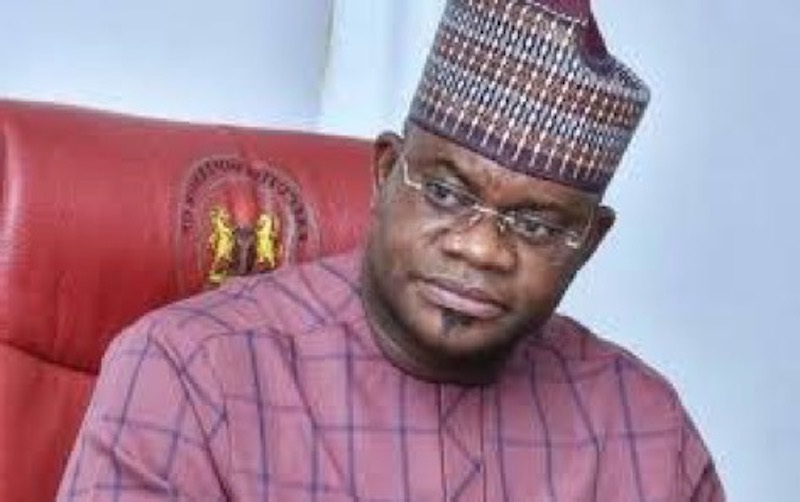
Buhari’s Suspicious N10b Request for Bello

By Danusa Ocholi
Ordinarily, the people of Kogi state would have spontaneously in their hundreds, possibly in their thousands trooped out to hold march pasts in Lokoja the state’s capital, and even in Abuja to thank President Muhammadu Buhari for his decision last week to seek Senate approval for “refund” of more than 10billion Naira to the state government under the leadership of Governor Yahaya Bello.
for the “rehabilitation” of Federal roads in the state.But the timing of the refund of fund meant to be the Federal roads in the state has heightened suspicion of the people of the state and concerned rest of Nigerians with conscience and goodwill. With a crucial governorship election coming up on Saturday, November 16 and with Governor Yahaya Bello and his running mate Edward Onoja overtly desperate to retain power and to continue their oppression of the people of Kogi state and profligacy of the state’s resouces, the President’s move ,in conjunction with the Senate is seen as a desperate attempt by the ruling All Progressives Party, APC, to make easy and underserved money available for their good boy in Kogi, to buy votes, hire thugs and manipulate the electoral process. For a government that prides itself with integrity and fight against corruption, for which it has been commended nationally and internationally, the APC-controlled government’s action is a corruption at the highest level. It should be condemned by the lovers of this country and truth.In the first place, as a citizen of the state, I know the ordeal my people and I go through the so-called Federal roads which have become death traps. Is it the Lokoja-Ganaja-Itobe road or the Lokoia-Okene road that hasve become impassable as a result of their deplorable conditions? No area has the poverty and the underdevelopment of Kogi state come into focus more than the federal roads. The Lokoja-Itobe , Itobe-Okene, roads have not only become death traps, but are now veritable grounds for robbers and kidnappers to operate. Some of the journeys on these roads that took average of one hour to make before, now take not less than four hours. Since I don’t claim to know all, and I am open to learn, Gov. Bello and his team should courageously tell Nigerians and the people of the state the roads his government has improved or worked upon to justify this huge request through the back door. The tragedy of Kogi’s administration in the last four years of Gov. Yahaya Bello’s administration is that while he has perfected the art of maintain good relation, and appearing to be a good boy to President Buhari and , the APC leaders like Bola Tinubu, Adams Oshiomhole, and the APC chieftains at the Abuja secretariat, he is a monumental disaster at home. I stand to challenge Bello and his commissioners to show the world a single project he inherited for which he even completed. Not to talk of him embarking and completing one. Ridiculous enough the roundabouts which his predecessors constructed to add beauty to Lokoja were all dismantled on puerile excuse that they served as fetish grounds of his predecessors. Imagine such a reasoning from a man entrusted with the administration of a highly endowed state like Kogi.. Up until today, Bello has not repaired the roundabouts in question, no done anything to elicit the attention and confidence of the people of the state. The issue of salary payment is an area that makes many people of the state to weep. For a man that inherited a salary arrear of just two months, today his government has backlog of 15 months and in some places 20 months, For the civil servants who are lucky to be paid, they are given in piece meals, in percentages.
A leader like Adams Oshiomohole owes the oppressed people of Kogi state apology for calling Gov. Bello a “trusted and tested” governor. I am not really surprised because Bello has been his loyal and trusted governor, whose modus operandi is working hard to keep the APC leaders in Abuja happy, without caring if those at home starve and die in the process. And actually Kogi has recorded civil servants starving and in penury because of the insensitivity of the present governor. A number of civil servants have taken their lives because of suffering visited on them by Gov.Bello.
It is a tragedy of our nation, of the leadership of the country to initiate moves to give money for a project that is no where on the ground. If the APC at the Federal level goes ahead to foist Bello on the people, they can only do this in some undemocratic and anti.people manner: Employing the security personnel to intimidate voters to pave way for Bello and his co travellers to rig; using INEC to falsify results, and employing money to buy the votes of hungry and deprived people of the state. Of course not to rule out Bello’s stock in trade, enganging thugs to intimidate voters, snatch ballot voters and kill even the innocent ones.With the desperation and Bello and Onoja, they will no doubt mind if blood of Kogites is shed to ensure they are returned to power. We must guide against this to avoid incurring the wrath of God that created these innocent persons. If Bello had done his part of he had, embarked on meaningful projects for the people of the state, he will not even need to be running to his god fathers in Abuja to devise dubious means to help him retain power. His achievements would have spoken for him. The Igalas, the Okuns, the Nupes, the Ebiras would have all stood in unison to give him the required support. Rather he frittered away the people’s goodwill by arrogantly turning an oppressor of the same people.Today he is resorting to employing ethnicity and other forms of sentiment to retain power. The coming election is going to be a big mountain to climb for Bello. If there is no interference from Abuja, using money as Buhari is contemplating to possibly buy the votes of hungry and depressed people of Kogi, using the army and police to intimidate, maim and kill the people, there will be no way the incumbent will win this election. I pray the APC government at the Federal level will not do anything untoward in allowing the will of the people of Kogi to prevail. The rest of Nigerians and the international community are watching.
| ReplyReply allForward |



By Raphael Atuu, Abuja
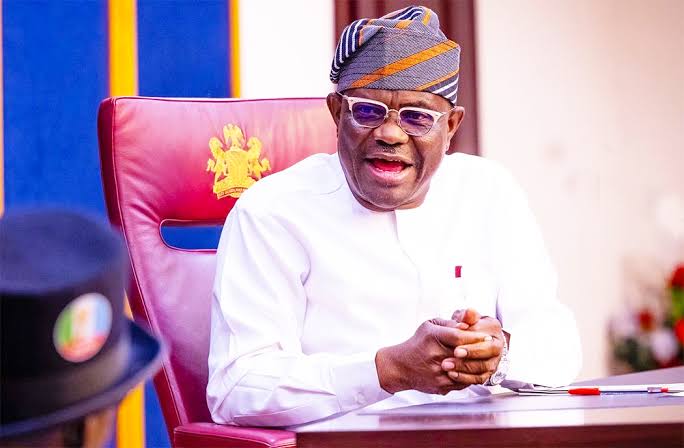
Since assuming office as Minister of the Federal Capital Territory in August 2023, former Rivers State Governor Nyesom Wike has remained one of the most visible and politically consequential figures in Nigeria’s current administration.
His tenure in the FCT has been marked by an aggressive emphasis on infrastructure, the revival of abandoned projects, road construction and administrative reforms.
The Federal Capital Territory Administration itself lists Wike as the incumbent minister, having assumed office in 2023.From the early months of his administration, Wike adopted a project-driven approach, meeting contractors and setting completion deadlines for ongoing road projects.
Contemporary reporting also documented his efforts to strengthen the FCT civil service and secure greater financial flexibility for the administration.Infrastructure as the Measure
One of the defining features of Wike’s tenure has been the scale of attention given to infrastructure.
The minister inherited projects from previous administrations and continued several of them, while also initiating and accelerating others. Roads linking different districts and satellite communities have received particular attention, alongside projects involving healthcare, security, public institutions and urban development.
President Bola Ahmed Tinubu has publicly acknowledged the infrastructure drive in Abuja. In March 2025, the President explained that the decision to remove the FCT Administration from the Treasury Single Account was intended to give the administration greater flexibility and speed in financing development projects. Tinubu specifically credited Wike with presenting the proposal and subsequently driving its implementation.
In July 2026, the Federal Government again defended the TSA exemption, saying it had increased the FCT Administration’s financial flexibility and accelerated infrastructure delivery. At the same event, Tinubu described the scale of infrastructure and urban renewal under Wike as substantial.
These developments have made project delivery one of the central arguments in assessments of Wike’s tenure.
More Than Roads
Wike’s administration has also involved institutional changes.
The FCT Administration has established a Civil Service Commission and created additional administrative structures, while the minister has pushed for reforms intended to make the administration more responsive.
The TSA issue is particularly significant. Rather than simply being a financial technicality, it became part of the broader debate about how the FCT should fund major capital projects. Wike has argued that the change provided the resources and flexibility required to accelerate development, while the Presidency has similarly defended the decision as necessary for faster delivery.
The FCT’s unique constitutional and administrative position also means that the minister operates in a role different from that of an ordinary state governor. According to the FCTA, the President serves as the equivalent of governor of the FCT, delegating administrative powers to the minister, while the National Assembly performs legislative functions for the territory.
The Political Dimension
Beyond infrastructure, Wike’s political activities have attracted perhaps even greater national attention.
The former Rivers governor remains associated with the Peoples Democratic Party while serving in an administration led by the All Progressives Congress. His political position became particularly prominent after members of the former G5 governors supported Bola Tinubu in the 2023 presidential election despite remaining within the PDP political space.
That cross-party positioning has continued into the preparations for 2027.
In 2025 and 2026, Wike promoted what he calls the Rainbow Coalition, a cross-party political arrangement intended to mobilise support for President Tinubu’s re-election. In September 2026, Wike again stated that the coalition was supporting Tinubu but was not an APC organisation and that politicians could retain their individual party identities.
This is where the question of Wike’s political influence becomes particularly relevant.
Where Were the APC Governors?
The emergence of the Rainbow Coalition has also exposed a disagreement between Wike and some APC governors.
In September 2026, the APC Governors Forum stated that the governors remained committed to the APC’s own political structure and would not endorse arrangements that could create divided loyalty or competing structures ahead of the 2027 elections.
Wike, however, has maintained that his coalition has a different objective: mobilising support for Tinubu across party lines while allowing politicians to contest other elections under their respective parties.
That distinction is important. The political argument is no longer simply about whether politicians belong to the APC or PDP. It is increasingly about whether influence can be organised across party boundaries.
A Different Kind of Political Capital
Wike’s political capital comes from several stages of his career: local government administration, service in Rivers State, federal ministerial experience, eight years as Rivers governor and his subsequent role as FCT minister.
His political network has also extended beyond a single political party.
The Rainbow Coalition represents an attempt to translate that network into a broader political structure. Wike has described the coalition as involving politicians from different parties who share a common objective regarding the 2027 presidential election.
There is, however, disagreement over how broad that coalition actually is. In January 2026, the Inter-Party Advisory Council rejected claims that all political parties were part of Wike’s proposed coalition, stressing that individual parties must make their own decisions through their constitutional structures.
That disagreement illustrates the limits as well as the reach of Wike’s political influence.
Performance and Political Alignment
The Wike phenomenon therefore rests on two separate but connected developments.
The first is his record of project execution in Abuja, which has received public commendation from President Tinubu and has been accompanied by significant administrative and financial reforms.
The second is his unusual political position: a PDP figure operating within an APC-led federal government while openly supporting the incumbent president’s re-election.
That combination has made Wike an unusual figure in contemporary Nigerian politics.
Whether his political network will translate into electoral influence in 2027 remains a matter for voters and the political process to determine. What is already clear is that his activities have become significant enough to generate public disagreements with both opposition actors and some members of the ruling party.
For a politician who has spent much of his career operating within the traditional party system, the Rainbow Coalition represents another chapter in Wike’s long-running experiment with political organisation across party boundaries.
And as the 2027 elections approach, the central question may not simply be which party Wike belongs to, but how much influence a politician can exercise while standing between the formal structures of one party and the governing machinery of another.
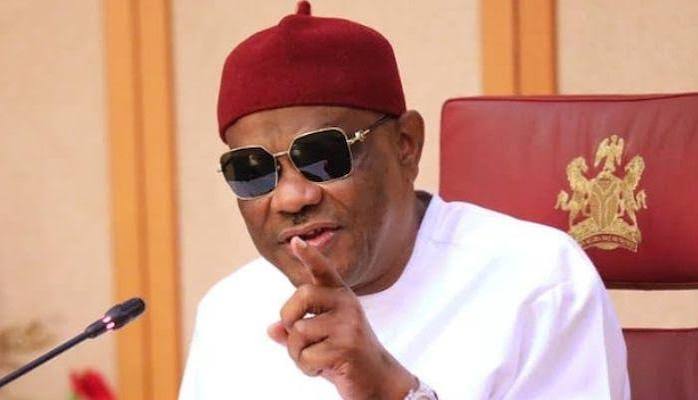
By Hajia Hadiza Mohammed
Nyesome Wike, the current Minister of the Federal Capital Territory (FCT) will go down in Nigeria history not just as one of the nation’s most controversial politician but as one of its worst political contractor and mercenary.
He will be remembered for his selfishness, hypocrisy, sycophancy and pettifoggery; a classical case of crass opportunism. This is exhibited in all decisions, his actions and utterances. He is the undertaker hired to kill and bury the Peoples’ Democratic Party (PDP), the platform he used to climb the political ladder and which he had destroyed after climbing, and he has his leg in the ruling All Progressives’ Congress (APC), where he is enjoying an appointment as the FCT Minister.And to continue to enjoy the APC patronage sitting on the fortunes of the PDP, the Obiakpor, Rivers State-born politician created his own hybrid political arrangement that he called the Rainbow Coalition for the 2027 elections. According to Wike, the Rainbow Coalition is a cross-party alliance for what he called the Renewed Hope Family which he intends to bring together members of his destroyed PDP camp, the decimated Labor Party group, the Action Alliance and other groups for the purpose of working to keep Tinubu in power beyond 2027. The number two reason for the formation of the alliance is to make the political parties in Rivers State, his home state, to agree to field one candidate that will succeed Governor Siminalayi Fubara in 2027.
And is usual about everything emanating from the Rivers State political strong man, his Rainbow Coalition is generating ripples in the political circles and in the public space. First, the Inter-Party Advisory Council (IPAC) said that Wike has no mandate to speak for all the political parties and called his claim “unfounded and misleading and exists only in his imagination.” IPAC says that the parties are independent and decisions can only come from the parties’ leadership. In the same vein, the opposition parties in Rivers State: the ADC, NDC and Labor party have publicly distanced themselves from the Wike’s Rainbow Coalition.
Furthermore, the APC political bigwigs are suspicious of Wike’s intentions. The APC governors speaking through its chairman Senator Hope Uzodinma, the governor of Imo State said that they are opposed to any political coalition or alliance that could threaten the chances of the party and its candidates in the 2027 elections. Wike was also accused by some concerned APC stalwarts of using the platform to support politicians who lost the APC primaries and are now contesting under the PDP platform. Senator Hope Uzodinma who doubles as the secretary of the Tinubu’s Presidential Campaign Council secretary maintained that “aligning with such a political arrangement could undermine Bola Ahmed Tinubu’s re-election bid and weaken the APC ahead of the election”.
And following the APC’s governors’ opposition to his Rainbow Coalition, the former Rivers State governor reacted by describing the APC governors as “politically lazy”, stating that his Rainbow Coalition has nothing to do with the APC. Rather, it is his own way of mobilizing support across political parties for Mr. President.
Indeed, the APC governors are politically lazy but not in the sense that Wike meant it (for he meant that they do not have the same will, the mentality and aggression to rig election as he has). They and the entire APC structure are lazy because they have never worked hard enough to better the lots of the suffering Nigerians in spite of the resources at their disposal. Yes, they are administratively lazy because they have failed woefully to provide good governance to the people. They failed woefully to deliver the dividends of democracy; their primary concern being about how to hatch plans to retain power and extend the stay of Tinubu against the will of the electorate. They have given Nigerians the worst form of leadership in history.
Talking about political laziness, Wike and his principal, Tinubu are politically lazier than the others in that they play toxic politics. Politics devoid of principles, ethics and values; politics of disservice, self-aggrandizement and primitive accumulation. They play politics of bitterness, acrimony and vendetta. Tinubu and Wike believe in do-or-die politics and they are ever ready to break the rule of engagement in other to win.
But what is the implication of the Wike’s altercation with the APC governors? Is it an indication of a crack in the APC’s wall? Is it an indication of lack of cohesion in the party? Is it an indication of discontent and disillusionment within members of the party? Is the APC heading for implosion or disintegration? What does this portend for the party that wants to retain power at all costs? Clearly, the answers to these questions would unfold as we get closer the general election in 2027.
There is no doubt that Wike is Tinubu’s hench-man. Wike was used to rig the election for Tinubu in Rivers State in 2023 and he was rewarded with the FCT Minister appointment and given full financial autonomy by removing the FCT from the Treasury Single Account (TSA). The purpose being to empower him to replicate the rigging he orchestrated in 2023 in Rivers State, in the FCT where Tinubu failed hopelessly. And now that the countdown for the 2027 has begun, Wike is obviously desperate to deliver in order to remain politically relevant being that he has no job other than politics.
Nyesome Wike, the current Minister of the Federal Capital Territory (FCT) will go down in Nigeria history not just as one of the nation’s most controversial politician but as one of its worst political contractor and mercenary. He will be remembered for his selfishness, hypocrisy, sycophancy and pettifoggery; a classical case of crass opportunism. This is exhibited in all decisions, his actions and utterances. He is the undertaker hired to kill and bury the Peoples’ Democratic Party (PDP), the platform he used to climb the political ladder and which he had destroyed after climbing, and he has his leg in the ruling All Progressives’ Congress (APC), where he is enjoying an appointment as the FCT Minister.
And to continue to enjoy the APC patronage sitting on the fortunes of the PDP, the Obiakpor, Rivers State-born politician created his own hybrid political arrangement that he called the Rainbow Coalition for the 2027 elections. According to Wike, the Rainbow Coalition is a cross-party alliance for what he called the Renewed Hope Family which he intends to bring together members of his destroyed PDP camp, the decimated Labor Party group, the Action Alliance and other groups for the purpose of working to keep Tinubu in power beyond 2027. The number two reason for the formation of the alliance is to make the political parties in Rivers State, his home state, to agree to field one candidate that will succeed Governor Siminalayi Fubara in 2027. Design Campaign Signs
And is usual about everything emanating from the Rivers State political strong man, his Rainbow Coalition is generating ripples in the political circles and in the public space. First, the Inter-Party Advisory Council (IPAC) said that Wike has no mandate to speak for all the political parties and called his claim “unfounded and misleading and exists only in his imagination.” IPAC says that the parties are independent and decisions can only come from the parties’ leadership. In the same vein, the opposition parties in Rivers State: the ADC, NDC and Labor party have publicly distanced themselves from the Wike’s Rainbow Coalition.
Furthermore, the APC political bigwigs are suspicious of Wike’s intentions. The APC governors speaking through its chairman Senator Hope Uzodinma, the governor of Imo State said that they are opposed to any political coalition or alliance that could threaten the chances of the party and its candidates in the 2027 elections. Wike was also accused by some concerned APC stalwarts of using the platform to support politicians who lost the APC primaries and are now contesting under the PDP platform. Senator Hope Uzodinma who doubles as the secretary of the Tinubu’s Presidential Campaign Council secretary maintained that “aligning with such a political arrangement could undermine Bola Ahmed Tinubu’s re-election bid and weaken the APC ahead of the election”.
And following the APC’s governors’ opposition to his Rainbow Coalition, the former Rivers State governor reacted by describing the APC governors as “politically lazy”, stating that his Rainbow Coalition has nothing to do with the APC. Rather, it is his own way of mobilizing support across political parties for Mr. President.
Indeed, the APC governors are politically lazy but not in the sense that Wike meant it (for he meant that they do not have the same will, the mentality and aggression to rig election as he has). They and the entire APC structure are lazy because they have never worked hard enough to better the lots of the suffering Nigerians in spite of the resources at their disposal. Yes, they are administratively lazy because they have failed woefully to provide good governance to the people. They failed woefully to deliver the dividends of democracy; their primary concern being about how to hatch plans to retain power and extend the stay of Tinubu against the will of the electorate. They have given Nigerians the worst form of leadership in history.
Talking about political laziness, Wike and his principal, Tinubu are politically lazier than the others in that they play toxic politics. Politics devoid of principles, ethics and values; politics of disservice, self-aggrandizement and primitive accumulation. They play politics of bitterness, acrimony and vendetta. Tinubu and Wike believe in do-or-die politics and they are ever ready to break the rule of engagement in other to win.
But what is the implication of the Wike’s altercation with the APC governors? Is it an indication of a crack in the APC’s wall? Is it an indication of lack of cohesion in the party? Is it an indication of discontent and disillusionment within members of the party? Is the APC heading for implosion or disintegration? What does this portend for the party that wants to retain power at all costs? Clearly, the answers to these questions would unfold as we get closer the general election in 2027.
There is no doubt that Wike is Tinubu’s hench-man. Wike was used to rig the election for Tinubu in Rivers State in 2023 and he was rewarded with the FCT Minister appointment and given full financial autonomy by removing the FCT from the Treasury Single Account (TSA). The purpose being to empower him to replicate the rigging he orchestrated in 2023 in Rivers State, in the FCT where Tinubu failed hopelessly. And now that the countdown for the 2027 has begun, Wike is obviously desperate to deliver in order to remain politically relevant being that he has no job other than politics.
Hajia Hadiza Mohammed, an actress, social activist, politician, London, UK. hajiahadizamohammed@gmail.com
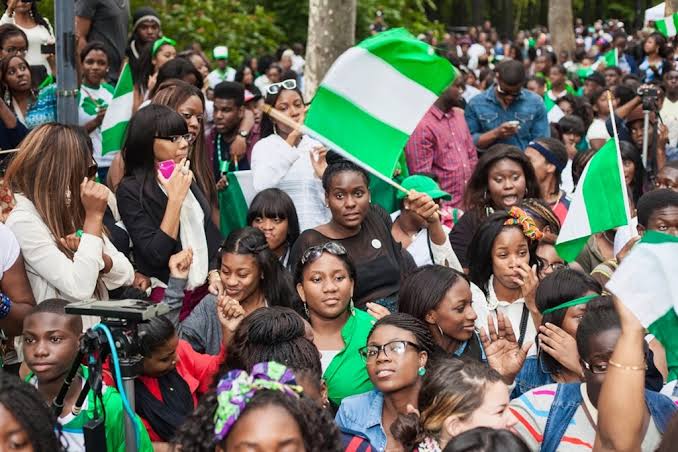
By Daniel Nduka Okonkwo
Walk through any Nigerian city before sunrise and you will meet the youth of this country already awake, already moving, already working, already fighting to make a living before much of the nation has opened its eyes.
There is the delivery rider weaving through traffic, sometimes before breakfast. There is a graduate selling goods by the roadside with a university certificate at home. A young woman is running a provisions shop while spending a significant part of her income keeping a generator running. There is a software developer working through the night for clients abroad because the domestic market cannot provide sufficient income.There is the artisan, the farmer, the POS operator, the online trader, the mechanic, the barber, the tailor, the content creator, and the young entrepreneur employing a handful of workers while struggling to keep the business alive. These are not isolated stories. They represent a much larger reality confronting Nigeria’s young population.
Nigeria is one of the world’s youngest countries, with more than 60 percent of its population under 30. The country’s youthful population is a major potential engine of social and economic transformation, while also identifying persistent structural barriers preventing many young Nigerians from realising that potential. The question is therefore no longer whether Nigerian youths are willing to work.
The harder question is why a country with such a large, energetic, and increasingly entrepreneurial young population has struggled to convert that enormous human effort into productive, secure, and dignified economic opportunity. This is the question Nigeria must confront. It is also a question government policy must answer.
Consider the university graduate who leaves home early, spends much of the day delivering packages across a crowded city, and returns exhausted, only to spend part of the night learning another skill or pursuing freelance work. The graduate may technically be employed. But employment alone does not tell the whole story.
If the work is informal, income is unstable, access to affordable credit is limited, social protection is weak, and there is no realistic pathway for the worker to build a sustainable enterprise, the work employed can conceal a much larger economic problem.
Nigeria’s official labour statistics demonstrate why the issue requires careful examination. The National Bureau of Statistics reported an unemployment rate of 4.3 percent in the second quarter of 2024, with unemployment among people aged 15 to 24 at 6.5 percent. At the same time, informal employment stood at 93 percent, time-related underemployment at 9.2 percent, and the proportion of young people not in education, employment, or training, the NEET rate, at 12.5 percent.
These figures should not be interpreted to mean that only a small proportion of young Nigerians face economic hardship. Neither should the official unemployment figure simply be dismissed as meaningless. Nigeria’s labour statistics follow internationally recognised concepts for measuring employment and unemployment.
The important point is that unemployment is only one measure of labour-market wellbeing. A person can be counted as employed while working in an informal occupation, earning an unstable income, or operating a small enterprise with little prospect of expansion. That distinction is critical. Nigeria’s problem is therefore larger than unemployment alone. It is also a problem of job quality, informality, underemployment, productivity, income security, and opportunity. Africans & Diaspora
The NBS figures provide a striking picture. In Q2 2024, unemployment was 4.3 percent. But informal employment was 93 percent. The combined unemployment and time-related underemployment measure, LU2, was 13 percent. What does that mean? It means Nigeria’s labour-market challenge cannot be understood simply by asking how many people have no work. kind of work people are doing, how much they earn, how secure that work is, and whether it gives them a realistic opportunity to improve their economic position.
A young Nigerian who spends ten or twelve hours selling goods, riding a motorcycle, operating a POS terminal, farming, freelancing, or running a small business is not necessarily unemployed. But neither should policymakers assume that the person has achieved economic security simply because the person is counted as employed. This is the statistical paradox at the heart of Nigeria’s youth economy. People are working. Yet too many remain economically vulnerable.
In 2023, figures circulated by the World of Statistics placed Nigeria second among the countries compared for average annual hours worked, at about 2,124 hours per worker, behind Mexico’s 2,128 hours. The figures were subsequently reported by Nigerian media.
That comparison is several years old and should not be presented as a current 2026 ranking. But it remains useful in illustrating a deeper point. Long working hours do not automatically produce prosperity. The Nigerian worker often works hard because failure to work has immediate consequences. A trader cannot simply close the shop. A mechanic cannot afford to lose customers. A delivery rider cannot afford to stop riding.
A farmer cannot postpone the planting season because input prices are rising. A young woman selling clothes online cannot simply abandon her business because electricity, transport, and logistics costs have increased. A freelance designer may work late into the night because the next client is never guaranteed. This is the deeper story behind Nigeria’s famous hustle culture.
The extraordinary resilience of Nigerian youths is an economic asset. But it should also be a warning. A society should not have to depend indefinitely on the ability of its youngest citizens to survive increasingly difficult conditions.
Across Nigeria, young people are effectively creating economic opportunities where formal systems have failed to create enough of them. They establish online clothing businesses. They build websites and applications. They design graphics. They operate POS terminals. They provide logistics and delivery services. They repair phones and computers.
They run restaurants and food businesses. They work in agriculture. They manufacture products on a small scale. They sell through WhatsApp, Instagram, Facebook, and other digital platforms. They combine formal employment with side businesses.
They learn vocational skills outside conventional educational institutions. They move from one occupation to another in search of opportunity. This entrepreneurial culture is not merely a social phenomenon. It is an economic resource.
The Mastercard Foundation’s 2026 Africa Youth Employment Outlook estimates that about 57 percent of Africa’s youth were working in 2025 and that 90 percent of employed young Africans were in informal work. The report also warns that high employment can coexist with working poverty, low productivity, and weak job security. These are continental figures, not Nigeria-specific estimates, but they provide useful context for understanding the wider labour-market environment in which Nigeria’s young population operates. The opportunity is enormous. But so is the policy challenge.
The problem is not necessarily that Nigerian youths lack ambition. It is the environment in which they operate that often prevents ambition from becoming scale. A young software developer may have the skills to serve international clients but struggle with electricity and internet costs. A fashion entrepreneur may have customers but lack affordable working capital. A young farmer may have land but lack irrigation, storage, transportation, and reliable access to markets.
A mechanic may have customers but lack modern equipment. A food entrepreneur may have demand but find that electricity, fuel, transportation, and raw material costs consume much of the business margin. A graduate may possess qualifications and professional skills but discover that the formal economy cannot absorb enough people with similar credentials.
This is the difference between working hard and working productively. Nigeria has millions of young people supplying labour. What it has not yet adequately supplied is the infrastructure, affordable finance, energy, education, security, and market systems required to multiply the value of that labour.
It would be inaccurate to suggest that the government has done nothing. There are substantial public programmes aimed at youth employment, entrepreneurship, skills development, and enterprise financing. In July 2026, the Federal Government launched Power Force, an initiative designed to train 5,000 young Nigerians in smart-meter deployment and create pathways into employment and entrepreneurship within the electricity sector.
The government said participants would receive technical training and certification before being connected to opportunities with distribution companies, meter providers, and other industry participants.
The Bank of Industry reported that in 2025 it disbursed ₦636 billion to more than 7,000 businesses across several sectors. It said ₦12 billion went to youth-owned enterprises, while its interventions supported more than 7,000 new MSMEs and 570 startups. BOI also reported that its 2025 interventions created or retained an estimated 1.6 million jobs.
These figures are claims and estimates reported by the institution and should be treated as such. They are important. They should also be independently tested, because the existence of a programme is not the same thing as proof that the underlying structural problem has been solved.
More importantly, distributing funds is an output, not necessarily an outcome. A loan being disbursed does not, by itself, establish that a business has become sustainable, that employment has been permanently created, or that the structural conditions confronting Nigerian enterprises have improved.
Businesses continue to contend with inflation, high energy and transportation costs, inadequate infrastructure, limited access to markets, and other operating pressures. The existence of a financing programme, therefore, cannot, on its own, be treated as proof that these deeper structural challenges have been solved.
There is also a need to examine how such intervention figures are measured. Institutions naturally tend to highlight indicators such as the volume of funds disbursed, number of beneficiaries, and estimated jobs created, while the longer-term picture may require additional scrutiny, including business survival rates, loan repayment and default rates, the number of enterprises that subsequently scale or fail, and whether the interventions produce sustained improvements in household incomes and local economic activity.
That is why the BOI figures deserve independent testing rather than either automatic dismissal or unquestioning acceptance. Independent audits, transparent beneficiary-level data where appropriate, and longitudinal socioeconomic studies could help determine how many of the businesses supported
remain operational, how many have expanded, how many jobs have actually been sustained, and whether the financing is translating into measurable improvements in livelihoods. The numbers may demonstrate the scale of intervention, but only credible outcome-based evidence can establish its longer-term economic impact.
Nigeria has seen loans. It has seen grants. It has seen training programmes. It has seen entrepreneurship schemes. It has seen digital skills initiatives. It has seen public announcements involving billions of naira. The investigative question must therefore move beyond how much money was announced. It must ask how many young Nigerians actually received it.
How many received the full amount? How many businesses survived? How many jobs remained in existence after one year? How many beneficiaries remained economically active after three years? How many businesses moved from survival-level operations into sustainable enterprises? How were beneficiaries selected? Were beneficiary lists published? Were programmes independently audited? What percentage of the country’s youth population was actually reached? These are not hostile questions. They are basic questions of public accountability.
A programme can genuinely help thousands of people and still be too small to transform the national youth labour market. Both things can be true. That is why the government should publish measurable outcomes rather than relying principally on announcements of inputs, training numbers, or disbursement figures.
There is also a deeper policy issue. Nigeria cannot solve a structural youth-employment problem simply by distributing money. A grant may help a young entrepreneur start a business. But what happens when electricity costs rise? What happens when transport costs increase? What happens when raw materials become more expensive? What happens when inflation reduces purchasing power? What happens when insecurity disrupts supply chains? What happens when the entrepreneur needs another round of affordable financing? What happens when the local market itself becomes too weak to sustain expansion? The entrepreneur can receive capital and still fail because the operating environment destroys the economics of the business. This is why youth policy must move beyond empowerment to productivity.
For millions of Nigerian entrepreneurs, electricity is not simply an infrastructure issue. It is an employment issue. A barber needs electricity. A tailor needs electricity. A restaurant needs electricity. A graphic designer needs electricity. A software developer needs electricity.
A small manufacturer needs electricity. A cold-room operator needs electricity. A phone-repair technician needs electricity. When public electricity is unreliable, entrepreneurs often have to purchase generators, fuel, and maintenance services simply to remain operational. That creates a hidden tax on enterprise. Money that could have been used to employ another worker, buy equipment, expand production, or acquire new skills is instead spent merely keeping the business alive.
Nigeria, therefore, loses productivity twice. First, through inadequate infrastructure. Second, through the additional cost entrepreneurs incur to compensate for it. This is why electricity policy should also be understood as an employment policy.
The same applies to inflation. When the cost of food, transportation, rent, fuel, and business inputs rises faster than income, young entrepreneurs experience a silent contraction. The business may remain open. Customers may still arrive. Sales may continue.
But real purchasing power and profit margins can deteriorate. The entrepreneur then works longer hours simply to maintain the same standard of living. That is how a young person’s economic life can become an endless cycle of work without accumulation. The objective of economic policy should not merely be to keep young Nigerians busy.
It should be to ensure that their work generates enough value to allow them to save, invest, acquire assets, employ others, and build stable futures.
There is another structural problem. Nigeria produces graduates, but the economy does not always generate enough high-quality opportunities to absorb them. At the same time, employers frequently report skills gaps. Young people then face a familiar contradiction. Employers want experience. Young people need employment to acquire experience. Unable to enter the formal labour market, many create side businesses.
The side business becomes the main occupation. The person is then economically active, but potentially remains financially insecure. This is why Nigeria’s youth-employment debate must extend beyond unemployment figures. It must include informality, underemployment, productivity, income, and job quality.
Afrobarometer’s survey of Nigerians aged 18 to 35 provides important evidence about how young people themselves view their economic circumstances. The cost of living was identified as the most important problem young Nigerians wanted the government to address, followed by unemployment, crime and security, poverty, management of the economy, and electricity.
On inflation control and job creation, only 2 percent and 6 percent, respectively, said the government was doing fairly well or very well. The survey also reported that 91 percent said the country was moving in the wrong direction. Sixty percent said they had considered emigrating, with jobs and economic hardship among the reasons cited.
The survey further found that nearly one quarter of young respondents were unemployed and looking for work.
These findings are not a verdict on one political party or administration. They are survey findings reflecting the views of the respondents at the time the research was conducted. They provide evidence of widespread economic concern among a generation confronting difficult conditions. That should concern every policymaker.
Nigeria’s youth migration, popularly described as japa, is frequently discussed as an individual decision. It is also an economic issue. When Nigeria educates and trains a young person, that person acquires skills, knowledge, and experience.
When that person subsequently leaves because domestic economic opportunities are inadequate, Nigeria does not lose everything, but it can lose part of the potential return on its investment in human capital. The receiving country gains the worker’s skills. Nigeria may lose labour, entrepreneurship, and future tax contributions.
Migration itself is not inherently negative. Nigerians abroad contribute significantly through remittances, investment, professional networks, and knowledge. The policy question is different. What conditions are causing so many young Nigerians to consider leaving in the first place? Afrobarometer’s finding that six in ten young Nigerians had considered emigration makes that question impossible to ignore.
There is something admirable about Nigerian youth resilience. But resilience should never become an excuse for structural failure. A government should not point to a young person selling products online and simply say, look, Nigerians are entrepreneurial.
The next question must be, why does that entrepreneur have to fight electricity costs, inflation, taxation, insecurity, expensive credit, poor infrastructure, and weak purchasing power simultaneously?
When a graduate becomes a delivery rider, society should respect the dignity of that work. But policymakers should also ask why a university graduate cannot more easily convert education and skills into productive, sustainable employment.
The answer is not to discourage hustling. It is to create an economy where hustling can become an enterprise.
The solution does not lie in one giant youth programme. It requires a different approach to youth economic policy. The government should measure outcomes rather than announcements. Major youth programmes should publish the number of beneficiaries, geographic distribution, amounts disbursed, business survival rates, jobs created, repayment rates where applicable, and independently verified results.
Financing should be easier to access and linked to genuine economic opportunities. Technical and vocational education should be connected directly to employers and industries.
The government should invest in reliable electricity, broadband, transport, and industrial infrastructure. Young entrepreneurs should be protected from overlapping taxes, unofficial charges, and regulatory uncertainty. Government procurement can create opportunities for credible youth-owned businesses. Agricultural policy should address the entire value chain, from production to storage, processing, transportation, and markets.
Skills programmes should measure whether participants actually obtain income-generating opportunities after training. And formalisation should become easier and less punitive for small businesses.
The objective should be simple: to move young Nigerians from survival-level economic activity to a productive, scalable enterprise.
The Mastercard Foundation’s 2026 Africa Youth Employment Outlook offers an important lesson for Nigeria. Africa’s challenge is not simply unemployment. It is also the prevalence of informal, low-productivity, and insecure work.
The report estimates that 57 percent of Africa’s youth were working in 2025, while 90 percent of employed young Africans were in informal jobs. It also estimates that 104 million young workers across the continent lived in households classified as extremely poor under the report’s international poverty measure.
The implication for Nigeria is profound. The country does not merely need to get young people working. They are already working. Nigeria needs to make its work more productive. It needs to help a trader become a formal business. A rider becomes a logistics entrepreneur. A tailor becomes a manufacturer. A farmer becomes an agro-processor.
A programmer becomes an exporter of digital services. A creative artist becomes a sustainable business. A graduate becomes a professional rather than a perpetual hustler. That is what it means to utilise Nigeria’s youth.
As Nigeria approaches another electoral cycle, young Nigerians have legitimate questions for anyone seeking public office. What precisely will you do to reduce the cost of electricity for small businesses, and how will progress be measured? How many sustained jobs will your policies create, as distinct from loans, training certificates, and temporary programmes? Will you publish beneficiary lists and independently verifiable outcomes for youth-empowerment programmes? What is your strategy for protecting the purchasing power of young workers and entrepreneurs?
How will you reduce multiple taxation and unlawful or unofficial charges imposed on small businesses? How will young entrepreneurs obtain affordable credit without collateral requirements that exclude most people at the beginning of their economic lives? What will you do to connect education and vocational training to actual labour-market demand? How will your policies make it easier for young businesses to survive beyond the first year? And perhaps the most fundamental question, how will you turn Nigeria’s enormous youth population from a demographic challenge into a productive economic advantage?
These are not partisan questions. There are questions about governance, economic policy, and the future of the country.
There is a fundamental difference between surviving and prospering. Nigerian youths have demonstrated that they can survive extraordinary economic pressure. They have demonstrated creativity. They have demonstrated adaptability. They have demonstrated technological awareness. They have demonstrated entrepreneurial courage. They have demonstrated an extraordinary willingness to work.
The evidence from Nigeria’s labour statistics, international youth-employment research, and public-opinion surveys points to a reality much more complicated than the simple label of unemployed youth. Nigeria has a generation that is already contributing. The real question is whether the country can build an economy capable of rewarding that contribution.
Nigeria’s young people do not need to be taught how to hustle. They need an economic environment in which hard work can produce accumulation rather than merely survival. They need electricity that allows businesses to operate.
They need affordable capital that allows businesses to grow. They need education that connects to real economic opportunities. They need security that protects their lives and investments. They need infrastructure that reduces operating costs. They need predictable taxation and regulation. They need transparent public programmes whose benefits can be independently verified.
And above all, they need the government to recognise that youth development is not simply a charity project. It is an economic policy.
The young Nigerian selling clothes from a small room, the graduate riding through traffic to deliver parcels, the woman running a POS business, the software developer working for an international client, the mechanic in a roadside workshop, the farmer struggling to reach the market, and the young entrepreneur trying to keep ten employees on payroll are not peripheral to Nigeria’s economy. They are part of the country’s emerging workforce and productive capacity.
The question confronting Nigeria is therefore not whether its youths are hardworking. The evidence presented here shows that millions of Nigerian youths are economically active and working across formal and informal sectors. The question is whether Nigeria will build an economic system capable of turning that extraordinary effort into greater productivity, higher incomes, sustainable businesses, and dignified work.
Because a nation cannot build its future indefinitely by asking its youngest generation to work harder against obstacles that public policy can reduce. Nigeria’s youths have already shown what they can do with very little. They have built businesses without reliable electricity. They have created careers without guaranteed employment.
They have acquired skills without adequate institutional support. They have survived inflation, insecurity, and weak infrastructure. They have kept moving when stopping was not an option.
Now the question is no longer what Nigerian youths can do for Nigeria.
The question is what Nigeria is prepared to do to ensure that its work finally produces the future it deserves.
Daniel Nduka Okonkwo is an investigative journalist, human rights advocate, and publisher, and the founder of Profiles International Human Rights Advocate, PIHRA. His work focuses on governance, accountability, and the protection of fundamental rights across Nigeria and Africa. His reporting has appeared in Vanguard, Daily Trust, Sahara Reporters, African Defence Forum, Opinion Nigeria, Daily Intel, African Angle, and others.




RMAFC Inaugurates Planning Committee for China Oil & Gas Investment Forum
ShareBy Tony Obiechina, Abuja The Revenue Mobilisation Allocation and Fiscal Commission (RMAFC) has inaugurated a Planning Committee to coordinate preparations...
Advancing Food Security through ONSA AgriShield Initiative
ShareBy Chido Onumah The Federal Government is strengthening the connection between national security and food security through the AgriShield Initiative,...

2027: NNPP Warns Public against Dealing with Impostors
ShareThe New Nigeria Peoples Party (NNPP) has warned the public against dealing with impostors parading themselves as candidates and leaders...

2027: INEC Harps on Proper Documentation, Archiving of Operational, Electoral Documents
ShareThe Independent National Electoral Commission (INEC) has stressed the need for proper archiving, cataloguing and documentation of operational and electoral...

Nigeria’s Airline Capacity Hits 1.19m Seats — FAAN
ShareBy David Torough, Abuja Nigeria’s scheduled airline capacity rose to 1.19 million seats in September 2026, representing a 37.4 per...
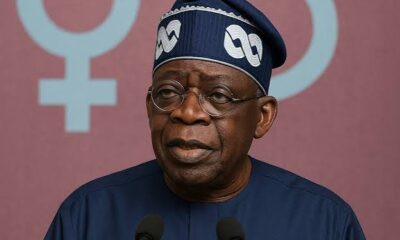

Tinubu to LGs: Make Local Government Autonomy Work
ShareBy David Torough, Abuja President Bola Tinubu has charged local government councils across Nigeria to turn financial autonomy into tangible...


CBN Faces Reps’ Probe, Slashes Interest Rate to 23 Per Cent
ShareBy Tony Obiechina, Abuja The Central Bank of Nigeria (CBN) came under fresh legislative scrutiny on Tuesday as the House...


CALSAN Names National Moot Championship After Franc Fagah Utoo
ShareBy David Torough, Abuja The Catholic Law Students’ Association of Nigeria (CALSAN) is set to honour distinguished Nigerian legal practitioner,...

Gen Musa’s Giant Strides Since Assuming Office As Defence Minister
ShareBy Mohammed Adamu Namji Before now, we all knew about the heightened security tension in Nigeria, particularly in Benue, the...

George Akume: A Patriot Who Stood for Democracy
ShareBy Dan-Morgan Ihomun Nigeria’s democracy was not preserved by accident. At critical moments in the nation’s political history, individuals were...