
OPINION
Between Gov. Bello and Engr. Wada

By Valentine Opaluwa
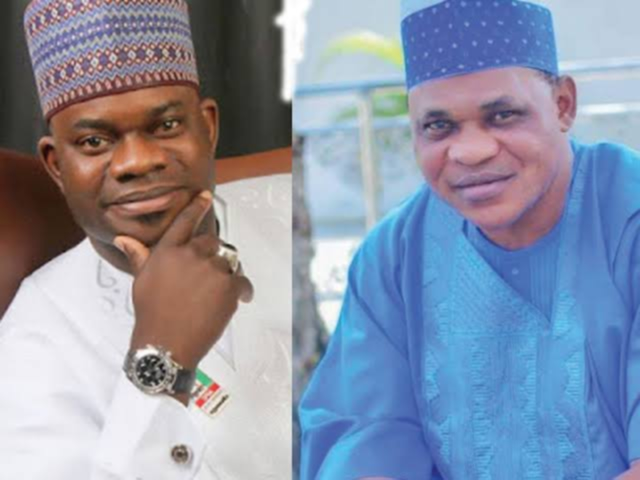
Between the two major contenders for the November 16th Governorship election in Kogi State there is every need for objective analysis and assessment of the candidate of All Progressives Congress (APC), the incumbent Gov’, Alhaji Yahaya Adoza Bello.
and that of Peoples Democratic Party (PDP), Engr. Musa Wada from the positions of strength and weaknesses because both candidates are clearly the leading hopeful in the run up to the election.Looking at Govr, Yahaya Bello the APC candidate from position of strength is the incumbency factor which confers on him an advantage.
More so, that the ruling party at the federal level is APC.GYB as a sitting governor has the privilege of the support of all or most of the political appointees like commissioners. special advisers, board members at Federal and state levels, the local government chairmen in the state and of course, the legislative arms both at the National and the State Assemblies, where 25 members are of the ruling party.
There is also a strong notion among some APC members that “federal might” would be deployed to aid APC and GYB to win the election and secure a second term in office by all means. Therefore, GYB can be considered as a strong candidate given the apparatus at his disposal and his capacity to use his foot soldiers who are already brewing for political thuggery and brigandage.
In fact, spectacularly political office holders are desperate and like they did in the last general election, they may also carry A.K. 47 and other arms to influence the outcome of the election in favour of GYB, the “White Lion”. Also GYB as sitting governor has a large purse therefore has plenty of resources to throw around in other to curry support of some people and do vote buying if possible.
On the other hand, Engr. Musa Wada, the candidate of the Peoples Democratic Party (PDP), position of strength lies in the fact that the party has been dominant in the state and produced the governors since 2003 until 2015 when it lost the baton of leadership in a very controversial way to Governor Yahaya Bello of APC. Therefore, the party has strong political structure across the 21 local governments area in the state.
Another position of strength for Engr. Musa Wada is that he does not have any political baggage working against him ;he has no corruption case hanging on his neck as a retired civil servant.
Also before he ventured into politics, he was well known by many people in the state especially in Kogi East where he hails from and given the circumstances that surrounded his emergence in the PDP primary election he does not have a known political godfather that can impede on governance of the state if he is elected. Another strong factor in favour of his candidacy is the fact that Engr. Wada is well educated and has vast knowledge of administration coupled with the fact that he is known to have unquenchable desire to render service to the people for some times now there, his emergence on the political soup opera is not accidental.
He is from Kogi East where the bulk of votes for Kogi State governorship reside and lastly which by no means the least, is that GYB’s administration is acknowledged to have received huge fund from the federal government in the name of Bailout fund, Paris refund, Infrastructure fund, Ecological Fund and Internal Generated Revenues yet the civil servants, teachers and pensioners in the state are owe salaries for months, some for more than 30 months and in the same vein, the government has not completed any infrastructural projects a side from the Revenue House in Lokoja.
In fact, since he came into office about four years ago, President Muhammadu Buhari or Vice President Prof. Yemi Osinbajo have never commission any project executed by the All Progressives Congress (APC) led administration of Govr. Yahaya Bello. This is a source of strength for Engr. Musa Wada of the Peoples Democratic Party (PDP).
Now what are the weaknesses of Governor Yahaya Bello as the incumbent governor of Kogi State? Even though, Bello inherited an outstanding salary of two months owe the state civil servants by his predecessor, Capt Idris Wada.
Graciously, President Muhammadu Buhari upon assumption of office met this debt burden across the states. Many governors were owing workers salaries as delicate as the issue of workers salary is to the economy and well-being of the citizens. Let call it Buharinomic, bailout funds that were secure for the states made it possible to overcome the challenges of payment of workers salary every month.
Alas Kogi State government under Govr. Yahaya Bello was receiving the bailout fund but was not paying the workers adequately and promptly and in some cases no payment at all. In the name of screening exercise, he oppressed the civil servants, teachers, pensioners and of course the good people of Kogi State. Conducting screening exercise to weed out ghost workers is a noble idea but it was done in a shady manner with a pre – conceived mind.
Kogi State became notorious place of attention, as the workers cried out, some of them committed suicide; a Director Mr. Soje hung himself and the reason for the act was that he could not fend for himself and family because he was not receiving salary. There were those who died in the course of traveling to Lokoja for the screening exercise that was simply a conduct pipe and tool of oppression and denigration of Kogi State workers and people.
Secondly, despite the huge resources that Govr. Bello has received from the federal government he has not executed infrastructural projects like roads, housing, or venture into solid minerals that is scattered across the state, education has not fare better. GYB was ensued in bitter acrimony with lecturers at the state owned University in Anyigba. He did the unthinkable by proscribing ASUU, a power which was not his but needed to display arrogance. Many professors and senior lecturers left the citadel of learning which was once reckoned as one of the best state owned in the country.
Thirdly, the populace groins in pain and penury because most of them depended on salary paid their father and mother to go to school, to pay fees, to feed the family and provide health care services in the case of ill health. Some extended family members depend on their brother, sisters, sons and daughters to make end meet and take care of bills. The absence or inadequate salary makes it difficult for them to get the support and assistance they normally recieve from their family members, relations and friends.
Fourthly, Gov. Yahaya Bello belongs to the Ebira Okene ethnic group and since he came to power as a result of the sudden death of Prince Abubakar Audu of blessed memory’ he has been trying to erase the foot print of his predecessors in different ways, the destruction of architectural master pieces in different roundabout in the state were removed. He once ordered the arrest of Alhaji Mohammed Audu, the first son of late politician on thump up charges.
GYB did not hide his deep hatred and animosity towards Igala people. This can be easily be seen from his appointments. As a matter of fact, key commissioners were only reserve for the Ebira and Okun people. Can you imagine this anomie in a state where the people of Kogi East, the Igala and the Bassa are clearly in majority, none was found worthy to serve as Commissioner for Finance, Commissioner for Works, Commissioner for Health, Commissioner for Local Government and Chieftaincy Affairs, Commissioner for Agriculture, the Speaker and the SSG are from Kogi West and impactful positions like SDG, Local Government Service Commission has not been occupied by an Igala man under GYB’s administration. Even though, for reason of survival some Igala youth are supporting his re – election especially the appointees and those he procured victory for in the State House of Assembly and those at the National Assembly. One good turn they say deserves another since personal interest is a strong variable in the whole gamut of politics.
However, they are very insignificant to sway majority of the votes from Kogi East for GYB who has treated the people of Kogi East so unfairly despite being the people that paved the way for him to become governor. Certainly it was not the Ebiras and Okun that gave him majority of the votes in the All Progressives Congress (APC) primary election in 2015 which he took second, and it was on that premise that he was nominated to replace Prince Abubakar Audu who was already cruising to victory in that election.
GYB has displayed crass ignorance of governance by choosing the path of oppression, dictatorship and pretentious hate for a section of the state. He is attempting to divide and rule the people of Kogi East, so as to incapacitate them politically but from all indication it is a mirage, because his supporters cannot give him up to 15% of the votes that will be cast in Kogi East in a free, fair and credible contest.
Fifthly, GYB does not have a grip on Kogi West Senatorial District where Senator Dino Melaye represents before court nullified his election on technical ground. At the moment two House of Representative seats that were deemed lost by the People Democratic Party (PDP) has been overturned by the Court of Appeal that of Honourable Shaba of Lokoja/Koton-Karfe Federal Constituency and HonourableTijani Yusuf of Kabba/Ijumu Federal Constituency.
Moreover, the appointees of GYB from Kogi West from the Secretary to the State Government, Speaker of the State Assembly, Commissioners and Special Advisers are not well known politicians who have the people on their side aside Senator Smart Adeyemi, most of the experienced politicians that decide the outcome of election in Kogi West are in the Peoples Democratic Party (PDP), namely Chief Shola Akomode, Gen. Jemibewon, Brig. Tunde Ogbeha among others.
While the weaknesses of Engr. Musa Wada are that he is a very independent minded person and would not have become the candidate of Peoples Democratic Party, if he does possess this attribute. He contested the PDP primary against all odds. He was persuaded by elders and younger men to step down for his elder brother, the former Governor of Kogi State, Capt. Idris Ichala Wada but he never budge, he was seeing beyond the request for him to step down.
Abubakar Ibrahim Idris, the son of former Governor of Kogi State, Alhaji. Ibrahim Idris was also contesting and had the support of his father-in-law, His Excellency, Ibrahim Idris, again he refused to succumb to pressure to step down. Engr. Musa Wada was not considered as a front runner in the primary election, but he was far ahead before the disruption during the last stages of the primary election.
In politics especially on our climes, an independent person is often seen as one who would not like to compromise thus supporting an independent minded person is not common. However, independent minded personality which appears to be a weakness in Engr. Musa Wada is a source of strength because an independent minded person is better for the people of the state than a yes man.
Again the fact that he is a younger brother to Captain Idris Wada the former governor some people are likely to see it as perpetuation of one family in power but that story is not flying among many people. Given the way he emerged and the failure of leadership of the magnitude we are having in Kogi State getting somebody like Engr. Musa Wada is good omen, that the state can be in a safe hand who would be driven by people centred leadership to enhance genuine development. He has the capacity and characteristics to advance the cause of the state positively and he is seen as such a leader by many well meaning Kogite of different shades of opinion and persuasion as things stand.
He does not have the resources to withstand GYB in terms of money for the election. However, luckily for Engr. Musa Wada his campaign is more like a movement and volunteers are many because of the strong desire for change of government for the better. Even though money for logistics and so on and so forth is necessary, it has become people project and that means individual donations is now driving the campaign and you know PDP is behind Engr. Musa Wada in totality.
The power of the people to demostrate their will to get freedom from oppressive leaders, be it monarchy and dictatorship is legendry in human history and about to be repeated. This time, it is about revolting against a young leader who came to power through providence but instead disgrace the very people who are the very essence of political leadership and democracy.
Engr Musa Wada seeming weakness has been eroded by the prevailing situation in Kogi State. Therefore, in comparision, while the strength of GYB is rooted in using anti-democratic forces to change the will of the people in the forthcoming election, Engr. Musa Wada is widely accepted not only in Kogi East but in Kogi West and of course Kogi Central. Therefore, in a free and fair contest, GYB is not popular enough to get 25% of the vote cast across the three Senatorial Districts in the state. The reason is simple, most civil servants, teachers, and pensioners would not vote for him and many others who are their beneficiaries and the generality of the people of the state because of the poverty and lack of democratic essentials which characterize his administration since he took the reign of power in 2016.
#Mr Opaluwa, a social commentator writes from Abuja







By Olusegun Adeniyi
Senate President Godswill Akpabio is renowned for his arrogance and hubris. So, when he tendered a public apology to Senator Natasha Akpoti-Uduaghan on the floor of the senate Tuesday, the stakes must have been very high.With a faceless but popular blogger running a vicious campaign against his family and threatening not to stop until Akpabio apologised to a female colleague he needlessly demeaned, it was obvious something would have to give.
And the public statement, issued by a group of powerful women on the same issue, must have persuaded even a man like Akpabio that he had carried his offering beyond the sacred place. The controversy began when Akpoti-Uduaghan attempted to speak before being recognised, an action that drew sharp reprimand from Akpabio. Despite her apologetic tone, Akpabio would not let it pass. He retorted with the biting remark that the Senate is not a “nightclub”.On Tuesday, Akpabio said, “Distinguished Senator Natasha, I want to apologise to you…I do not mean any harm. People should concentrate on things that will move this country forward. Social media handlers should practice with decorum. We won’t out of anger regulate social media.”I am impressed by how Akpabio handled this situation. Many Nigerians still recall his altercation with Dr Joy Nunieh in the Niger Delta Development Commission (NDDC) during his stewardship as Niger Delta Minister.But it is unfortunate to hear that Akpabio’s wife was dragged into what does not in any way concern her. Those who purportedly called to denigrate her exhibited the same traits they accuse Akpabio of. They obviously have no respect for women. No matter how we feel about issues, certain lines should not be crossed.On Monday, 24 hours before his apologies, a group of respected female professionals in the country under the aegis of Voices for Inclusion and Equity for Women (VIEW), released a public statement on what they described as a “disheartening display of disrespect and gender bias” by Akpabio.Signatories included Aisha Muhammed-Oyebode, Aisha Waziri, Amina Salihu, Asmau Joda, Ene Ede, Ene Orgah, Fatima Akilu, Ier Jonathan-Ichaver, Kadaria Ahmed, Larai Ocheja Amusan, Mairo Mandara, Maryam Lemu, Maryam Uwais, Nguyan Feese, Rekiya Abaji, Sa’ida Sa’ad, Saudatu Mahdi, Ummahani Amin, Zainab Salihijo and Zaynab Musa.Although the VIEW statement was anchored on how the senate president compared Akpoti-Uduaghan’s conduct to behaviour suited to ‘a nightclub’, they added that “This is not the first instance of such behaviour from Senator Akpabio; he recently silenced Senator Ireti Kingibe in a similarly dismissive manner, underscoring a troubling pattern.”Before I address what has become an institutional problem, let me state clearly that I do not subscribe to the erroneous notion that the leadership of a National Assembly controlled by the ruling party should be acrimonious in their relationship with the executive.In the United States from where we borrowed the presidential system of government, lawmakers from the ruling party collaborate with their president in the interest of the country without compromising their own integrity as an independent arm of government. But the leadership of an institution with the power of oversight on issues of transparency and accountability cannot be slavish in its dealings with the president.While Akpabio may have apologised to Akpoti-Uduaghan, it is increasingly becoming a fad, especially in the Senate, that those who make laws for the rest of us can only find relevance in denigrating Nigerian women.It did not start with Akpabio. In presenting a motion to mark the International Women’s Day 2016 eight years ago, then Senator (now First Lady) Oluremi Tinubu argued, “We represent courage and resilience; without us (Nigerian women) I don’t think this country will move forward.” But the significance of the motion was lost on most of her male colleagues who trivialised the issue.Making his contribution, then Senate Leader, Ali Ndume (who is now facing persecution from his own party for being critical of the president), said: “I urge men to marry more than one wife. The first care of a woman is marriage. Men should take care of women by not just befriending them, but by going further to marry them. I know there is nowhere in the Bible that prohibits marrying more than one wife. Starting with the senate president (Dr Bukola Saraki) I ask him to consider marrying more than one wife.”On a day the United Nations invested the theme, ‘Planet 50-50 by 2030: Step It Up for Gender Equality’, Ndume made a formal request in plenary. His prayer was seconded by Senator Suleiman Nazif. But Senator Binta Masi Garba did not allow the insult to go unchallenged: “We are not sex objects. Bible is in support of one man, one woman. We want gender parity where women and men can work side by side,” she said.When those responsible for making our laws do not consider women as equal but rather mere consorts, we have a huge problem. A week earlier, in his contribution to the motion by Senator Enyinnaya Abaribe, advocating the need to patronise products made in Nigeria, Senator Dino Melaye said most memorably: “We must reduce the allocation for made-in-Nigeria goods and services to the basics. What are those factors limiting the production of these goods? We must tackle them. We must also begin to look at our legislation, then, we will begin to talk about made-in-Nigeria goods. We will also move to encourage made-in-Nigeria products and begin to talk about made-in-Nigeria women…”The foregoing illustrates that the issue of disrespect for women goes beyond the person of Akpabio. It is institutional; even though the House of Representatives has shown more decency on the issue. On 15th March 2015, the Senate voted to dismiss the Gender and Equal Opportunities Bill, 2016, sponsored by Senator Biodun Olujimi who was then Minority Whip. The bill sought to accord women rights equal to those of men in various spheres of life and to prohibit certain discriminatory practices.Interestingly, those who opposed the bill used religion as cover. While Senator Ahmad Rufa’i Sani cited the Quran to oppose it, Senator Emmanuel Bwalcha found his own justification in the Bible. The bill has been tabled at different times since then and has met not only rejection but ridicule by Senators. It therefore came as no surprise that not a single male senator thought it fit to censor Akpabio when he made the disparaging remark about Akpoti-Uduaghan in plenary.I once referenced a 2013 piece ‘How Nigeria legalizes discrimination against women’ by Dr Aminu Hassan Gamawa, currently Chief of Staff to Governor Bala Mohammed of Bauchi State. Then pursuing his doctorate at Harvard Law School, Aminu had argued that the language used by the Nigerian constitution “is not gender neutral, perhaps because it was written by men.” For example, according to Aminu, “the pronoun ‘He’ appears in the 1999 constitution about 235 times.”Again, under our criminal law, he pointed out, a man cannot be deemed to have raped his wife because, “Section 182 of the Penal Code provides that ‘sexual intercourse by a man with his OWN (emphasis mine) wife is not rape if she has attained puberty’”. Section 55 (1) (d) even recommends that a man should keep in the house what my wife called ‘Dr Do-Good’ (when our children were growing up) “for the purpose of correcting his wife”.Therefore, before we reduce this serious conversation to the banality of whether a ‘side chick’ (whatever it means) is part of the ‘constituency projects’ of our distinguished senators, we must call out the chauvinism and prejudice that drive public engagement in Nigeria.
I concede that a patriarchal society such as ours revolves around the ‘man of the house’. But for us to develop as a nation, we must begin to cede to our womenfolk the rights and respect they are due.It is a paradox that within Nigerian culture, as well as both Christianity and Islam, the mother is elevated to a distinct place of honour and respect. Yet, our elected legislators as influential policymakers, professing to be patriotic Nigerians and devout faithfuls, continue to denigrate and trivialize the voice of the female gender.You can follow me on my X (formerly Twitter) handle, @Olusegunverdict and on www.olusegunadeniyi.com

By Uche Anunne
Shelter is one of the basic necessities of man. Shelter was meant to provide protection for man against stronger primates in the jungle, and a cover against elements. The cave served that purpose.It has evolved to serve man in various areas. Today, it serves as a place of worship, work, education, recreation, sports, entertainment and business among others.
The more the need for shelter the more it is designed to fit those needs. The desire to minimise land use, celebrate aesthetics and elegance led to building taller structures.Today high rise buildings dot the landscape all over the world. In Nigeria and in many developing countries, what is meant to solve man’s special need has become a source of nightmare to many families.Many families have lost their loved ones in building collapse in various parts of the country.Those who survive it are left with physical and or mental scare. Businesses are ruined and several billions of naira lost in these unfortunate incidents.A report by The Brookings Institution showed that between 1974 and 2019, more than 211 buildings collapsed in various parts of the country, with more than half of the incident occurring in Lagos State.According to the Think Tank, between 2000 and 2021, Lagos State recorded 167 incidents with 78.4 percent being residential buildings and 12.8 percent commercial buildings while the remaining 8.8 per cent were institutional buildings.The incidents displaced no fewer than 6,000 households with an estimated loss of $3.2 trillion worth of property.The recent gale of building collapse calls for urgent attention from stakeholders to address the challenge.On July 13, four persons were rescued from the rubble of a collapsed two-storey building in Kubwa area of Abuja according to Mrs. Florence Wenegieme, Acting Director FCT Federal Emergency Management Department.Earlier on July 10, seven persons were pulled out of the rubbles of a collapsed another two-storey building at Mushin area of Lagos State on Wednesday.Dr Olufemi Oke-Osanyintolu, Permanent Secretary, Lagos State Emergency Management Agency, LASEMA, was quoted by the media as saying that those rescued consisted of three females and four males.In Kano State, on April 26 three persons died following the collapse of a three-storey building in the Kuntau area of Gwale Local Government Area of Kano State, according to Dr Nuradeen Abdullahi, Kano Coordinator, National Emergency Management Agency.On June 17, 2011, three persons died as a building under construction at University of Nigeria, Nsukka, caved in. Five construction workers were rescued and taken to the intensive care unit of the University of Nigeria Teaching Hospital, Enugu.Yet on July 13, the city of Jos, Plateau was thrown into mourning following the collapse of Saint Academy, Jos school building. No fewer than 22 persons, mostly students, died and 154 others injured according to official accounts.The Nigerian Institute of Civil Engineers (NICE) says the country has recorded 41 building collapses in the last 17 months.Observers wonder why what should be a place of safety should become a death trap. Questions are raised as to how it should be reduced to the barest minimum.Paul Erubami, the Chief Executive Officer, Max-Migold, a physical property management firm, says effective facility management sector can stem the tide of building collapse in Nigeria.“It starts with knowledge; it starts with skills and these are how to put the right processes in place,” Erubami said.Prof. Samson Duna, Chief Executive Officer, Nigerian Building and Road Research Institute (NBRRI), attributed building collapse to use of substandard materials among others.According to Duna, 80 percent of building collapse happens during the rainy season due to some natural causes and because the materials were substandard.He, therefore, recommended training and retraining of engineers and professionals in the construction sector should attend refresher courses to refresh their knowledge.He said the government and professional bodies should sensitise the general public on the steps to follow when embarking on building projects.“All professional bodies should strengthen its arm of monitoring, to ensure they function effectively during project supervision.“The professionals must be involved in monitoring and evaluation of building projects and funds for the supervision should be incorporated in the cost of the project,“ Duna said.The Nigerian Association of Technologists Engineering (NATE) blames the challenge on the failure to keep to the ethics and codes of building, cutting corners in terms of the required materials are the main causes of building collapse.Dominic Udoatan, the national president of the association, however, expressed hope in the Council for the Regulation of Engineering in Nigeria (COREN) determination to work on the issue through closed monitoring.He said it was important that only professionals were saddled with the responsibility of erecting buildings.The Nigerian Institution of Structural Engineers (NISTRUCTE) also points accusing fingers at CORENPresident of the institution, Dr Kehinde Osifala, said that non-regulation of the practice by COREN was at the root of incessant collapse of buildings and structures in Nigeria with many quacks operating freely.He pledged the institution’s readiness to partner with COREN to flush out quacks from the building industry and save the nation from the agony of building collapse.Then Permanent Secretary of the Federal Ministry of Works and Housing, Mahmuda Mamman, gave COREN a marching order.“I urge you to strategise and hatch out a plan to stop this menace of building collapse. There should be no more cases of building collapse and this lousy situation be brought to a stop” he said.He also directed the conduct of thorough checks, registrations, and mandatory monitoring of construction activities to ensure Nigerians live in well-built, solid buildings without any fear of building collapse, no matter the weather.Sadiq Abubakar, industry regulator, COREN, said for instance, there were complexities involved in prosecuting cases of building collapse and called for the involvement of trained investigators and regulatory reforms.“Once you go to a tribunal, you need diligent steps to gather evidence. Building collapse has different causes, and without proper sampling and investigation, it becomes challenging to prosecute”, he said.The COREN president said another challenge to effective supervision was economic. He said the issue of substandard materials and construction practices could be caused by economic pressures such as the rising cost of cement.“There is a direct correlation between the price of cement and building collapses. When costs rise, clients often cut corners, leading to compromised building integrity,” he told newsmen.Abubakar suggests the training and certification of professional investigators in the construction sector to enhance prosecution of suspects in building collapse.He also canvassed decentralising investigation panels and tribunals to ensure timely and effective responses to building collapses.“We must train investigators who are qualified, competent, and can even go to other countries to investigate. This we don’t have now, but we’re working towards that,” he said.“We have identified gaps in the regulatory and legal framework and are packaging amendments to address these issues.“There is the need for collaborative efforts among all actors in the building environment, including architects, builders, and surveyors. We must work as a team to ensure compliance and accountability,” he said. (NAN)

By Olanrewaju Akojede
Team Nigeria will begin a fresh phase of participation when the 2024 Paris Olympic Games begin on July 26 in Paris, France.
The Paris Olympics, which is its 33rd edition, is scheduled to end by Aug. 11 while the Paralympics is expected to hold from Aug.
28 to Sept. 8.Nigeria’s target is to put up a master class performance akin to its famous outing at Atlanta 96 Olympics where the country garnered six medals at the Games.
Nigeria is fielding a strong team of 82 sportsmen and women who will compete in 11 sports at the 2024 Games in Paris.
Track and Field is leading the contingent in terms of numbers with 32 athletes, consisting of 14 males and 18 females at the Games.
Nigeria will also be represented in Basketball, Badminton, Boxing, Canoeing, Cycling, Football, Table Tennis, Taekwondo, Weightlifting and Wrestling at the Paris Olympics.
With a total medal haul of two gold, one silver and three bronze at the 1996 Games in Atlanta, the country’s performance till date remained the first and only time that Team Nigeria won two gold medals in the Olympics.
Leading the medal zone was a fantastic brilliance of Chioma Ajunwa, who leaped to a 7.12 metres to set the record as the first West-African female athlete and the first Nigerian to win an Olympic gold medal in track and field.
Nigeria also created another memorable record by winning another gold medal in the male football event against all odds and against the big guns in the sport such as Brazil and Argentina.
Nigeria’s football team, tagged the ‘Dream Team’, was led in that epoch-making event by Kanu Nwankwo, the then African Footballer of the Year.
The team comprised other football greats such as the mercurial midfielder, Austin Okocha.
Their defensive wall was marshalled by Taribo West, Uche Okechukwu, Sunday Oliseh, and Celestine Babayaro, with attacking power play of Daniel Amokachi, Wilson Oruma and speedy winger Emmanuel Amuneke among others.
They went on to record an incredible comeback 3-2 win over Argentina in a dramatic final and claimed their first-ever gold in football at the Olympics.
Other success stories at the 1996 Olympics included a silver medal in the women’s 4x400m with the quartet of Falilat Ogunkoya, Olabisi Afolabi, Fatima Yusuf and Charity Opara.
Also, Nigeria’s woman of candour in sprints, Mary Onyali, powered to a silver podium finish in women’s 200m, while her compatriot, Ogunkoya, won a bronze in the women’s 400m.
Ace boxer Duncan Dokiwari won a bronze medal as well.
Since that historic performance about 28 years ago, subsequent performances in the quadrennial Olympics had been measured by the performances in the 1996 Games.
Till date, for Nigeria, no Olympics show has outperformed the 1996 spectacle.
Indeed, Nigerians had wondered why subsequent Team Nigeria failed to replicate the feat recorded at 1996 Olympics.
While the flag-off of the 2024 Olympics remains just a few days to go, Nigerians are, no doubt, expecting the present squad of 82 sportsmen and women to equal and surpass that record.
Nigeria’s powerful squad in athletics is led by the country’s Queen of the track and World Record holder, Oluwatobiloba Amusan, in company of Rosemary Chukwuma, Favour Ofili, Tima Godbless, Ella Onojuvwevwo in Women’s 400m as well as Esther Joseph, at the Games.
Others in the mix include Ruth Usoro (Women’s long jump); Ese Brume (Women’s Long jump); Prestina Oluchi Ochoogor, Obiageri Amaechi (Women’s discus); Ashley Anumba, Chioma Onyekwere, Oyesade Olatoye (Women’s hammer throw); Women’s 4×100 metres Relay and Mixed 4×400 metres relay.
Nigeria’s Super Falcon also returns to the show in the Football event with an 18-woman squad after several years’ absence.
The Super Falcons, in a tough group with Champions Spain, Brazil and former world champions Japan, are, however, tipped for a podium finish at the Games in spite of the odds against them.
According to the Secretary-General of Nigeria Olympic Committee (NOC), Tunde Popoola, Nigeria has a strong football team to scale through their group.
”Also, we expect medals in Athletics, Weightlifting and Wrestling. We will surprise Nigerians with bags of medals,” he said.
Another female team, D’Tigress will also aim to better their record in the female orBasketball event with their 12 players on parade.
Nigeria will also parade three boxers to be led by Olaitan Olaore, who aims for a good show in men’s heavyweight; Dolapo Omole, who will also compete in men’s featherweight category; and Cynthia Ogunsemilore, who reigns in the women’s lightweight class.
It is worthy of note that, for the first time since 2016, Nigeria will send three boxers to the Olympics
Also, Nigeria will have high hopes in Weightlifting relying on the form of Rafiatu Lawal and Adijat Olarinoye.
The 24-year-old Olarinoye is not new on the world stage as she has earlier won gold at the Commonwealth Games in Birmingham two years ago.
She will seek to make Nigerians proud at a bigger podium at the Paris Olympics.
In other sports Nigeria will have two women in Canoeing, one female representative in Cycling while Aruna Quadri with Olajide Omotayo will lead the men in table tennis alongside Offiong Edem and Fatima Bello in the women’s category.
Taekwondo will also feature one female; Weightlifting will have two females while Wrestling will have a male and five females for a total of six athletes.
Team Nigeria will be fielding 20 males and 62 females at the Paris games.
The Minister of Sports Development, Sen. John Owan-Enoh, knowing the task ahead and the need for Nigeria to improve on their performance has been talking and doing the work to get the athletes in top shape ahead of the quadrennial games to be hosted by France.
At the presentation of N100 million donated by the House of Representative members, the minister said that the aspiration of the ministry was to surpass the previous best Olympic record achieved in 1996, at the 2024 Olympic Games in Paris.
He also said that the cash contribution from the House of Representatives would go to athletes.
He also announced increased allowance and bonuses will accrue to the athletes.
Owan-Enoh said,”Just like it was with the African Games in Accra, Ghana, I will spell out from A-Z, the entitlements for our athletes.
”My aspiration is for the nation to surpass our previous record from our best Olympic Games performance in 1996.
”We’ve been working on this goal through our preparations, arrangements, and performance team working with athletes in Germany. I am getting reports on the progress every day.”
”We want to get our athletes to feel appreciated and wanted by our country.”
He also said,” The entire N100 million donations from the Federal House of Representatives will entirely go to the athletes.”
In addition to this, athletes will receive local camping allowance, foreign training grants, foreign training camp allowances, Olympic Games allowances, and winning bonuses.
The Minister also told newsmen in Abuja that the Federal Government had approved more than N12 billion for Team Nigeria at the 2024 Paris Games.
The Minister’s commitment to transparency and support for the athletes underscore the federal government’s dedication to ensuring Team Nigeria’s success at the Games.
As the clock ticked within a few days to the Paris 2024 Olympic Games, Owan-Enoh said that his ministry, as the supervising arm, was ticking all the boxes.
He said that the atmosphere was frenetic and excitement palpable as showmanship and calisthenics set the stage for the 2024 Olympic Games in Paris, France.
He said that Team Nigeria is in top spirits as it prepares to fly its colors at this quadrennial sporting showpiece of global attention.
He also said that Nigeria’s contingent encompasses talented and world-class athletes who are set to take the world by storm.
He said, ”With several months of preparation and training, athletes such as Oluwatobiloba Amusan, Ese Brume, Blessing Oborodudu, the two Favours (Ashe and Ofili), Odunayo Adekouroye, Chukwuebuka Enekwechi, Aruna Quadri, among other names too numerous to mention, the nation flies to Paris with strong hopes.”
Sen. Owan-Enoh also urged Nigerians to throw their weight behind the nation throughout the Games.
”Our athletes are putting in tremendous effort and dedication in their preparations.
”We are confident that with the support of every Nigerian, our team will excel and make the nation proud,” he said.
Owan-Enoh said that following the domestic camping, the contingent proceeded on foreign camping to acclimatise, focus and step up preparations for the Games.
”The Super Falcons camped in Spain, while the other athletes camped in Saarbrucken, Germany,” he said.
He also said that the prioritisation of the welfare of athletes had been demonstrated by the increase in bonuses and allowances payable to them.
”Additionally, domestic camping allowances, foreign training grants, foreign training allowances, Olympic Games allowances, and winning bonuses will be given to ensure our athletes are well-supported.
”Let’s unite in support of our athletes as they embark on this remarkable journey.
”Our aspiration is not just to participate but to excel and bring home the medals,” Owan-Enoh said. (NAN)
Tinubu Approves Management Unit for Health Sector Renewal Investment Initiative
SharePresident Bola Tinubu has approved the establishment of the Sector-wide Coordinating Office-Programme Management Unit (SCO-PMU) domiciled in the Office of...

FG Denies Slash in Students’ Allowances
Share The Federal Government says it has no plan to slash scholarship students’ allowances as recently projected in the media.The...

Planned Protests: CAN calls for calm and patience
ShareBy Laide Akinboade, Abuja The Christian Association of Nigeria, CAN, on Friday, has urged Nigerians to calm and patient with...

Senate Consultant Scores Benue LG Bureau High on Projects Execution
ShareThe Consultant for Senate Standing Committee on States and Local Government Administration, Engineer Kayode Adegbayo has described the quality of...

Doctor Mark Ogbodo: A Man Destined for Success
ShareBy Paul Ugah Henry Miller once said, “Every man has his own destiny, the only imperative is to follow it,...


Ignore Anti -government Protests, Wike Begs Abuja Residents
ShareBy Laide Akinboade, Abuja Minister of the Federal Capital Territory, Barr. Ezenwo Nyesom Wike has called on residents of the...
Reps Commit to Ensure Legislations for Better Skills Acquisition, Management
ShareBy Ubong Ukpong, Abuja The House of Representatives on Thursday pledged its continuous commitment to ensure legislations that would align...

Economic Sabotage: Senate Summons Petroleum Minister, NNPCl, CBN, NPA, Others for Interrogation
ShareBy Eze Okechukwu, Abuja The Senate is blowing hot over alleged economic sabotage by stakeholders within the petroleum sector, thus...
Dialogue with Organisers of August 1 Protest, AANI Urges FG
ShareBy Johnson Eyiangho, Abuja The Alumni Association of the National Institute (AANI) has advised the Federal Government to dialogue with...


Stigmatization: CSO Urges Kogi Gov to Assent Bill Protecting HIV Patients
ShareFrom Joseph Amedu, Lokoja Civil Society Organisation, Initiative for Grassroot Advancement in Nigeria (INGRA), has called on the Kogi State...