
Economy
CAC RG Uncovers 189 Fake Coys Defrauding Nigerians

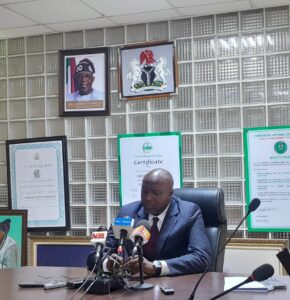
The new Corporate Affairs Commission (CAC) Registrar-General Hussaini Magaji says he uncovered 189 fake companies positioned to defraud well-meaning Nigerians within one week after assuming office.
.
Magaji told newsmen on Tuesday in Abuja that a syndicate of criminals which specialised in operating numerous unregistered companies was arrested by the commission.
”One of the milestone achievement upon my assumption of duty is our ability to burst a ring of criminals that are creating havoc in the commission.
”About 189 fake companies have been identified to be used by these group of persons to secure lands.
”We discovered that these non existing entities collaborate with lawyers who claim to be accredited agents with the commission.
”They collaborate with some staff of the Abuja Geographical Information System, (AGIS), manage their way to make applications at the AGIS and take priority over existing applications.
”With the collaboration of security agents we arrested the suspect who have volunteered some informations,” he said.
He said the suspect was arrested due a complain from the FCTA asking the commission to verify some applications made by some entities.
He said upon findings, the commission discovered that the companies were not even in existence.
”The nature of their crime is that they create a fake entity and apply for land at the FCTA and maneover their way to have a priority application over an existing application.
”To take over the land and they have succeeded severally in the past.
The CAC scribe then reiterated his commitment to deter others from engaging in such act.
On plans for the Commission, Magaji said more efforts would be geared towards increasing revenue for the Commission.
The registrar- general said upon his assumption to duty, he came up with some agendas among which is the human capital development.
”I think this is essential to the discharge of the responsibilities of any staff in the commission and we are taking it seriously.
”Followed by the welfare of staff; this is one of the issues we met in the commission that is lingering and creating havoc in the commission.
”So we have plans to address it as soon as possible; we have set agenda and will discuss it in our next management meeting,” he said.
The CAC boss however enjoined the staff to also ensure to play their part towards moving the organisation forward even as the management was making moves to do theirs.
On ease of doing business, he said itvwas one of the priorities of the President Bola Tinubu’s administration and the Commission would work at ensuring that.
”That is one of the reasons why we are not talking about reviewing charges. One of the key things we will also do is to further simplify the process if registration,”he said.
The News Agency of Nigeria (NAN) reports that Magaji was appointed as the registrar-General of the Commission on Oct. 13.(NAN)

By Tony Obiechina, Abuja
The Federal Government has reaffirmed its commitment to strengthening Nigeria’s bilateral relations with Germany, with renewed focus on economic cooperation, investment promotion, energy partnerships, and the effective implementation of existing agreements.
Minister of Budget and Economic Planning, Senator Abubakar Atiku Bagudu, made this statement during a visit to the Ministry in Abuja on Monday by the Ambassador of the Federal Republic of Germany to Nigeria, Stefan Rössel.
The minister welcomed the ambassador and his delegation, expressing Nigeria’s appreciation for Germany’s longstanding partnership and support for the country’s economic reform programme, particularly in the early stages of implementation.
He recalled that when German Chancellor Olaf Scholz visited Nigeria, the Federal Government was pursuing significant economic reforms that required support from international partners, including Germany, the World Bank, the International Monetary Fund and the European Union.
The minister said Germany’s support has contributed to Nigeria’s progress in its reform efforts, adding that the country remains grateful for the cooperation and assistance it has received from its development partners.
He also acknowledged Germany’s role in facilitating high-level engagements between the two countries, particularly in trade, investment and energy cooperation, noting that discussions during the Nigerian President’s visit to Germany advanced talks on key energy agreements.
Senator Bagudu further commended Germany’s commitment to multilateral cooperation and international engagement, emphasising the importance of sustained partnerships to address evolving global economic and political challenges.
He noted that Nigeria and Germany had built a strong foundation for bilateral cooperation over the years, with significant opportunities to expand their partnership in areas that support economic growth and development.
The minister disclosed that discussions had covered cooperation involving €25 million and €300 million in export credit guarantees, identifying these as important areas for continued engagement as Nigeria seeks to expand investment opportunities and strengthen its capacity to utilise available resources effectively.
According to him, Nigeria’s reform efforts have created an opportunity to place greater emphasis on attracting investment, strengthening productive capacity, and translating international partnerships into tangible economic outcomes.
He assured the German ambassador that the ministry was prepared to work closely with the German government and its relevant institutions to deepen bilateral relations and broaden areas of mutual interest.
Earlier, Ambassador Rössel expressed appreciation for the warm reception he received, describing the relationship between Nigeria and Germany as strong and longstanding.
The ambassador, who arrived in Nigeria a few weeks ago, reaffirmed Germany’s commitment to building on the partnership’s achievements and to exploring opportunities for further cooperation.
He acknowledged that both countries were operating in an increasingly complex global environment characterised by evolving strategic, political and economic challenges.
Despite these circumstances, Ambassador Rössel expressed confidence that the longstanding relationship between Nigeria and Germany would provide a solid foundation for addressing emerging issues and sustaining mutually beneficial cooperation in the years ahead.
He also welcomed the ministry’s readiness to continue working with Germany, noting the importance of maintaining established partnerships while adapting to evolving circumstances.
In her remarks, the Minister of State for Budget and Economic Planning, Dr Doris Uzoka-Anite, congratulated Ambassador Rössel on his appointment, welcomed him to Nigeria, and expressed the ministry’s readiness to collaborate with him and with relevant German agencies.
She emphasised the importance of translating bilateral agreements and shared commitments into practical outcomes, noting that effective implementation remained critical to achieving the partnership’s objectives.
Dr Uzoka-Anite assured the ambassador that the ministry would continue to facilitate collaboration and support efforts to ensure joint initiatives progressed efficiently and delivered meaningful results.
The Permanent Secretary of the Federal Ministry of Budget and Economic Planning, Dr Deborah Odoh, also welcomed the German delegation, describing Germany as a reliable partner whose technical expertise, knowledge exchange and experience had contributed to Nigeria’s development.
She said the ministry expects the ambassador’s tenure to create further opportunities to strengthen cooperation and to advance the longstanding relationship between the two countries.
The courtesy visit reaffirmed Nigeria and Germany’s shared commitment to sustaining bilateral engagement, deepening economic cooperation, and exploring opportunities for expanded investment and development collaboration.

The Nigerian Export Promotion Council (NEPC) says exporters in Imo generated a total of 1,244,095 dollars as proceeds from export trade in 2025.
The Imo Coordinator of the council, Mr Anthony Ajuruchi, disclosed this during a follow-up engagement with cocoa farmers in the state on Thursday in Owerri.
50 cocoa farmers and exporters in Imo received 30 cocoa seedlings each in 2025 as part of interventions to boost production for export.
Ajuruchi said the amount was derived from proceeds of both formal and informal export transactions carried out by the farmers within the 2025 fiscal year.
He commended the Executive Director of NEPC, Mrs Nonye Ayeni, and the management team for their support and commitment to the growth of the export market in Imo and across the country.
According to him, the council recorded notable achievements in 2025, including the organisation of capacity-building programmes on non-oil export, product packaging and labelling.
“In addition to our interventions for cashew farmers, we conducted trainings on product development and adaptation, export contracts, market penetration, product certification and export documentation procedures.
“We also trained about 600 exporters and small and medium-scale enterprises,” he said.
Ajuruchi said the engagement with the cocoa farmers was aimed at obtaining feedback and brainstorming on strategies to increase production and export volume in 2026.
One of the beneficiaries, Mrs Sophia Orji, said the cocoa seedlings she received were doing well and had started fruiting after 17 months.
Another farmer, Mrs Mary Okeke, said her cocoa plants were thriving and appealed to NEPC to extend similar support to farmers during the rainy season.
Also speaking, Mr Canice Nze, Director of Produce in the Imo Ministry of Trade, Commerce and Investment, urged the farmers to register with the ministry to enable them benefit from cooperative structures and access possible government grants. (NAN)
By David Torough, Abuja
In line with the consumer-focused objectives of the Nigerian Communications Commission (NCC) and the Central Bank of Nigeria (CBN), the two regulators have drawn up a framework to address consumer complaints arising from unsuccessful airtime and data transactions during network downtimes, system glitches, or human input errors.
The framework is the outcome of several months of engagements involving the NCC, the CBN, Mobile Network Operators (MNOs), Value Added Service (VAS) providers, Deposit Money Banks (DMBs), and other relevant stakeholders.
According to the NCC, these engagements were prompted by a rising incidence of failed airtime and data purchases, where subscribers were debited without receiving value and experienced delays in resolution.
“The Framework represents a unified position by both the telecommunications and financial sectors on addressing such complaints. It identifies and tackles the root causes of failed airtime and data transactions, including instances where bank accounts are debited without successful delivery of services. It also prescribes an enforceable Service Level Agreement (SLA) for MNOs and DMBs, clearly outlining the roles and responsibilities of each stakeholder in the transaction and resolution process,” a statement by Head of Public Affairs of NCC, Nnen Ukoha said.
Under the new framework, where a purchaser is debited but fails to receive value for airtime or data—whether the failure occurs at the bank level or with an NCC licensee—the purchaser is entitled to a refund within 30 seconds, except in circumstances where the transaction remains pending, of which the refund can take up to 24 hours.
The framework further mandates operators to notify consumers via SMS of the success or failure of every transaction. It also addresses erroneous recharges to ported lines, incorrect airtime or data purchases, and instances where transactions are made to the wrong phone number.
Director of Consumer Affairs at the NCC, Mrs. Freda Bruce-Bennett in a comment on the development said the framework also establishes a Central Monitoring Dashboard to be jointly hosted by the NCC and the CBN. According to her, the dashboard will enable both regulators to monitor failures, the responsible party, refunds, and track SLA breaches in real time.
“Failed top-ups rank among the top three consumer complaints, and in line with our commitment to addressing these priority issues, we were determined to resolve it within the shortest possible time,” she said.
“We are grateful to all stakeholders—particularly the Central Bank of Nigeria and its leadership—for their tireless commitment to resolving this issue and arriving at this framework, and for ensuring that consumers of telecommunications services receive full value for their purchases.
“So far, pending the approval of management of both regulators on the framework, MNOs and banks have collectively made refunds of over N10 billion to customers for failed transactions” she explained .
Mrs. Bruce-Bennett further noted that implementation of the framework is expected to commence on March 1, 2026, once the two regulators have made final approvals, and technical integration by all MNOs, VAS providers and DMBs is concluded.



Economic Independence: CDS Empowers Veterans with Skills
ShareThe Chief of Defence Staff (CDS), Gen. Olufemi Oluyede, has reaffirmed the commitment of the Defence Headquarters (DHQ) to improving...

Beyond 23 Per Cent MPR, Should CBN Reconsider 45 Per Cent CRR to Unlock Credit?
ShareBy Blaise Udunze The last Monetary Policy Committee (MPC) meeting of the Central Bank of Nigeria (CBN) was its 307th...
Shame of a Nation: Cacophony Trails Igbokoba Naf Aircraft Crash
ShareThe tragic crash of a Nigerian Air Force (NAF) ATR-42 aircraft, registration number NAF 931, in the swampy terrain of...
CBN: Nigeria’s Foreign Reserves hit $58.81bn, Highest in 18 Years
ShareBy Tony Obiechina Abuja Nigeria’s foreign exchange reserves rose to $58.81 billion on October 12, 2026, their highest level since...

INEC Engages PWDs, Reaffirms Commitment to Inclusive Electoral Process
ShareThe Independent National Electoral Commission (INEC) has restated its commitment to an inclusive electoral process. The Resident Electoral Commissioner (REC)...


2027: Governance Won’t Take Back Seat to Campaigns –Tinubu
SharePresident Bola Tinubu has assured Nigerians that governance will not take a backseat to electioneering ahead of the 2027 presidential...


NYSC DG Task Corps Members on Safety, Networking
ShareFrom Mike Tayese, Yenagoa The Director-General of the National Youth Service Corps (NYSC), Brigadier General O. O. Nafiu, has urged...

Nigeria, EU, Euro Bank Sign €14m Grant Agreement on Fibre-Optic Infrastructure
ShareBy Tony Obiechina, Abuja The Federal Government of Nigeria, the European Union (EU) and the European Bank for Reconstruction and...


Tinubu: I Won’t Abandon Governance for 2027 Campaigns
ShareBy Tambaya Julius, Abuja President Bola Ahmed Tinubu has said he will not allow political campaigns ahead of the 2027...
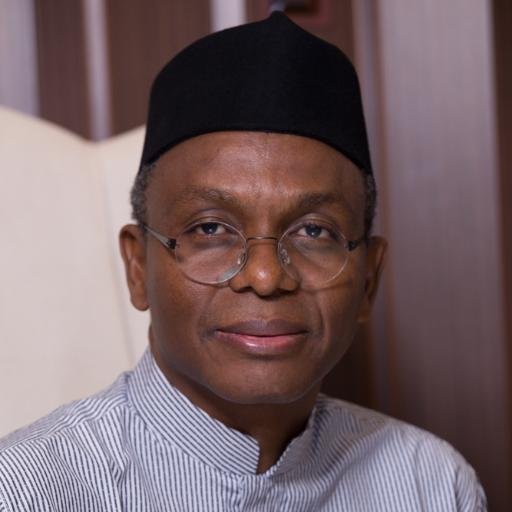
El-Rufai, Associates Earmark $600,000 to Pay EFCC Officials, DSS Tells Court
ShareBy Tambaya Julius, Abuja A forensic investigator with the Department of State Service (DSS), Segun Kayode, on Tuesday told a...