
OPINION
Can Nigeria Get it Together Again?

By Menyanga Abu
Many would tend to ask if Nigeria has ever gotten it together before. This question is not in that direction and not that Nigeria is so divided that we need to come together to make things work, far from that. The question is how would we put together the broken security, the unstable economy, get rid of the insurgencies, bring corruption down to the barest minimum, bring down to zero level the sense of hopelessness and despairs, do away with ethnic nationality syndrome, traditions, language, religion and stimulate that sense of national identity and consciousness in the country.
Gone are the days when people with just few naira in their pockets troop to their villages for week-ends after a week’s run around and hectic schedules of duty in the cities. Those were the days when one’s vehicle had problem on the high ways and one can just pack the motor by the road side even in the middle of the night and trek to any nearby village without the fear of kidnapping, attacks by unknown and known gun men, Fulani herders, armed bandits and what more your vehicle would be safe any time you would want to come to repair it. How many of our political leaders can boast of going to their villages or constituents to spend some days with those who elected them even with their crew of security personnel?Robert Rotberg, the founding director of the Harvard Kennedy School’s programme of intrastate conflicts and president Emeritus of the world peace foundation once posited that the first steps to restoring stability and security of any nation in the face of sickening and uncontrollable violence is recognizing that the government has lost or is losing control. Losing control includes losing the monopoly of violence. But as long as the government does not come to term with the hard fact that it has lost or losing control of the security of life and property, there is no way it will think of restoration. We thank God the present administration understands that it is losing the monopoly of violence and it is doing everything possible to contain the multi-faceted security challenges facing Nigeria. The country needs to work hard, doubling its efforts at restoring security and economic development so as not to fall into the category of failed or collapsed nations. Nigeria many believe has been teetering on the cliff of failure and the only solution to prevent its fall into failed or collapsed nation is for all of us, both the leaders and the followers to change our attitudes and our ways of doing things, create jobs for the teeming unemployed youths, combat and view corruption as another form of insurgency that needs to be brought down. We should do everything possible not to fail our founding fathers who handed to us this beautiful edifice called Nigeria to nurture and steer it with utmost care as shining luminosity of Africa.
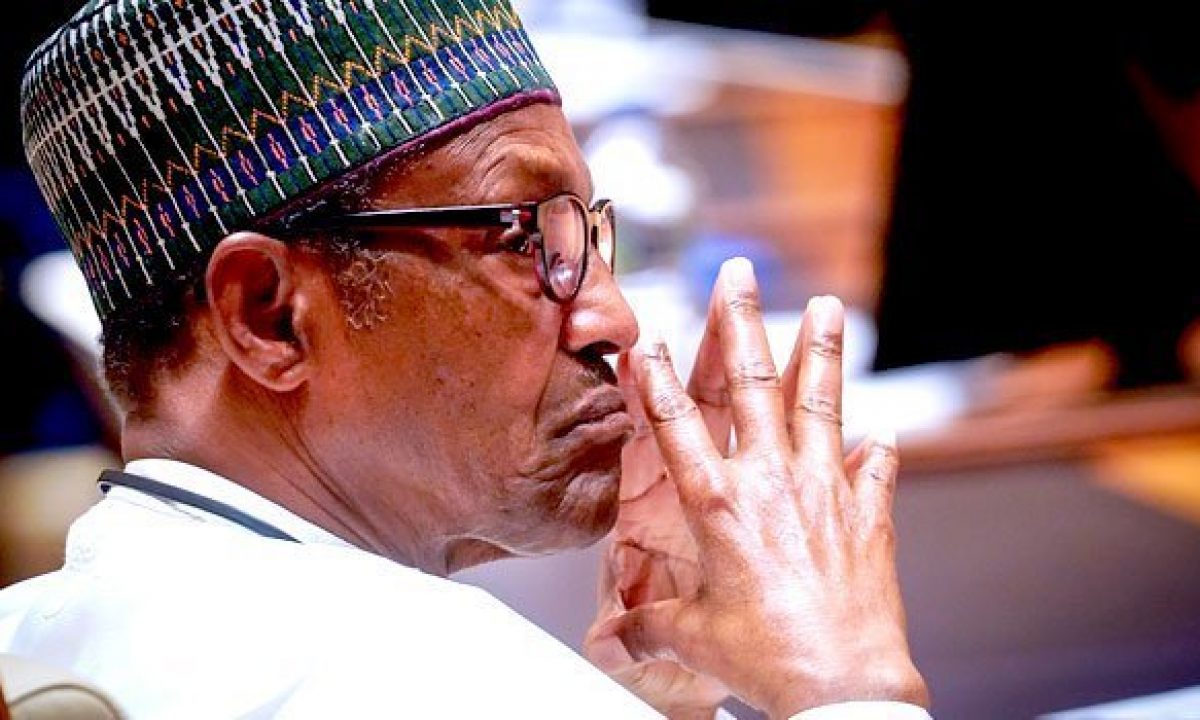
It is very important for the world to equally understand that any spillover from Nigeria’s failure will adversely affect the security of the whole world considering the strategic position and roles Nigeria plays in the world schemes of things and not only African sub-region. Along this line, advanced countries have some critical roles to play in helping Nigeria out of these burdens of insecurity. This administration has put in place various strategies to contain and eventual overcoming the numerous insurgencies but still needs to evolve concrete and workable strategies that will enable it halt the activities of these insurgencies. This becomes imperative so as to once again get things together in order to restore security and that sense of safety to the citizens as well as preventing the nation from spiraling into failure and despairs. This requires committed leaders that are ready and determine to drive home the implementation of viable strategies without resorting to corruption, fraud and embezzlement. Nigeria has basket full of problems to go round, outstanding among them are non-committed and self-serving political leaders, insecurity and corruption. Corruption, poverty and inequality are however some of the attributable factors of insurgencies and insecurity. Corruption in other clime is considered serious crime or offence against the state and trhe offenders are severely punished. In Japan for example corrupt person kill themselves, in China corrupt person are executed, in Europe they are imprisoned but in Nigeria corrupt people not only present themselves for election but are also given chieftain titles and other accolades, now tell me when we will get out of this. We need to put together those solid anti-corruption strategies that will see us putting corruption behind for us to move forward. But can we ever get it together again, how and when and under whose leadership? We were hoping on Buhari but the defective system we operate in has made things so difficult for the president to successfully wade through the gamut of challenges.
Nigeria is at the cross road today because of the failure of our society to identify with some or all parts of objective social realities. For Nigeria to get things together again we need to build that strong national consciousness and identity as they stand to enhance physical security, good governance, facilitate economic development, foster trust among the citizens, excite support for strong social safety nets as well as ensuring liberal democracy.






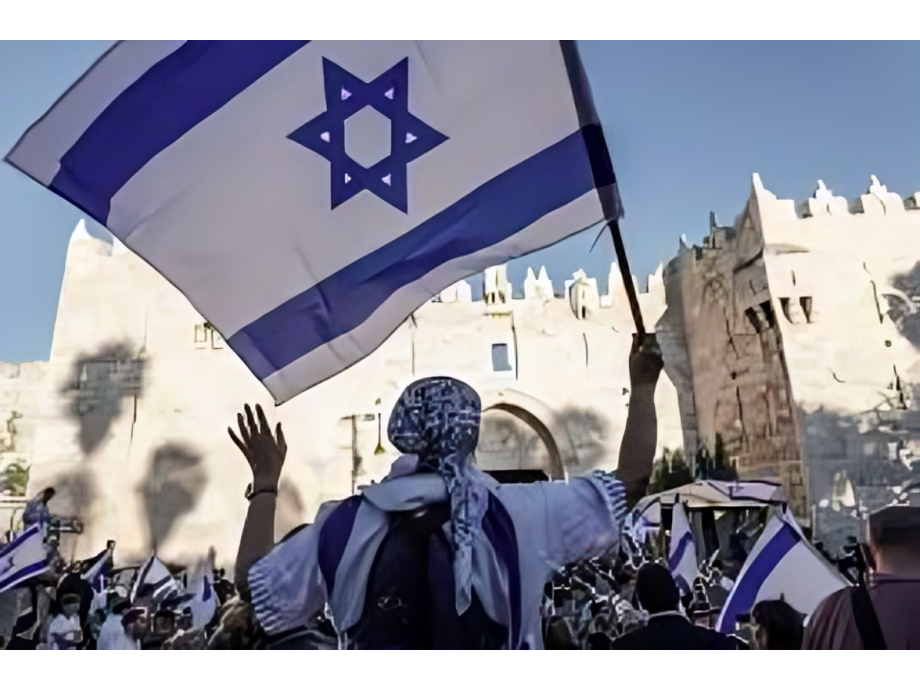
By Fransiscus Nanga Roka, Yovita Arie Mangesti
On 28 February 2026, Israel launched what it called “Operation Lion’s Roar” against Iran, coordinated with a U.S. campaign reportedly named “Operation Epic Fury.” Within hours, Iranian state media confirmed that Supreme Leader Ayatollah Ali Khamenei was dead, killed in strikes on Tehran that also hit senior leadership and key military infrastructure—followed by Iranian missile and drone retaliation across the region.
This is not merely another Middle East escalation. It is a strategic decapitation strike against the core of the Islamic Republic’s authority—an act that, whatever its tactical logic, carries the legal and political DNA of a war that can metastasize faster than diplomacy can react.
The other legal questions involving this conflict: was it reasonably necessary in the circumstances? Did a proportionality of means match the threat posed?
Under Article 2(4) of the UN Charter, states must refrain from the threat or use of force against another state’s territorial integrity or political independence—unless force is justified by Security Council authorization or self-defense (Article 51). In the public reporting so far, there is no indication of a Security Council mandate; hence the legal center of gravity becomes self-defense.
Washington and Jerusalem appear to be positioning the operation as a preemptive strike against “imminent threats” tied up with missiles, nuclear risk, and regional armed networks. That phrasing means something—but in international law cannot simply represent self-defense. It entails at least these aspects:
Imminence (the threat is about to materialize, not speculative)
Necessity (no other reasonable way, including diplomacy, could render the threat harmless)
The heavier end of the spectrum is even states friendly to America and Israel would be unyielding. If your justification sounds more like preventing a future capability than stopping an imminent attack, it resembles the controversial doctrine of preventative war. This was widely condemned as not part of the Charter.
Targeting the president: “Assassination” by any other name
The death of Khamenei creates a normative shock that can’t be avoided. International law does not harbor among its otherwise neat principles a clear sentence stating “Never you must target a leader”; instead, legality is created from the surrounding circumstance:
If a State is involved in an armed conflict w another state and the person targeted satisfies enough criteria for being a legitimate military objective (through his function, direct participation, command role), then the attack could in principle be legal—in which case.the principal constraints are those of distinction and proportionality under IHL.
If the operation is not lawfully justified in self-defense (jus ad bellum), then even a very accurate operation becomes an unlawful use of force—making the death of a head of state a symbol intensified by this illegality of warfare, thereby augmenting backfire dynamics.
This is why the strike is strategically “successful” and strategically catastrophic at one time: not only may it weaken decision-making at the top, but it also removes that last psychological ceiling which often keeps adversaries from directly targeting each other’s core leadership.
Proportionality isn’t just about bombs and bombers—it’s about consequences
When assessing IHL proportionality, civilian losses projected against concrete and immediate military advantage are weighed. But here, in a region where oil production facilities and military bases as well as nuclear reactors are likely to be next-door neighbors such judgment takes into account predictable second-order effects: attacks on bases, drones overhead in cities to which they have become accustomed anyway, strikes in the Gulf, panic buying in world energy markets, commercial shipping disrupted.
Certainly, financial reporting and live briefings are already a sign that the Strait of Hormuz has the backing of fear and widening regional strikes are on their way.
Simply put, while knocking out one leader could have the “advantage,” human and economic costs mushroom faster than expected, turning into legal issues of guilt when decision-makers could predict a cascade of damage to noncombatants yet proceeded.
The succession problem: war plus a vacuum equal’s big trouble
AP: Khamenei’s death leaves a power vacuum, and while succession technically lies in the hands of Iran’s Assembly of Experts (AOE) it’s shaped in practice by entrenched security institutions.
This is important because while avoiding escalation requires one end of a conversation, it works best if that party has the power to make decisions and then carry them out. A divided leadership will produce the opposite result: parallel lines of counterattack, misunderstanding, and a race to seem “tough enough” take over as Logos.
The “most dangerous war” isn’t doing the first strike—it’s what happens afterward.
What makes this moment so infinitely dangerous is not only that Iran, America, and Israel are all sending signals in the worst three-hours of nations’ lives. No, what’s even worse is the following:
The U.S. and Israel both end up on a regime change course which they may not be willing or unable to follow through on.
Iran’s factions are led into a cycle of retaliation that politically they cannot get out of.
Once leaders are targeted and killed, war becomes less about deterrence and more about who survives it. It quickly becomes distorted so that neither negotiating nor averting destruction have a serious chance—the three craziest-speeding accelerants of all time.
If Operation Lion’s Roar marks the end of Khamenei’s rule, it could also mark the dawn of a nastier era: a Middle East in which the old rules of setting up matches out of eyesight crumble down, new matches are struck as soon they go public retaliative cycles break no holds barred diplomacy, and there’s nobody confesses they can still control.
By David Ugwunta
At the National Traditional and Religious Leaders Summit on Health held in Abuja on 17th February, attended by President Tinubu, an unexpected institutional fault line surfaced as an Enugu monarch and the Ooni of Ife openly disputed the existence of the Southern Nigeria Traditional Rulers Council.
Speaking at the health summit, the revered Eze Ogbunaechendo 1 of Ezema Olo in Ezeagu Local Government Area of Enugu State, a former Chairman of the Enugu State and South-East Council of Traditional Rulers, seasoned diplomat, and elder statesman, challenged references to a Southern Nigeria Traditional Rulers Council.
He stated: “Now again, they were talking about the Southern Traditional Rulers Committee on Health, and the eminent Professor Pate was saying that this will be an annual event – what we are doing today – if I heard him correctly.
” “The truth of the matter is that there is nothing like a Southern Traditional Rulers Council. If you come here and give money to people on that basis, it is not correct.” “The South is not the North. We have our systems. We need unity in diversity.” “So, if you want to deal with us, deal with us in the South East.” “If you have resources for us, give it to us. Don’t give it to people who come and say they represent a traditional rulers’ council.” “Democracy is a representative government, and anybody who goes to present himself without his people is not democratic or traditional. So, get it right.”The interposition was not casual, it was categorical, yet it stands in sharp contrast to what occurred barely eighteen months earlier, when on 30th July 2024, the inauguration of Southern Monarchs’ Council occurred. The event hosted by Governor Hope Uzodinma, was presided over by President Tinubu, represented by the Secretary to the Government of the Federation, George Akume, as monarchs and political dignitaries gathered under the banner of southern regional cohesion.
Months later, a harder question emerged: Does the Council exist beyond ceremony? It was inaugurated with political and symbolic weight; does it exist institutionally? Public inauguration grants visibility; collective consent grants legitimacy.
The dissent exposes the Council’s core vulnerability. When a former South-East Council Chairman declares that “there is nothing like a Southern Traditional Rulers Council,” the matter shifts from organisational to existential.
Membership is very optional, Ooni professed. If membership is optional, can unity or regional cohesion, by definition, be optional?
Southern Traditional Rulers Council
The inauguration in July, 2024 saw the respected Ooni of Ife, Adeyeye Enitan Ogunwusi, appointed as chairman, with Cletus Ilomuanya and Jaja of Opobo as co-chairmen, and Benjamin Ikenchuku Keagboreku as secretary. The intent was unmistakable: To create a coordinated Southern platform comparable, though not identical, to the more centralised structures historically associated with Northern traditional leadership.
During the inauguration, Governor Uzodinma explicitly urged collaboration with northern counterparts, and support for President Tinubu, while George Akume reaffirmed the president’s respect for traditional rulers as custodians of Nigeria’s heritage. The Ooni of Ife, Ogunwusi framed it as a new era of unity across the Southern protectorate of the country.
Yet, at inauguration, while some southern governors were represented, the absence of several others raised quiet questions about the breadth of consensus underpinning the initiative. Absences could be linked to limited consultation, concerns over the council’s inclusivity, and sub-regional balance. Similarly, the absence of notable traditional rulers reflected reservations about process, political perceptions, and representation.
Institutions are sustained by consent and validated by acceptance. What appeared, in July 2024, as a historic consolidation was, in February 2026, openly contested. The public rejection by an elder statesman, Igwe Ambassador LOC Agubuzu, whose career reflects a rare fusion of ancestral authority and modern diplomacy, did not merely contradict a claim. It punctured the presumption of collective mandate, shifting the issue from symbolism to structure.
The Import of Agubuzu’s Interposition
Igwe Agubuzu’s remarks deserve serious engagement, not dismissal. When he warned against individuals presenting themselves as representatives of Southern traditional rulers without broad consent, he was not merely contesting nomenclature. He was defending legitimacy; emphasising that the South is not the North, that its strength lies in diversity, and that democracy, whether traditional or modern, rests on representation grounded in the people.
These are not trivial concerns. They echo long-standing anxieties about the centralisation of traditional institutions and sub-regional dominance. They reflect a historical wariness of imposed structures masquerading as consensus.
Yet, diversity without coordination does not automatically produce strength. When respected monarchs deny the existence of a Council inaugurated by the President of the Republic before him, the issue is not opposition, but rather, structural ambiguity. Such a council cannot function in a state of suspended definition.
Why Optional Membership Undermines the Council
First, authority cannot be selective. A council that some of the most prominent traditional rulers feel free to ignore will never command national, let alone international respect, particularly in a political environment where access and voice matter.
Second, legitimacy requires completeness. Governments engage more seriously with institutions that demonstrably represent the full spectrum of leadership. Optional membership creates parallel voices, rival claims, and confusion over representation.
Third, conflict resolution demands comprehensiveness. Traditional rulers remain critical actors in mediating identity tensions. A partial council lacks the moral authority to intervene across sub-regions.
Fourth, cultural preservation is collective work. No single monarch or bloc can safeguard Southern Nigeria’s diverse traditions alone. A coordinated platform prevents selective recognition and marginalisation.
Finally, legacy matters. Institutions endure only when they are cohesive. A voluntary council risks becoming ceremonial, useful for optics, politics and symbolism; but fragile in substance and importance.
Politics, Acknowledged, But Not Determinative
It would be naïve to ignore the political undertones surrounding the Council’s formation. Governor Hope Uzodinma played a central role in the inauguration, signalling alignment with President Bola Ahmed Tinubu and the ruling All Progressives Congress. The presence of Dapo Abiodun, chairman of the Southern Nigeria Governors’ Forum, and Mai Mala Buni, underscored the inauguration event’s political weight. However, institutions of consequence must outlive political moments.
If the Southern Traditional Rulers Council is perceived primarily as a political artefact, it will wither with shifting alignments. If, however, it evolves into a rule-bound, inclusive, and representative institution, it can transcend its origins.
The burden now rests with the appointed chairman, the Ooni of Ife. His role is both symbolic and strategic. The surrounding contestation demands engagement, not assumption; persuasion, not proclamation. Direct dialogue with dissenting voices is essential. So is a formal charter defining representation, decision-making, membership obligations, rotational leadership, sub-regional balance, and structured joint programmes.
The Southern Nigeria Traditional Rulers Council was inaugurated with promise. However, promise does not create unity. Structure does. The public denial of its existence by a respected monarch is not merely opposition; it is a warning about the cost of optional unity. Legitimacy cannot be assumed. It must be earned through inclusivity, clarity, and shared commitment.
If Southern Nigeria is to speak with authority in Nigeria’s evolving governance architecture, its most revered institutions (traditional) must be binding as well as symbolic, representative as well as ceremonial. Unity cannot be optional. It must be institutional.
David Okelue Ugwunta, a public policy and economic planning specialist, is a senior adviser with Thoughts & Mace Advisory.

By Abiemwense Moru
When Chioma Ezeakonobi, a mental health advocate and author, welcomed her second child, what should have been a joyful season gradually dissolved into anxiety, exhaustion and persistent sadness.
However, rather than surrendering to the silence that often surrounds maternal mental health struggles, she confronted postpartum depression and found a path to recovery.
Ezeakonobi said her experience began unexpectedly after childbirth, marked by tearfulness, fatigue, anxiety and emotional withdrawal.
She said the feelings confused her because motherhood is often portrayed as a time of unbroken happiness.
According to her, postpartum depression remains widely underdiagnosed and misunderstood across cultures, largely because societal expectations discourage women from speaking honestly about emotional pain after delivery.
“The cycle of silence leaves women to suffer alone,” she said, urging mothers to speak openly so they can access professional care, family support and reassurance during recovery.
Indeed, global health authorities affirm that postpartum depression is neither rare nor a personal failing.
The World Health Organisation describes it as a common but treatable mental health condition that can affect women after childbirth and, if left unaddressed, may impair maternal wellbeing and child development.
Available estimates indicate that about one in seven new mothers may experience postpartum depression, with symptoms including prolonged sadness, frequent crying, guilt, anxiety, sleep disturbances and difficulty bonding with the baby.
In Nigeria, studies suggest prevalence rates ranging between 10 per cent and 36.5 per cent, underscoring the need for routine screening, early intervention and accessible maternal mental health services within primary healthcare systems.
Furthermore, mental health professionals warn that depression is not limited to mothers alone but is increasingly affecting Nigerians across age groups and professions, often progressing silently until productivity, relationships and emotional stability begin to decline.
Dr Michael Nubi of the Association of Resident Doctors at the Federal Neuro-Psychiatric Hospital, Yaba described depression as “a silent killer” that thrives when emotional distress is ignored.
He identified common triggers to include chronic stress, financial hardship, sleep deprivation, childhood trauma, job loss, divorce and persistent negative thinking.
According to him, depression often deepens in environments shaped by intense societal pressure and unrealistic expectations, thereby making emotional self-regulation and supportive relationships essential protective factors.
Similarly, mental health advocate and media entrepreneur Chude Jideonwo has shared his personal struggles publicly, adding momentum to conversations that challenge stigma and encourage help-seeking behaviour.
Mental health organisations are also intensifying awareness.
The Cope and Live Mental Health Awareness Foundation notes that depression, anxiety and substance misuse frequently lead to social isolation, which in turn worsens emotional distress.
Rev. Chukwudiebube Nwachukwu, Executive Director of the foundation, explained that fear of judgment, trauma, illness and rejection often push affected individuals away from social interaction, deepening loneliness and eroding self-esteem over time.
He advised gradual reconnection through volunteerism, hobbies, faith-based engagement, outdoor activities and professional counselling as practical steps toward rebuilding confidence.
Dr Salawu Abiola, also of the Federal Neuro-Psychiatric Hospital, Yaba, emphasised that Nigeria still faces gaps in mental health data, calling for stronger collaboration between government and private institutions to generate evidence for policy and service delivery.
He warned that depression is rising among young people as well, fuelled by social media pressures, economic uncertainty, environmental stressors and relationship challenges.
According to him, digital platforms often promote unrealistic images of success and perfection, encouraging unhealthy comparisons that can trigger anxiety and depressive symptoms.
At the community level, Mrs Abimbola Agbebiyi, Founder of the Tabitha-Abimbola Foundation, said widows and single mothers face heightened vulnerability due to compounded grief, financial strain and caregiving responsibilities.
She noted that targeted therapy sessions and support networks help such women feel seen, valued and emotionally supported during isolating periods.
Clinical psychologist Marcellinus Aguwa urged early help-seeking, stressing that stigma and cultural attitudes continue to discourage many Nigerians from accessing timely mental healthcare.
Experts agree that recovery is strongly linked to awareness, family support and access to professional care; factors that shaped Ezeakonobi’s survival story.
Reflecting on her journey, she said knowledge of the condition helped her regain control, while the support of her husband and family played a critical role in her healing.
Her experience later inspired her to write ‘Navigating Postpartum Depression’, a book that documents her story and amplifies the voices of other mothers who endured similar struggles.
Ultimately, across clinical insights and lived experiences, stakeholders say one message stands clear.
They emphasise that breaking the silence around postpartum depression can transform suffering into survival, restore dignity to motherhood and strengthen families and communities alike.(NAN)

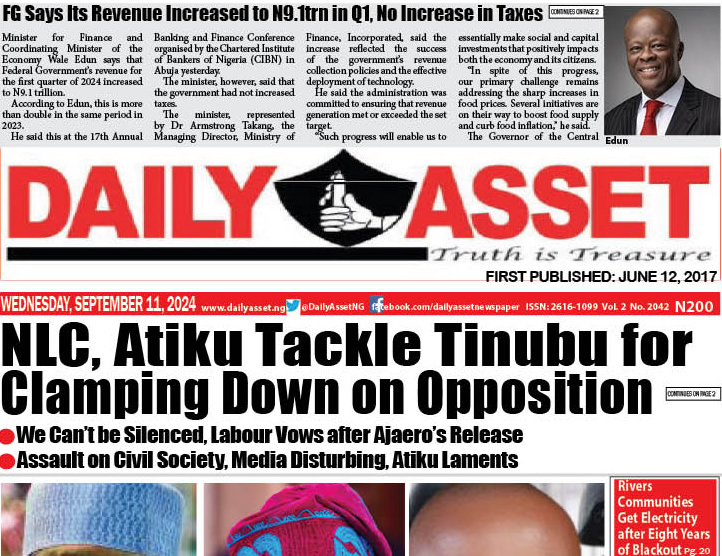
From Pain to Enterprise: How Chibok Mothers are Rebuilding through Farming
ShareBy Joan Odafe In the quiet farmlands of Chibok in northeastern Nigeria, the steady rhythm of women cracking groundnuts and...
Jesse Jackson and the Architecture of Hope: Why Nigeria Needs Movements, Not Moments
ShareBy Ebuka Ukoh If Nigeria is serious about reform, it must study not only who the late Right Reverend Jesse...


Why e-Transmission Dust Must Settle Before 2027
ShareBy Ebuka Ukoh Nigeria is once again arguing about whether election results should be transmitted electronically from polling units in...


ADC Knocks Akpabio for Celebrating Passage of Controversial Laws
ShareThe African Democratic Congress (ADC) has lashed out at the Senate President, Godswill Akpabio over his submission that he gets...

Labour Party State Chairmen Kick Against Rescheduled Congress
ShareBy Mike Odiakose, Abuja The Labour Party State Chairmen Forum on Monday called on the Independent National Electoral Commission (INEC)...

Obasanjo Commends Nigeria for Hosting of 2027 Intra-African Trade Fair
ShareFormer President Olusegun Obasanjo has commended Nigeria for securing the hosting rights for the fifth edition of the Intra-African Trade...
SDP NEC Ratifies Gombe as National Chairman
ShareThe National Executive Committee of the Social Democratic Party (SDP) has ratified the appointment of Dr Sadiq Gombe as the...


PDP Crisis Should End Now, Gbenga Hashim Warns
ShareBy Mike Odiakose, Abuja Following the judgment of the Court of Appeal which technically sacked the leadership of the two...

NIMET Cautions Farmers on Early Planting Due to Deceptive Feb. Rains
ShareThe Nigerian Meteorological Agency (NiMET) has cautioned farmers against early planting of crops to avoid drought, saying the recent rainfall...


Otu Pledges Collaboration with Amphibious Training School
ShareFrom Ene Asuquo, Calabar Cross River State Governor, Bassey Otu, has reaffirmed his administration’s commitment to deepened collaboration with the...