
BUSINESS
Capital Importation Jumps by 380 Per Cent to $6bn in Q3 2025 – NBS

Nigeria’s capital importation surged to $6.01bn in the third quarter of 2025, representing a 380.16 per cent increase compared to $1.25bn recorded in the corresponding period of 2024, the National Bureau of Statistics has said.
The NBS disclosed this in its latest Nigeria Capital Importation (Q3 2025) report published on its website at the weekend.
The report showed that capital inflows also rose on a quarter-on-quarter basis, climbing by 17.
46 per cent from $5.12bn recorded in the second quarter of 2025 to $6.01bn in Q3.“In Q3 2025, total capital importation into Nigeria stood at $6.
01bn, higher than $1.25bn recorded in Q3 2024, indicating an increase of 380.16 per cent.“In comparison to the preceding quarter, capital importation increased by 17.46 per cent from US$5.12bn in Q2 2025,” the report read.
A breakdown of the data indicated that portfolio investment dominated inflows during the period, accounting for $4.85bn or 80.70 per cent of the total capital imported.
Other investments followed with $864.57m, representing 14.37 per cent, while foreign direct investment recorded the least with $296.25m, accounting for 4.93 per cent of total inflows.
Further details from the report showed that, within portfolio investment, money market instruments attracted $2.95bn, while bonds accounted for $1.58bn.
Equity investment under the portfolio category stood at $328.10m.
Under foreign direct investment, equity inflows amounted to $281.61m, while other capital recorded $14.64m.
Sectoral analysis revealed that the banking sector attracted the highest inflow at $3.14bn, representing 52.25 per cent of total capital imported in the quarter.
The financing sector followed with $1.86bn or 30.85 per cent, while the production/manufacturing sector recorded $261.35m, accounting for 4.35 per cent.
Other sectors that received notable inflows included electrical ($244.86m), telecommunications ($208.51m), and shares ($94.89m). Trading attracted $80.94m, while real estate recorded $61.07m.
Lower inflows were recorded in agriculture ($24.67m), information technology services ($11.55m), and transport ($5.23m). Oil and gas received $4.60m, while construction attracted $2.88m.
Public administration and defence accounted for $0.35m, brewing $0.10m, marketing $0.06m, arts, entertainment and recreation $0.04m, and health and social work $0.02m.
An analysis by banks showed that Standard Chartered Bank Nigeria Limited received the highest capital inflow at $2.12bn, representing 35.17 per cent of the total.
Stanbic IBTC Bank Plc followed with $1.79bn or 29.75 per cent, while Citibank Nigeria Limited recorded $561.40m, accounting for 9.33 per cent.
Access Bank Plc received $385.03m, while Rand Merchant Bank recorded $306.92m. Ecobank Nigeria Plc attracted $299.91m, and First Bank of Nigeria Plc recorded $254.29m.
Zenith Bank Plc received $94.89m, Guaranty Trust Bank Plc $80.12m, and Fidelity Bank Plc $56.25m.
First City Monument Bank Plc accounted for $49.27m, while United Bank for Africa Plc received $8.39m. Sterling Bank Plc recorded $3.10m, FSDH Merchant Bank Limited $2.87m, Union Bank of Nigeria Plc $2.30m, and Titan Trust Bank Ltd $1.94m.
Polaris Bank recorded $1.73m, Wema Bank Plc $1.16m, Keystone Bank Ltd $0.22m, and Providus Bank Plc $0.16m.
By country of origin, the United Kingdom emerged as the largest source of capital inflows into Nigeria during the quarter, accounting for $2.94bn or 48.80 per cent of total capital imported.
The United States followed with $950.47m, representing 15.80 per cent, while the Republic of South Africa accounted for $773.95m or 12.87 per cent.
Other notable sources included Mauritius with $451.46m and the Netherlands with $282.90m.
The NBS noted in its methodology that the data were provided by the Central Bank of Nigeria and capture fresh capital entering the economy as reported by commercial banks, excluding other components of foreign direct investment, such as reinvested earnings.
The Federal Ministry of Industry, Trade and Investment unveiled plans to deepen trade facilitation and tighten policy execution in 2026, following a sharp rebound in capital inflows and export performance in 2025.
According to the FMITI Outlook 2026, the ministry will focus on sustaining reform momentum while strengthening implementation frameworks to translate consolidation into sustained growth, exports and jobs.

By Tony Obiechina, Abuja
The Federal Ministry of Finance and the Central Bank of Nigeria (CBN) have formalised a new framework for closer fiscal and monetary policy coordination, in an effort to strengthen economic stability, improve policy consistency and address inflation.
The Minister of Finance and Coordinating Minister of the Economy, Taiwo Oyedele, said the MoU would institutionalise coordination through stronger information sharing, aligned macroeconomic assumptions, consistent forecasts and clearer mechanisms for resolving areas where fiscal and monetary policies could work at cross purposes.
Speaking at the signing ceremony in Abuja, Oyedele said the framework was designed to move coordination beyond personalities and make it a permanent feature of Nigeria’s economic management.
He stressed that while the Ministry and the CBN have distinct mandates and must retain their institutional independence, their policies ultimately affect the same economy and therefore require closer coordination.
He explained that government borrowing has implications for liquidity, interest rates and financing costs, while monetary policy affects government finances.
Exchange rates, tariffs, government spending and agricultural policies also have direct consequences for prices, revenue and economic activity.
Oyedele identified bringing inflation sustainably into single digits as a major focus of the framework, stressing that this could not be achieved through monetary policy alone. He said the Ministry would contribute through disciplined spending, sound cash and liquidity management and more efficient government financing, while fiscal interventions would address structural drivers of inflation, particularly food, energy, imported costs and logistics.
On food inflation, the Minister said the Ministry would work with relevant institutions and state governments to strengthen grain reserves, improve agricultural yields and irrigation, build climate resilience and address farm-to-market infrastructure gaps.
He also ruled out a return to fuel subsidy, saying it would put further pressure on public finances and the naira, while improved foreign exchange stability and tax exemptions on fuel had contributed to moderating prices.
Oyedele said better economic data would also be critical to effective policy coordination, noting that the Ministry was working with the National Bureau of Statistics to expand the quality and range of data available for policy decisions.
Under the new framework, the Ministry and the CBN will also strengthen information sharing on cash positions, financing plans, credit growth and foreign exchange flows. “Better coordination starts with a common evidence base,” he said.
The Minister said recent economic developments showed strengthening confidence in the Nigerian economy, citing a balance of payments surplus of more than $5 billion in 2025 and external reserves of over $54 billion.
He listed increased non-oil exports, declining refined-product imports as domestic refining capacity expands, Nigeria’s return to Frontier Market status and its inclusion in JPMorgan’s new frontier local-currency government bond index.
He, however, stressed that the government’s focus extended beyond short-term portfolio inflows to attracting patient capital that would translate into factories, infrastructure, technology and jobs.
“This required policy consistency and certainty and a regulatory environment that does not impose unnecessary burdens on businesses, while the coordination framework would also take account of the economic consequences of insecurity and illicit financial flows.
Oyedele explained that the Federal Ministry of Finance would continue to drive fiscal discipline, improved liquidity management, stronger transparency and data systems, more efficient financing and reforms aimed at increasing production and easing structural inflation.
“Nigeria has one economy. Fiscal policy cannot succeed without price stability; monetary policy cannot deliver price stability if fiscal policy pulls in the opposite direction,” he said.
The CBN Governor, Olayemi Cardoso, described the signing as a significant step in strengthening Nigeria’s macroeconomic management and economic stability, noting that fiscal and monetary policies are complementary instruments whose combined impact is stronger when they work in harmony.
Cardoso said the MoU did not create a new relationship between the two institutions, which have collaborated for decades on inflation management, debt sustainability, budget financing, exchange rate stability and responses to economic shocks.
Rather, he said, it formalises that longstanding collaboration through structured processes for regular consultation, information exchange and policy coordination.
He said the framework would strengthen cooperation in areas including government cash management, debt issuance planning, liquidity forecasting, macroeconomic analysis and periodic policy consultations.
The CBN Governor added that the timing was particularly important as the CBN advances its transition towards an inflation-targeting framework, whose effectiveness also depends on a supportive fiscal environment.
Cardoso commended Oyedele and the technical teams from both institutions for their roles in bringing the initiative to fruition, reaffirming the CBN’s commitment to sound monetary policy, macroeconomic stability and financial system resilience. He said the strengthened partnership would help build a more stable and resilient economy capable of creating greater opportunities for Nigerians.
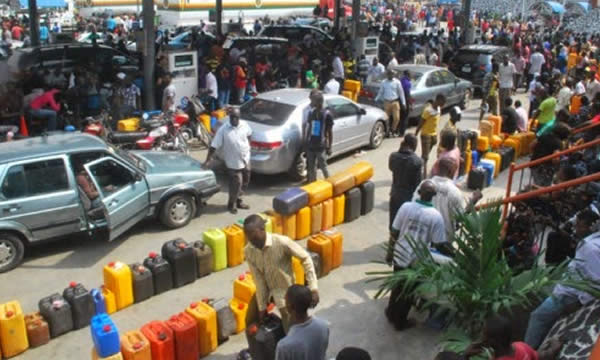
Many motorists, commuters and road transport workers in the Federal Capital Territory (FCT) have expressed concern as petrol prices rise again, pushing up transport fares and household expenses.
The latest increase followed Dangote Petroleum Refinery’s fourth upward review of its petrol gantry price since Aug.
21.The refinery raised the price from N1,265 to N1,350 per litre, an N85 increase, representing 6.
7 per cent.The new price, effective Sept. 12, has triggered fresh pump-price adjustments across filling stations in the FCT.
Checks in Abuja showed that MRS outlets were selling petrol at N1,395 per litre, while NIPCO outlets were selling at N1,430 and Mobil outlets at N1,400.
However, other outlets were selling the product at prices approaching N1,450 per litre, depending on location and prevailing supply costs.
The development had raised concerns among vehicle owners and commuters, with transport operators saying increased fuel costs were putting additional pressure on their businesses.
Udoh Daniel, a motorist in Abuja, described the latest increase as unbearable, saying the rising price of petrol was affecting household finances.
“Imagine buying petrol at N1,414 per litre. My cousin told me that it is selling for N1,450 presently in Dawaki,” Daniel said.
He said the continuous increases were making it increasingly difficult for motorists to maintain their vehicles and meet other financial obligations.
Favour Adeniji, another Abuja resident, said the latest increase was coming at a difficult period for families following the resumption of academic activities.
“Our children have just returned to school, and we are struggling to pay their fees when the petrol price increase was slammed on us.
“This is ill-timed. The government and other people responsible for this are not considerate at all because it has created additional pressure,” she said.
A civil servant, Ali Salisu, also expressed concern over the effect of rising petrol prices on workers whose salaries had not increased in line with the cost of living.
“Salaries are not increasing, yet the price of petrol keeps rising and pushing up the price of everything else.
“This administration is pushing workers and ordinary Nigerians to the edge.
“There is a popular saying that if you chase a goat to a brick wall, it will have no choice but to hit back at you.
“I hope the government is not gradually pushing Nigerians to their limit,” Salisu said.
For commuters, the impact is being felt directly through higher fares on some routes within Abuja and its suburbs.
Commuters from satellite towns and other surrounding communities going to the city centre now spend more on daily transportation than they did before the latest petrol increase.
Commuters travelling from the Masaka-New Nyanya-Ado-One Man Village axis to the city centre said fares had increased from N1,000 to N1,200.
Similarly, commuters from Kubwa, a satellite town to Federal Secretariat, Wuse and Berger now pay N1200, instead of N1000
The additional N200 per trip could translate into thousands of naira in extra monthly expenditure for workers who commute to Abuja every weekday.
Transport workers have also expressed concern that higher fuel costs are reducing their daily earnings because a larger proportion of their revenue is now spent on petrol.
A taxi driver, Salem Ogbe, said operators were caught between increasing fares to cover their expenses and protecting passengers from additional financial pressure.
“I am tired of this job because there is hardly any profit left,” Ogbe lamented.
He said drivers could not increase fares every time petrol prices rose because passengers were also struggling with higher living costs.
According to him, transport operators were therefore being forced to absorb part of the increase, despite the additional cost of fuelling and maintaining their vehicles.
“The situation is particularly challenging for drivers who cover long distances daily and consume significant quantities of petrol before returning home,” he said.
A private vehicle owner, Collins Ejiga, said the increase had eaten deep into his savings and was affecting his livelihood.
“When the pump price was N1,265 per litre, I was buying 50 litres for #63,250, which lasted me for a week.
“With the latest increase to N1,450, I am buying the same quantity for N72,500, which is about a N10,000 increase. The pressure is becoming unbearable,” Ejiga lamented.
Some motorists said that to mitigate the pressure, they were reducing unnecessary journeys, combining multiple errands into single trips and considering public transportation to control their monthly expenses.
Some commuters on the other hand, said they faced the difficult choice of paying higher fares, walking longer distances or waiting for cheaper means of transportation.
The increase has also raised concerns among traders and small business operators because higher transportation costs could increase the cost of moving goods from markets and distribution centres.
Some of the business owners said they had no choice but to increase the prices of their wares to cover the increased cost of transportation.
Meanwhile, economic experts had warned that increased transportation and production costs could eventually feed into the prices of food and other essential commodities.
They contended that the development could further compound the challenges faced by Nigerians who were grappling with rising living costs.
The latest adjustment is the fourth upward review of Dangote Refinery’s petrol gantry price since Aug. 21, bringing the cumulative increase to N185 within the period.
Motorists and transport operators have urged stakeholders in the petroleum sector to ensure greater stability in petrol prices to enable households and businesses to plan their finances.
For FCT residents, the concern extends beyond the price displayed at filling stations, as each increase affects the cost of commuting, household budgeting and daily economic activities.
As motorists and commuters adjust to the latest increase, transport workers say further petrol price increases could create additional pressure on fares and the already stretched finances of passengers. (NAN)
By Raphael Atuu, Abuja
The Federal Ministry of Livestock Development has trained 200 sheep and goat farmers in Kano State on improved production practices as part of efforts to raise livestock productivity, strengthen food security and create sustainable livelihood opportunities for small-scale farmers.
The three-day training programme brought together beneficiaries from Fagge, Tarauni and Gwale Local Government Areas, who were trained in animal management, feeding, breeding, healthcare and other husbandry practices aimed at improving productivity and reducing losses.
The Permanent Secretary of the Ministry, Dr.
Chinyere Ijeoma Akujobi, who was represented by the Director, Department of Ruminant and Monogastric Development, Victor Egbon, said livestock development required more than the provision of animals, stressing the need to equip farmers with the knowledge and skills to manage their livestock effectively.According to her, interventions of this nature are designed to strengthen farmers’ productive capacity, improve household livelihoods and support the Federal Government’s efforts to increase livestock production and food security.
“The sheep and goat subsector occupy a particularly important position within Nigeria’s livestock economy. Small ruminants are accessible to a wide range of households, require comparatively modest start-up investment, adapt to diverse production environments, and provide meat, milk, skin and other products that contribute to household nutrition and income. Their relatively short reproductive cycles also make them an important instrument for improving household assets and livelihoods.
“The Federal Ministry of Livestock Development therefore considers small-ruminant development a strategic component of national food security, employment generation, poverty reduction, women’s economic participation, youth entrepreneurship and economic diversification,” she explained.
Dr. Akujobi added that the training combined theoretical sessions with practical demonstrations to enable participants to understand how proper feeding, breeding, animal health and general husbandry could contribute to healthier animals, improved productivity and increased income.
On her part, the Permanent Secretary, Kano State Ministry of Livestock Development, Hajiya Rabi Ibrahim Waya, commended the Federal Ministry’s intervention, saying the state would also undertake similar initiatives to strengthen livestock production and support farmers.
She stressed that Kano State would continue to explore opportunities to help farmers translate the knowledge acquired and productive inputs provided into sustainable economic activities.
The programme also featured contributions from relevant stakeholders, including the National Sheep and Goat Development Association of Nigeria (NASHGODAN) and the Africa Women in Animal Resources, Farming and Agribusiness Network, represented by Aisha Maidawa.
One of the beneficiaries, 33-year-old Afrahsiyya Idris, a person living with disability, was among the participants, demonstrating the potential of livestock farming to provide inclusive livelihood opportunities.
At the end of the training, the 200 beneficiaries received sheep and goats, animal feeds and stipends to support them in applying the knowledge acquired.
The intervention is expected to support beneficiaries in improving their farming activities, raising household income and contributing to increased sheep and goat production in Kano State.




Bishop Yakela Calls for Renewed Commitment to God at Makurdi Enthronement
ShareBy David Torough, Abuja The Anglican Bishop of Makurdi Diocese, Rt. Rev. Dr. Godwin Tersoo Yakela, has called on Christians...


Finance Ministry, CBN Sign MoU to Strengthen Fiscal, Monetary Policy Coordination
ShareBy Tony Obiechina, Abuja The Federal Ministry of Finance and the Central Bank of Nigeria (CBN) have formalised a new...

Fuel Hike: FCT Motorists, Commuters Groan as Fares Rise Again
ShareMany motorists, commuters and road transport workers in the Federal Capital Territory (FCT) have expressed concern as petrol prices rise...

SharePost Recapitulation: NAICOM Holds First Quarterly Staff Meeting By Tony Obiechina, Abuja The Commissioner for Insurance, Olusegun Ayo Omosehin, at...
Livestock Ministry Trains 200 Sheep, Goat Farmers in Kano
ShareBy Raphael Atuu, Abuja The Federal Ministry of Livestock Development has trained 200 sheep and goat farmers in Kano State...


Trump Escalates Media Fight after Week of Setbacks
SharePresident Donald Trump has infused his ongoing feud with the White House press with a new level of acrimony. Journalists...
Nigeria; a Gen Z Will Soon Be President
ShareBy Prince Charles Dickson Two of my dogs fought with a bitterness I had never seen. The older one carried...

Wike, Performance and the Politics of Cross-Party Influence
ShareBy Raphael Atuu, Abuja Since assuming office as Minister of the Federal Capital Territory in August 2023, former Rivers State...
Niger 37 Tragedy: NSCDC Boss Must Go
ShareThe death of 37 detainees in the Nigeria Security and Civil Defence Corps (NSCDC) detention facility in Minna, Niger State,...

Shettima to Declare Editors’ Conference Open in Enugu Thursday
ShareVice President Kashim Shettima will on Thursday, September 24, 2026, declare open the 22nd All Nigeria Editors Conference (ANEC) of...