
POLITICS
CDHR Calls for Prosecution of Babangida Over Annulment of June 12, 1993 Presidential Election

By Mike Odiakose, Abuja
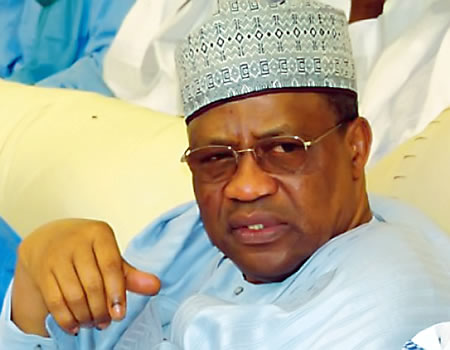
Following the admission of former military president, General Ibrahim Babangida of his role in the annulment of June 12, 1993 presidential election, the Committee for the Defence of Human Rights (CDHR), a human rights organisation, has urged President Bola Ahmed Tinubu to prosecute former military president.
The CDHR’s demand comes after Babangida’s recent public admission of his involvement in the annulment, which the CDHR described as an attempt to “hoodwink” Nigerians into believing he acted in good faith.
The CDHR in a statement issued on Saturday and signed by by its President, Debo Adeniran said
“In light of this, we call on the President of the Federal Republic of Nigeria, President Bola Ahmed Tinubu, to immediately order the prosecution of General Babangida for crimes against humanity and for orchestrating a coup d’état that subverted the democratic will of the Nigerian people.
This prosecution should not be difficult since the chief plotter has confessed to these crimes in public and in writing as published in his bloody book that could have been ‘A Journey into Perdition’ mistitled “A Journey in Service”.“The fact that the result of that election was already in public domain and everybody knew that Abiola won the election, before Babangida in his typical deft ‘Maradonic’ maneuvering of people’s sensibilities stopped the official announcement of the remaining results, made the annulment as good as committing a coup d’état against the administration the people voted for.
“His actions meet the threshold of crime against humanity, as they resulted in widespread human rights abuses and the repression of pro-democracy activists and ultimately affected huge number of people who were affected by the misrule and misgovernance that followed that inglorious annulment.”
The human rights organisation added that Babangida’s actions was a “brazen sociopolitical and moral assault” on Nigerians, undermining democracy and resulting in widespread human rights abuses.
The organisation emphasised that the annulment was a “coup d’état” against the administration of MKO Abiola, who was denied his rightful victory.
The statement partly read: “The Committee for the Defence of Human Rights (CDHR) received with heavy heart the recent admission of the infamous June 12 notorious fact by former military ruler, General Ibrahim Badamasi Babangida (Rtd). His belated public confessions regarding his role in the illegal annulment of the June 12, 1993, presidential election is an attempt to hoodwink the unwary Nigerians to believe that the mischievous dictator actually meant well by the brazen sociopolitical and moral assault he unleashed on them by the inglorious act.
“Although we had viewed the June 12 election as being an unfair exercise, going by all the shenanigans that preceded the election.
“These included prevention of willing political associations from transmuting to political parties; creating political parties for politicians; banning, unbanning of eligible politicians from contesting in the election; the creation of political structures, programmes and manifestos for politicians and imposition of alien ideological leanings on Nigerians.
“We insisted that despite widely regarded as the most peaceful and freest election in the Nigeria’s history it was, like the military dictatorship that orchestrated it, not fair but could be tolerated.
“The worst of the unfair treatments unleashed on the 14 million citizens who voted in the election by the self-acclaimed Evil Genius was the inexplicable annulment announced on the 23rd June, 1993 when the world expected the announcement of Chief MKO Abiola, the most credible and popular candidate as winner.
“This reckless, illegal and unconstitutional action remains one of the gravest injustices inflicted upon the Nigerian people, undermining democracy, destabilizing the nation, and robbing millions of Nigerians of their fundamental right to freely elect their leader.
“General Babangida’s belated admission is not only an affront to the principles of democracy and justice but also a clear acknowledgment of his direct involvement in an act that plunged Nigeria into years of political turmoil, civil unrest, loss of lives and properties and inestimable economic hardship.
“It should therefore be regarded as a coup d’état to the administration of M.K.O Abiola who was robbed in broad daylight and denied the opportunity of savouring his well-deserved victory at the polls.
“The annulment of the June 12 election led to severe human rights violations, including arbitrary arrests, political assassinations, and the suppression of press freedom.
“We would also like to remind President Tinubu that just as he said that Babangida lost the opportunity to become a hero with the annulment of the June 12 election, he (President Tinubu) should not lose that opportunity of becoming the hero of the June 12 struggle by announcing MKO Abiola as a past Nigerian president with full privileges of the status posthumously granted him and his family. We would also like the Government of the day to punish the likes of all beneficiaries of the coup d’état, especially late Chief Ernest Shonekan, and those that served in his kangaroo and illegal cabinet called the “Interim National Government”.
His successor, late Gen. Sanni Abacha, Justice Ikpeme, who delivered the midnight verdict to accentuate the journey to perdition, spineless late Humphrey Nwosu, who succumbed to illegal instructions to truncate announcement of the election results and all others who benefitted from the annulment of the election one way or the other.
“We recommend that the national honours conferred on them should be withdrawn and the benefits being paid to the families of the dead ones among them should also be withdrawn. All the physical belongings that they may have acquired during their illegal stay in office should also be confiscated even when some of them could no longer be prosecuted because they are no longer alive.
“Furthermore, we urge the Nigerian judiciary, relevant anti-corruption agencies, and international human rights organizations to take decisive action in ensuring that justice is served.
The culture of impunity must end, and those responsible for Nigeria’s democratic setbacks must be held accountable.
“Justice for June 12 is justice for democracy, and Nigeria must never allow such an egregious crime to go unpunished. The time for accountability is now.”

By Catherine Agbo
In the unfolding drama of Nigerian political discourse, few things excite the commentary circuit quite like a prominent figure stepping decisively into the political arena.
The recent media frenzy surrounding the activities of the High Chief Government Ekpemupolo-led PBAT Door-to-Door Movement is a classic study in selective outrage.
Ekpemupolo, popularly known as Tompolo, is the Grand Patron of the movement.
From editorial columns in national dailies to online commentary, critics have been relentless in dishing out opinions about the group’s activities targeted at mobilising support for President Bola Tinubu’s re-election campaign.
Yet, beneath the righteous indignation lies a fundamental misinterpretation of constitutional rights and democratic principles.
The narratives being spun across several opinion pieces, such as those asking why Tompolo should be actively involved in partisan politics or phoney groups labelling his endorsement as “deceptive,” are all built on shaky foundation.
Critics point to his role as a major security stakeholder in the Niger Delta and argue that a person of his background should remain politically passive or detached from party politics. Others question the deployment of operational vehicles and logistics to coordinators of the movement across states for the campaign, framing legitimate political mobilisation as an overreach.
However, this wave of criticism ignores a fundamental truth, that Nigeria is a constitutional democracy governed by the rule of law.
Section 39 and 40 of the 1999 Constitution of the Federal Republic of Nigeria (as amended) guarantee every citizen the right to freedom of expression and the right to peaceful assembly and association.
These rights are not reserved exclusively for career politicians, armchair intellectuals, or media commentators, they belong to every Nigerian citizen in equal measure.
Critics who have raised the alarm over campaign spending have also conveniently ignored the provisions of Nigeria’s statutory electoral framework.
The way I see it, High Chief Ekpemupolo has not gone against the Electoral Act 2026 in any way.
The Electoral Act 2026 sets clear financial caps on direct spending by individual candidates and limits on direct monetary donations to political parties or candidates’ accounts.
It also limits the amount a donor can make to a candidate or political party to N500 million.
The Electoral Act 2026 does not, however, specify, mandate, or place any financial spending ceiling for independent third-party support groups, non-governmental movements, or citizen-led mobilisation platforms.
Because the law contains no statutory cap on what an independent group can spend to mobilise voters, logistically equip its coordinators, or advocate for a candidate, Tompolo’s support group operates entirely within the legal limits of the Nigerian electoral law.
To invent non-existent legal infractions simply to tar a political support group is a disingenuous exercise in bad faith.
Tompolo has not been indicted by any court of competent jurisdiction, nor has he violated any law of the land by supporting a presidential candidate of his choice.
He has not been found wanting in any legal measure whatsoever for exercising his democratic suffrage and organising a political support group.
To, therefore, suggest that he should sit on the sidelines while other private citizens and influencers exercise their constitutionally guaranteed right to endorse and fund candidates is to demand a double standard that borders on hypocrisy.
Political association in a democratic society is rooted in choice, conviction, and interest.
If Tompolo believes that the current administration’s policies, particularly in stabilised oil production, maritime security, infrastructure, increased allocation to states, security, especially the State Police bill which 25 state Houses of Assembly have already approved, among others, align with the long-term prosperity of his constituency and the nation, he is within his full constitutional rights to persuade others to share that vision.
Mobilising grassroots support at the ward, household, and polling-unit levels through peaceful door-to-door engagement is the very essence of citizen participation in governance. It is political organising at its most fundamental level.
Those rushing to judge him prematurely are mistaking political enthusiasm for wrongdoing.
A citizen’s choice to donate campaign vehicles, set up organisational structures, and hold political rallies across different geopolitical zones is standard practice in presidential politics globally. In democratic climates, such actions are celebrated as evidence of civic investment and grassroots empowerment. Why should a different standard be constructed when the participant happens to be an influential opinion leader like Tompolo?
The online backlash and critical editorials reveal a deeper prejudice.
Nigeria’s democracy matures when citizens participate freely without fear of unwarranted public trial by the media.
The PBAT Door-to-Door Movement is operating entirely within the boundaries of civil political engagement and statutory electoral law. Rather than attacking the messenger, critics would do well to focus their energy on robust policy debates, engaging the electorate on ideas rather than seeking to curtail the lawful rights of individuals.
Tompolo has broken no law, breached no electoral act provision, and violated no constitutional mandate. He is simply exercising his fundamental right as a free citizen of Nigeria to associate, express his preference, and campaign for the candidate he trusts to lead the country. The misplaced outrage and hasty judgments filling opinion pages ought to be laid to rest.
In a free nation, the right to choose belongs to everyone and Tompolo is no exception.
Agbo, a strategic and development communication expert writes from Abuja.
By Tony Obiechina, Abuja
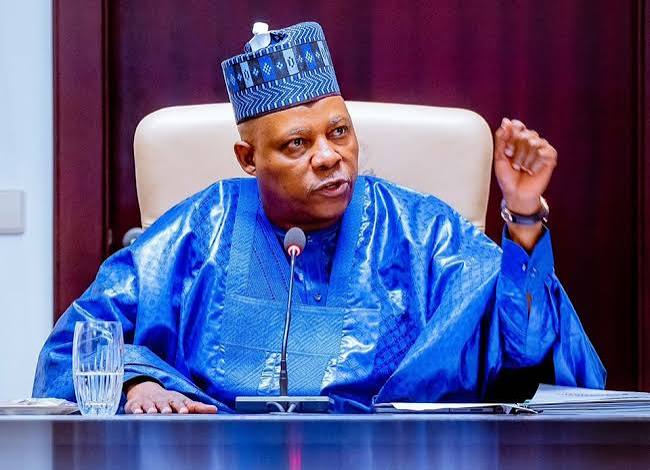
Vice-President Kashim Shettima has criticised the presidential candidate of the Nigeria Democratic Congress (NDC), Peter Obi, saying he has nothing to offer Nigerians beyond what he described as questionable statistics and his opposition to restoring petrol subsidy.
Shettima made the remarks at the 32nd Nigerian Economic Summit, where he acknowledged Obi’s position on subsidy removal but questioned the substance of his economic proposals.
Kashim Shettima accused Peter Obi of relying on “bogus” or “dubious” statistics and incoherent economic prescriptions rather than practical solutions suited for Nigeria’s unique demographic and economic realities.
“I respect Peter Obi for having the courage to say he’s not going to restore the petrol subsidy, but beyond spouting some statistics, Mr Peter Obi has absolutely nothing to offer.
“He was surviving on various statistics. So, I call on you, the crème de la crème of the Nigerian economic community, to support us,” the Vice-President said.
In his opening remarks at the summit, the minister of Finance and coordinating minister of the economy Taiwo Oyedele disclosed that the Federal Government is proposing mandatory impact assessments for major economic policy changes in a move to curb policy reversals, restore investor confidence and ensure government decisions translate into productive investment, decent jobs and higher household incomes.
Under the proposed Nigeria Economic Policy Oyedele said policymakers would be required to demonstrate the problem a proposed intervention seeks to solve, the evidence supporting it, who stands to benefit, who bears the cost and the conditions for ending the policy.
According to him, “Our challenge has never been a shortage of ambition or good ideas. It has been the absence of an enduring economic philosophy, consistent policymaking, and disciplined implementation.”
Describing policy uncertainty as an invisible tax on businesses, the minister said the proposed framework was designed to establish enduring economic principles that would survive successive administrations, rather than become another development plan or the economic manifesto of a particular government.
The proposal comes as the private sector intensifies pressure on the government to move beyond macroeconomic stabilisation and demonstrate tangible improvements in productivity, employment, purchasing power and living standards following successive economic reforms.
On trade protection, Oyedele cautioned against using tariffs to shield inefficient businesses indefinitely from competition, saying trade policy should help local industries become competitive rather than entrench inefficiency.
“A tariff must serve as a runway for local industry to take off, never a permanent shelter from competition,” he said.
The draft framework will be opened for public consultation from November 27, 2026, with Nigerians invited to respond to 17 questions through the Federal Ministry of Finance’s website.
Following consultation and validation, the document is expected to proceed to the Federal Executive Council for approval and the National Economic Council for endorsement.
Oyedele said the government also planned to introduce an annual national economic scorecard, to be published on or before October 1, to track indicators including real wages, productive employment and poverty.
The scorecard is intended to shift the measurement of economic performance beyond aggregate GDP growth towards improvements in household incomes, employment opportunities and business productivity.
“GDP growth matters, but per capita income matters even more,” the minister said.
He identified enterprise as the engine of growth, open but fair markets and coordination across government institutions as the framework’s guiding principles”.
Minister of Budget and Economic Planning, Senator Abubakar Bagudu, has reaffirmed President Tinubu’s commitment to sustaining Nigeria’s economic reform programme, stating that the administration remains determined to maintain the reform trajectory, improve implementation, and address the challenges facing households and businesses.
“For those of us serving under the President and Vice President, the instruction has been clear: we must stay the course,” he said at the 32nd Nigerian Economic Summit (NES#32), which began on Monday in Abuja under the theme “Growth that Works: Delivering Jobs, Productivity and Shared Prosperity”.
Opposition politicians, including the African Democratic Congress presidential candidate, Alhaji Atiku Abubakar, had promised to restore the petrol subsidy to reduce the rising cost of living.
However, Bagudu said that would turn back the clock and erode the gains of the reforms that stabilised the economy and put the country on a growth path.
He recalled that the President had taken deliberate steps to ensure the continuity of the reforms, noting that at a National Economic Council meeting in October 2025, the President presented a memorandum on their sustainability.
According to him, the discussion acknowledged differing opinions on the reforms and the need for a framework to ensure their continuity.
Bagudu stressed that sustaining the reforms would not preclude necessary policy adjustments to respond to prevailing economic realities and to improve implementation.
He reiterated the administration’s position, saying, “There will be no return to the fuel subsidy and the economic distortions associated with the previous system.”
The minister emphasised that the priority now is to consolidate the progress made, tackle the challenges facing Nigerians and ensure that the benefits of economic growth are more widely shared.
“The task before us is to sustain progress, improve implementation, address the challenges facing households and businesses, and ensure that economic growth translates into jobs, productivity and shared prosperity for Nigerians,” he said.
He said the Tinubu administration is investing in agriculture, manufacturing, infrastructure, digital technology and human capital to achieve inclusive, sustainable economic growth.
Commending the Nigerian Economic Summit Group (NESG) for sustaining a platform for constructive engagement among government, the private sector, organised labour, academia, civil society and development partners, he noted that the Summit offers an important opportunity to examine the country’s economic challenges, assess ongoing reforms and develop practical recommendations to accelerate national development.
Bagudu explained that the Renewed Hope Agenda aims to reposition the Nigerian economy for sustainable growth by addressing longstanding structural distortions, strengthening the foundations for investment and expanding productive activities.
He emphasised that the ultimate objective is to build a resilient economy that creates opportunities, improves livelihoods and delivers tangible benefits to Nigerians.
He highlighted improvements in key macroeconomic indicators and increased revenue accruing to the Federal, State and Local Governments, noting that the additional resources available to subnational governments present an opportunity to expand infrastructure, improve public services and advance development priorities.
According to the minister, the distribution of increased revenue across the federation reflects President Tinubu’s commitment to fiscal federalism and to the effective functioning of the three tiers of government. He emphasised that stronger coordination among federal, state and local authorities is essential to converting available resources into measurable development outcomes.
While acknowledging progress, Bagudu stressed that Nigeria must sustain its reform efforts, strengthen domestic production and mobilise greater investment to realise its ambition of building a one-trillion-dollar economy by 2030.
He noted that achieving this target would require improved productivity, stronger private-sector participation, expanded industrial capacity and a more competitive business environment.
He also acknowledged the economic pressures facing households and businesses, emphasising that reforms must be accompanied by effective implementation, responsive policy adjustments, and interventions that protect vulnerable populations, support domestic production, and improve livelihoods.
He maintained that the success of the reform programme would ultimately depend on its ability to create opportunities and translate economic gains into better living conditions.
On grassroots economic development, Bagudu highlighted the Renewed Hope Ward Development Plan, which aims to identify and unlock productive opportunities across Nigeria’s 8,809 wards.
He explained that the initiative aims to identify the distinctive economic strengths of communities and to develop targeted interventions that stimulate local production, increase household incomes and create employment. Communities with potential in agriculture, fishing, livestock, textiles and other productive activities, he said, require support tailored to their specific needs, resources and opportunities.
According to the minister, unlocking economic potential at the ward level would broaden the foundations of national growth, strengthen local economies, and ensure that development opportunities extend beyond major urban centres to communities across the country. He stressed that a more inclusive growth strategy must recognise local communities’ productive capacity and create pathways for them to participate meaningfully in the national economy.
Agriculture, he noted, remains central to economic diversification, food security and employment generation, emphasising the importance of access to farm inputs, agricultural financing, mechanisation, irrigation and stronger agricultural value chains, alongside the National Agricultural Mechanisation Policy and the National Agricultural Mechanisation Investment Strategy.
Bagudu stressed that increasing agricultural production must go hand in hand with improvements in processing, storage, transport, distribution and market access. He explained that these interventions are necessary to reduce post-harvest losses, improve food availability and affordability, raise farmers’ incomes and create sustainable opportunities for agribusinesses and rural communities.
He also emphasised the importance of manufacturing in promoting local value addition, creating skilled employment and reducing dependence on imported goods. In this regard, he cited the Nigeria Industrial Policy 2025 and the Nigeria First Policy as part of efforts to strengthen domestic production, deepen local supply chains and improve the competitiveness of Nigerian enterprises.
Beyond agriculture and manufacturing, the Minister identified digital technology, financial services and trade as sectors with considerable potential to boost productivity, foster innovation and expand economic opportunities.
By Elijah Oguche, Abuja
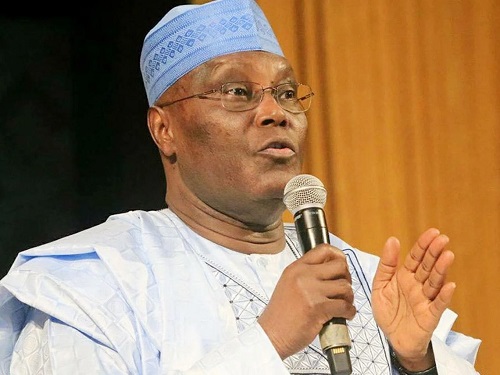
Former Vice President Atiku Abubakar has challenged President Bola Tinubu to identify those who allegedly collected billions of naira from ministers seeking appointments into his cabinet, as the president intensifies his campaign for a second term ahead of the 2027 general election.
Atiku’s demand comes amid renewed political exchanges between the ruling All Progressives Congress (APC) and opposition figures, with Tinubu appealing to Nigerians to renew his mandate while defending his administration’s economic policies and record in office.
The former vice president, who is a presidential candidate of the African Democratic Congress (ADC), raised the allegation in a post on X on Friday, citing remarks attributed to Alwan Hassan, a spokesperson for Tinubu’s Presidential Campaign Council.
“Bola @officialABAT, your campaign spokesman has admitted that ministers paid billions in bribes to secure their appointments. You appointed them, so who received the money? Nigerians deserve names, not silence,” Atiku wrote.
The allegation, which has not been independently established in the material available, has prompted calls for the presidency and relevant anti-corruption agencies to clarify the claims and determine whether any wrongdoing occurred.
Atiku also criticised the administration over the rising cost of living and alleged restrictions on funding to ministries, arguing that the consequences of government decisions were being borne by ordinary Nigerians.
“Your government’s reckless decisions have driven the cost-of-living crisis. And when you withhold funds from ministries because you distrust your own ministers, Nigerians are left paying for a government that has abandoned them,” he added.
In a related statement posted on X, Atiku’s Media Adviser, Paul Ibe, called on the Economic and Financial Crimes Commission (EFCC) and the Independent Corrupt Practices and Other Related Offences Commission (ICPC) to investigate the allegation and obtain any evidence available.
Ibe said the allegation was attributed to Hassan, who reportedly made the remarks while defending restrictions on funding to ministries.
He questioned which ministers allegedly paid for their appointments, who received the money, what evidence supported the claim and what Tinubu knew about it.
According to him, allegations that public officials paid to secure appointments raised serious questions about accountability and the purpose of public service.
“The danger is obvious: when public office becomes a purchased investment, public service risks becoming an exercise in capital recovery,” Ibe said.
He argued that, if substantiated, the allegation could undermine public confidence in the administration and raise concerns that some officeholders might prioritise recovering their alleged investments over delivering essential services.
Ibe maintained that restricting ministry funding could not replace a proper investigation into possible corruption, urging the anti-graft agencies to examine the claims and investigate anyone implicated, regardless of political affiliation or position.
He also called on Tinubu to address the matter directly, insisting that Nigerians deserved clarification on allegations involving members of the president’s cabinet.
However, Tinubu, speaking at the flag-off of the APC campaign in Kaduna on Saturday, appealed to Nigerians to give him another term, promising that his administration would continue working towards prosperity, economic recovery, growth and greater opportunities for citizens.
The president urged supporters to vote for the APC at all levels, including the presidency, governorships, the National Assembly and state Houses of Assembly.
He accused opposition parties of relying on criticism and hostility rather than presenting credible alternatives to the government’s policies.
Addressing concerns over hunger and poverty, Tinubu blamed previous administrations for creating the conditions his government was now attempting to address.
“I hear my opponents talking about hunger and poverty. Who created it? They did. They created hunger. They created poverty. We are trying to eradicate it,” he said.
The president also defended his administration’s economic direction, calling on Nigerians to support its policies and pointing to efforts to ensure regular salary payments and create opportunities for citizens.
He urged eligible voters to obtain their Permanent Voter Cards and participate in the forthcoming elections.
Tinubu’s appeal for a fresh mandate places the administration’s economic performance, infrastructure projects and social interventions at the centre of the emerging 2027 political contest, as opposition figures intensify scrutiny of its record.
Earlier, Kaduna State Governor Uba Sani expressed confidence that Northern Nigerians would support Tinubu for another term, citing federal and state interventions in infrastructure, security, education and healthcare.
Sani recalled Tinubu’s visit to Birnin Gwari during the 2023 presidential campaign, when the area was facing serious security challenges, and said the president had followed through on commitments relating to roads and security.
He cited the ongoing reconstruction of the Zaria–Funtua–Gusau–Sokoto road and the Abuja–Kaduna expressway, which he said was about 95 per cent complete.
The governor also highlighted the reopening of more than 300 schools and over 150 primary healthcare centres previously shut because of insecurity, alongside other interventions aimed at improving access to essential services.
On education, Sani said the North-West had benefited from approximately ₦250 billion in student loans, which he described as part of the administration’s support for young people.
He argued that the region’s political support should be based on the administration’s performance and the impact of its policies rather than sentiment alone.
Sani, however, cautioned APC members against underestimating the opposition, warning that political campaigns were increasingly using artificial intelligence and other digital tools to influence public opinion.
Also speaking at the rally, Senator Abdullaziz Yari, representing Zamfara West and Director-General of the APC Presidential Campaign Council, declared that political stakeholders in the North were prepared to work towards Tinubu’s re-election.
Yari argued that the administration’s record in the economy, infrastructure, health, education and human capital development provided grounds for seeking continuity.
He cited the removal of fuel subsidy, changes in the exchange-rate regime, trade performance and social intervention programmes as areas the APC intended to highlight during its campaign.
According to him, party stakeholders had been engaging traditional rulers, religious leaders and other influential figures to build support for Tinubu’s return in 2027.
Yari also rejected suggestions that Northern political leaders would abandon the understanding of power rotation between the North and South, insisting that the region remained committed to the president’s re-election bid.
The rally brought together APC governors and other party leaders, who presented the administration’s projects and policies as evidence of progress and urged voters to support continuity.
The contrasting developments underscore the issues likely to shape political debate ahead of the 2027 elections: economic hardship, public accountability, infrastructure delivery, social welfare and confidence in government institutions.
While Atiku and his associates are demanding answers over allegations of payments for ministerial appointments, Tinubu and APC leaders are seeking to consolidate support by highlighting what they describe as achievements in economic reform and development.
The allegation concerning ministerial appointments remains a matter requiring clarification and, where evidence warrants, investigation by the appropriate authorities.
For Nigerians, the emerging political contest is likely to test not only the competing claims of the ruling party and opposition but also their ability to demonstrate transparency, deliver public services and address the economic pressures confronting households and businesses.




Ishowo Urges Kwara to Convert KWASUED to Medical Varsity
ShareA Kwara based Public Affairs Analyst, Comrade Ishowo Olanrewaju, weekend called on the Kwara State government to urgently convert the...

NESG Chairman Urges Shift from Economic Reforms
ShareChairman, Nigerian Economic Summit Group (NESG), Olaniyi Yusuf has urged the Federal Government to translate economic reforms into tangible results,...

Yakubu Receives Fellowship Of Nigerian Institute Of Town Planners
ShareBy Raphael Atuu, Abuja TPL Chief Amb Hon. Stephen Shekwonce Yakubu, the District Head (Hakimi of Garki Shekwope), had his...


Much Ado About the PBAT Door-to-Door Movement
ShareBy Catherine Agbo In the unfolding drama of Nigerian political discourse, few things excite the commentary circuit quite like a...


WAHO, ECOWAS Countries Move to Tackle Health Worker Shortages, Brain Drain
ShareBy David Torough, Abuja The West African Health Organization (WAHO) has called for stronger regional collaboration and practical policy interventions...

Afreximbank’s Net Income Rises 24 Per Cent to $813.5 Million in Nine Months
ShareThe African Export-Import Bank (Afreximbank) and its subsidiaries have reported a 24 per cent increase in net income for the...

Wike-Led FCTA Committed to Quality Healthcare, Stronger Medical Institutions – Mahmoud
ShareBy Laide Akinboade, Abuja The Minister of State, Federal Capital Territory (FCT), Dr. Mariya Mahmoud, has reaffirmed the commitment of...

Enugu Police Arrest 28 Year Old Suspect for Robbing POS Operator
ShareFrom Sylvia Udegbunam, Enugu The Enugu State Police Command has arrested a 28-year-old male suspect, Michael Ayisa, for allegedly robbing...
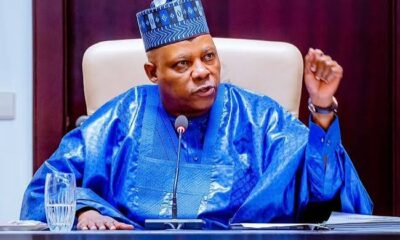

Peter Obi Has Nothing to Offer as President — Shettima
ShareBy Tony Obiechina, Abuja Vice-President Kashim Shettima has criticised the presidential candidate of the Nigeria Democratic Congress (NDC), Peter Obi,...

NCMMP 2.0: The Gaps in National Alignment and Inclusive Consultation
ShareBy Uche Joe Uwaleke The Nigeria Capital Market Master Plan 2.0 (NCMMP 2.0), covering 2026-2036, is a commendable and ambitious...