
NEWS
NCMMP 2.0: The Gaps in National Alignment and Inclusive Consultation


By Uche Joe Uwaleke
The Nigeria Capital Market Master Plan 2.0 (NCMMP 2.0), covering 2026-2036, is a commendable and ambitious undertaking that deserves recognition.
The Securities and Exchange Commission (SEC), the sponsors, FSD Africa and the Foreign, Commonwealth & Development Office (FCDO), and the consortium of consultants led by Genesis Analytics and Bourse Consult deserve commendation for investing the expertise, resources and collaborative effort required to articulate a strategic vision for Nigeria’s capital market over the next decade.
The aspiration to build a diverse, efficient, transparent and innovative capital market that positions Nigeria as a regional financial hub and mobilizes the capital needed to drive wealth creation and a US$1 trillion economy by 2030 is quite compelling.
There is every reason to be confident that the plan can make a meaningful contribution to Nigeria’s economic transformation.However, the success of a masterplan of this magnitude will depend not only on its aspirations and proposed reforms, but also on the realism of its time horizon, its alignment with national development priorities, the inclusiveness of its formulation and the strength of the institutional arrangements for its implementation.
On these critical considerations, the Nigerian experience offers important lessons, including from Malaysia’s latest Capital Market Masterplan.
One fundamental question is whether a ten-year implementation horizon, spanning 2026-2036, is the most appropriate framework for the NCMMP 2.0.
While a long-term vision is necessary for transforming a capital market, the implementation programme must be anchored in a timeframe that is sufficiently realistic, measurable and aligned with the country’s prevailing economic policy framework.
In this respect, Malaysia’s Capital Market Masterplan 2026-2030, launched on 9th March 2026, offers a useful model.
Malaysia has adopted a five-year implementation horizon within a broader 20-year vision extending to 2045.
This approach distinguishes between the long-term destination and the medium-term actions required to get there.
It allows policymakers and market participants to translate strategic ambitions into specific, time-bound priorities, assess progress against measurable milestones and recalibrate interventions in response to changing economic conditions without losing sight of the overarching vision.
Nigeria would have benefited from a similar architecture.
The country already has a National Development Plan for 2026-2030, situated within the longer-term Nigeria Agenda 2050.
A capital market masterplan covering 2026-2030 would therefore have provided a natural and coherent framework for aligning capital market reforms with national economic priorities, while preserving a longer-term perspective towards 2050.
This is not merely a question of administrative convenience or the choice of a more convenient planning cycle.
It goes without saying that the capital market does not operate in an economic or policy vacuum.
Its development is profoundly influenced by macroeconomic stability, fiscal and monetary policy, the investment climate, public-sector borrowing, pension and insurance regulations, infrastructure development and the government’s broader economic priorities.
The market can mobilize capital, facilitate investment, deepen financial inclusion and support enterprise growth, but it cannot independently overcome policy constraints that lie beyond its institutional reach.
Indeed, the NCMMP 2.0 document itself provides a compelling reason to take this alignment seriously.
It acknowledges that the first Capital Market Master Plan, covering 2015-2025, achieved only 63 percent of its planned activities, with just two of its 21 macro-objectives fully achieved by the end of 2025, while the remaining 19 were at varying stages of execution.
A revised masterplan was subsequently developed in 2021 to reflect market realities, while the absence of alignment with Nigeria’s national development blueprints weakened broader buy-in from policymakers. These are significant lessons.
They suggest that ambitious targets and extensive stakeholder engagement, however valuable, cannot substitute for a planning framework that is integrated with the national policy environment and commands sustained political and institutional ownership.
It would therefore have been prudent to make the NCMMP 2.0 a medium-term implementation plan for 2026-2030, explicitly aligned with the National Development Plan for the same period, within a longer-term capital market vision extending to 2050.
Such an arrangement would have offered a more direct connection between capital market reforms and national economic objectives, made it easier to assign responsibilities to relevant government institutions, and strengthened accountability for delivery.
It would also have provided a natural opportunity for a comprehensive review at the end of 2030, when the next phase could be developed in light of the country’s economic performance, policy direction and progress in capital market development.
A ten-year plan is not inherently inappropriate, but its effectiveness depends on how well its implementation cycle is integrated with the national planning system.
The concern, therefore, is not the ambition of the NCMMP 2.0, but the risk of creating another planning horizon that may not adequately correspond with the policy framework upon which its success depends.
The second issue concerns the breadth and inclusiveness of the stakeholder consultation undertaken in developing the masterplan.
The engagement of 18 institutions, including regulators, government agencies, market infrastructure providers and industry associations, is commendable and demonstrates an appreciation of the diverse interests that shape the capital market.
The contributions of these stakeholders are indispensable because they bring practical knowledge of regulatory constraints, market infrastructure, operational challenges and the commercial realities confronting capital market participants.
Nevertheless, the composition of the consultation process raises an important question: where was the academia?
In Nigeria, the Capital Market Academics of Nigeria provides an umbrella platform for researchers and academics working on financial markets and related issues.
Its omission from a process of this strategic importance represents a significant gap in the range of perspectives brought to bear on the masterplan.
Academia is not merely an observer of the capital market or a commentator on policies formulated elsewhere.
It has a distinctive contribution to make through independent research, empirical analysis, critical evaluation of policy assumptions, assessment of international experience and examination of the economic models underpinning strategic targets.
Academics can interrogate whether proposed interventions address the market’s most binding constraints, whether the assumptions underlying projected outcomes are defensible, and whether the proposed sequencing of reforms is consistent with available evidence.
They can also identify unintended consequences, test alternative policy options and recommend appropriate indicators for measuring progress.
These contributions are particularly important when a masterplan seeks to deliver structural changes over several years.
Targets relating to market capitalization, capital mobilization, investor participation, product diversification and the development of Nigeria as a regional financial hub must rest on credible assumptions and a clear understanding of the relationship between policy interventions and expected outcomes.
An independent academic perspective can strengthen the analytical foundations of these targets and help distinguish between aspirations that are desirable and outcomes that are realistically achievable under specified conditions.
It can also enhance the credibility of the plan by ensuring that its underlying logic is open to rigorous scrutiny.
The value of academic participation, therefore, lies not in adding another institution to a consultation list, but in introducing a complementary form of expertise that regulatory, governmental and industry stakeholders may not independently provide.
Equally important is the distinction between consulting stakeholders individually and bringing them together to deliberate collectively.
Association-based consultations are useful for eliciting the views of specific professional groups, understanding sector-specific challenges and ensuring that participants can speak candidly about their interests.
However, separate consultations alone are insufficient for an undertaking as consequential and cross-cutting as a national capital market masterplan.
It is a no-brainer that the interests of regulators, exchanges, institutional investors, market intermediaries, issuers, infrastructure providers, policymakers and researchers inevitably intersect.
A reform intended to address one segment of the market may have implications for another, while measures that appear desirable from the perspective of an individual institution may create implementation difficulties elsewhere.
These interdependencies are not always fully apparent when stakeholders are consulted in isolation.
A more robust process would have combined the individual consultations with a national stakeholder conference convened specifically to deliberate on the draft masterplan before its finalization.
Such a conference would have provided a structured platform for presenting the proposed strategic priorities, testing the assumptions underlying the recommendations, identifying inconsistencies and resolving competing perspectives.
It would also have enabled stakeholders to assess the feasibility of proposed reforms collectively, clarify institutional responsibilities and build a shared understanding of the sequencing required for effective implementation.
Crucially, it would have given the academic community an opportunity to scrutinize the evidence and analytical framework underpinning the document alongside those responsible for regulation, policymaking and market operations.
This collective deliberation should ideally have preceded the SEC’s National Capital Market Conference at which the final masterplan was unveiled for implementation. The distinction is crucial.
A conference convened after a document has been finalized is principally an opportunity to communicate its contents, mobilize support and discuss implementation.
A conference convened while the document is still a draft can influence its substance, improve its analytical quality and generate a stronger sense of collective ownership.
The latter is particularly valuable when implementation depends on numerous institutions, many of which have different mandates, priorities and resource constraints.
Consultation should not be treated simply as a procedural requirement to be completed before a document is published; it should be an integral part of policy design, with a demonstrable opportunity for participants to shape the final outcome.
There is also a broader lesson to be drawn from the Malaysian example.
Malaysia’s experience reinforces the importance of continuity between successive masterplans.
Each iteration of its capital market strategy builds on the experience of the preceding one, while responding to changing economic and market conditions.
Nigeria should similarly institutionalize periodic, transparent assessments of implementation, supported by clearly defined indicators, responsible institutions, realistic timelines and public reporting.
The experience of the first NCMMP demonstrates why this matters.
A plan can articulate the right aspirations and still fall short if responsibility is diffuse, coordination is weak, resources are inadequate or implementation is insufficiently monitored.
The new masterplan should therefore be accompanied by a credible delivery framework that establishes measurable annual milestones, provides for regular independent evaluation and makes it possible to distinguish between completed activities and reforms that have produced tangible economic outcomes.
All said, the NCMMP 2.0 deserves to be welcomed as an important statement of ambition and a potentially significant instrument for the development of Nigeria’s capital market.
The SEC and its partners have undertaken a substantial assignment, and the country’s financial system stands to benefit if the plan’s reforms are effectively implemented.
The observations raised here should not detract from that achievement; rather, they are intended to strengthen the prospects of success by drawing attention to lessons that Nigeria’s own planning experience and Malaysia’s latest masterplan bring into sharper focus.
Indeed, a more deliberate connection between the NCMMP 2.0 and the national development planning cycle, and broader participation by the academic community would help strengthen both the substance of the plan and the legitimacy of its implementation.
Uche Uwaleke is Nigeria’s renowned Professor of Capital Market and the Director of the Nasarawa State University Institute of Capital Market Studies
By Tony Obiechina, Abuja
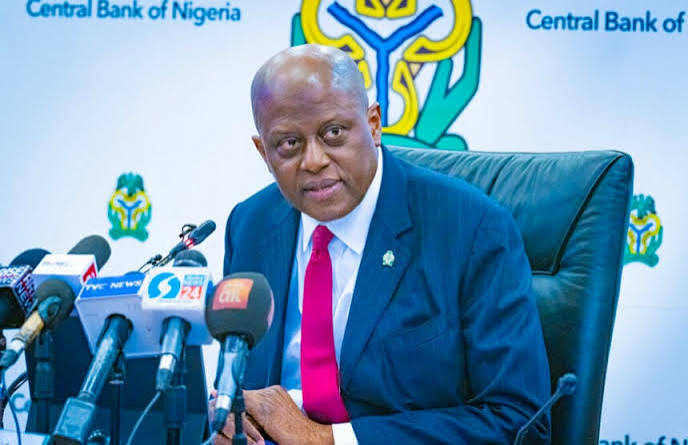
The Central Bank of Nigeria (CBN) has introduced a comprehensive regulatory framework for non-security virtual assets service providers (VASPs), including stablecoins and deposit money tokens dealers, as part of its sustained regulatory measures to strengthen its oversight of emerging digital financial services in the country.
This was contained in the Bank’s circular with Ref.
No PSP/DIR/PUB/CIR/001/004 dated November 5, 2026 and signed by its Director.Payments System Policy Department, Musa Jimoh, indicated that the new regulations established licensing, authorisation and supervisory requirements for virtual asset issuers and service providers operating in or targeting the Nigerian market and were designed to promote responsible innovation, strengthen the integrity of the financial system and provide an appropriate regulatory framework for emerging digital payment instruments.
Under the new framework titled ‘Regulations for the Operations of Non-Security Virtual Assets in Nigeria’, stablecoin issuers, virtual asset service providers and other regulated operators will be subject to requirements covering licensing, capital adequacy, reserve backing, liquidity and redemption arrangements.
While also prescribing standards for corporate governance, risk management, internal controls, cybersecurity and operational resilience, the framework also directed the operators to comply with requirements for safeguarding customer assets, making appropriate disclosures and establishing effective complaints management systems.
In addition, the framework also introduced measures to address financial crime risks associated with digital asset transactions, including anti-money laundering and counter-terrorist financing obligations, sanctions screening, transaction monitoring and blockchain analytics.
The framework also mandates virtual asset service providers to comply with the Travel Rule and conduct due diligence on counterparties, particularly other virtual asset service providers involved in transactions.
The latest regulations apply to individuals and organisations conducting regulated activities in or from Nigeria, directing such activities at Nigerian customers or undertaking operations that could materially affect the country’s payment system, financial system, foreign exchange market or financial stability.
According to the apex bank the requirements could apply irrespective of whether an operator maintains a physical presence in the country, which implies that foreign virtual asset operators targeting Nigerian customers or undertaking activities with material implications for the country’s financial system may also fall within the regulatory framework.
The CBN clarified, however, that the new regulations did overrule the statutory responsibilities of the Securities and Exchange Commission (SEC) or other competent authorities, stressing that activities involving security virtual assets, securities, investment contracts and other capital-market products would remain subject to the applicable capital-market regulatory framework.
The framework further provides that where an activity involves both non-security virtual assets and matters under another regulator’s jurisdiction, operators are required to obtain the relevant approvals from each competent authority.
The apex bank mandated all the affected financial institutions, issuers, service providers, operators and other stakeholders to familiarize themselves with the regulations and ensure strict compliance with the applicable licensing, prudential, operational, reporting and technology requirements.
As a deterrent to abuses, the framework also provides for regulatory enforcement, administrative sanctions and orderly wind-down arrangements for operators unable to continue their regulated activities.

From Sylvia Udegbunam, Enugu
A non-governmental organisation, Renevlyn Development Initiatives, has called on women journalists in Enugu State to intensify investigative and gender-sensitive reporting on the environmental and socio-economic impacts of extractive activities on women in host communities.
The Executive Director of the organisation, Philip Jakpor, made the call during a one-day training on Agenda for Women and Extractive Journalism held at Hotel Sylvia, Independence Layout, Enugu, with the theme, “Empowering Women Journalists for Effective Reporting of Extractive Impacts in Nigeria.
”Jakpor stressed that discussions on extractive activities in Nigeria, particularly in Enugu State, would remain incomplete without addressing the devastating environmental consequences of coal mining.
He noted that women in host communities bear a disproportionate burden of mining activities because of their roles as caregivers, providers and major users of natural resources, including land and water.
He regretted that despite bearing much of the consequences of environmental degradation, women are often excluded from decision-making processes and policies concerning extractive activities in their communities.
He therefore urged female journalists to adopt gender-sensitive reporting approaches that amplify, document and adequately present the experiences of affected women.
Earlier, the Project Officer of Renevlyn Development Initiatives, Tracy Ohovwore, acknowledged the contributions of journalists in drawing attention to environmental challenges but observed that the specific experiences of women affected by extractive activities remained largely underreported.
She raised concerns over pollution in Iva Valley, Akwuke, Onyeama, Okpara and Awhum, alleging that the Ekulu and Nyaba rivers, which residents depend on for domestic water, had been contaminated by wastewater containing heavy metals, including arsenic, cadmium, lead and mercury.
Also speaking, the Executive Director of New Life Community Care Initiative (NELCCI), Mrs Florence Ifeanyi Aneke, said environmental degradation undermines community development by threatening livelihoods, food security, healthcare, education and access to clean water.
She added that pollution and land destruction could expose women to serious health risks, including reproductive health challenges, while increasing the economic hardship faced by families.
Aneke called on the Enugu State Government to harness the state’s natural resources in ways that create economic opportunities without destroying the environment or imposing further hardship on host communities.
She also advocated compensation for affected communities, particularly women and persons with disabilities, while urging the government to ensure their active participation in decisions concerning extractive activities.
In her contribution, a journalist, Ebere Ekeopara, shared her experiences growing up in a coal-mining community, highlighting poor remuneration for miners, health hazards and the impact of mining activities on women and family livelihoods.
She urged journalists to go beyond routine reporting through sustained investigative journalism that identifies environmental hazards, establishes institutional responsibilities and examines available interventions for affected communities.

By Tony Obiechina, Abuja
The Chairman of the Revenue Mobilisation, Allocation and Fiscal Commission (RMAFC), Dr. Mohammed Bello Shehu has charged Directors and Heads of Departments (HODs) to demonstrate commitment, accountability and professionalism in the discharge of their duties to ensure the successful implementation of the Performance Management System (PMS) in the Commission.
The Chairman gave the charge at the signing of Performance Contracts by Directors and Heads of Departments at the Commission’s headquarters in Abuja.
He described the exercise as more than the signing of official documents, noting that it represented a covenant of accountability and a commitment to delivering on the Commission’s strategic objectives through improved productivity and measurable results. He also noted that the initiative aligned with the Federal Government’s Renewed Hope Agenda under President Bola Tinubu, which prioritises institutional efficiency, good governance and improved service delivery.He explained that the PMS represents a deliberate shift from routine administrative activities to a result-oriented system that measures institutional and individual performance against clearly defined objectives. He noted that the Commission had recorded significant progress towards its implementation through the development of a dedicated IT platform, organisation-wide staff training, capacity building for PMS champions, management sensitisation sessions and change management initiatives.
He emphasised that the system was not designed to be punitive but to empower officers, clarify responsibilities, identify capacity gaps and promote fairness in performance assessment. He therefore urged Directors and HODs to ensure that departmental targets and key performance indicators were realistic, measurable, time-bound and aligned with the Commission’s strategic objectives.
Shehu assured staff of management’s commitment to providing the necessary support and enabling environment, while urging all officers to embrace the initiative and make accountability, professionalism and improved service delivery their guiding principles.
The Chairman of the Personnel Matters Committee (PMC) and Federal Commissioner representing Cross River State, Ntufam Eyo-Nsa Whitley, described staff as the driving force behind the success of the Commission, urging them to demonstrate discipline, diligence, emotional intelligence and dedication to their responsibilities. He encouraged officers to take the performance management exercise seriously and give their best towards achieving the Commission’s objectives.
He further urged staff to support one another, embrace the reform process and avoid attitudes that could undermine teamwork and institutional progress. Hon Ntufam called on the PMS champions to demonstrate commitment and provide guidance to their colleagues, stressing that collective responsibility, discipline and effective implementation would ensure the success of the initiative.
In his address, the Secretary to the Commission, Comrade Tosin Adeyanju, described the signing ceremony as a significant milestone in the Commission’s history, marking the transition from intention to action, planning to execution, and traditional performance evaluation to a modern, data-driven performance management system. He appreciated the Chairman’s leadership and the Commissioners’ support, while acknowledging the critical roles of Directors and HODs in driving the transformation.
He urged management staff to take ownership of their performance agreements and ensure regular engagement, feedback and monitoring to achieve the desired results. He stressed that the success of the PMS would depend not merely on signing the contracts but on the Commission’s ability to translate agreed targets into improved productivity, efficiency and measurable institutional achievements.
The Director overseeing the Administration and Human Resource Department, Alhaji Ahmed Rufai Gidado, explained that the Commission had undertaken a series of activities towards the implementation of the Performance Management System and that the signing of the performance contracts represented a major milestone in the process, marking the transition from preparatory activities to the implementation phase.
In his lecture on The Role of Performance Management in Public Sector Transformation, Mr. Nwachukwu John, Head of Economy Team Performance Management at the Office of the Head of the Civil Service of the Federation (OHCSF), commended RMAFC for the progress recorded in adopting the PMS framework. He noted that the Commission’s commitment demonstrated its readiness to embrace public service reforms and align individual responsibilities with institutional and national development objectives.
He explained that the PMS was designed to connect the responsibilities of individual officers with departmental targets, the Commission’s strategic plan and the Federal Government’s priorities. He urged Directors and HODs to ensure that performance contracts were cascaded to other levels of staff through regular engagement and feedback, emphasising that the system was a productivity tool rather than a promotion exercise.


CBN Introduces New Regulatory Framework for Non-Security VASPs, others
ShareBy Tony Obiechina, Abuja The Central Bank of Nigeria (CBN) has introduced a comprehensive regulatory framework for non-security virtual assets...


Group tasks Women Journalists on Reporting Impact of Coal Mining in Enugu
ShareFrom Sylvia Udegbunam, Enugu A non-governmental organisation, Renevlyn Development Initiatives, has called on women journalists in Enugu State to intensify...

RMAFC Chairman Tasks Directors, Others on Accountability, Productivity
ShareBy Tony Obiechina, Abuja The Chairman of the Revenue Mobilisation, Allocation and Fiscal Commission (RMAFC), Dr. Mohammed Bello Shehu has...


NDLEA Secures 18 Convictions, Arrests 130 Suspects in Kaduna
ShareThe National Drug Law Enforcement Agency (NDLEA), Kaduna State Command, said it secured 18 convictions and arrested 130 suspects for...
Gen Z No Longer Think for Themselves, Ayra Starr’s Mother Blames Social Media
ShareNene Aderibigbe, mother of Nigerian singer Ayra Starr, has criticised the influence of social media on Gen Z, claiming that...


Davido, Chioma Arrive in Style for Zlatan, Davita’s Wedding in Morocco
ShareNigerian music star, Davido, and his wife, Chioma Adeleke, have arrived in style in Marrakesh, Morocco, for the wedding celebration...


Lessons from the 2023 Presidential Elections: Obi Vs Wike
ShareBy Sunday Adelaja My goal in this article is to go beyond promoting a particular candidate like I did in...
Certificates Without Jobs: The Uncomfortable Reality of Nigeria’s Education System
ShareBy Idris Rufai Welcome to Nigeria, where young people are highly educated, professionally qualified and, unfortunately, increasingly experienced in the...


FG Generates N33tn Revenue in 10 Months – Oyedele
ShareBy Tony Obiechina, Abuja The Federal Government generated N33tn in revenue between January and October 2026, while about 90 per...


Terrorists Flee Strongholds, Military Block New Bases – DHQ
ShareBy David Torough, Abuja The Defence Headquarters (DHQ) has dismissed reports and suggestions of a ceasefire with Boko Haram terrorists,...