
Environment
Commission Moves to Sanction Unlicensed Water Users

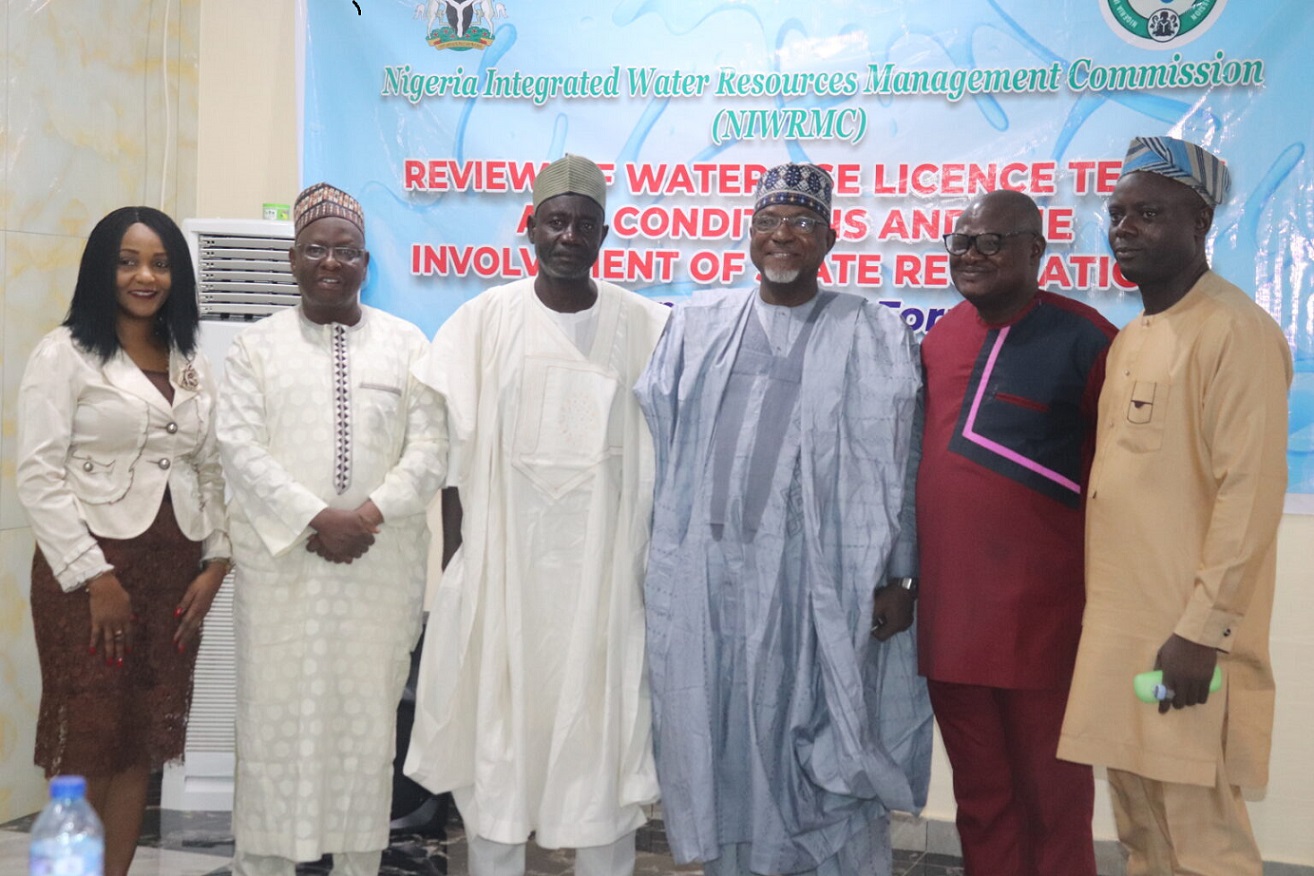
The Nigeria Integrated Water Resources Management Commission (NIWRMC), has commenced the review of its laws that would enable it sanction all unlicensed water users in the country.
Magashi Bashir, the Executive Director of the commission, made this known on Monday, at the opening of the Review of Water Use License Terms and Conditions Meeting, in Abuja.
According to Bashir, there is need to standardise all documents targeted at repositioning and regulating the water resources sector.
He said the non-passage of the Water Resources Bill however,, had caused many irregularities in the sector, saying partnerships between all actors would reduce poor water governance.
“It is important to state that Water Use Licence Terms and Conditions is a critical component in the administration and issuance of Water Use Licence to applicants, as it determines the regime for proper licence usage by various applicants.
“The relevance of Water Use Licence Terms and Conditions can therefore, not be overestimated in anyway.
“Continuous stakeholders’ engagement in the administration of Water Resources in the Country is necessary for effective and result oriented regulations, with particular reference to Water Use Licence Terms and Conditions.”
Magashi noted that the Commission under his watch would leave no stone unturned in ensuring a continuous proper licensing regime.
He said it was his honest expectation that the forum would consolidate on the ongoing engagement between all tiers of government, for the purpose of appropriately managing Nigeria’s water resources, through effective enforcement mechanisms.
The executive director said implementing a comprehensive regulatory regime would benefit the collective interest of the country, saying participants at the workshop could make it happen by contributing meaningfully.
Earlier, the Legal Adviser for NIWRMC, Mr Rotimi Ojegbile, said before now, the legal department had made several efforts to regularise most of the commission’s documents, with little or no progress made.
Ojegbile said with the commitment of the present leadership however, the commission had made that possible, saying it was necessary for all frameworks to stand the test of time.
The legal adviser, represented by Ms. Ikemhe Ekwere-Bello, urged all participants to brainstorm and contribute meaningfully, so that water use was regulated and done properly.
Dr Emmanuel Udoh, delivering a paper on ‘Optimising Water Allocation Through Revised License Terms and Conditions’, said there was need for Nigeria to strengthen its weak and fragile institutions.
Udoh said climate change challenges called for appropriate measures to mitigate them, noting that though section 11 of the Water Resources Act gave individuals access to water use, it must however, be used sustainably.
He said key considerations on Revised License Terms and Conditions must include sustainability and long-term water management, through equity and fairness in water distribution.
“We must adapt to changing climatic conditions and water scarcity by integrating regulatory frameworks, such as the environmental protection and incorporating stakeholder perspectives and public participation into all aspects”.
Chinesonu Okpoko, a legal expert, said currently, there was no effective water resources data management system for the country.
Okpoko said the unavailability of adequate and reliable data, upon which analysis, planning, management and decision-making could be based on, had crippled the water licensing system.
The Water Resources Act 2004, empowers the Minister with responsibility for matters relating to water resources, as the lead in charge of water resources development, licensing, planning, and use.
Sections 11-19 of the Act deals with issuance of water use licences, licensing fees, power to fix rates in connection with the abstraction of water, penalties and the issuing of regulations.
Water licensing plays a pivotal role in the sustainable management and allocation of water resources in Nigeria. It ensures equitable access to water, promotes efficient use, and safeguards the environment.
While challenges persist in its implementation, continued efforts to improve water licensing systems are essential for addressing water scarcity, promoting sustainable development, and protecting Nigeria’s water resources. (NAN)
In a bid to tackle environmental degradation impacting negatively on communities in Kaduna state, Bridge That Gap Hope for Africa Initiative (BTG), in partnership with the Network of Civil Society in Environment (NCSE) has launched a transformative project aimed at empowering women and advancing sustainable climate governance.
Executive Director Bridge that Gap Hope for Africa Initiative (BTG), Gloria Kasang Bulus, who dropped the hint in Kaduna during the week, regretted that environmental disasters and shocks have deepened poverty and eco-anxiety among women who remain grossly under-represented in decision-making.
The project is tagged “Women Empowerment and Climate Resilience Initiative”While revealing that the project would focus on three Local Government Areas of Zaria, Chikun, and Zango Kataf, Ms Bulus stated that reports from these three local councils were troubling because “they show high levels of environmental degradation, food insecurity and limited female representation in governance structures”
“Kaduna state faces a troubling mix of environmental, social, and economic challenges.
From extensive deforestation and desertification to resource shortages and ecosystem breakdowns, the impacts of climate change have become severe. A report by Global Forest Watch shows that in 2023 alone, the state lost over 5,400 hectares of natural forest, leading to 1.94 million metric tons of CO₂ emissions.These environmental shocks have worsened poverty and eco-anxiety, especially among women who are disproportionately affected but remain underrepresented in decision-making. Although women play important roles in agriculture, small businesses, and household sustainability, they often lack access to platforms and resources that could help them influence climate policies and local development strategies.
The project focuses on LGAs with some of the worst environmental records:
- Zaria LGA suffers from massive vegetation loss due to fuelwood consumption, which accounts for nearly 40% of its deforestation. According to satellite data from 1973 to 2014, over 80% of vegetation in the area has been degraded, highlighting the urgent need for clean energy alternatives and community-led environmental restoration (Global Forest Watch).
- Zango Kataf LGA faces challenges from erratic rainfall, rising temperatures, and soil degradation. Women and internally displaced persons are especially vulnerable to water shortages and land conflicts, worsened by deforestation caused by agricultural practices.
- Chikun LGA, especially communities like Kakau Daji, is experiencing rapid environmental decline due to firewood collection and industrial pollution from nearby petrochemical plants. The ecosystem has suffered from biodiversity loss, soil erosion, and toxic emissions.
With women at the forefront
focusing on gender inclusion and environmental sustainability, the project aims to strengthen women-led coalitions by improving their policy advocacy skills, providing them with energy-efficient cookstoves, and developing a climate action plan that considers gender and Persons with Disabilities (PWD) in line with the Kaduna State Climate Change Policy.
“Women are central to community life. They manage natural resources, care for households, and make significant contributions to the economy.
“However, they still face marginalization in important decisions about the environment and development. By providing women with advocacy tools and encouraging cooperation among policymakers, civil society, and the private sector, the project aims to change this situation”, Bulus volunteered.
According to her, the goals of the initiative is built around four core objectives:
*Enhancing Policy Advocacy Capacity – Training women’s groups to participate in governance structures and advocate for inclusive climate strategies.
*Developing Inclusive Climate Action Plans – Ensuring that gender and PWD perspectives are prioritized in environmental policies.
*Promoting Climate Adaptation – Implementing grassroots solutions like reforestation, clean energy use, and climate-smart agriculture.
*Strengthening Multi-Stakeholder Collaboration – Fostering collaboration among women’s coalitions, government agencies, and environmental stakeholders.
She assured that her organization remains determined to build sustainable communities by removing barriers to basic rights of vulnerable populations.
The organization has also concluded preparations to plant 15,000 trees in the state. To date, over three thousand (3000) economic and forest trees have been planted in Chikun LGA and its environs.
She further disclosed:
“Journalists in Kaduna will also receive training to enhance their skills in effective writing and reporting on climate change-related issues.
“The Partnership for Agile Governance and Climate Engagement (PACE) Project supports coalitions that influence governments to address climate and governance issues affecting the poorest and most vulnerable communities. It aims to boost state government revenue from internal sources, integrate climate actions into state policy, planning, and budgets, and enhance election delivery and credibility.
The program, she stated, is being carried out in Kaduna, Kano, and Jigawa in northwestern Nigeria, with focused strategic engagement at both federal and regional levels.

The First Lady, Sen. Oluremi Tinubu has called for a lasting solution to eradicate environmental pollution caused by plastic wastes.
In her message to mark the year 2025 World Environment Day, with the theme ‘Ending Plastic Pollution’, in Abuja on Thursday, the first lady also advised people to curtail the way they consume food and drinks packaged in plastics.
“I join millions of Nigerians and the world in calling for urgent and united action to safeguard our environment.
Plastic pollution has become one of the most pressing environmental challenges of our time, affecting our health, our environment, and our future.“In Nigeria, we must rise to this challenge by changing how we consume packaged food items and how we dispose of plastic containers and bags.
“I particularly want to speak to our youths, the leaders of tomorrow, be it in schools or within our neighborhoods, each of you has a role to play in creating a cleaner, healthier and greener Nigeria,” she said.
Mrs Tinubu had recently promised to introduce environmental solutions clubs to schools through her NGO, Renewed Hope Initiative (RHI).
“I want to use this opportunity to introduce our students to two programmes that the RHI will be launching soon.
“First is the Environment Club for Secondary School Students and the Environment Society for Students in Tertiary institutions nationwide to help us clean up our environment and grow more trees.
“Second is the “Flow with Confidence” for our girls in rural communities.
“This programme is to provide one year’s supply of disposable sanitary pads to our adolescent girls to support them to remain in school during their menstrual cycle,” She said.
NAN further reports that some of the functions of RHI environmental clubs in schools would include raising environmental awareness; fostering social and life skills; empowering students to take action and promoting sustainable behaviours.
The clubs can also enhance critical thinking and creativity, encourage healthy lifestyles, and strengthen communities.
The club would encourage students to participate in various environmental projects, like tree planting, recycling, and garden projects, gaining practical experience and deeper understanding.(NAN))

Abia Government says it will offset the hospital bills of the Aba Billboard accident victims.
Mrs Victoria Onwubiko, Managing Director, Abia State Signage and Advertising Agency (ABSAA) made this known on Thursday in Aba at the Salad Market entrance, the site of the accident.
A big billboard fell on some passengers in five tricycles in Aba on Wednesday, following a boisterous wind, killing one person and injuring seven others.
Onwubiko said the governor had given the necessary approval for procedures regarding the victims’ treatment without hindrances.
“So, we are glad there are not going to be any more deaths; from what we have seen, the victims in the hospital are recovering and doing well.
“We understand that about eight persons were involved in the accident; five are at the Abia University Teaching Hospital, two have been discharged and one is died,” she said.
Onwubiko added that the governor had sent his Chief of Staff to the hospital for the proper management of the victims at ABSUTH, Aba.
According to her, there is no hoping that any one of them will go to the court as the state government is doing everything to take care of them.
He said ABSAA would ensure such accidents did not reoccur noting that henceforth the agency would inspect every advertising site in the state.
“We are going to ask the owners of sites like this to give us the technical drawings with which they built their sites.
“If we don’t see them, the bill board will come down for them to redo it to ensure safety,” she said.
The ABSAA MD said every site, whether high or low, which is not sound, will go down.
Mr Chinedu Nwibo, an eye-witness and a vulcaniser for tricycle operators, said there were seven persons at the entrance of the Salad Market on that Wednesday when the accident occurred.
“We were inside a little makeshift shop I had set up for my work when the rain started on Wednesday.
“The wind was very boisterous and some of the tricycle operators went into their tricycles to stay for the rain to stop.
“No sooner had they ran into their tricycles than a big iron pipe used to hoist a billboard fell on them.
“One Destiny Uguru, 27, from Izzi in Ebonyi state died from the accident while seven persons sustained injury,” he said.
Nwibo called on the government to come to the aid of the victims especially by replacing their tricycles.
“The man that lost his life has an expectant wife and two children,” he said. (NAN)




Former Delta Governor Uduaghan Dies at 70
ShareFrom Francis Sadhere, Delta Former Governor of Delta State, Dr. Emmanuel Eweta Uduaghan, has died. Uduaghan, who governed the state...


Customs Opens Review for Disqualified Recruits, Flags 397 Applicants
ShareBy Tambaya Julius, Abuja The Nigeria Customs Service (NCS) has opened a review process for applicants disqualified during its recent...


World Bank Tasks FG, States on Sustainable Cash Transfers
ShareBy Tambaya Julius, Abuja The World Bank has urged the Federal Government and state governments to establish a sustainable social...


NDLEA Nabs 85-year-old Woman, Seizes 407kg Cannabis
ShareThe National Drug Law Enforcement Agency (NDLEA) has arrested an 85-year-old grandmother and five other suspected drug traffickers during coordinated...

Economy would’ve Collapsed without Tinubu’s Reforms, Says Shettima
ShareVice President Kashim Shettima has said Nigeria’s economy would have collapsed had President Bola Tinubu not taken what he called...


House of Reps Seeks 90-Day Fuel Reserve for Nigeria by 2027
ShareFrom Rabiu Sanusi, Kano The House of Representatives has backed plans to increase Nigeria’s strategic petroleum reserve from 20 days...

56,000 Candidates Register for 2026 Private WASSCE
ShareThe West African Examinations Council (WAEC) said no fewer than 56,000 candidates registered for the 2026 West African Senior School...


JAMB Warns Varsities Against Issuing Admission Letters
ShareThe Joint Admissions and Matriculation Board (JAMB) has warned universities against issuing admission letters to candidates, insisting that only admissions...
Beyond Survival: Building A Healthier Nigeria For A Longer Life
ShareBy Yussuf Mubaraq Damilare What does it mean to live a long life if access to basic medical care remains...


Jigawa to Increase Corps Members Allowance – Namadi
ShareThe Jigawa government has announced plans to increase monthly allowance for the National Youth Service Scheme (NYSC) members posted to...