
NEWS
Community Stakeholders Demand Accountability from Shell Divestment


From Mike Tayese, Yenagoa
In the face of divestment plans of oil multinational companies in the Niger Delta especially Shell, stakeholders have called on all communities affected by oil pollution to band together to hold the multinational companies accountable for the environmental disasters caused by oil exploration over the years.
They also demand for reparations and compensation from divesting oil companies and their succeeding companies.
This was stated in a meeting of community representatives from Delta, Rivers, Bayelsa and Abia which held at the EDEN Resource Center in Yenagoa, Bayelsa State, with the aim of raising awareness of community members, to educate local communities on their rights and how to hold Renaissance Africa Energy Holdings and other local oil companies accountable for the continuous pollution of the Niger Delta Region, in the face of divestment by Shell and other oil multinationals.
Deputy Executive Director of EDEN, Alagoa Morris who led the meeting, stated that the interactions and shared experiences of affected communities were necessary in order to strategize on how to collectively confront the polluters. He described the divestment of Shell as a ploy to escape the consequences of decades of environmental and human rights abuses, while operating under the guise of local oil companies.
According to statement issued and signed by Elvira Jordan Media Manager, EDEN and made available to our correspondent via email said, sharing their experiences in their various communities, the issues of recurring oil spills, polluted lands and waters, low crop yields, health related issues, communal crisis and deaths, and lack of infrastructural development were the testimonies of all the communities represented.
They condemned the divestment of Shell and other companies, pointing out that rhetorical divestment was just a name change, while the operators and their operations remain the same.
They lamented that the communities have become helpless in these dire situations, as intimidation and divide-and-rule tactics have been employed by these companies to keep the communities suppressed and silenced.
Also speaking at the program, EDEN’s Program Manager on Women and Gender, Keziah Okpojo spoke on the importance of women inclusion in the climate and environmental justice system, not just to complete protest numbers but to also participate in decision making and advocacy efforts towards seeking justice and accountability.
Comrades Akpotu Ziworitin and Comrade Sabastan Kpalaap highlighted the Human and Environmental rights of the people and the need to continue to speak up to uphold these rights and ensure accountability from oil companies.
Media and Communication Manager of EDEN, Elvira Jordan spoke on the role of Social Media in environmental advocacy, and how communities can utilize the internet to expose the injustices of the oil and gas sector, as social media provides a wide opportunity to reach the oil companies, government regulatory agencies, civil society organizations, human rights advocates and other stakeholders.
While presenting their testimonies, Ngbar Lezin, who represented Korokoro Community in Tai LGA of Rivers State lamented that after decades of pollution by Shell, they have neglected the need to carry out a health audit of the people in the community, and a responsive medical care to cater for the multiple issues of stroke, miscarriages, early menopause and blindness that has swept across the community.
Also speaking at the meeting, a representative from Abia State, Nelson Nwafor, decried the attitude of the companies to the people, as they have closed every window of dialogue by intimidating the community folks with security agencies.
On his part, Jonah Gbemre from Iwherekan/ Otu-jeremi community in Delta State highlighted how even the justice system has failed the host communities, citing the landmark judgement that was given to his community in 2002 to end gas flaring. According to him, this judgement has not been acted upon 23 years later. He added that communities need to work together in the fight for justice and accountability.
Meanwhile, Environmental Defenders Network, under the Global Greengrants Funds(GGF) carried out a robust research on the impact of the operations of Shell Petroleum Development Company in Akwa Ibom, Abia, Bayelsa, Delta and Rivers State, following the divestment of Shell, which involves the transfer of ownership of equity holdings to indigenous companies. The findings of this research was compiled into a document titled “Shell’s Awkward Divestment in Nigeria’s Niger Delta”. This document serves as an advocacy material to guide the relevant bodies and agencies on how best to ensure that host communities are not shortchanged and plunged further into more environmental degradation through the divestment process.
The Executive Director of EDEN, Chima Williams took the advocacy efforts to the Nigeria Extractive Industries Transparency Initiative (NEITI), presenting the document to key stakeholders at NEITI including Dr. Orji Ogbonnaya Orji (Executive Secretary), Obiageli Onuora (Director of Communication), Comr. Kola Banwo (former CSOs Representative on the NEITI Board), and Dr. Mustapha Mohammed (National Coordinator, Publish What You Pay).
Williams also presented the publications to key stakeholders at the Environmental Management Disaster Risk Reduction Institute (EMDRRI), connecting with the President and CEO of Stephen Ogboli, and also the Federal Ministry of Environment and the National Oil Spill Detection and Remediation Agency.
These engagements are geared towards advancing transparency, accountability, and stronger environmental governance for the common people of oil bearing communities, in the face of divestment plans.
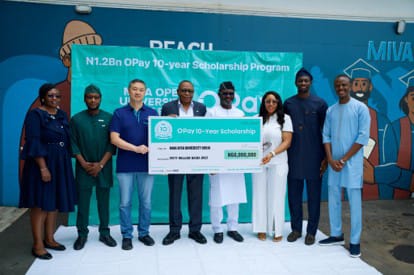
For a Nigerian student, a scholarship can mean more than money. It can mean staying in school when a family is struggling to pay fees. It can mean being able to concentrate on lectures instead of worrying about how the next semester will be funded.
For some families, it can be the difference between a young person completing a degree and having to put education on hold.What started as a long-term commitment to students across 20 tertiary institutions is now taking another step forward.
With the signing of a new Memorandum of Understanding (MoU) with Miva Open University, the OPay N1.2bn 10-year scholarship programme, which sits in the broader OPay ScholarsProgramme, alongside the OPay National Innovation Challenge in partnership with Google and 3MTT, and OPay Futures, now has 25 partner tertiary institutions.
But there is more to come. OPay plans to extend the programme to 16 additional tertiary institutions by the end of 2026, bringing the total number of institutions covered to 41. For thousands of young Nigerians and their families, these numbers are not simply figures. They represent opportunities.
A commitment beyond a cheque
Education support in Nigeria is often associated with one-off donations or short-term interventions. OPay’s approach is different. The company has chosen to make a commitment that stretches across a decade.
The ₦1.2 bn 10-year scholarship programme is designed to provide sustained scholarship support to students over 10 years, creating a more reliable form of assistance for young Nigerians pursuing higher education. The recent partnership with Miva Open University further strengthens that commitment.
As a technology-driven university, Miva brings a flexible and technology-enabled approach to higher education. Its inclusion in the OPay ₦1.2 bn 10-year scholarship programme means more students can benefit from scholarship opportunities while pursuing their education through a different learning model. This latest partnership also sends a clear message about the programme’s direction: OPay is not looking to do less in the years ahead. It aims to reach more students and institutions.
A long-term bet on Nigeria
For OPay, the decision to invest in Nigerian students is ultimately a decision to invest in Nigeria itself. The young people receiving these scholarships are not simply students. They are future professionals, entrepreneurs, innovators, teachers, engineers, technology experts, healthcare workers and leaders. Their success will become part of the country’s success, and that is the bigger story behind the numbers.
For the student who can remain in school, the parent who can breathe easier, and the young Nigerian who can continue pursuing a dream, that commitment is not just a corporate announcement. It is an investment in a future that belongs to all of us, and OPay is making that investment for the long haul.
By Tambaya Julius, Abuja
The Nigeria Customs Service (NCS) has fixed physical screening and documentation for successful candidates shortlisted in its 2024/2025 recruitment exercise, warning applicants that failure to appear on their assigned dates could lead to disqualification.
The exercise will take place at the Nigeria Customs Command and Staff College (NCCSC), Gwagwalada, Abuja, with candidates expected to report strictly according to the dates allocated to their respective states and cadres.
The NCS Spokesperson, Deputy Comptroller Abdullahi Maiwada, announced this in a statement issued on Tuesday in Abuja.
Maiwada described attendance at the exercise as compulsory, urging shortlisted candidates to comply fully with the schedule and requirements communicated by the Service.
He said candidates must appear with both original and photocopies of the required documents for verification.
The documents include the National Identification Number (NIN), original birth certificate or declaration of age, as well as educational certificates covering O’Level, National Diploma (ND), Higher National Diploma (HND), degree and other applicable qualifications.
Candidates are also required to present a Certificate of State of Origin, two recent passport photographs, a completed Guarantor’s Form and NYSC Certificate, where applicable.
In addition to the documentation requirements, Maiwada directed candidates to appear in a white T-shirt, shorts and canvas shoes for the physical screening.
He explained that candidates who successfully complete the screening and documentation exercise would subsequently receive further instructions from the Service on the next stage of the recruitment process.
The spokesperson said the NCS had established the necessary mechanisms to ensure that the recruitment exercise was conducted transparently and on the basis of merit.
He said the Comptroller-General of Customs, Bashir Adeniyi, and the management team remained committed to ensuring fairness throughout the process.
“The NCS under the leadership of the Comptroller-General of Customs, Bashir Adeniyi and his management team, assure all candidates and the general public of a transparent, fair and merit-based recruitment process,” Maiwada said.
He further cautioned candidates against relying on unofficial information, advising them to obtain updates only through the Service’s recognised communication channels.
The recruitment exercise comes as the NCS continues efforts to strengthen its workforce and improve its operational capacity in revenue generation, trade facilitation and border security.
By Dakuku Peterside
Dolly Parton has never governed a state, controlled a public budget, or commanded the machinery of government. Yet her life offers Nigeria a timely lesson: leadership is measured not by the grandeur of office, the length of a convoy or the volume of publicity, but by the durable good created for others.
Parton built global fame through music, entertainment, and business.
She could have treated success as private property. Instead, she converted influence into service — supporting literacy, medical research, disaster relief, education, hospitals, and community programmes. Her example is not an invitation for Nigerian leaders to imitate an American celebrity. It is a reminder of a universal principle: influence is stewardship.Nigeria does not lack influential people. It has presidents, governors, ministers, legislators, regulators, traditional rulers, business leaders, religious figures, and celebrities. What it too often lacks is the disciplined conversion of influence into trusted public value.
Parton’s Imagination Library captures this distinction. Launched in 1995 as a local literacy initiative, it became an international programme that has distributed hundreds of millions of free books to children. Its significance lies not merely in generosity, but in institutional design. She did not simply give books on a celebrated occasion; she created a system capable of delivering them repeatedly.
During the COVID-19 pandemic, she donated $1 million to Vanderbilt University Medical Centre, supporting early research connected with the development of Moderna’s vaccine. The principle was straightforward: identify a public problem, commit resources, and support a practical solution.
Nigeria’s leadership deficit often begins where this sense of stewardship ends. Public office is too frequently approached as privileged access to contracts, appointments, protection, and personal accumulation. Political loyalty can outweigh competence; public resources are captured by private networks; and institutions are bent around the interests of those who temporarily control them.
The consequences are not abstract. The United Nations Office on Drugs and Crime’s 2023 national corruption survey found that 27 per cent of Nigerians who had contact with public officials paid a bribe during the preceding year. Although this was slightly lower than the 29 per cent recorded in 2019, cash bribes paid to public officials were estimated at approximately ₦721 billion in 2023.
Behind that figure are millions of humiliating encounters: a motorist compelled to pay at a checkpoint, a trader charged unofficially for a permit, a patient denied attention without inducement or a jobseeker expected to purchase an opportunity. When influence becomes a private commodity, citizens pay in money, dignity, and lost opportunity.
The deeper lesson from Parton’s philanthropy is that leadership must build institutions, not merely monuments. A ceremonial donation generates applause for a day; a credible literacy programme changes lives for decades. A ribbon-cutting attracts cameras; a transparent procurement system, a reliable hospital, or a professionally managed scholarship scheme continues to serve after the officeholder has departed.
Nigeria’s governance culture remains excessively attached to visible projects and individual personalities. Administrations arrive, rename inherited programmes, abandon unfinished projects, remove experienced officials, and announce new beginnings. Continuity is sacrificed to political ownership. Public institutions become temporary estates rather than enduring national assets.
The claim that most public institutions lack effective, public-facing systems for disclosing how they use public resources is not my conjecture. The evidence is clear. The 2025 Transparency and Integrity Index (TII) found alarmingly weak transparency and accountability across Nigerian public institutions. Of the 517 MDAs assessed, only six scored above the 50% benchmark, while the vast majority fell in the “red zone.” Nine MDAs scored zero.
The message is clear: institutions entrusted with public resources are falling seriously short on disclosure, accountability, and public-facing integrity. The picture is even more disturbing at the level closest to citizens. The Nigerian Local Government Integrity Index reported that 85 per cent of the country’s 774 local governments fell within the “very high” or “critical” risk categories, reflecting opacity, weak enforcement, and poor service delivery.
For citizens, institutional failure has a physical address. It is the primary healthcare centre without medicine, the community road rendered impassable by rain, the refuse left uncollected, the market without sanitation and the local council whose budget cannot be meaningfully examined. An institution is not strengthened because a new building bears a leader’s name. It is strengthened when rules work, professionals are protected, resources are accounted for and services reach the public consistently.
Nigeria’s preference for monuments over institutions is reinforced by a political culture that rewards what can be photographed. The remodelled Abuja City Gate, presented as a symbol of renewal, identity and national pride, illustrates the attraction of ceremonial achievements. A capital city should maintain attractive landmarks. But ceremonial visibility must not be confused with institutional progress.
The meaningful questions are less glamorous: Was the project cost publicly disclosed? Was procurement transparent? Is there a credible maintenance plan? What measurable improvement did it bring to the administration of the city? A monument may embody national aspiration, but without transparency and sustainable management, its symbolism can exceed its public value.
Institution-building rarely produces immediate spectacle. Transparent planning approvals, audited asset registers, responsive complaint systems, enforceable service standards, and competitive procurement do not always offer dramatic commissioning ceremonies. Yet these are the achievements that make government dependable.
Crisis provides an even sterner test. Nigeria regularly confronts floods, insecurity, displacement, food inflation, unemployment, and public-health emergencies. The official response often follows a familiar script: visits to affected communities, sympathetic speeches, high-level committees, promises of intervention and relief that arrives late — or not at all.
The 2022 floods exposed this gap between appearance and impact. Homes, farms, and infrastructure were destroyed, communities displaced and vulnerable households pushed deeper into hardship. A subsequent recovery assessment found that 80.4 per cent of surveyed households considered external flood-response and recovery services unhelpful.
That finding should trouble every level of government. Emergency leadership is not measured by the number of officials photographed in flooded communities. It is measured by whether warnings were acted upon; whether evacuation routes and shelters were prepared; and whether food, medicine, sanitation, compensation, and reconstruction reached affected families in time. Sympathy without an effective response is public relations, not leadership.
The removal of the petrol subsidy in 2023 presented a different but equally consequential test. There were defensible fiscal arguments for reform, including the enormous cost and questionable sustainability of subsidy spending. But economic logic does not erase human pain. Transportation, food, and energy costs increased almost immediately, while credible cushioning measures remained distant from the daily experience of many citizens.
A people-centred transition would have preceded sacrifice with preparation: a clear explanation of the policy, transparent accounting of the savings, targeted income support, dependable mass transportation, wage protection, food security measures, and safeguards for vulnerable households. Good leadership does not merely take tough decisions. It equips people to withstand their consequences.
This is where proximity matters. Parton’s working-class background did not remain a convenient detail in her biography; it informed the causes she supported. Nigeria’s governing class, by contrast, often appears insulated from the conditions under which most citizens live.
A citizen who spends hours navigating a broken road struggles to make sense of the sirens and convoys of officials who have failed to repair it. A family unable to afford treatment cannot easily trust leaders who routinely seek healthcare abroad while public hospitals deteriorate. Calls for citizens to “endure,” “sacrifice,” or “be patient” sound hollow when sacrifice flows in only one direction.
This distance is also democratic. Many Nigerians have little direct contact with elected representatives outside campaign periods. Leaders who enter communities to solicit votes may become inaccessible once elected. Major taxes, subsidy reforms, infrastructure choices, and budgetary priorities are frequently announced without meaningful consultation, accessible data, or functioning feedback mechanisms. Citizens become an audience for government decisions rather than partners in governance.
Humility offers a necessary corrective. Roads, hospitals, schools, and security services are not personal gifts from officeholders. They are public obligations financed by taxes, national revenue, borrowing and the work of civil servants and contractors. A governor who commissions a school has not bestowed private generosity upon the people; the governor has performed a constitutional duty.
Yet publicly funded projects are routinely personalised through oversized portraits, self-congratulatory publicity and naming practices that portray ordinary responsibilities as exceptional acts of benevolence. Institutional credit is displaced by personal glorification. The state becomes indistinguishable from the officeholder.
Humility also requires openness to scrutiny. Nigeria’s Constitution requires public officers to declare their assets upon assuming office, periodically while serving and at the end of their tenure. Yet concerns persist about compliance and the limited accessibility of declarations. When leaders resist disclosure or treat questions from journalists, citizens, legislatures, and civil-society organisations as hostility, they undermine the accountability that gives democratic office legitimacy.
Dolly Parton’s lesson is therefore not really about celebrity or philanthropy. It is about the moral purpose of influence. Leadership should leave behind stronger institutions, better-prepared communities, more educated children, greater public trust, and citizens who feel respected rather than exploited.
Nigeria will not be transformed by speeches, monuments, or ceremonies alone. It will change when those entrusted with power treat office as service, public resources as a sacred trust, crisis as a call to practical action and achievement as an invitation to humility. The true legacy of leadership is not how prominently a leader’s name is displayed, but how well the people continue to live when that leader is gone.
Dakuku Peterside is the author of Leading in a Storm and Beneath the Surface.




10 Years. N1.2bn. 40+ Tertiary Institutions by 2026. OPay Is Here to Stay
ShareFor a Nigerian student, a scholarship can mean more than money. It can mean staying in school when a family...


NCS Sets Physical Screening for 2024/2025 Recruitment, Warns Candidates Against Absence
ShareBy Tambaya Julius, Abuja The Nigeria Customs Service (NCS) has fixed physical screening and documentation for successful candidates shortlisted in...
A leadership Lesson for Nigeria from Dolly Parton
ShareBy Dakuku Peterside Dolly Parton has never governed a state, controlled a public budget, or commanded the machinery of government....
NSIA’s Healthcare Journey: From Vision to Measurable Impact
ShareBy Tony Obiechina At the Nigeria Sovereign Investment Authority NSIA), the mandate to deploy patient capital is anchored in a...


Messi Legacy will Live Forever, Says Beckham
ShareDavid Beckham said Lionel Messi’s “legacy will live forever” after the Argentina legend announced his retirement from international football. Messi...

Katsina, UNICEF Inaugurate Campaign against Diphtheria, Malnutrition
ShareThe Katsina State Government, in collaboration with the United Nations Children’s Fund (UNICEF), has intensified sensitisation on diphtheria prevention and...

JAMB, WAEC Clarify N4,000 One-off O’Level Result Verification
ShareThe Joint Admissions and Matriculation Board (JAMB) and the West African Examinations Council (WAEC) have clarified that candidates seeking admission...


NYSC Commends Security Agencies for Rescue of 16 Abducted Corps Members
ShareThe National Youth Service Corps (NYSC) has commended security agencies and other groups for the successful rescue of 16 corps...

NAPTIP Urges CSOs to Expose Criminal Elements
ShareThe Director-General of the National Agency for the Prohibition of Trafficking in Persons (NAPTIP), Hajia Binta Adamu-Bello, has charged the...

NEMA, FRSC, Fire Service Step up Early-warning, Preventive Safety Measures
ShareThe National Emergency Management Agency (NEMA), Federal Road Safety Corps (FRSC) and Federal Fire Service (FFS) have intensified preventive measures...