
Agriculture
COVID-19: PTF Exempts Farmers From Movement Restriction


By Mathew Dadiya, Abuja
The Presidential Task Force (PTF) on COVID-19, Thursday said that farmers were included in the exemption list of non-restriction of movement and appealed to State Governors, Local Government Authorities and security agencies to allow them to carry out their activities.
The PTF stressed that the nation’s food security “is critical to our national security.
”The Secretary to the Government of the Federation (SGF) and Chairman of Presidential Task Force on COVID-19, Boss Mustapha said this at the daily National briefing, in Abuja.
“Recall that when the new measures were rolled out and published, we ensured that certain economic activities pertaining to food production and distribution were exempted.
“This, for the avoidance of doubts includes farming activities. We recognize the fact that we are in the planting season and the nation cannot afford to prevent our hardworking farmers from going to their farms.
“We, therefore, use this medium to reemphasize that farmers fall within the list of exemptions and urge State Governors, Local Government Authorities and security agencies to allow them to carry out their activities,” the PTF chairman reiterated.
This is even as the the SGF disclosed that a total of 1,071 Nigerians have already been discharged from the various isolation treatment centres.
The PTF congratulated all frontline health workers, who he said have collectively nursed them back to health.
“These health workers have put in all, even beyond the call of duty, to save lives. We also congratulate all those that have been discharged and urge them to come out and tell their stories. We need to tell Nigerians that COVID-19 is real, that it is deadly and that prevention is better than cure. There is no better convincing and compelling evidence of the reality of the dangers than your experience.”
“We also congratulate all those that have been discharged and urge them to come out and tell their stories. We need to tell Nigerians that COVID-19 is real, that it is deadly and that prevention is better than cure. There is no better convincing and compelling evidence of the reality of the dangers than your experience.
“We need to tell Nigerians that COVID-19 is real, that it is deadly and that prevention is better than cure. There is no better convincing and compelling evidence of the reality of the dangers than your experience,”he said.
“Statistics on COVID -19 have continued to come out daily indicating that the testing strategy deployed is yielding results,” Mustapha said adding “we can now give care to those that need it.”
The SGF said that the PTF was disappointed with some Nigerian returnees on quarantine in isolation centers and who violate the guidelines on their being in the isolation centers.
He noted that while the PTF reported the progress made with the evacuation of some Nigerians from the UAE, UK and USA and informed about the mandatory quarantine protocol, it was saddened to see Nigerians acting to the contrary.
“Nigerians have in recent days been served with different audio-visual clips by some of these returnees. The PTF is saddened by the conduct of some of the returnees who fail to adhere to the conditions attached to their quarantine.
“I strongly urge them to obey the rules in the facilities and also urge their friends and relations to recognize the contagious nature of the disease by desisting from visiting them. Complying is in the interest of the visiting relation and in the overall public interest.”
Mustapha said that the nation has began the countdown to the end of the first phase of eased lockdown approved by the President, so that the economy could gradually reopen.
He said that the government would continue its assessment of the level of compliance with the guidelines and the impact on slowing down the spread of COVID 19.
He added that the taskforce shall make further recommendations before the second phase commences.
“I must, however, state that our initial evaluation point firmly in the direction of a high level of non-compliance which, as we have often warned, portend grave self-inflicted danger. This fact has made it imperative for me to re-echo our call for taking personal responsibility.
“This (exemption) for the avoidance of doubts includes farming activities. We recognize the fact that we are in the planting season and the nation cannot afford to prevent our hardworking farmers from going to their farms. We therefore use this medium to reemphasize that farmers fall within the list of exemptions and urge State Governors, Local Government Authorities and security agencies to please allow them to carry out their activities. Our food security is critical to our national security,” he said.
Mustapha said the PTF has briefed President Muhammadu Buhari on progress, challenges and planned course of action.
According to him, the objective was to seek further guidance and fresh ideas to improve the fight against COVID-19 and that the briefing was very helpful in bringing renewed cohesion into the efforts of government.
The SGF said that the PTF welcomes the resolution of the Nigeria Governors Forum to take steps to ramp up testing and provide the prescribed minimum number of bed spaces in their isolation and treatment centres.
He, however, assured the states that the NCDC will continue to provide technical support and standardization guidelines.
“It will also continue to firmly pursue its surveillance activities nationwide. We urge the states to recognize the essence of a strong partnership and always allow overarching public interest to prevail” he advised.








Some residents in Lagos State have expressed concern over the recent surge in the price of tomatoes, forcing many households to adopt alternatives.
The residents made their views known in separate interviews on Wednesday in Lagos.
A market survey showed that a 50kg basket of tomatoes now sells between N115,000 and N125,000, compared to between N35,000 and N40,000 recorded last month.
Olachi Igwe, a resident of Ago Palace, said the scarcity and high cost of tomatoes had disrupted her household’s meal plans.
“I contacted my usual vendor, but she said tomatoes were scarce and difficult to source.
“A small bowl we used to buy for between N3,500 and N4,000 now sells for as high as N6,000 to N7,000, when available.
“For now, my family will resort to palm nut stew (ofe akwu) until prices stabilise,” she said.
Another resident, Mercy Okeleye of FESTAC, said although her family prefers fresh tomatoes, rising prices have forced her to consider cheaper options.
“I cannot do without fresh tomatoes because of the taste, but I may have to buy broken ones, popularly called ‘esha’, which are relatively cheaper.
“I do not consider tomato paste a suitable substitute because it is not purely made from tomatoes,” she said.
Also speaking, Tope Babalola from Dopemu, said she might adjust her cooking methods if prices remain high.
“I have not bought tomatoes in over a month, but if the price is still high, I will use more onions and peppers.
“I will not resort to artificial additives; I prefer natural ingredients for my meals,” she said.
Joan Ogugua, another resident, said she had already switched to tomato paste to cope with the situation.
“I asked my son to buy tomato paste for our meals. I cannot justify spending excessively on fresh tomatoes when other basic needs must be met,” she said.
Also, Oge Ugwu, a civil servant at Lekki, said she would resort to cucumber stew with the recent price hike.
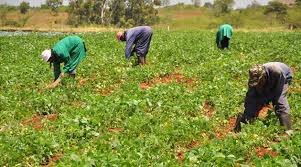
The Tomatoes Growers and Processors Association of Nigeria (TOPAN) has predicted a steady increase in the price of the produce between May and June 2026.
The Kaduna State Chairman TOPAN, Rabiu Zuntu, disclosed this in an interview recently in Lagos.
Zuntu noted that although there is no particular time for tomatoes planting season up north, seasonal weather variations can affect the production of the produce.
“Although we can plant tomatoes all-year-round, we cannot assure quality harvest all-year-round.
“Some farmers are harvesting now, while others are transplanting, and others are harvesting.
“Tomatoes are still available for sale but the price of the produce is gradually on the increase.
“Come May/June, the prices of tomatoes will be very expensive, so now is a good time to stock up the produce. There’s always a scarcity within that period.
“This is because of the nature of the weather in the north around that period, the weather is usually very hot and tomatoes cannot resist such hot temperature,” he said.
Zuntu said the price of tomatoes have started rising up in the north.
“A 50kg rafia basket of tomatoes sells from N20,000 as against N7,000 to N10,000 that was sold earlier in the year.
“While a crate of tomatoes up north is sold between N10,000 and N15,000 as against N5,000 to N6,500 sold earlier in the year.
“In most part of Kano State, where there is bumper harvest, they are rounding off their harvest. So, tomato is not that available there and most buyers have turned to where they can find it now, mostly within Kaduna State and some parts of Plateau State.
“So, that’s why the supply has decreased and the tomato supply and cost is determined by the law of demand and supply,” he said.
A 50kg basket of tomatoes in Lagos, at the moment, sells between N40,000 and N60,000 depending on the size and quality.

The Smallholder Women Farmers Organisation in Nigeria (SWOFON), Oyo State chapter, has said that the lack of irrigation facilities had become a major obstacle to dry season farming in the state.
The Chairperson of SWOFON in Oyo State, Atinuke Akinbade, said this in an interview in Ibadan on Monday.
Akinbade, who shared the experiences of women farmers in the state during the 2025 dry season, said that inadequate access to water for irrigation significantly affected the performance of many farmers during the period.
“It hindered many older farmers from participating in dry season farming and also prevented younger farmers from doing as much as they could in cultivating large acres of land,” she said.
Akinbade explained that farmers who managed to plant during the season struggled to access sufficient water to irrigate their farms, a situation worsened by the effects of climate change.
“Many farmers who depended on streams and wells to water their crops suffered major setbacks because those sources could not provide enough water for irrigation.
“Some farmers had to resort to buying water from commercial water tankers, which increased the cost of production, while at times it was even difficult to get water from the tankers,” she said.
The SWOFON chairperson warned that failure to address the problem could worsen food insecurity in the coming months.
“Even now, rainy season farming has not fully commenced because of the irregular rainfall pattern.
“This is a double burden, and if nothing is done, it may lead to serious hunger later,” she said.
Akinbade, however, acknowledged that the government had organised training for members of the association on home gardening.
She, however, said that little support was provided to address the challenges of dry season farming.
The chairman said that the home garden support package given to members consisted mainly of seedlings and one sprayer.
“They gave us two packs each of maize and pepper seeds, with six seeds in each pack, as well as one sprayer, so that we can grow food for household consumption,” she said.
Earlier, Oluwatoyin Oyedeji, SWOFON Coordinator in Oyo East, explained the severe hardship members of the organisation experienced in sourcing water for irrigation.
“Many farmers are already counting their losses because water was not available to irrigate their farms.
“Those who depended on streams and brooks were badly affected because many of them dried up, while the few that still had water had so little that farmers had to dig deeper into the ground in search of more,” Oyedeji said.
In the same vein, the Women Leader for farmers in Saki East, Musiliu Ashiru, said the absence of irrigation facilities also hampered dry season farming in her area.
According to her, many farmers still engaged in dry season farming have had to pay for water to keep their crops alive.
“Many of them buy water from the dam here to irrigate their crops. It has not been easy for them this year,” Ashiru said.


Nigeria Since 1999: When will the Years Begin to Count?
ShareBy Dakuku Peterside Think of a Nigerian born in 1999, the year civilian rule came back. That person is twenty-seven...


Tinubu’s Return: An Update
ShareBy Reuben Abati Exactly a week ago, President Bola Ahmed Tinubu, now jokingly renamed a citizen of Kano with a...


NDLEA Seizes over 10 Tonnes of Illicit Drugs, Recover Firearms in Kogi
ShareBy Elijah Oguche, Abuja The National Drug Law Enforcement Agency (NDLEA) in Kogi said it has seized more than 10...


CAN Mourns Victims of NAF Aircraft Crash in Ondo
ShareBy Laide Akinboade, Abuja The Christian Association of Nigeria (CAN) on Tuesday, mourned the crash involving a Nigerian Air Force...


Trust is Democracy’s Invisible Currency, Says Akpabio
ShareThe National Assembly remains the bridge through which the hopes and aspirations of ordinary Nigerians must translate into government decisions,...


Why Women Must Equip Themselves – Minister
ShareBy Laide Akinboade Abuja The Minister of Women Affairs and Social Development, Imaan Suleiman-Ibrahim, on Tuesday, tasked Nigerian women to...

Horrors Must Never be Repeated, Says UN Chief
ShareUN Secretary General António Guterres on Monday called for a peaceful future for Israelis and Palestinians ahead of the third...


Kenya Confirms its First Ebola Death as Outbreak Spreads
ShareKenya has confirmed its first case of Ebola, a Kenyan citizen who has been living in the Democratic Republic of...


NAF Names Crew, Passengers on Board ill-fated Flight
ShareThe Nigeria Air Force (NAF) has released the names of personnel and passengers in the crashed NAF 931 aircraft. This...

SUBEB Begins Training of 75 SMOs in Zamfara
ShareThe Zamfara State Universal Basic Education Board (ZSUBEB) has flagged off the training of 75 State and Local Government Education...