
FEATURES
Customs PR Officers Sweep Top Honours as 50 Graduate from NCCSC Gwagwalada

By Tambaya Julius, Abuja
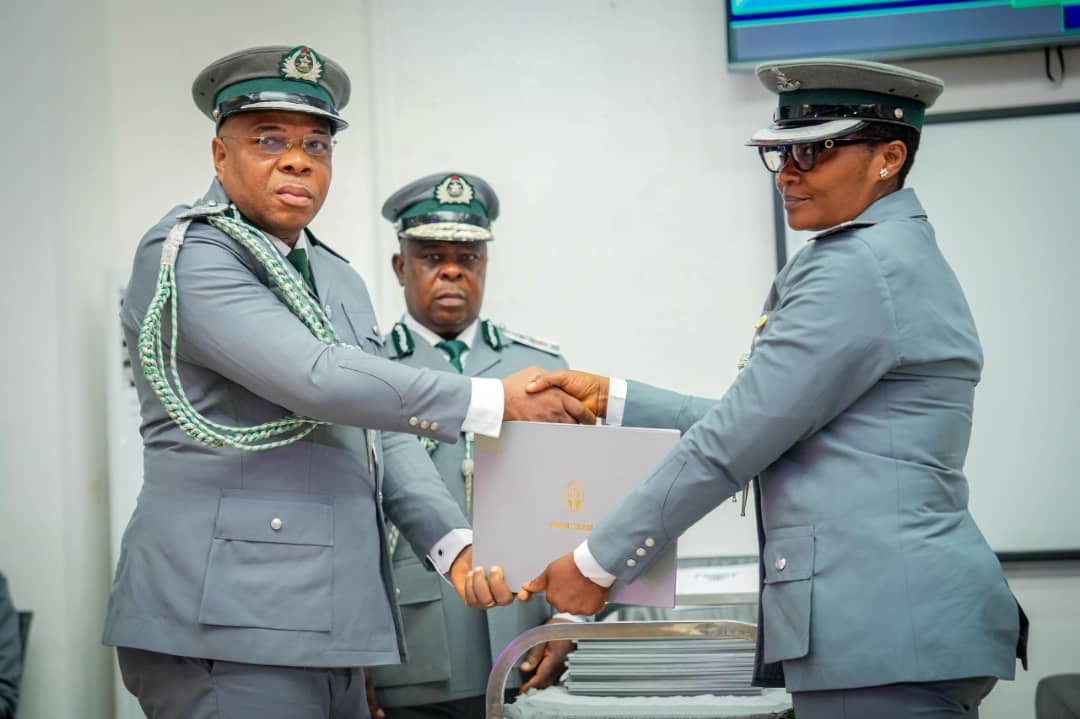
The Nigeria Customs Service (NCS) has graduated 50 officers from the Nigeria Customs Command and Staff College (NCCSC), Gwagwalada, with two officers from the Service’s National Public Relations Unit emerging as the Overall Best and Second Best Graduating Students in Senior Course 14/2026.
A major highlight of the graduation ceremony, held at the Ahmed Makarfi Hall of the College on Friday, 26 June 2026, was the emergence of Chief Superintendent of Customs Ridwan Yusuf as the Overall Best Graduating Student and Chief Superintendent of Customs Nuruddeen Sa’idu as the Second Best Graduating Student.
Both officers serve in the Service’s Public Relations Unit.In his message to the graduating officers, the Comptroller-General of Customs, Adewale Adeniyi, represented by the Commander, Training and Doctrine Command (TRADOC), Deputy Comptroller-General of Customs Sulaiman Chiroma, congratulated them on completing one of the Service’s most demanding professional training programmes.
DCG Chiroma charged the officers to uphold the highest standards of professionalism, discipline and courage, saying, “To whom much is given, much is expected. On behalf of the Comptroller-General of Customs, I urge you to remain mission-focused and continue to serve the nation with honesty, integrity and dedication.”
Earlier, the Commandant of the College, Assistant Comptroller-General of Customs Duwoh Gaura, reaffirmed the institution’s commitment to producing competent officers in line with the Comptroller-General’s vision of a more efficient, technology-driven and professional NCS.
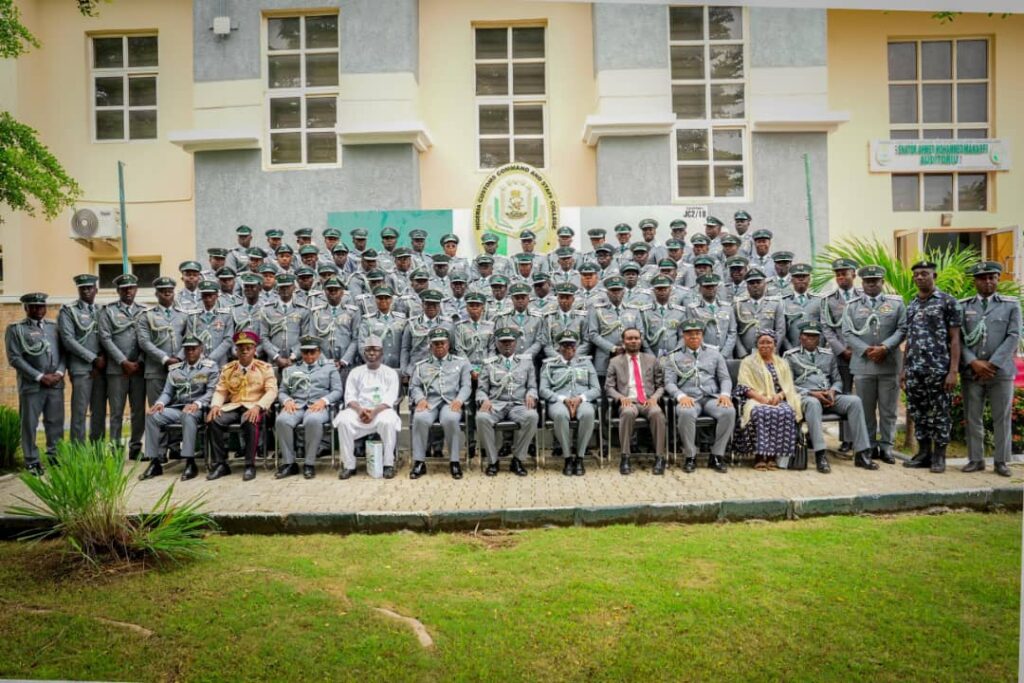
The graduation marked another milestone in the Service’s commitment to developing highly skilled officers capable of meeting the evolving demands of Customs administration and border management.
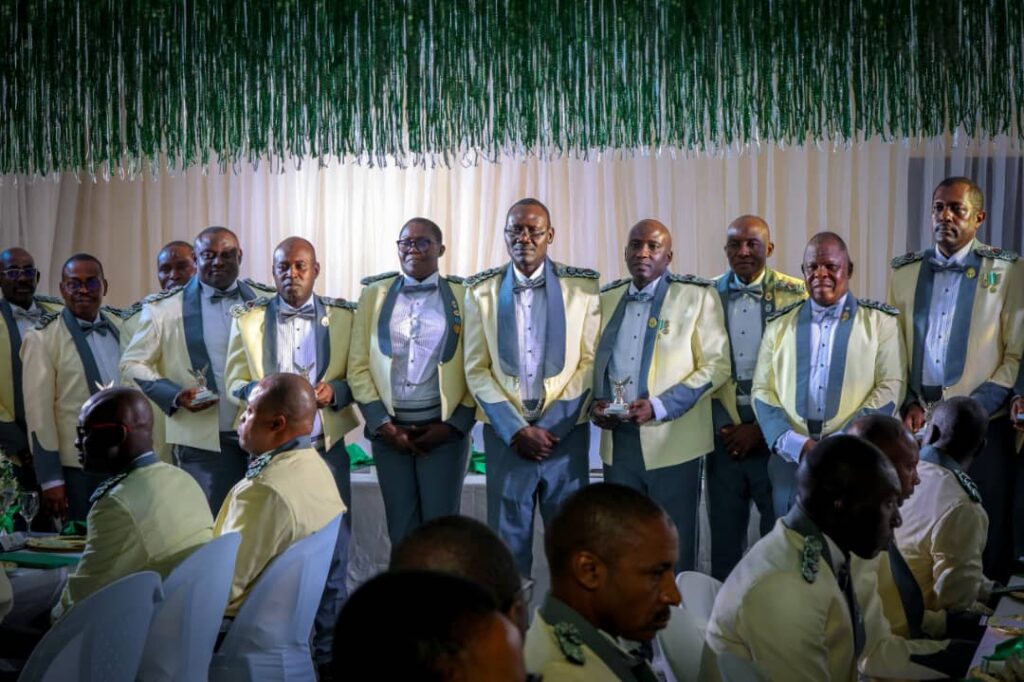
The College had earlier, on Wednesday, 24 June 2026, held a Regimental Dinner at the NCCSC Hotel, Gwagwalada, in honour of the graduating officers. The event was attended by members of the Service’s Management Team, senior officers and guests. It was graced by the Comptroller-General of Customs, Adewale Adeniyi, represented by DCG Sulaiman Chiroma.

By Aderonke Ojediran
As Nigeria marks its 66th Independence anniversary, the debate over leadership, public trust and accountability remains central to the country’s democratic experience.
For citizens, the question is not simply whether political leaders make mistakes.
It is also about how they respond when they do, how they explain their decisions and whether they remain accountable to the people they serve.This debate has recently been brought into sharper focus by comments from Lagos Deputy Governor, Dr Obafemi Hamzat, who is also the All Progressives Congress (APC) governorship candidate for the 2027 election.
From housing and the cost of accommodation to Lagos’ notorious traffic, some of Hamzat’s public comments have generated criticism and discussion, raising a broader question.
Must a leader always say the right thing, make the right decision and satisfy every public expectation to be considered worthy of leadership?
The question goes beyond one politician or one election.
Obviously, it touches on the difficult balance between citizens’ expectations and the realities of governing a population of millions, with competing needs, interests and circumstances.
Mr Emmanuel Okara, a sports analyst, believes leaders are human, but accountability remains non-negotiable.
The challenge, therefore, is to distinguish between an honest mistake, poor judgment, a legitimate change of position and a failure to act in the public interest.
According to Mr Dipo Ishola, a retiree, politicians should be held accountable for actions taken while in office because they are custodians of public trust and resources.
His position reflects a basic principle of democratic governance: public office is not merely a position of authority. It is a responsibility exercised on behalf of citizens.
Political leaders make decisions that affect the cost of living, employment, education, healthcare, housing, transportation and the general welfare of the population.
Their words and actions therefore attract greater scrutiny.
As Ishola noted, words spoken by private citizens can carry greater significance when expressed by people entrusted with public responsibility.
Mr Taiwo Olapade, a political analyst and Lagos resident, similarly said politicians were often held to higher standards because of the responsibilities entrusted to them and the public resources under their control.
He said government policies should ultimately improve citizens’ lives, although their effects might not be distributed equally.
According to him, leaders should be prepared to make difficult decisions when necessary, but should also explain the reasons for those decisions and their expected long-term benefits.
He added that governments should regularly review policies to ensure that they remained relevant to citizens’ needs.
Nigeria’s long-running debate over fuel subsidy removal provides one example.
In January 2012, the administration of former President Goodluck Jonathan announced the removal of the petrol subsidy, triggering nationwide protests and opposition from labour unions, civil society groups and political actors.
Tinubu, then a prominent opposition politician and former Lagos governor, was among those who criticised the policy and supported opposition to the removal.
On May 29, 2023, however, Tinubu, in his inaugural address as president, announced that the petrol subsidy was gone.
His administration subsequently defended the reform as necessary to address fiscal pressures and pursue longer-term economic changes.
The two episodes occurred under different administrations and in different economic circumstances.
They nevertheless provide a useful illustration of a recurring question in politics: Can a position opposed under one administration become justifiable under another?
Mr Lanre Adewole, a member of the Obafemi Hamzat Advisory Council, believes politicians can legitimately change their positions when they gain a better understanding of an issue or are presented with compelling evidence.
Adewole said historical perspectives and precedents should guide governments when explaining policies whose immediate effects might be difficult for citizens to bear.
He also stressed the importance of palliative measures to cushion the effects of economic reforms, including subsidy removal.
“The legitimacy of a decision depends not only on the intentions behind it but also on the evidence supporting it, its implementation and its consequences.
He nonetheless noted that describing a decision as necessary or beneficial in the long term “does not, by itself, make it a sound policy.”
According to Adewole, unpopular decisions can be justified where government has credible evidence that they are likely to address a difficult problem and produce broader benefits.
The important distinction, he said, was between a policy that was unpopular because it tackled a difficult problem and one that was unpopular because it was poorly designed, inadequately explained or unfairly implemented.
The Lagos conversation where housing costs and traffic congestion are part of the daily experience of many residents, comments by political office holders about these issues can quickly become matters of public debate.
Hamzat’s advice to young workers struggling with high rents to consider living with parents or relatives, sharing accommodation or choosing housing they can afford has attracted criticism as well as discussion about the realities of housing in Lagos.
The deputy governor was reported to have also advised residents not to spend more than 40 per cent of their income on rent.
Some may view the advice as practical in a city where accommodation is expensive. Others may argue that personal financial discipline does not address the structural problem of housing affordability.
Both perspectives point to a wider question: what policies can make decent housing more accessible to workers whose incomes have not kept pace with rents?
The issue goes beyond where an individual chooses to live. It involves housing supply, land costs, wages, transportation, urban planning and the broader cost of living.
A similar debate followed Hamzat’s description of Lagos traffic as a “lifestyle” during an appearance at Podfest Naija.
He was speaking in the context of Lagos’ creative industry and how commuters consume podcasts and other content while travelling.
Following criticism of the comment, Hamzat said the remark had been taken out of context and explained that he was discussing how traffic had become part of the daily experience of many Lagos residents.
For commuters, however, traffic is more than a cultural experience.
It can mean late arrival at work, reduced family time, additional transport costs, fatigue and lost productivity.
That is why the broader discussion should also consider practical solutions, including public transportation, road infrastructure, traffic management and urban planning.
Public comments should be assessed in context, but context should not prevent citizens from asking whether leaders adequately understand the problems they are addressing.
A politician’s choice of words may reveal a weakness in communication without necessarily providing a complete picture of the person’s approach to governance.
Conversely, a well-expressed statement does not automatically demonstrate effective leadership.
The more substantive question is whether a leader can translate an understanding of citizens’ problems into workable policies and measurable improvements.
Okara, the sports analyst, argued that leaders in government and business should be willing to make difficult or unpopular decisions where the long-term benefits justified them.
He said such leaders must communicate with the people and explain the expected benefits of their decisions.
He further argued that human beings were capable of changing as they learn and gain new experiences and that individuals should not be judged solely by the baggage of past controversies.
For Toyin Onigbanjo, founder of August Secrets, governance remained a collective responsibility.
That perspective recognises the role of citizens, public institutions, civil society, businesses and other stakeholders in promoting effective governance.
According to her, citizens often look to leaders for solutions to problems that have accumulated over many years.
The expectation can sometimes approach a demand for perfection, as though political office should eliminate ordinary human weaknesses such as uncertainty, error or changing judgment.
But political leaders are not religious figures, because they exercise public authority within institutions and should therefore be assessed against the responsibilities attached to public office.
Political leadership should not depend on unquestioning admiration or personal loyalty.
A leader should be able to make a mistake without every action being dismissed. At the same time, a leader should be expected to acknowledge errors and accept responsibility for their consequences.
The humanity of a leader may help explain a mistake. It does not automatically excuse it.
Beyond one comment
As Nigeria marks 66 years of independence, the question of leadership remains closely connected to the expectations citizens have of the state and those who govern it.
The anniversary offers an opportunity to reflect not only on Nigeria’s political journey but also on the responsibilities that accompany public office and citizenship.
In his 2026 Independence Day address, President Bola Tinubu described the anniversary as an opportunity to reflect on Nigeria’s journey and the difficult choices made in recent years.
He also said the government’s focus should now be on turning economic reforms into broadly shared prosperity.
For citizens, expectations remain straightforward: public institutions should be responsive, public resources should be responsibly managed and government decisions should ultimately improve people’s lives.
In return, public officials are expected to demonstrate integrity, transparency and a willingness to account for their actions.
The challenge is to ensure that criticism of leaders is based on evidence rather than personal dislike, while also ensuring that appeals for understanding do not become a shield against legitimate scrutiny.
The same standard should apply regardless of party affiliation, political popularity or past controversy.
With the 2027 governorship election approaching, discussions about political leadership in Lagos are likely to intensify.
Hamzat has already unveiled a development agenda focused on areas including job creation, infrastructure, education, healthcare and security.
The debate surrounding his public comments therefore provides an opportunity to consider how voters assess candidates whose statements may attract both support and criticism.
One comment, taken in isolation, may not adequately establish a candidate’s overall approach to governance.
Equally, a public statement should not be dismissed simply because it comes from a politician whom someone supports.
A fuller assessment requires attention to a candidate’s public record, policy proposals, understanding of the state’s challenges, approach to accountability and explanation of how proposed solutions would be implemented.
Citizens may also ask whether a candidate has demonstrated the ability to listen to criticism, respond to public concerns and adjust policies when evidence shows that changes are necessary.
These questions are particularly relevant in Lagos, where housing affordability, transportation, waste management, flooding, employment and access to public services affect residents in different ways.
The task is not to demand that a candidate be perfect. No leader can reasonably satisfy every citizen or avoid every error.
The more practical question is whether the person seeking public office is willing to listen, learn, explain decisions, correct mistakes and remain accountable to the people.
Democracy does not require citizens to regard politicians as saints. Neither does it require them to accept every explanation offered by those in power.
It requires citizens to distinguish between personality and performance, promises and results, a genuine change of position and an unexplained contradiction.
It also requires political leaders to recognise that public office comes with obligations that go beyond personal intentions or the popularity of their statements.
A difficult decision should be supported by evidence and clearly explained.
A policy that causes hardship should come with a credible explanation of its purpose, expected benefits and consequences.
A mistake should remain open to scrutiny, while a change of position should be explained.
Ultimately, the question is not whether a leader can avoid every error or satisfy every citizen. No leader can reasonably guarantee either.
The more important question is whether the leader is willing to listen, learn, explain decisions, correct mistakes and remain accountable to the people.
As Nigerians reflect on 66 years of independence and Lagos residents prepare to make political choices in 2027, the challenge is to look beyond isolated comments without ignoring them, test claims against evidence and assess candidates by their records, proposals and willingness to answer for their actions.
The ballot box is not a search for a saint. It is a decision about who should be entrusted with public power and who will be held accountable for how that power is used.(NAN)
By Tony Obiechina
At the Nigeria Sovereign Investment Authority NSIA), the mandate to deploy patient capital is anchored in a clear objective: to invest in sectors capable of delivering both long-term commercial returns and measurable national impact.
Few sectors embody this dual imperative more clearly than healthcare.NSIA’s entry into healthcare was therefore guided by a straightforward but ambitious proposition: that high-quality healthcare services—many of which were previously inaccessible in Nigeria or available primarily through overseas treatment—could be made more accessible and affordable within the country.
This ambition led to the establishment of NSIA Advanced Medical Services Limited (“MedServe”), the Authority’s wholly owned healthcare subsidiary, with a strategic focus on advancing oncology, diagnostics and, subsequently, other specialised medical services across Nigeria.
Building on this foundation, Aminu Umar-Sadiq, Managing Director & Chief Executive Officer at NSIA has placed healthcare investment within a broader institutional framework—one that goes beyond the development of individual facilities to building sustainable healthcare capacity, strengthening local expertise, and creating platforms capable of delivering measurable outcomes over the long term.
Through MedServe, NSIA has translated this strategic vision into operational healthcare infrastructure with national significance.
The MedServe–LUTH Cancer Centre (MLCC) in Lagos, commissioned in May 2019, became the first oncology centre in Nigeria to offer 3D Conformal Radiotherapy and today houses the largest concentration of radiotherapy equipment in West Africa.
The centre’s strategic value became particularly evident during the COVID-19 pandemic, when international travel restrictions significantly constrained access to overseas medical treatment. At a critical moment for patients requiring specialised care, MLCC provided continuity of advanced cancer treatment within Nigeria, demonstrating the importance of resilient domestic healthcare capacity.
This investment has been complemented by the MedServe Kano Diagnostic Centre (MKDC) and the MedServe Umuahia Diagnostic Centre (MUDC), which introduced advanced radiology and pathology services to regions where such capabilities had previously been limited or unavailable.
The results are both substantial and measurable. Since inception, MLCC has delivered more than 25,000 radiotherapy sessions and 10,000 chemotherapy treatments to approximately 15,000 unique patients. The centre has also recorded instances of reversed medical tourism, with Nigerians being referred from overseas providers on account of the quality and cost-effectiveness of services available locally.
Treatment costs remain significantly below comparable international services, in many cases at less than half the cost of treatment abroad. It is estimated that these interventions have prevented more than US$200 million in foreign exchange outflows that would otherwise have been associated with overseas treatment and related expenses.
Across Kano and Umuahia, more than 410,000 patients had received pathology and radio diagnostic services by December 2025, supporting earlier detection, contributing to improved clinical decision-making and patient outcomes.
These figures represent more than service volumes. They demonstrate healthcare capacity built locally, specialised skills retained within the country, and tangible value delivered to Nigerians.
Building a Sustainable Oncology Ecosystem
Sustainable healthcare transformation requires more than physical infrastructure. It depends on an ecosystem in which infrastructure is supported by human capital development, clinical research, knowledge transfer and integration with leading international institutions.
Recognising that oncology remains an emerging specialty in Nigeria, NSIA, through MedServe, adopted a holistic approach centred on three priorities: developing a pipeline of skilled oncology professionals; strengthening clinical research and trial capacity tailored to African populations; and establishing partnerships with leading global medical institutions.
As part of this effort, MedServe instituted an annual Oncology Summit to bring together clinicians, researchers, regulators and academics, creating a platform for knowledge exchange, professional development and collaboration.
MedServe has also established partnerships with globally respected institutions, including Memorial Sloan Kettering Cancer Center, the University of Maryland Medical Center and Bio Ventures for Global Health. These collaborations are helping expand access to clinical trials and innovative approaches in oncology, radiology and pathology.
To date, MedServe has participated in two global cancer trials focused on prostate and breast cancer—an important step towards strengthening Nigeria’s role in international clinical research and ensuring that evidence generated through global healthcare innovation is increasingly relevant to African populations.
This ecosystem-led approach reflects the broader investment philosophy championed under Aminu Umar-Sadiq’s leadership: that sustainable impact is achieved not simply by deploying capital into assets, but by creating the institutional, technical and human-capital foundations required for those assets to deliver value over generations.
Expanding National Access: The Next Phase
Building on the outcomes achieved to date, MedServe has embarked on a structured expansion of its healthcare footprint across 13 states.
The expansion is designed to balance established urban centres—including Lagos, the Federal Capital Territory and Kaduna—with other participating states such as Oyo, Sokoto, Delta and Yobe. The objective is to bring specialised diagnostic and treatment capabilities closer to more Nigerians while creating a more geographically diversified healthcare network.
The next phase comprises the development of 13 new diagnostic centres, three additional oncology centres and three cardiac catheterisation laboratories, introducing cardiology as a new service line within the MedServe platform.
Scale, however, must be accompanied by operational resilience. To this end, MedServe has established long-term partnerships with global equipment manufacturers Siemens and GE. These partnerships cover equipment supply, maintenance, training and bulk procurement efficiencies, supporting high service uptime, consistent quality and the long-term sustainability of the expanding network.
The financing structure supporting this expansion is equally significant. In line with NSIA’s mandate to mobilise capital and catalyse foreign investment, MedServe secured up to US$24.3 million in blended financing from the International Finance Corporation (IFC) and the International Development Association (IDA).
The financing represents an innovative approach to healthcare investment, helping to lower the cost of capital while supporting affordability and demonstrating growing multilateral confidence in Nigeria’s healthcare sector.
With the commissioning of new centres scheduled to commence from mid-2026, NSIA, through MedServe, remains focused on expanding equitable access to high-quality healthcare services across Nigeria.
The country’s healthcare narrative must continue to evolve. It should no longer be defined predominantly by outbound medical tourism, but increasingly by domestic resilience, expanding capacity and measurable national capability.
The ambition is not simply to build more healthcare facilities. It is to demonstrate that world-class, dignified and accessible healthcare can be developed, operated and sustained in Nigeria.
The journey remains ongoing, but the direction is clear. Through disciplined capital deployment, strategic partnerships, long-term institutional commitment and strong execution, NSIA will continue to support the development of healthcare infrastructure capable of serving both the current and future generations of Nigerians.
For NSIA, the measure of success ultimately extends beyond the infrastructure delivered. It lies in the capacity created, the patients served, the expertise retained, the investment attracted and the extent to which Nigeria’s healthcare system becomes stronger, more resilient and increasingly capable of meeting the needs of its people at home.
By Rotimi Ijikanmi
For four days, the road into Benue became a moving test of perception, with a presidential media team traversing routes once feared for attacks, without incident.
The Renewed Hope Ambassadors Presidential Media Team, led by Mr Bayo Onanuga, the Special Adviser to the President on Information and Strategy, embarked on the journey on Aug.
5.The mission was to inspect Federal Government and state infrastructure projects across Nasarawa and Benue states, but the journey also offered an opportunity to test prevailing narratives about insecurity.
The journey also unfolded against sustained Federal Government efforts under President Bola Tinubu to strengthen security nationwide through expanded deployments, intelligence, recruitment and inter-agency coordination.
The team travelled from Abuja to Makurdi, then ventured into interior communities and remote locations where reports of attacks by bandits, kidnappers and other criminal elements had previously generated concerns.
No fewer than 40 senior editors,, social media handlers, cameramen, photographers and other support staff members from the Presidential Villa joined the journey, making the convoy a sizeable travelling media contingent.
Among the officials were Mr Tunde Rahman, Senior Special Assistant to the President on Media and Special Duties; Mr Tope Ajayi, Senior Special Assistant on Media and Publicity, Director in the Villa Media Unit, Mr Abiodun Oladunjoye.
Others included Mr Abdulaziz Abdulaziz, Senior Special Assistant on Print Media; Mr Otega Ogra, Senior Special Assistant on Digital Media; and Ms Linda Akhigbe, Senior Special Assistant on Strategic Communication.
The first leg of the journey provided an immediate indication of changing conditions along the Abuja-Makurdi corridor, where improved road infrastructure has transformed travel on sections once associated with delays and hazards.
The reconstructed highway now offers wider lanes, improved shoulders, safer overtaking opportunities and better traffic flow, reducing motorists’ exposure to isolated bottlenecks and prolonged stops.
The road, a major gateway linking the Federal Capital Territory with Benue and the South-East, carries passengers, agricultural produce, fuel, livestock and other goods across the region.
The journey continued beyond Makurdi to Taraku Mill in Gwer East Local Government Area, Otobi Water Works and Treatment Plant, Benue Brewery and other infrastructure sites.
These locations, some situated away from major urban centres, offered another opportunity to assess the security situation beyond the main highways.
The team also inspected the ongoing 258-kilometre Makurdi-Otukpo-Enugu highway and travelled through the Aliade-Oju axis, areas where insecurity had previously affected movement and economic activities.
At Buruku, the team visited the ongoing bridge project across the Katsina-Ala River, a location historically associated with dangerous river crossings and significant loss of lives.
Mr Raymond Aondoakura, Chairman of Buruku Local Government, said almost 200 people had reportedly died in boat mishaps on the river within three years.
The ongoing bridge, therefore, represents more than infrastructure.
It is expected to eliminate a dangerous crossing, improve movement and connect communities previously constrained by geography and inadequate transportation links.
For the presidential media team, however, the significance of the journey extended beyond the projects inspected.
It provided an opportunity to experience directly a security environment often portrayed as uniformly dangerous across Benue and other parts of the North Central.
For four days, the team travelled through several locations without an attack or security incident, an experience that appeared to contrast with perceptions of pervasive insecurity.
The experience does not mean security challenges have disappeared from Benue, but it suggests that the situation may be more nuanced than broad descriptions of the state as entirely unsafe.
Across the North-West, the Tinubu’s administration has sustained Operation Fansan Yamma and intensified joint operations against bandit camps and kidnapping networks in Zamfara, Sokoto, Katsina, Kebbi and neighbouring states.
Gov. Hyacinth Alia has also pointed to improving security as evidence of changing conditions, particularly the gradual return of displaced residents to their ancestral communities.
During a media chat with the team, Alia disclosed plans to close some Internally Displaced Persons’ camps because occupants had voluntarily returned to their homes in order to farm.
The governor said 15 IDP camps had been established following attacks and displacement, but improved security was enabling many residents to return and rebuild their livelihoods.
He said security agencies, traditional institutions and residents were monitoring developments across the state, while the government continued working with international organisations to achieve durable returns.
The changing security picture is also reflected in renewed economic activity, as government revives abandoned industries and improves roads connecting farms, markets and production centres.
At Taraku, the government is reviving a N70 billion mill that had remained moribund for about 40 years, with the facility expected to process soybean, maize and animal feed.
The mill’s General Manager, Mr Terngwu Kyuve, said the facility could create no fewer than 2,000 direct and indirect jobs when fully operational.
Such investments require security because factories cannot thrive where workers, investors, farmers and transporters fear travelling to production locations.
Similarly, improved roads are helping farmers move produce faster, reducing journey times and limiting the prolonged exposure to isolated stretches that can heighten vulnerability.
The evidence from the road journey, therefore, points to a gradual change rather than a complete victory over insecurity.
Benue still faces security challenges, but improved roads, increased movement, government intervention and returning residents suggest that the state’s security narrative is evolving.
For the presidential media team, the four-day journey became an unconventional field test and evidence that the state is moving beyond its troubled past.
The experience also underscored the connection between security and development.
Roads, bridges, industries and economic opportunities can strengthen communities while reducing isolation that often creates vulnerabilities.
As the convoy returned after traversing highways, bridges, industrial sites and interior communities without incident, one conclusion stood out: Benue’s security story may no longer be as bleak as commonly portrayed.(NAN)



Senator Abba Moro: It is Time to Go Home
ShareBy Cleopas Agada For seven years in the National Assembly, what has Benue South actually felt? For a man who...


NCDs Fastest-growing Disease Burden in Nigeria — Pate
ShareThe Coordinating Minister of Health and Social Welfare, Prof. Muhammad Pate, said Non-Communicable Diseases (NCDs) have become one of the...
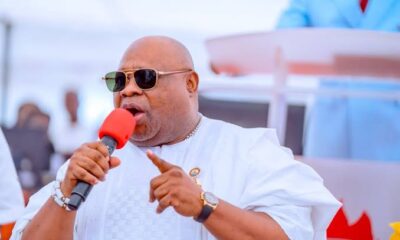

2027: Adeleke Inaugurates Aare Asejere’s Campaign Council
ShareFrom Ayinde Akintade, Osogbo The Governor of Osun State, Senator Ademola Adeleke, yesterday charged newly inaugurated members of the Osun...

INEC Seeks Stakeholders’ Collaboration for Credible, Peaceful Elections
ShareThe Independent National Electoral Commission (INEC) has reaffirmed its commitment to strengthen collaboration with the National Orientation Agency (NOA), security...

Reps Reject Child Marriage, Demand Protection of Girl Child
ShareBy Ubong Ukpong, Abuja The House of Representatives on Thursday unanimously called for urgent and coordinated actions to protect Nigerian...

Court Awards N125, 000 Cost against Odumodublvck
ShareAn Abuja High Court on Wednesday awarded N125, 000 against a rapper, Tochukwu Ojogwu, popularly known as “Odumodublvck”, for asking...


Hunger Changed My Mind, Timini Egbuson on Embracing YouTube movies
ShareNollywood actor Timini Egbuson has reflected on his changing perception of YouTube movies, joking that he might have struggled financially...


Peller Announces Livestream with Peter Obi
SharePopular Nigerian TikTok streamer, Hamzat Adelaja, popularly known as Peller, has announced an upcoming livestream with the presidential candidate of...

Nigeria’s inflation drops from 15.39 Per Cent to 14.63 Per Cent in September
ShareBy Tony Obiechina, Abuja The National Bureau of Statistics (NBS) on Thursday disclosed that Nigeria’s inflation has eased from 15.39...


Senate Oders Investigation into Corps Member’s Death in Enugu
ShareBy Tambaya Julius, AbujaThe Senate has ordered an investigation into the death of a National Youth Service Corps (NYSC) member,...