
Business News
Dangote is Wealthiest African for 9th Consecutive Year

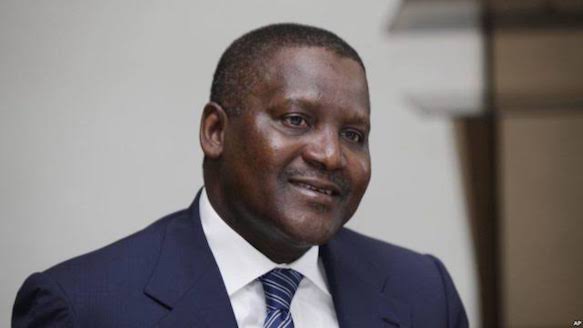
For the ninth year in a row, Aliko Dangote of Nigeria has been declared as the wealthiest person in Africa, with an estimated net worth of $10.1billion. In the latest ranking of the world’s billionaires by Forbes, the American global media company, focusing on business, investment, technology, entrepreneurship and leadership, Dangote’s present worth is down from his estimate of $10.
Africa has 54 nations, but only eight countries have billionaires according to Forbes, with South Africa and Egypt dominating not only the top 10 richest people in Africa list, but in the rankings overall with five billionaires each.
Sawiris’ most valuable asset is a stake in shoemaker Adidas worth a recent $4 billion. The increase in Adidas’ share price alone added nearly $1.5 billion to his fortune since January 2019. He also owns a significant stake in fertilizer producer OCI N.V. In 2019, Sawiris and U.S. investor Wes Edens purchased the remaining stake they didn’t own in U.K. Premier League team Aston Villa Football Club.
Number three on the list is Nigeria’s Mike Adenuga, worth $7.7 billion. He owns mobile phone network, GloMobile as well as oil producer Conoil and extensive real estate holdings. His mobile phone network, Globacom, is the third-largest operator in Nigeria, with 43 million subscribers while his oil exploration outfit, Conoil Producing, operates six oil blocks in the Niger Delta. One member of this elite group was worth 50 per cent less than a year ago. Due primarily to the introduction of a new (weaker) currency in Zimbabwe, Strive Masiyiwa’s fortune fell to $1.1 billion from $2.3 billion in January 2019. Zimbabwe, which has battled with hyperinflation, had been using the U.S. dollar as its currency, but in 2019 it switched to its own currency, initially called the RTGS. When converted into U.S. dollars, the values of Masiyiwa’s stakes in Zimbabwe-listed mobile phone network Econet Wireless Zimbabwe and Cassava Smartech fell dramatically in dollar terms.
Just two of the 20 billionaires are women: Isabel dos Santos, the eldest daughter of Angola’s former president, Jose Eduardo dos Santos; and Folorunsho Alakija of Nigeria. Dos Santos’ fortune has declined to an estimated $2.2 billion, down $100 million from a year ago. In late December, an Angola court issued an order to freeze the assets that Isabel dos Santos and her husband, Sindika Dokolo, own in Angola. Those include her stake in telecom firm Unitel and stakes in two Angolan banks; Forbes estimates those assets are worth hundreds of millions of dollars. A statement issued by Isabel dos Santos said the judgment contained “a number of untruths” and that she would fight the decision “by using all the instruments of Angolan and international law at my disposal.” Africa’s billionaires are as a group richer than a year ago. Altogether, the continent’s 20 billionaires are worth a combined $73.4 billion, up from $68.7 billion a year ago.
Country rankings are unchanged from a year ago: Egypt and South Africa are tied with five billionaires each, followed by Nigeria with four and Morocco with two. Forbes found one billionaire each from Algeria, Angola, Tanzania and Zimbabwe. That’s the same as last year but a better representation than nine years ago, when only four African nations were home to ten-figure fortunes. Dangote, Africa’s wealthiest man, founded and chairs Dangote Cement, the continent’s largest cement producer. He owns nearly 85% of publicly-traded Dangote Cement through a holding company. Dangote Cement produces 45.6 million metric tonnes annually and has operations in 10 countries across Africa. Dangote also owns stakes in publicly-traded salt, sugar and flour manufacturing companies. Dangote Refinery has been under construction for three years and is expected to be one of the world’s largest oil refineries once complete.
Explaining the methodology used in the ranking, Forbes Africa said “Our list tracks the wealth of African billionaires who reside in Africa or have their primary businesses there, thus excluding Sudanese-born billionaire Mo Ibrahim, who is a U.K. citizen, and billionaire London resident Mohamed Al-Fayed, an Egyptian citizen. (Strive Masiyiwa, a citizen of Zimbabwe and a London resident, appears on the list due to his expansive telecom holdings in Africa; Isabel dos Santos, a citizen of Angola, has been living in Europe but retains assets in Angola—although they were recently frozen by a court in Angola.). “We calculated net worths using stock prices and currency exchange rates from the close of business on Friday, January 10, 2020. To value privately-held businesses, we couple estimates of revenues or profits with prevailing price-to-sales or price-to-earnings ratios for similar public companies.
Some list members grow richer or poorer within weeks or days of our measurement date.” Sharing the third position with Mike Adenuga with $7.7billion worth is a South African, Nicky Oppenheimer. Heir to his family’s fortune, Oppenheimer sold his 40% stake in diamond firm DeBeers to mining group Anglo American for $5.1 billion in cash in 2012. He was the third generation of his family to run DeBeers and took the company private in 2001.
For 85 years until 2012, the Oppenheimer family occupied a controlling spot in the world’s diamond trade. In 2014, Oppenheimer started Fireblade Aviation in Johannesburg, which operates chartered flights with its fleet of three planes and two helicopters. He owns at least 720 square miles of conservation land across South Africa, Botswana and Zimbabwe.
Johann Rupert is the fifth richest African. He is the chairman of Swiss luxury goods firm Compagnie Financiere Richemont.
The company is best known for its brands Cartier and Montblanc. It was formed in 1998 through a spinoff of assets owned by Rembrandt Group Limited (now Remgro Limited), which his father Anton formed in the 1940s. He owns a 7% stake in diversified investment firm Remgro, which he chairs, as well as 25% of Reinet, an investment holding co. based in Luxembourg.
In recent years, Rupert has been a vocal opponent of plans to allow fracking in the Karoo, a region of South Africa where he owns land. Rupert says his biggest regret was not buying half of Gucci when he had the opportunity to do so for just $175 million.
Nigeria’s Abdulsamad Rabiu is in number eight position among the top 20 African billionaires. Rabiu is the founder of BUA Group, a Nigerian conglomerate active in cement production, sugar refining and real estate. In early January 2020, Rabiu merged his privately-owned Obu Cement company with listed firm Cement Company of Northern Nigeria, which he controlled. The combined firm, called BUA Cement Plc, trades on the Nigerian stock exchange; Rabiu owns 98.5% of it.
Isabel dos Santos is one of the two women in the top 20 African billionaires coming in 13th position with a net worth of $2.2 billion. Aged 46, Dos Santos is the oldest daughter of Angola’s longtime former president, Jose Eduardo dos Santos, who stepped down in 2017. Her father made her head of Sonangol, Angola’s state oil firm, in June 2016, but Angola’s new president removed her from that role in November 2017.
Forbes research found that while Isabel’s father was president, she ended up with stakes in Angolan companies including banks and a telecom firm. She owns shares of Portuguese companies, including telecom and cable TV firm Nos SGPS




By Jennifer Enuma, Abuja
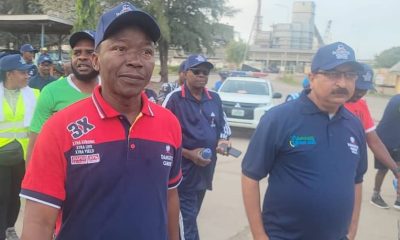
President Bola Tinubu has congratulated Alhaji Aliko Dangote, the President of Dangote Group, on his appointment to the World Bank’s Private Sector Investment Lab, a body tasked with promoting investment and job creation in emerging economies.
In a statement by Special Adviser on Media and Publicity, Bayo Onanauga, the President described the appointment as apt, given Dangote’s rich private sector experience, strategic investments, and many employment opportunities created through his Dangote Group.
The Dangote Group became one of Africa’s leading conglomerates through innovation and continuous investment.
Dangote Group’s business interests span cement, fertiliser, salt, sugar, oil, and gas. However, the $20 billion Dangote Petroleum Refinery and Petrochemicals remains Africa’s most daring project and most significant single private investment.
“President Tinubu urges Dangote to bring to bear on the World Bank appointment his transformative ideas and initiatives to impact the emerging markets across the world fully” the statement said.

The World Bank announced Dangote’s appointment on Wednesday, as part of a broader expansion of its Private Sector Investment Lab. The lab now enters a new phase aimed at scaling up solutions to attract private capital and create jobs in the developing world.
The CEO of Bayer AG, Bill Anderson, the Chair of Bharti Enterprises, Sunil Bharti Mittal, and the President and CEO of Hyatt Hotels Corporation, Mark Hoplamazian, are on the Private Sector Investment Lab with Dangote.
The World Bank said the expanded membership brings together business leaders with proven track records in generating employment in developing economies, supporting the Bank’s focus on job creation as a central pillar of global development.
By Joel Oladele, Abuja
The Nigeria Customs Service (NSC) has generated an impressive N1,751,502,252,298.05 in revenue during the first quarter of 2025.
The Comptroller-General (CG) of the Service, Bashir Adeniyi, disclosed this yesterday, during a press briefing in Abuja.
According to Adeniyi, the achievement not only surpasses the quarterly target but also marks a substantial increase compared to the same period last year, reflecting the effectiveness of recent reforms and the dedication of customs officers across the nation.
“This first quarter of 2025 has seen our officers working tirelessly at borders and ports across the nation.
I’m proud to report we’ve made real progress on multiple fronts—from increasing revenue collections to intercepting dangerous shipments,” Adeniyi stated.He attributed this success to the reforms initiated under President Bola Tinubu’s administration and the guidance of the Honourable Minister of Finance and Coordinating Minister of the Economy, Olawale Edun.
The CG noted that the revenue collection for Q1 2025 exceeded the quarterly benchmark of N1,645,000,000,000.00 by N106.5 billion, achieving 106.47% of the target. This performance represents a remarkable 29.96% increase compared to the N1,347,705,251,658.31 collected in Q1 2024.
Adeniyi highlighted the month-by-month growth, noting that January’s collection of N647,880,245,243.67 surpassed its target by 18.12%, while February and March also showed positive trends.
“I’m pleased to report the Service’s revenue collection for Q1 2025 totaled N1,751,502,252,298.05.
“Against our annual target of N6,580,000,000,000.00, the first quarter’s proportional benchmark stood at N1,645,000,000,000.00. I’m proud to announce we’ve exceeded this target by N106.5 billion, achieving 106.47% of our quarterly projection. This outstanding performance represents a substantial 29.96% increase compared to the same period in 2024, where we collected N1,347,705,251,658.31.
“Our month-by-month analysis reveals even more encouraging details of this growth trajectory,” Adeniyi said.
In addition to revenue collection, Adeniyi said the NCS maintained robust anti-smuggling operations, recording 298 seizures with a total Duty Paid Value (DPV) of ₦7,698,557,347.67.
He stated that rice was the most seized commodity, with 135,474 bags intercepted, followed by petroleum products and narcotics.
“From rice to wildlife, these seizures show our targeted approach,” Adeniyi remarked, noting the NCS’s commitment to combating smuggling and protecting national revenue.
Adeniyi also highlighted key initiatives, including the expansion of the B’Odogwu customs clearance platform and the launch of the Authorized Economic Operators Programme, which aims to streamline processes for compliant businesses. The NCS’s Corporate Social Responsibility Programme, “Customs Cares,” was also launched, focusing on education, health, and environmental sustainability.
Despite these achievements, the CG noted that the NCS faced challenges, including exchange rate volatility and non-compliance issues. Adeniyi acknowledged the need for ongoing adaptation and collaboration with stakeholders to address these challenges effectively.
Looking ahead, the NCS aims to continue its modernization efforts and enhance service delivery, ensuring that it remains a critical institution in Nigeria’s economic and security landscape.
“Results speak louder than plans; faster clearances through B’Odogwu, trusted traders in the AEO program, and measurable food price relief from our exemptions. We’ll keep scaling what works,” he concluded.
 |
By Tony Obiechina Abuja
The Nigeria Sovereign Investment Authority (NSIA) yesterday disclosed that its net assets grew from N156bn in 2013 to N4.35 trillion in 2024.
Similarly, the Authority has remained profitable for 12 consecutive years, leading to cumulative retained earnings of N3.
74 trillion in 2024.Managing Director and Chief Executive Officer of NSIA, Aminu Umar- Sadiq made these disclosures at a media engagement in Abuja, highlighting its audited financial results for the 2024 fiscal year.
According to him, the results underscored the resilience of the authority’s investment strategy and the strength of its earnings, driven by a well-diversified revenue base and robust risk management practices, despite a challenging global macroeconomic and geopolitical environment.
Total operating profits, excluding share of profits from associates and Joint Venture (JV) entities, increased from N1.17 trillion in 2023 to N1.86 trillion in 2024, driven by the strong performance of
NSIA’s diversified investment portfolio, infrastructure assets, gains from foreign exchange movements, and derivative valuations.
In addition, Total Comprehensive Income (TCI), inclusive of share of profits from associates and JV entities, reached N1.89 trillion in 2024, reflecting a 59 per cent increase from N1.18 trillion in 2023.
Core TCI (excluding foreign exchange and derivative valuation gains) rose by 148 per cent to N407.9 billion in 2024 compared to N164.7 billion in 2023, supported by robust returns on financial assets measured at fair value through profit and loss, including collateralised securities, private equity, hedge funds, and Exchange-Traded Funds (ETFs).
Umar-Sadiq said the authority’s outstanding financial performance in 2024 reflected the “strength of our strategic vision, disciplined execution and unwavering commitment to sustainable socio-economic advancement.”
He said, “By leveraging innovation, strategic partnerships and sound risk management, we have not only delivered strong returns but also created value for our stakeholders
“As we move forward, we remain focused on driving economic transformation, expanding opportunities, scaling transformative impact and ensuring long-term prosperity for current and future generations of Nigerians.”
The CEO reaffirmed the authority’s commitment to managing the country’s SWF, and delivering the mandates enshrined in the NSIA Act.
He said NSIA remained poised to continually create long-term value for its stakeholders by delivering excellent risk-adjusted financial results, developing a healthy and well-diversified portfolio of assets and large-scale infrastructure projects, and enhancing the desired social outcomes.
He noted that NSIA was committed to its mandate of prudent management and investment of Nigeria’s sovereign wealth.
“In adherence to its Establishment Act, NSIA prioritises transparency, disclosure, and effective communication with all stakeholders and counterparties,” he said.
He pointed out that in the year under review, a new board, led by Olusegun Ogunsanya as Chairman, was appointed by President Bola Tinubu, in accordance with the provisions of the NSIA Act.
The new board will provide strategic direction and oversight, in addition to playing a pivotal role in critical decision making.
He remarked that under the guidance of the Board, the Authority will retain focus on its primary mandate of creating shared value for all stakeholders based on its continued adoption of corporate governance practices.
“NSIA prides itself an investment institution of the federation established to manage funds in excess of budgeted oil revenues and its mission is to play a pivotal role in driving sustained economic development for the benefit of all Nigerians through building a savings base for the Nigerian people, enhancing the development of the county’s infrastructure, and providing stabilisation support in times of economic misadventure,” he added.

The Man Rotimi Makinde: A True Progressive by All Standards
ShareBy Kolapo Ogundare It is impressive to note that many well-meaning Nigerians are now coming out, recounting several good deeds...
FG, NBS Launch Nationwide MICS7 Survey
ShareFrom Francis Sadhere, Delta The Federal Government of Nigeria, through the National Bureau of Statistics (NBS), has officially launched the...


Finding Joy in Old Age: The Renewed Hope Intervention
ShareBy Bridget Tikyaa Getting to the life journey of a senior citizen should ordinarily be a source of pride, a...


CBN Revokes Licenses of Aso Savings, Union Homes Savings, Loans
ShareBy Tony Obiechina, Abuja The Central Bank of Nigeria (CBN) has revoked the operational licences of Aso Savings and Loans...

Dangote Petitions ICPC, Accuses NMDPRA Boss of Corruption, Abuses
ShareBy David Torough, Abuja President of the Dangote Group, Alhaji Aliko Dangote, has petitioned the Independent Corrupt Practices and Other Related Offences Commission...

NDIC Liquidates Aso Savings, Union Homes, Pays N2m Deposits
ShareBy Tony Obiechina, Abuja The Nigerian Deposit Insurance Corporation (NDIC) exercised its appointment as the liquidator of Aso Savings and...


Reps Launch Nationwide Probe into Drug Abuse, Trafficking Crisis
ShareBy Ubong Ukpong, Abuja The House of Representatives has commenced a nationwide investigation into Nigeria’s worsening drug abuse and trafficking...

Clement Koko Assumes Office as CIPPON President
ShareBy David Torough, Abuja Clement Koko has been inaugurated as the President and Chairman-in-Council of the Chartered Institute of Professional...

Thousands of Drivers Wrongly Fined for Speeding Since 2021
ShareThousands of drivers could have speeding fines cancelled after a fault saw some cameras falsely triggered on English A roads...

UK Unemployment Rate Rises to 5.1 Per cent
ShareThe UK unemployment rate in the three months to October has increased to 5.1%, according to official figures. That marked...