
Oil & Gas
Dangote Refinery Reaffirms N699/litre Gantry Price

Dangote Petroleum Refinery has refuted a report claiming the refinery is shutting down for maintenance, describing the story as false and misleading.
In a statement released on Monday, the refinery emphasised that production remains ongoing, stable, and uninterrupted.
“Dangote Petroleum Refinery continues to operate at scale and retains the capacity to supply between 40 million and 50 million litres of Premium Motor Spirit (PMS) daily through January and February, subject solely to market demand,” the statement said. It added that on January 4, the refinery produced 50 million litres of PMS and evacuated 48 million litres via its gantry. “Current stock levels cover over 20 days of national consumption, effectively dispelling any concerns about supply.”The refinery clarified that routine maintenance on specific units, including the Crude Distillation Unit (CDU) and Residual Fluid Catalytic Cracking (RFCC), does not interrupt overall production, owing to the sophisticated and integrated design of its processing units. Other critical units, such as the Naphtha Hydrotreater, CCR Reformer, and Hydrocracker, remain fully operational, producing PMS, Diesel (Automotive Gas Oil), and Jet A-1.
The refinery also reaffirmed its ex-gantry price of N699 per litre for PMS, available to all marketers and bulk consumers. It encouraged filling stations, large-scale users, and institutional buyers to patronise locally refined products, which are more affordable, reliable, and of high quality, rather than relying on imported alternatives.
Dangote Petroleum Refinery accused fuel importers of promoting false reports to justify recent, unwarranted increases in petrol pump prices, noting that such actions run counter to national interest and impose unnecessary hardship on Nigerians. According to the refinery, without domestic refining, petrol prices could rise to as much as N1,400 per litre in a post-subsidy environment, highlighting the stabilising role of local production.
Reiterating its commitment to energy security and market stability, the refinery said it would continue supplying high-quality petroleum products, maintaining steady availability, and supporting Nigeria’s broader economic growth. Stakeholders and the public were advised to disregard misinformation and rely on verified sources.
Operators in the petroleum sector have called for more regional collaboration across Africa, right policies and implementation, in a bid to strengthen the energy sector.
Speaking at the on-going 10th Anniversary edition of the Sub-Saharan African International Petroleum Exhibition and Conference ( 2026), in Lagos, theme, “Africa’s Local Content Collaboration Strategy.
”Speaking in a panel session, Chairman, Oilserv Group, Emeka Okwuosa, said, “On the government side, to talk about regional collaboration, we need free movement.
I understand that the Chairman will be visiting the AU meeting. I think one of the points that should be raised with the leaders of AU is to make the business free, so that we can allow a free movement and collaboration.“Also, we need policies. We have policies that are already in place in Nigeria. Let’s try to standardize it across the African nations so that we can ease collaboration in those areas.
“One of the initiatives coming out, stemming from the PIA, the Domestic Decade of Gas, which is very clear and very executable, and Oilserv is playing a significant role in delivering the projects for the Decade of Gas. That’s on the government side.”
Okwuosa added that “Before now, Oilserv was saddled with the responsibility to execute complex projects and pipeline infrastructure. Just to, for the benefit of those who are not aware of these complex projects that we have as a company executed. We have executed one of the largest gas treatment plants within the OB3 project.
“The OB3 project is a 124-kilometer gas pipeline, 48 inches, the largest in Nigeria. Plus, the gas treatment plant has the capacity to process two liters of gas per day. And that facility is currently under the scope of gas as we speak today.
“We have also been involved in the AKK, which is ongoing, another significant complex project that is 40 inches by 304 kilometers per second, one that we are responsible for. And the design has been completed; the construction of the pipeline has been completed as of December.
“We have been involved in constructing and building gas pipelines to independent power plants, six of them individually, including the geometric power plant that was commissioned last year by the Vice President and is currently promoting industrialization in the country. Within Lagos, we have built and constructed and installed cumulatively 200 kilometers of gas pipelines.”
On other development, Okwuosa added that the place for capacity development as well as community relations cannot be overemphasized.
Noting that “We have leveraged on capacity development. We have also leveraged on training and partnership. For the OB3 that I mentioned, when we installed or constructed that, one of the main processes of the pipeline construction is welding. We use the manual welding system to install that.
“And we are able to achieve that with the partnership of the OB3 and provide training to our people. We have also leveraged on the communities, collaborating with the communities to ensure that we empower and get them involved as well as educating them in our processes and our projects.
“That, in turn, has given some useful environment to execute and not affect the project execution. In technology and innovation, we have also deployed technologies like the Horizontal Directional Drilling, HDD. And first of all, it is because they have been trainers in this industry, making sure that the human resources get the right training modules, the right skills that are relevant to this industry.”
On the operators, he called for more projects to be allotted to indigenous operators, adding that “What we need from you is to give us more jobs. Get your FID on time and reduce the contract cycle from one year or three years to as soon as possible within six months.”
He lauded Total Energy, NLNG, Renaissance for their continued support to grow indigenous EPC companies.
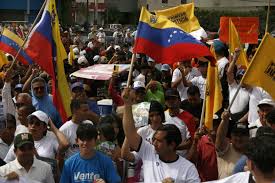
Venezuela’s oil sales, under the control of the United States for five weeks now, are set to bring $5 billion in revenue over the next few months, U.S. Energy Secretary Chris Wright said.
“Sales today are over a billion dollars, and in fact, we have sort of short-term agreements over the next few months that will bring in another $5 billion,” Secretary Wright said in the interview during a historic visit to Venezuela to meet with the interim President Delcy Rodríguez.
The United States has already transferred $500 million in proceeds from sales of Venezuelan crude oil to Caracas, following the deal agreed by the two governments in January.
All the money from the oil sales, handled by top commodity traders Vitol and Trafigura, goes back to Venezuela from a U.
S. Treasury-controlled account, Secretary Chris said.There is a lot of work to be done and massive investments need to flow for Venezuela to restore its oil industry, “But it’s on the road to becoming investable,” Secretary Wright said.
At last month’s White House meeting of U.S. President Trump with oil executives, ExxonMobil’s CEO Darren Woods said that “If we look at the legal and commercial constructs—frameworks—in place today in Venezuela, today it’s uninvestable.”
During the visit to Venezuela, Secretary Chris said earlier this week that Venezuela’s crude oil production could surge as soon as this year.
“This year, we can drive a dramatic increase in Venezuelan oil production, in Venezuelan natural gas production and Venezuelan electricity production,” the U.S. official said.
Commenting on a recent change in Venezuela’s oil law, Wright said that it was “a meaningful step in the right direction”, as quoted, but “probably not far and clear enough to encourage the kind of large capital flows.
The NLNG has been crowned Overall Champion and Best Sports Company at the 20th edition of the Nigeria Oil and Gas Industry Games (NOGIG), which ended, recently in Abuja with a resounding display of athletic excellence and team spirit.
Team NLNG topped the medal table with an impressive 52 medals; comprising 20 gold, 16 silver and 16 bronze to take the lead from the defending champion, Nigerian National Petroleum Company Limited (NNPCL), who finished second with 49 medals (14 gold, 15 silver and 20 bronze).
The Nigerian Content Development and Monitoring Board (NCDMB) secured third place with 18 medals, while TotalEnergies finished fourth with 15 medals. Other notable participants included Renaissance, Oando, Seplat Energy, PTI, NUPRC, ND Western, Chevron, NMDPRA, ExxonMobil, Shell and Aradel.
The biennial tournament, held from February 8 to 14, 2026, marked a milestone celebration of four decades of unity, collaboration and sporting excellence within Nigeria’s oil and gas industry.
Leading the NLNG delegation at the Abuja Stadium was the Deputy Managing Director, Olakunle Osobu, who commended Team NLNG for exemplifying the company’s core values both on and off the field.
“This victory is a testament to the resilience, discipline and unity that define NLNG,” Osobu said. “At NLNG, excellence is not confined to the boardroom. It is embedded in our culture and reflected in how we compete, collaborate and win, whether in business or on the field. I am immensely proud of Team NLNG for demonstrating that our winning spirit extends beyond our operations and into every sphere we engage in.”
He further noted that the company’s performance at NOGIG reflects its broader commitment to fostering teamwork, promoting wellness, and strengthening industry relationships.
Organisers described the 20th edition of NOGIG as a landmark event, underscoring the industry’s enduring commitment to corporate camaraderie, healthy competition and collaboration beyond the workplace.
With chants of #TeamNLNG and #Champions echoing across the stadium, the victory reinforces NLNG’s reputation as a leader not only in Nigeria’s energy sector but also in promoting sportsmanship, unity and excellence.




Nigeria Records N5trn Post-harvest Losses in 2025
ShareThe Organization for Technology Advancement of Cold Chain in West Africa (OTACCWA) has disclosed that Nigeria recorded between N3.5 trillion...


Tinubu Applauds Leo Stan Ekeh’s Achievements at 70
SharePresident Bola Tinubu has congratulated Leo Stan Ekeh on his 70th birthday, describing him as a pioneering innovator in Nigeria’s...
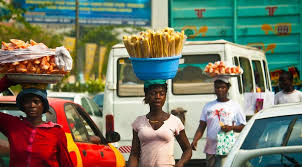

Zamfara Tackles Illegal Hawking, Sales of Drugs
ShareFrom Ifeanyichukwu Nwannah, Gusau Zamfara State Ministry of Health has convened a high level stakeholders’ meeting aimed at curbing the...

STEAP Transforms 50 Benue Schools into Anti-Trafficking Prevention Hubs
ShareBy David Torough, Abuja The School-Based Trafficking Education and Prevention (STEAP) Project has recorded significant progress in Benue State, with...

Zamfara Seeks Collaboration with International Partners, Others to Curb Out of School Children
ShareFrom Ifeanyichukwu Nwannah, Gusau The Zamfara State Government has appealed for collaborative actions from International partners and stakeholders to address...

FG Plans to Establish Armed Forces College of Medicine and Health Sciences
ShareBy Tony Obiechina, Abuja The Federal Government has advanced plans for the establishment of the Armed Forces College of Medicine...


Christian Council of Nigeria Backs CAN, Rejects Niger Hisbah Bill
ShareFrom Dan Amasingha, Minna The Christian Council of Nigeria (CCN), Niger State Chapter, has declared its full support for the...
Katsina Bureau of Statistics Deploys Enumerators for 2024/2025 SGDP Survey
ShareFrom Bala ldris, Katsina The Katsina State Bureau of Statistics (KTSBS) has commenced field operations for the 2024/2025 State Gross...
Young Innovators Win Big at Maiden Enugu Campus Hackathon
ShareFrom Sylvia Udegbunam, Enugu Youth innovators at the weekend won big at the maiden edition of the state backed Enugu...


UNEC Nursing Students Celebrate annual Health Day with Medical Outreach in Enugu Community
ShareFrom Sylvia Udegbunam, Enugu The students of department of nursing sciences, University of Nigeria Enugu Campus (UNEC) posted to Ugwu...