
Health
Diphtheria: Everyone is at Risk, Protect Yourselves — FG Warns

Ministry of Health has urged Nigerians to make
conscious efforts to avoid contracting diphtheria, adding that everyone is at risk of
being infected with the disease.
The ministry’s Health Promotion Department on Monday issued a health advisory, asking
Nigerians to be cautious and protect themselves.
The department stated that the disease, a life-threatening infection caused by bacteria, is easily
transmitted from person to person through coughing, sneezing and contact with open sore/blister/wound
on the skin.
diphtheria is caused by bacteria called Corynebacterium
diphtheriae.
The disease, which has an incubation period of usually two to five days after exposure, can extend to 10 days in some cases.
The ministry advisory, therefore, cautioned that “everyone is at risk of getting infected with diphtheria, especially children
under five years and adults above 60 years.
“Also, children who have not completed three doses of the Pentavalent vaccination, people living in crowded areas, people
that practice poor personal hygiene and people living in areas with poor environmental hygiene and sanitary condition are also vulnerable.
“Additionally, people with weak immune system, people that travel to infected areas, people living in areas with poor access
to health facility, people caring or having close contact with infected persons with diphtheria and healthcare workers in endemic areas are also at risk.”
Meanwhile, the Nigeria Centre for Disease Control and Prevention (NCDC) had since December 2022, reported multiple diphtheria
outbreaks in different states across the country.
However, as of June 30, NCDC said it confirmed 798 diphtheria cases from 33 local government areas in eight states of the federation, including the FCT.
The centre added that so far, a total of 80 deaths were recorded from the confirmed cases.
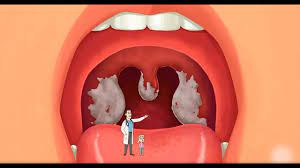
The signs and symptoms commonly associated with diphtheria are sore throat, which can be mild or severe, scratchy and painful, with
thick gray or white membrane that covers the back of the throat and tonsils.
Others are swollen and tender lymph nodes in the neck, fever, which can be moderate to high fever, usually above
38°C (100.4°F), cough, difficulty swallowing, rapid breathing and difficulty in breathing, leading to blockage of the airway.
Some other symptoms are general weakness and fatigue and hoarseness or changes in voice when it affects the vocal cords.
However, there is treatment for diphtheria but early diagnosis is key.
The ministry’s directory advises anyone who experiences any of the signs and symptoms to promptly go to the nearest health facility
for proper diagnosis and treatment.
On prevention of the disease, the ministry said vaccination, promotion of herd immunity and practice of good hygiene would help.
“Get vaccinated, diphtheria can be primarily prevented through vaccination. In Nigeria, three doses of the Pentavalent vaccine is administered
to children to prevent the five diseases namely Diphtheria, Tetanus, Pertussis (whooping cough), Hepatitis B and Hemophilus influenzae type B.
“The three doses are given as follows: first dose at six weeks of age, second dose at 10 weeks of age and third dose at 14 weeks of age.
“However, Tetanus Diphtheria (Td) vaccine is also given to children two to five years old during immuinisation campaigns, pregnant
women during Ante Natal Care and health workers that are involved in handling diphtheria outbreak vaccination response.”
The Federal Government also advised the practice of good personal hygiene by always washing hands with soap under clean running
water, clean hands with alcohol-based hand sanitiser if there is no water.
“Cover your mouth and nose with tissue or bent elbow when coughing or sneezing. Throw used tissue into covered dustbin
immediately, avoid close contact with sick persons and do not share personal items (clothes, cup, tooth brush) with another person,” the
government cautioned.
It also advised that surroundings should be kept clean, while people should avoid crowded places. (NAN)

By Laide Akinboade, Abuja
The Benue State House of Assembly has passed into law a landmark legislation aimed at eliminating tuberculosis (TB) and protecting persons affected by the disease from discrimination and human-rights violations.
The legislation, known as the Tuberculosis Elimination, Human Rights Protection and Anti-Discrimination Law of Benue State, 2026, was passed into Law during Thursday plenary presided over by Speaker, Rt.
Hon.Berger Alfred Emberga, MNIQS, RQS, following consideration of the report of the House Standing Committee on Health and Human Services.The committee, chaired by Hon. Matthew Damkor, Ph.D., said the legislation was necessary to provide a comprehensive legal framework for tuberculosis prevention, diagnosis, treatment, care and control across the state.
The law also seeks to safeguard the rights of persons affected by Tuberculosis (TB), including their rights to dignity, healthcare, privacy, information, employment, education and social protection.
In its report, the committee identified several areas of the original Bill that required amendment, particularly provisions relating to federal laws and institutions, implementation responsibilities, screening and isolation, enforcement mechanisms, offences and penalties.
The committee recommended the removal of provisions purporting to amend federal legislation, particularly the Employees’ Compensation Act, 2010, noting that such amendments were inappropriate for state legislation.
It also recommended that references to federal institutions as implementing authorities be replaced with relevant Benue State institutions, while allowing for lawful collaboration with federal authorities.
The committee further recommended that the Commissioner for Health and Human Services, through the Ministry of Health and relevant state agencies, be clearly designated to coordinate the implementation of the law.
On the protection of fundamental rights, the House called for clearer safeguards in provisions dealing with TB screening, isolation and restriction of movement, including informed consent, confidentiality, medical necessity, proportionality and the use of the least restrictive measures.
It also recommended the establishment of an accessible mechanism for receiving complaints, addressing discrimination and providing remedies to persons whose rights may have been violated under the law.
The House further urged relevant agencies to ensure that offences and penalties under the legislation are clearly defined, proportionate and enforceable.
After considering and adopting the committee’s recommendations clause-by-clause, the bill was read for the third time and subsequently passed into law by the Speaker, Rt. Hon. Emberga following a unanimous consideration and adoption by members.
The Tuberculosis Law which was sponsored by Hon. Dr. Simon Gabo of Mata State Constituency and others, is expected to strengthen Benue State’s response to tuberculosis and provide a stronger legal framework for protecting persons affected by the disease from stigmatization, discrimination and other rights violations.
Meanwhile, Civil Society Organisations, Lawyers Alert and Media Health and Rights Initiative of Nigeria, MHR, have commended the Benue State House of Assembly for taking steps to strengthen the state’s response to tuberculosis, and protect the rights of persons affected by the disease.
In a joint statement, the President of Lawyers Alert, Rommy Mom and the Executive of MHR, Alu Azege said the Bill brings health and human rights dimensions of TB into legislative conversation in the state.
The Niger State Private Health Facilities Agency (NiSPHFA) has sealed 12 unregistered Islamic medicine stores in Minna and a health facility in Katcha Local Government Area (LGA).
The Executive Chairman of NiSPHFA, Dr.
Abdullahi Suleiman, disclosed this while receiving members of the Islamic and Prophetic Medicine Practitioners’ Association of Nigeria (IPMPAN) in Minna.The enforcement is part of the agency’s renewed efforts to protect residents from unsafe healthcare practices and ensure compliance with minimum standards.
Suleiman said the facilities were sealed over alleged non-compliance with regulatory standards.
According to him, the enforcement is not aimed at persecuting healthcare providers but at ensuring residents have access to safe, quality, and standard-compliant healthcare services.
“Our responsibility is to protect the people by ensuring that anyone providing healthcare services operates within the required standards,” he said.
He urged genuine alternative medicine practitioners to register with NiSPHFA, saying registration would enable the agency to identify operators, monitor their activities, and protect residents from unsafe products and practices.
Suleiman also announced plans to organise a trade fair for verified alternative medicine practitioners to promote legitimate practices and improve public confidence in alternative healthcare.
He emphasised the need for practitioners to maintain minimum standards of hygiene, sanitation, safe preparation and storage of medicines, proper packaging, and infection prevention.
“Practitioners should refer patients whose conditions are beyond their capacity to appropriate health facilities. Such referrals will help reduce avoidable health risks,” he said.
The chairman said sustained enforcement, stakeholder collaboration, and improved compliance would enable NiSPHFA to safeguard residents and promote a safer, more accountable, and quality-driven healthcare system across the state.
He said the NiSPHFA enforcement team inspected 10 health facilities in Katcha local government and identified various irregularities requiring improvement.
Suleiman said the affected facilities were issued 21-day notices to correct the identified deficiencies.
“One of the facilities inspected was sealed for non-compliance with established standards,” he said.
He added that the agency also secured the support of the local government area in identifying and addressing facilities operating with irregularities.
IPMPAN Chairman, Abdullahi Haske, commended the state government for establishing NiSPHFA.
He pledged the association’s cooperation in ensuring that its members complied with regulatory requirements.
Stakeholders have called for improved implementation, tracking and accountability of health sector budgets to strengthen healthcare delivery and advance Universal Health Coverage (UHC) in Kaduna State.
They made the call during an engagement on strengthening participatory budget processes, health budget tracking and advocacy on Saturday in Kaduna, with emphasis on the 2027 budget process and implementation of the Annual Operational Plan (AOP) for the health sector.
Seth Luke, a Civil Society Coach on strengthening participatory budget processes under the Open Government Partnership (OGP) Kaduna, said the engagement was aimed at strengthening the capacity of OGP Technical Working Groups and state and local government accountability mechanisms to effectively participate in budget processes and advocacy.
Seth said the engagement was particularly focused on the health sector, including tracking the implementation of the Annual Operational Plan as the state commenced preparations for the 2027 budget.
“We want to see how we can track the implementation of the Annual Operational Plan for the health sector and, from our findings, bring out recommendations around improving funding and other areas that require attention,” he said.
He said the government needed to prioritise health financing beyond budgetary allocation by ensuring effective implementation of approved programmes and projects.
According to him, budget allocation represents government plans based on expected revenue, but available resources should be prioritised toward activities capable of improving healthcare and service delivery at the grassroots.
Seth urged participants to use the knowledge and findings from the engagement to engage relevant government stakeholders on improving health financing and budget implementation.
He also encouraged them to extend the knowledge gained to other sectors and continuously engage government on budgeting, accountability and service delivery.
Similarly, Garba Mohammed, Co-Chair of the Kaduna Maternal Accountability Mechanism (KADMAM), said the engagement was aimed at reviewing health budget performance against key indicators linked to maternal mortality reduction and child survival.
Mohammed said participants examined first and second quarter performance, particularly in areas such as family planning, Maternal, Newborn and Child Health (MNCAH), nutrition, malaria, immunisation and essential medicines.
He said family planning interventions largely involved commodities at the primary healthcare level, while MNCAH activities remained largely donor-dependent.
Mohammed commended the Kaduna State Government for meeting the Abuja Declaration benchmark of allocating at least 15 per cent of its annual budget to health.
He, however, expressed concern over gaps in the implementation of some critical health budget lines, stressing that allocation alone was not enough to improve health outcomes.
“We have looked at the budget allocation, and Kaduna State has met the 15 per cent Abuja Declaration benchmark. We commend the state for that. However, there are still issues around budget performance in critical health indicators,” he said.
He said the findings would be used to identify advocacy priorities and engage key government decision-makers, including the Ministry of Health, Planning and Budget Commission, Ministry of Finance and other relevant authorities.
Mohammed said participants were expected to understand the relevant health budget lines and their implementation status and use the knowledge to undertake evidence-based advocacy in their respective organisations.
Meanwhile, Yusuf Guje, Executive Director, Civic Impact for Sustainable Development Foundation (CISDF), and a participant at the programme, told the News Agency of Nigeria (NAN) that the engagement was timely in strengthening the capacity of civil society and accountability mechanisms.
Guje said the programme would deepen participants’ capacity in budget tracking, project monitoring and social auditing, particularly within the health sector.
He described the health sector as a critical pillar of development, saying civil society organisations had an important role to play in complementing government efforts through effective monitoring and accountability.
He said CSOs needed to strengthen their ability to analyse budgets, track expenditure and visit healthcare facilities to determine whether appropriated and released funds were being properly utilised.
“Civil society needs to really improve on how effectively we analyse the budget, how we track the spending, and go down to the various facilities to see how well the money appropriated and released is being utilised,” Guje said.
He said effective monitoring would help determine the extent to which communities benefited from government investments in healthcare.
According to him, Kaduna State’s commitment to Universal Health Coverage could only be strengthened through sustainable health financing and effective accountability mechanisms.
Guje described CSOs as representatives of communities that often lacked the knowledge, skills and platforms required to engage government on public policies and resource allocation.
He therefore urged civil society actors to continuously strengthen their capacity to represent citizens effectively, particularly in health financing advocacy and accountability.
“As civil society, we need to remain committed to holding the government accountable where necessary and tracking the entire health financing process,” he said.
Guje said the ultimate objective of budget tracking and social accountability was to ensure value for money in public expenditure on health.
He added that effective monitoring of public finances would contribute to improved healthcare delivery and better health outcomes at the grassroots. (NAN)



Attempted Suicide in Nigeria: Legislative Reform, Economic Hardship and the Right to Human Dignity
ShareBy Oluwaleye Adedoyin Grace Should a person who survives a suicide attempt be punished or helped? This question challenges Nigeria’s...

UBA Scores Legal Victory in N156bn Stallion Debt Case
ShareBy Tambaya Julius, Abuja United Bank for Africa (UBA) Plc has secured a favourable judgment in its N156 billion debt...


Nigeria Customs, Afreximbank Push Regional Border Modernisation
ShareBy Tambaya Julius, Abuja The Nigeria Customs Service (NCS) and the Customs administrations of Benin and Cameroon are working with...


NCDMB Heritage Energy Train 48 Nigerians in Subsea Engineering
ShareFrom Mike Tayese, Yenagoa The Nigerian Content Development and Monitoring Board (NCDMB), in partnership with Heritage Energy Operational Services Limited...

CAN: Tinubu Tasks Christians for Greater Unity
ShareBy Laide Akinboade, Abuja The first lady Senator Oluremi Tinubu, at the weekend urged all Nigerian Christians to ensure they...
Maka Oganiru Begins Operations, Pledges Africa’s Investment-ready Projects
ShareBy Tony Obiechina, Abuja New Africa-focused advisory firm aims to connect high-potential opportunities with global capital, institutional investors and strategic...


FG Tadks Varsities on Specialised Health Degree Programmes
ShareBy Tambaya Julius, Abuja The Federal Government has urged vice-chancellors of Nigerian universities to introduce degree programmes that address critical...


Presidency, Makinde Clash Over Alleged ₦250bn NLNG Fund for States
ShareBy Tambaya Julius, Abuja The Presidency has dismissed claims by Oyo State Governor Seyi Makinde that the Federal Government is...


UBA Wins N156bn Debt Recovery Case Against Stallion Group
ShareThe Court on Friday ruled in the Bank’s favour on all issues and granted all its prayers. United Bank for...


Senator Abba Moro: It is Time to Go Home
ShareBy Cleopas Agada For seven years in the National Assembly, what has Benue South actually felt? For a man who...