
EDITORIAL
Disbandment of SARS

Until recently, the Special Anti-Robbery Squad (SARS), of the Nigerian Police, was one of the most respected arms of the country’s Police essentially for its efficiency in combating violent crime.
SARS was created as a child of necessity in 1992 and charged with tackling the problem of violent crime in Lagos, especially robbery.
It first operated as a faceless, 15-man team that went about its assignments in two unmarked buses, with its officers often wearing neither uniforms nor name tags.As a result, it was difficult for criminals to identify them.
Because of their efficiency in tackling robbery, and other violent crimes like kidnapping and banditry were added to their lists of operation, while the unit was upgraded to become a main arm of the Operations department in the country’s Police with operations in the 36 states of the Federation and the FCT.With the passage of time, however, SARS deviated from its noble principal assignments and started indulging in gross human rights abuses, especially in brutality against youths.
It was accused of targeting young people who appeared well-dressed, and molesting them for money, as well as torturing and abusing and even killing those who resisted them.
Amnesty International reported that it documented more than 82 cases of abuse and extrajudicial killings by SARS officers from January 2017 to May 2020.
Of course, there have been spontaneous reactions against SARS in the last few weeks with some of the greatest protests witnessed across the country for a long time as a result of their unleashing of atrocities against some civilians .
Nigerians in their thousands, especially youths , have been demonstrating against the continued existence of the anti-robbery squad of the Nigerian Police with protests across the country and in Diaspora communities around the world. The Federal Government early in the week announced the immediate ban of the Special Anti-Robbery Squad (SARS) and other Police tactical squads from undertaking routine patrols in its response to the protests.
A statement by the Police Public Relations Officer of the Force, DCP Frank Mba, stated that the Inspector-General of Police, IGP M.A Adamu, has banned the personnel of the Federal Special Anti-Robbery Squad (FSARS) and other Tactical Squads of the Force including the Special Tactical Squad (STS), Intelligence Response Team (IRT), Anti-Cultism Squad and other Tactical Squads operating at the Federal, Zonal and Command levels, from carrying out routine patrols and other conventional low-risk duties – stop and search duties, checkpoints, mounting of roadblocks, traffic checks, etc – with immediate effect.
In addition, no personnel of the Force is authorized to embark on patrols or tactical assignments in mufti. They must always appear in their police uniforms or approved tactical gear.
The IGP’s directives, the statement added , came against the backdrop of findings by the leadership of the Force that a few personnel of the Tactical Squads hide under this guise to perpetrate all forms of illegality, contrary to the Standard Operating Procedure (SOP), Code of Conduct and Rules of Engagement establishing the squads.
Specifically, the statement said the IGP has warned the Tactical Squads against the invasion of the privacy of citizens particularly through indiscriminate and unauthorized search of mobile phones, laptops and other smart devices. They are to concentrate and respond only to cases of armed robbery, kidnapping and other violent crimes when the need arises.
He however condemned every act of unprofessionalism, abuse of human rights and high-handedness by some personnel of the Squads. He has therefore, ordered the X-Squad and the Monitoring Unit to embark on immediate and massive nationwide monitoring of activities of Tactical Squads and other police officers on the road.
They are to ensure prompt arrest, investigation and prosecution of all erring police officers who violate these directives and other extant regulations of the Force.
We welcome the government’s decision to ban SARS and other related units of the Police Force in line with the demands of many aggrieved Nigerians.
By this, the government has demonstrated that it could once in a while be sensitive to people’s yearnings and respond to them accordingly. It is not just enough to ban SARS for the sake of it. All cases of human rights abuse perpetrated by the former bodies must be investigated with actions taken on those culpable.
That is the only way the Police can restore its confidence, which has suffered great damage among many Nigerians, especially the youths. No matter the grievances of Nigerians, the Police still need to devise special means to tackle violent crime like robbery, kidnapping, banditry which have been on the increase.
Nigeria needs a more people- oriented, civil and a more professional police that will be on top of crime and criminality in the country. The government owes the nation a duty and responsibility to fund the police and equip it as well, to be on top in its assignments and responsibilities.




The people of Kano State have for ages defined themselves with public morality and decency. To uphold and project these moral fabrics, the State Government established the Hisbah Board; enshrined Sharia-compliant codes, and positioned itself as a guardian of cultural and religious values in Northern Nigeria.
That reputation is now being dragged through the mud by a political campaign so debased that it insults the very women it claims to empower.A viral social media post has shown what purports to be branded underwear distributed to women by state actors under the guise of an “empowerment programme.” But truly, this is not about women empowerment.
It is a moral and political abomination. And if false, the fact that it is believable enough to trend reveals how far the state’s political culture has sunk.True empowerment should lift women out of poverty through skills, capital, education, and access to markets. It should build businesses, pay school fees, and provide healthcare. Reducing “women empowerment” to the distribution of underwear emblazoned with political slogans is not only demeaning, it is a betrayal of every mother, wife, sister daughter, market woman, farmer and student the government claims to serve. It treats adult citizens as objects of ridicule rather than partners in development. The dignity of not just Kano women but all women in Nigeria is not a campaign poster. Their needs are not lingerie.
Kano cannot claim to police public morality through Hisbah raids on dress codes, alcohol and public conduct, while its political class engages in stunts that violate the very standards it imposes on the citizens of the state. Hisbah was created to uphold Islamic values of modesty, privacy, and decency. A government that purportedly brands and shares underwear for political gain makes a mockery of those values. It tells the world that morality in Kano is a tool to control the weak, not a principle that binds the powerful. That double standard corrodes the moral authority of the state and breeds cynicism among the youth.
This episode exposes the rot in campaign culture: the shift from policy to spectacle, from substance to stunts. When politicians cannot articulate a plan for jobs, security, or education, they resort to cheap tokenism. When they cannot defend their record, they distract with scandal. Distributing intimate items with party insignia is not grassroots outreach. It is political grooming disguised as charity. It sexualizes poverty and monetizes shame. No society that respects itself should tolerate this sordid campaign.
Kano is the commercial nerve centre of the North, home to scholars, traders, and industrialists. Its women run major markets, lead cooperatives, and educate the next generation. They deserve policies that expand credit for small businesses, protect girls’ education, and improve maternal health. They do not deserve to be campaign props. The state’s moral identity is not preserved by Hisbah patrols alone. It is preserved when leaders act with the same modesty and restraint they demand from citizens.
DAILY ASSET’s position on this setback is that if the state government sanctioned this distribution, it must apologize, bring those responsible to book and redirect funds to genuine empowerment schemes. The entire saga must be investigated to expose the culprits, and prosecute those using the state’s name to score cheap political points. Silence in this disturbing development amounts to complicity.
Kano cannot preach morality in the morning and practice indecency by noon. The Hisbah Board, religious leaders, women’s groups, and every citizen who believes in the state’s values must denounce this act unequivocally. Politics without ethics is just manipulation. And a state that loses its moral compass will soon lose everything else.
We equally urged organisations like the International Federation of Women Lawyers (FIDA), Federation of Muslim Women’s Association of Nigeria (FOMWAN), Kano League of Senior Lawyers, et al, to rise up and challenge this retrogressive and negative campaign targeted at women. They should swiftly investigate and unearth those behind such an act and initiate a court action to bring them to book.
Public interest litigation must be initiated by the Kano League of Senior Lawyers to enforce Section 34 of the Constitution of Nigeria (as amended) and seek declaratory judgment that such “empowerment” violates constitutional dignity.
The moral grounds on which Kano stands should not be eroded by a few miscreants by negative political campaigns.

On Wednesday, February 28, 2026, the Department of Security Service (DSS) released Walida Abdulhadi, an indigene of Hadija in Jigawa state reportedly involved in a controversial relationship with an operative of the agency with whom she has a baby, to the Jigawa State Government.
She was handed over to Governor Umar Namadi and several top officials of the state government in Abuja, along with her baby. The release followed intense public debate over the relationship between the young woman and the DSS operative, Ifeanyi Onyewuenyi. All along, the debate had centred on the circumstances surrounding her alleged disappearance in 2023.The governor was accompanied to the SSS headquarters in Abuja by the Speaker of the State House of Assembly, Haruna Aliyu; the Attorney General and Commissioner of Justice, Bello Fanini; the Commissioner of Women Affairs, Hadiza Abdulwahab; and her counterpart in the Ministry of Environment, Nura Ibrahim, among others.
The Director General of the DSS, Adeola Ajayi, alongside principal officers of the Service, handed over Walida to Governor Namadi. The Nigerian Supreme Council of Islamic Affairs (NSCIA) was represented by the Deputy National Legal Adviser, Haroun Muhammad, and a member of the Expanded General Purpose Committee, Najib Jimoh.
The birth of a baby to the DSS operative and Walida’s alleged conversion to Christianity has dominated public discourse reminiscent of Ese Oruru saga who was kidnapped at the age 13 from her mother’s food shop in Yenagoa, Bayelsa, to Kano, where she was forcefully converted to Islam and married off to a commercial tricycle driver in 2015. After a prolonged legal tussle Oruru regained freedom and went to school. Interestingly, she has since graduated from the University of Ilorin with a Second Class Upper Division in Education Technology.
And today we are witnessing something similar to the case of Oruru, leading to the intervention of Jigawa state governor and other stakeholders all of whom are insisting on an independent investigation of the matter for a quick judicial process to determine who and what went wrong. That is the way to go because doing otherwise could be detrimental to religious harmony between Muslims and Christians in the country.
Furthermore, releasing Walida to her home state of Jigawa was a right step in the right direction, more so as the state government has assured of her safety and full recovery from whatever trauma she might have passed through.
Again, the move to keep her under the custody of the state government, pending the resolution of all the contentious issues surrounding the controversial relationship is commendable because it would give enough room for the controversy to be tabled before a law court for a snappy adjudication; so that peace can prevail in due course.
Aside individuals, other bodies that have publicly expressed divergent views on the Walida case include; National Supreme Council for Islamic Affairs (NCIA), Federation of Women Lawyers (FiDA), Muslim Rights Concern (MURIC), Federation of Muslim Women’s Associations in Nigeria (FOMWAN), Muslim Students’ Organisation of Nigeria (MSO), Women in Da’awa, International Human Rights Commission Relief Fund Trust (IHRC-RFT), Arewa Youth Assembly (AYA), Women Voices and Accountability, and Gamji Lawchain. This is a clear demonstration of the intensity the Walida case has generated with palpable tension built up through the prism of divergent views.
DAILY ASSET believes that the controversy over Walida’s age, the circumstances surrounding her alleged abduction, and other contending issues would best be resolved by a competent court of law.
Considering the painfully slow process of Nigeria’s justice system and situating the plural society already struggling with mistrust and sectarian tension, there is a need for absolute urgency in resolving the matter. To this end, the judiciary should quickly swing into action. Mindful of time, it must set aside all forms of technicalities and delve headlong into the substance of the matter. This is the sure way to diffuse tension and permanently resolve the impasse, rather than subjecting the sensitive issue to linger on.
By and large, it is important for all aggrieved individuals, stakeholders, family members and other interested parties in the case to exercise restraint and wait for the final verdict of the court, as was the case during the Ese Oruru saga over a decade ago.
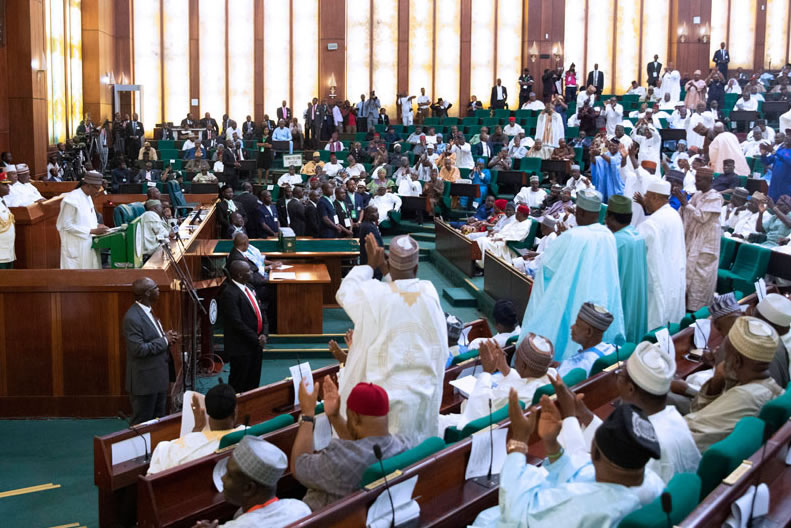
The recent controversy surrounding the voice vote in the House of Representatives highlights the need for the National Assembly to adopt an electronic voting system. The incident, which generated unnecessary tension and mistrust, could have been avoided if a more transparent and reliable method was deployed.
The two chambers of the National Assembly – the Senate and House of Representatives, are governed by specific rules.
In the Senate, Order 72 of the Senate Standing Rules outline three modes of voting; Voice Vote, Signing of Register in a division, or using an Electronic Voting device. The lower chamber too has provisions for voting after exhaustive debate on a motion. The chambers are both fitted with electronic voting devices with myriad benefits, which includes; transparency as votes are recorded, and verifiable, leaving no room for disputes.Also, the use of the electronic voting system erases human error and ensures accuracy. Again, it fosters faster voting processes and instant results. Above all, there will be accountability as lawmakers’ votes shall be on record for their constituents and the entire world to know their stance, thus promoting accountability.
In spite of enumerated advantages of using the electronic scoreboard, installed with millions of Naira of taxpayers money for resolution of heated debates, principal officers of the bi-camera Assembly, have totally abandoned the digital platform alternative for resolving thorny and critical issues confronting the country. Instead, they have continued to deploy crooked uncivilized voice votes that often create confusion. This is exactly what the Speaker of the House of Representatives, Tajudeen Abbas, did on February 17, 2026, during the heated debate raging across the country on real-time transmission of election results. The action of the Speaker led to a very rowdy session in the green chamber, prompting some members to stage a walk-out in protest over the controversial bill for the Electoral Amendment Act.
It started after a motion for the House to reverse its decision on the Electoral Act bill, passed on December 23, 2025. After a rigorous debate, the Speaker then put the motion to a voice vote. While the “nays” were louder than the “ayes”, he controversially ruled that the ayes had it, a development which triggered protests. The action of the Speaker amounts to total disrespect and disregard for millions of Nigerians, within and outside who were watching the event live on television.
There have been past instances where the none use of electronic scoreboard generated tension. For instance, during the debate for the declaration of State of Emergency proclaimed by President Bola Ahmed Tinubu, in Rivers State, controversy erupted when the Speaker’s decision on the voice vote was hotly disputed, highlighting concerns about manipulation and lack of transparency. These incidents underscore the need for transparent voting methods, like electronic voting, to ensure accountability and credibility in Nigeria’s legislative process.
Given that the National Assembly has acquired and installed an electronic voting and results transmission device, it raises concern why it is not being utilized to boost public trust, transparency, and accountability.
The action of the Speaker, who glaringly turned down popular voices in favour of real time transmission of electronic votes in the Green Chamber, signals the unwillingness of the few who cling tightly unto power and would not allow popular voices in line with democratic tenants.
Such a unilateral decision from the Speaker might further embolden those peaceful protesters (some of whom have been camping at the entrance gate of the National Assembly) and indeed across the country to continue to escalate their agitation. Already, a coalition of Civil Society Organisations (CSOs) are insisting on Real-Time Transmission 0f Election Results or nothing. The CSOs have teamed up with other pro-democracy activists in Abuja, to keep their agitation live. They are demanding mandatory electronic transmission, which they believe is essential to strengthening electoral integrity and reducing malpractices.
DAILY ASSET is hereby urging the National Assembly to embrace technology and adopt total electronic voting for transparency and accountability.
The parliament is the bastion of democracy. It is the only arm that stands out to defend the masses. Therefore, members of the National Assembly who constantly gauge the mood of their constituents and vote in line with aspirations of their constituencies should not be blacked out through a nebulous voice vote. Their stance on topical issues confronting the country should not be buried. It is the fundamental right of every Nigerian to track the views of elected representatives in order to hold them to account.




FG Moves to Automate Teachers’ Awards, Ends Manual Selection Process
ShareBy Tony Obiechina, Abuja The federal government has digitalised the selection process for the 2026 President’s Teachers’ and Schools’ Excellence Awards (PTSEA),...


Utsev Leads Nigerian Delegation to World Water Congress in Glasgow
ShareBy David Torough, Abuja Minister of Water Resources and Sanitation, Engr. Prof. Joseph Terlumun Utsev, will on Saturday, October 3,...


BBNaija Season 11: Keivo Becomes Second Housemate to be Disqualified
ShareKeivo has become the second Big Brother Naija housemate to be disqualified from Season 11. This follows his physical altercation...


Mofe-Damijo Envisions Bright Future for Nigeria at 66
ShareVeteran actor and public speaker, Richard Mofe-Damijo, has expressed optimism about Nigeria’s future, describing the country as a work in...


My Wife Paid $20k for Her Surgery Herself, Peller Fires Back at Carter Efe
ShareNigerian content creator and streamer, Peller, has fired back at Carter Efe after the streamer compared their relationships while praising...


I Didn’t Want to be in the Spotlight – Tems
ShareGrammy-winning Nigerian singer Temilade Openiyi, popularly known as Tems, has revealed that despite wanting musical success, she was uncomfortable with...
Nigeria at 66: Which Way Nigeria?
ShareBy Tochukwu Jimo Obi Sixty six years after independence, Nigeria should be asking itself a question that can no longer...

Nigeria at 66: Booming Banks, Struggling Nation, Where Is the Promised Prosperity?
ShareBy Blaise Udunze As Nigeria celebrates 66 years of independence, it must ask whether the country has delivered the prosperity...


Nigeria at 66: Leaders are Human, But Accountability is Non-negotiable
ShareBy Aderonke Ojediran As Nigeria marks its 66th Independence anniversary, the debate over leadership, public trust and accountability remains central...


Oborevwori Orders Julius Berger to Fix Washed-Out East-West Road at Agbarho
ShareFrom Francis Sadhere, Delta Delta State Governor, Rt. Hon. Sheriff Oborevwori, has directed Julius Berger Nigeria Plc to immediately commence...