
NEWS
Domestic Refiners Lift Paltry 28.5m Barrels Crude Despite 61.9m Allocation

By David Torough, Abuja
Nigeria’s domestic refiners lifted less than half of the crude oil allocated to them in the first quarter of 2026, despite increased volumes made available by producers under the Domestic Crude Supply Obligation framework, according to data from the Nigerian Upstream Petroleum Regulatory Commission.
The commission’s figures showed that oil producers offered a total of 68.
7 million barrels of crude during the period, exceeding the 61.9 million barrels allocated to local refiners. However, actual crude uptake remained low, with refiners receiving only 28.5 million barrels. This translated to a supply conversion rate of between 36 and 46 per cent.The figures highlight a continuing disconnect between crude availability and refinery intake, raising concerns about the adequacy of feedstock supplies needed to support Nigeria’s drive to expand local refining capacity.
Despite the shortfall, the Nigerian Upstream Petroleum Regulatory Commission reiterated its commitment to enhancing crude supply to domestic refineries in line with the Federal Government’s energy security objectives.
Meanwhile, the Crude Oil Refiners Association of Nigeria said the Dangote Petroleum Refinery’s growing dependence on imported crude is largely driven by commercial pricing considerations and differences in crude grades available in the domestic market.
The US government says it will stop funding programmes in South Africa intended to tackle the spread of HIV and Aids.
More than eight million South Africans are living with HIV – the highest number of any country in the world.
The US State Department appeared to link the decision to South Africa’s alleged failure to protect the white-minority Afrikaner community – an allegation the South African government has repeatedly rejected.
South Africa’s health ministry responded by saying that though it had not been informed of this decision, it had “long been working on a self-reliance plan”.
Until 2025, the US was supporting South Africa’s efforts to deal with the virus with an estimated $400m (£300m) a year through the President’s Emergency Fund for Aids Relief (Pepfar).
But since the inauguration of President Donald Trump, relations between the two countries have increasingly soured.
Shortly after he came into office, Trump issued an executive order alleging that “countless” South African policies dismantled equal opportunities and fuelled violence “against racially disfavored landowners”.
This is disputed by the South African government, which says its Black Economic Empowerment policy is needed to correct economic inequality dating from the apartheid era.
The executive order also highlighted South Africa’s case against Israel at the International Court of Justice and its links to Iran.
The White House said that given these “unjust and immoral practices”, further aid to South Africa would not be provided.
Trump has also alleged that there is a “white genocide” taking place in South Africa, which has led to the administration setting up a refugee programme for Afrikaners – descendants of western Europeans who settled in southern Africa in the 17th Century. They are now just about the only refugees being allowed into the US.
The genocide claim has been widely discredited.
Pepfar funding, which had been providing about a fifth of South Africa’s total spending on HIV programmes, got a reprieve last October with what was called a “bridge plan”.
But a US State Department official has confirmed that a “phased drawdown” of Pepfar funding would now start.
This was because of “South Africa’s failure to make demonstrable progress on policy requests by the administration”, the official said.
The intention of the US government was to “foster self-reliance” and reduce dependency on American funding, they added, pointing out that “South Africa is a middle-income country and is more than capable of supporting its own health programs”.
South Africa’s health ministry has said that while Pepfar contributed to the country’s HIV programme, the provision of life-saving antiretroviral drugs was funded entirely separately, with most coming from the government.
Attempts to mend US-South Africa relations have floundered. These include a high-profile White House meeting between Trump and South African President Cyril Ramaphosa just over a year ago when the US president confronted his counterpart with his claims of white persecution.
The US also boycotted the G20 meeting, a gathering of the world’s major economies, hosted by South Africa last November.
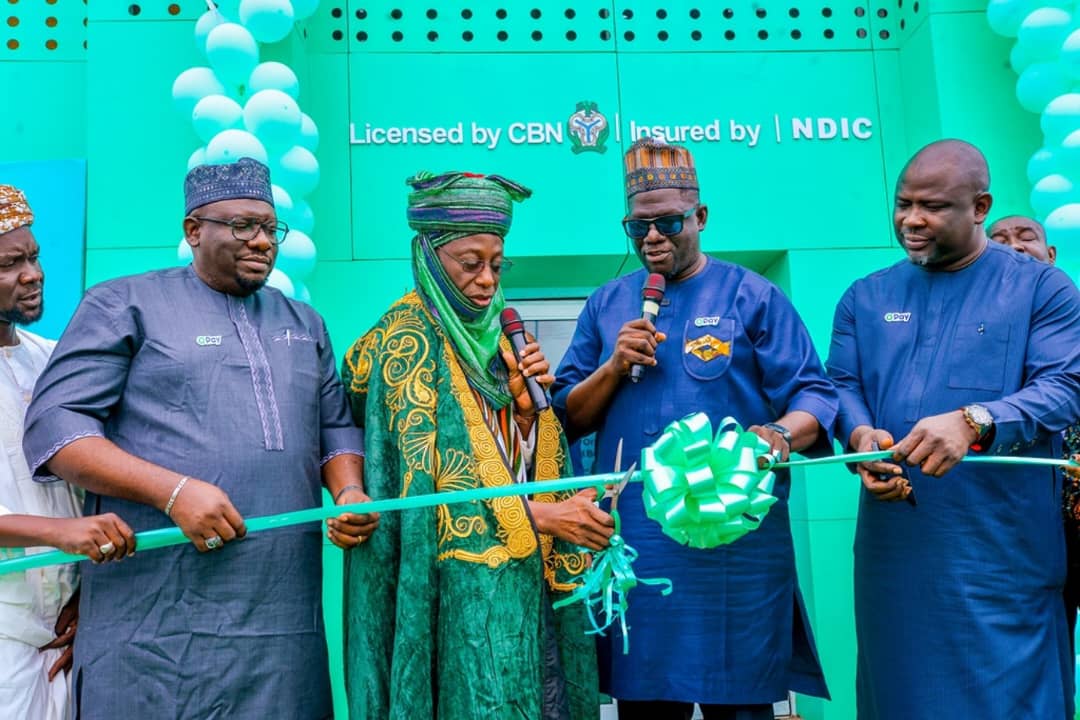
New office Reinforces OPay’s Commitment to Financial Inclusion, Customer Support across Nigeria
OPay, a leading fintech company in Nigeria, officially launched its new office in Kaduna State on Wednesday, 10th June 2026, marking another important milestone in the company’s commitment to expanding access to secure, convenient, and inclusive financial services across the country.
The event brought together community and business leaders, local merchants, and members of OPay’s senior leadership team.The new Kaduna office reflects OPay’s continued investment in bringing financial services closer to customers, merchants, agents, and businesses.
It also strengthens the company’s ability to provide localised support, deepen community engagement, and contribute to economic growth in Nigeria.Over the years, OPay has played a significant role in advancing financial inclusion by providing tens of millions of Nigerians with access to digital payments, transfers, savings, and other financial services through technology-driven solutions. The launch of the Kaduna office further demonstrates the company’s dedication to ensuring that individuals and businesses, regardless of location, can participate fully in the digital economy.
“Today is more than the opening of a new office. It reflects our long-term commitment to Kaduna State and to the millions of Nigerians who trust OPay every day for their financial needs. Kaduna is a city of enterprise, innovation, and opportunity, and we are proud to strengthen our presence here as we continue to make financial services more accessible to individuals, businesses, and underserved communities, said Dotun Adekunle, Chief
Operating and Technology Officer of OPay at the Kaduna office official launch event. “Trust remains the foundation of everything we do at OPay. Every day, millions of Nigerians choose our platform because they know they can rely on us for secure transactions, innovative solutions, and dependable service. As we continue to grow, we will keep investing in technology, security, customer experience, and local partnerships to ensure that financial inclusion reaches every corner of Nigeria,” he continued.
The new office will serve as a key hub for customer engagement, merchant support, business partnerships, and operational activities within Kaduna State and neighbouring communities.
Kaduna continues to play an important role in Nigeria’s economic landscape, with a vibrant population of entrepreneurs, traders, and small businesses. By establishing a physical presence in the state, OPay aims to further support these communities with reliable, secure, and innovative financial solutions designed to meet their evolving needs.
As Nigeria’s trusted digital bank, OPay remains committed to building a more inclusive financial ecosystem where every Nigerian can access and benefit from modern financial services.
About OPay
OPay was established in 2018 as a leading fintech company in Nigeria with the mission to make financial services more inclusive through technology. The company offers a wide range of payment services, including money transfer, bill payment, card service, airtime and data purchase, and merchant payments, among others. Renowned for its fast and reliable network and strong security features that protect customers; funds, OPay is licensed by the CBN and insured by the NDIC with the same insurance coverage as commercial banks.

By Tony Obiechina, Abuja
The Joint Admissions and Matriculation Board (JAMB) has abolished admissions into affiliated degree programmes run by Colleges of Education nationwide, effectively making the Nigeria Certificate in Education (NCE) the only admission pathway into the institutions from the 2026/2027 academic session.
The decision, contained in JAMB’s newly released NCE/ND Agric Registration Guidelines issued by the Office of the Registrar in June 2026, marks a major policy shift in Nigeria’s teacher education system and brings to an end the long-standing arrangement that allowed Colleges of Education to award university degrees through affiliations with conventional universities.
Under the new policy, JAMB declared that no admission would be conducted into any affiliated degree programme in Colleges of Education from the 2026/2027 session. The Board also ruled out direct admission into 100 and 200 levels, insisting that all fresh entrants into Colleges of Education must now come through the NCE programme.
The development is expected to affect thousands of candidates who applied for degree programmes in affiliated Colleges of Education during the 2026 admission exercise.
To mitigate the impact, JAMB outlined several options for affected candidates. Direct Entry applicants may change institutions at no cost, transfer to the parent university overseeing the affiliated degree programme, or allow their second-choice institution to become their first choice for admission processing.
Similarly, UTME candidates seeking admission into affiliated degree programmes may change institutions, elevate their second-choice institution to first choice status, or opt for admission into the NCE programme.
According to the Board, candidates choosing the NCE route will be required to obtain an O’Level verification code from the relevant examination body and pay a registration fee of ₦700 through the JAMB portal.
JAMB further explained that candidates who elect to pursue the NCE programme and are subsequently recommended for admission will have any ongoing UTME or Direct Entry admission process suspended.
The Board fixed June 22 as the deadline for affected candidates wishing to make changes to their admission choices.
In addition, JAMB announced that details of candidates who applied through the 2026 UTME would be automatically migrated to their selected first-choice Colleges of Education or Agric-related Non-Technology National Diploma programmes where applicable.
As part of the new admission framework, the Board introduced compulsory O’Level verification for all NCE applicants, with fees pegged at ₦1,500 for one sitting and ₦2,000 for two sittings.
JAMB directed Colleges of Education, Institutional Professional Registration Centres (IPRCs), accredited Computer-Based Test (CBT) centres and its officials nationwide to study the new guidelines and ensure strict compliance.
The policy effectively ends decades of university-affiliated degree admissions in Colleges of Education and reinforces the NCE as the foundational qualification for teacher education in Nigeria.


Benue to Resuscitate N70bn Taraku Mills after 15 Years
ShareFrom Attah Ede, Makurdi Benue State Government through the Benue Investment and Property Company Limited (BIPC) has worked out modalities to commence immediate...
Dutch Royals Enjoy Two Big Results in One World Cup Day
ShareTwo nations, four points, one crazy World Cup day. There may be about 5,000 miles between the Netherlands and their former colony Curacao but the World Cup meant...

US to Stop Funding HIV Programmes in South Africa
ShareThe US government says it will stop funding programmes in South Africa intended to tackle the spread of HIV and Aids. More than eight million South Africans are living with HIV – the highest number...
Fathers Lament Silent Mental Stress, Gender Bias
ShareAs Nigeria celebrates Father’s Day 2026, many fathers are battling silent, severe mental health crisis driven by crushing economic hardships and deep societal...


Expands Presence in Nigeria with New Kaduna Office Launch
Share New office Reinforces OPay’s Commitment to Financial Inclusion, Customer Support across Nigeria OPay, a leading fintech company in Nigeria, officially...
Domestic Refiners Lift Paltry 28.5m Barrels Crude Despite 61.9m Allocation
ShareBy David Torough, Abuja Nigeria’s domestic refiners lifted less than half of the crude oil allocated to them in the...


JAMB Abolishes Degree Admissions in Colleges of Education
ShareBy Tony Obiechina, Abuja The Joint Admissions and Matriculation Board (JAMB) has abolished admissions into affiliated degree programmes run by...


Oyebanji Pledges Inclusive Govt after Historic Landslide Re-election in Ekiti
ShareBy David Torough, Abuja Governor Biodun Oyebanji of Ekiti State has made history by becoming the first governor since the...

NSUK Alumni Hold 2026 Delegates Conference, Pledge Support for Indigent Students
ShareBy Tambaya Julius, Abuja The Nasarawa State University, Keffi (NSUK) Alumni Association has restated its commitment to supporting indigent students...

Ikechukwu to Rabe Abubakar’s ‘Friends and Associates’: Where Were You When He Needed You Most?
ShareRenowned public affairs commentator and Executive Director of Development Specs Academy, Prof. Okey Ikechukwu, has criticised those now identifying themselves...