
Uncategorized
D’Tigers Decimate Korea, Head to Guangzhou for Olympics Ticket


By Orkula Shaagee, Abuja
Nigeria bounced back against Korea to record its first win 108-66 points at the ongoing FIBA World Cup holding in China.
The win after two previous attempts and losses to Russia and Argentina was enough to put the team in contention to pick the 2020 Olympics sole automatic ticket on offer for Africa.
The team who were fired up minutes before the game by the NBBF President, Engr Musa Kida shot to the lead seconds to the end of first quarter courtesy of a last gasp 2 points layup from Ike Iroegbu to win the quarter, 17-15 points.
Second quarter also ended in similar fashion as D’Tigers extended their lead to 18 points to end the first half 49-31 points.
Michael Eric was the top performer of the night with 17points and 9 rebounds to lead Nigeria’s 42-point win which became the highest point margin against a non-African opponent.
Captain, Ike Diogu also put in a sterling performance with 16 points and 6 rebounds while Chimezie Metu with 15 points was the highest rebounder of the day with 9.
Speaking at the post match conference, Head Coach, Alex Nwora said finally getting the win and getting their 2020 Olympics qualification back on track was comforting.
“Korea was good, but we were taller and we used that to our advantage. On the court, our tactics worked out well and I must commend my players for a job well done.”
With mixed feelings, Alex said, “We didn’t come to the World Cup just to fight for the Olympics ticket. We came with the mindset of a podium finish, but sadly we could not achieve this. We are happy to be back in the race for the Olympics.”
The coach said the lessons have been learnt as attention has now shifted to the classification games to be decided in Guangzhou.





From Mike Tayese, Yenagoa
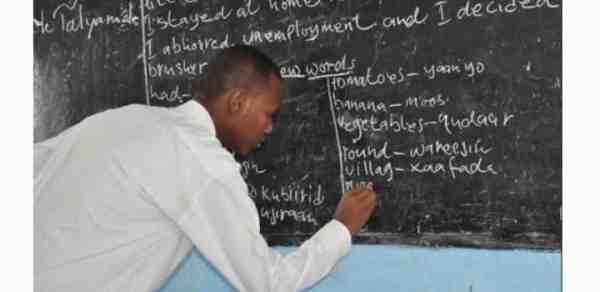
The people of Amatu 2 Community in Ekeremor Local Government Area of Bayelsa State, have appealed to the State government to come to their aide, saying that for the past three years their children have not been attending classes both at the primary and secondary school level due to the unavailability of teachers and corps members.
While making the appeal in Ekeremor Town, Mr.
Jerry Samasuode, a leader of the community, said they have written several petitions to the State Ministry of Education, State Universal Basic Education Board and Post Primary Schools Board to draw attention of government to their plight but no action has been taken for the past three years.He said the situation is so bad that children of the community have forgotten their academic calendar as they don’t know when schools will resume or close for holiday, and that they fear that if nothing is done urgently to save the situation their children may grow up to become a problem to society.
Explaining further, he said “about five years ago corps members used to cover up for unavailability of teachers but today they also abandoned us. Both the teachers and corps members that were posted to the community used to complain about distance and poor standard of living as excuses but today there is a road from Yenagoa to Ekeremor.
“So, today distance should not be an excuse. Concerning the issue of poor standard of living, the community made an effort by providing accommodation, food and stipends to encourage them even though that is not part of our responsibility. Yet, when they are posted to our community, they will lobby officials to redeploy them to urban cities.
“Most of the teachers who work their redeployment to urban areas, told us that they are doing so because the government does not pay them rural posting allowances, even though we made money available for them to cover up for that but they have refused to come to our community. Yet, they will say education is the bedrock of development.”
From Sylvia Udegbunam, Enugu
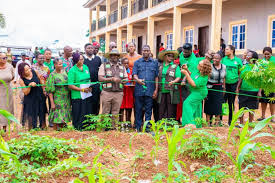
The Executive Chairman of Enugu State Universal Basic Education Board (ENSUBEB), Associate Professor Hyginus Banko Okibe has flagged off the 2022/2023 Agricultural Education training programme for head teachers, teachers, and pupils at Independence Layout Primary School, Enugu.
Professor Okibe emphasized the importance of agriculture for economic development and growth, stressing that the country’s major problem is hunger due to people not engaging in farming activities anymore.
He noted that schools should be exposed to agricultural skills and technology; he however announced that there will be an agricultural trade fair, where produce from all schools will be showcased.
The Commissioner for Agriculture and Agro Industrialisation, Dr. Patrick Nwabueze Ubru, in a keynote address, highlight the importance of agriculture, stating that without it, there will be no life.
He disclosed that 12,000 bags of fertiliser will be distributed to registered farmers in the state and noting that non-farmers will not receive farming inputs and fertilisers.
Ubru reiterated that agriculture occupies an important space in the Governor’s vision and manifesto as one of the developmental areas for reviving the economy.
He said that Enugu State has introduced dry season farming with solar pumping machines and embarked on three-cycle rice production, making it the largest producer of cassava in the country.
He further disclosed plans to establish agricultural processing industries in the three senatorial zones of the state.
Dr. Amaka S. Ngene, Executive Chairman of STVSMB and former Permanent Member of ENSUBEB, appreciated the guests and emphasized that the agricultural education training programme is child-centered, aimed at making agriculture a future career or hobby for the pupils.
She enumerated the objectives of the training, including the provision of requisite skills for self-employment.
Hon. Nwakaego Ajah, Permanent Member 3, thanked the Executive Governor of Enugu State, the Executive Chairman of ENSUBEB, and UBEC for the initiative in making Agricultural Science more practical-oriented at the Basic Schools.
She urged the learners and teachers to take the training serious and also promote their dignity in labour.
The event featured lectures on food crops, planting, and care, and the distribution of farm inputs and plants to various schools.
The highlight of the occasion was the decoration of Dr. Amaka Ngene by the Commissioner for Agriculture and Agro Industrialisation.

The Police said they have arrested three suspects over house breaking, robbery of gold and other valuables in Abuja.
The Force Public Relations Officer, ACP Olumuyiwa Adejobi, said this during a media briefing in Abuja.
He added that the suspects were arrested following an investigation by operatives of the Intelligence Response Team (IRT).
ADejobi said further investigation revealed that the prime suspect in the case was a fish trader at the Kado fish market in Abuja.
He said the suspects had raided three houses in the Lugbe area of Abuja before getting to the fourth house where they jumped the fence and used a motor jack to expand the bars of the burglary.
Adejobi said the suspects expanded the bars of the burglary and had access into the house where they searched for items they could steal.
He said in the process, they found a safe in the house, went away with it and used a hammer and chisel to break the safe forcefully and found money, documents and gold.
“Upon the discovery, the prime suspect contacted a buyer to dispose of the items where he realised over N60 million after selling the items,” he said.
Adejobi said operatives of the IRT had also arrested 16 suspects in connection with theft and robbery of motorcycles and tricycles in Plateau.
He said the suspects, who were particularly involved in moving around at late night, picking up any tricycle parked without supervision, were arrested following credible intelligence.
The police spokesman said the suspects were also involved in moving around and stopping motorcyclists on the road while parading themselves as police officers with fake identity cards.
He said the members of the syndicate, who posed as policemen and accused motorists of late night movement, were engaged in confiscating motorcycles and telling them to go to the nearest Police Division to retrieve the motorcycles.
He said the suspects had so far stolen several motorcycles which they had sold to the receiving group in their syndicate.
Adejobi said police operatives had recovered eight motorcycles and 11 tricycles from the suspects.
He said police operatives had in the past six weeks arrested a total of 1,284 suspects over the offences of armed robbery, kidnapping, rape, homicide, cultism and other criminal offences.
Adejobi said 307 of the suspects were arrested over armed robbery, 296, kidnapping, 301, homicide, 176, rape and defilement, and 204, cult related offences.
The police spokesman said 284 firearms, 6702 ammunition of various calibres, 107 vehicles were recovered from the suspects while 97 kidnap victims were rescued during the period under review. (NAN)
Tinubu Approves Management Unit for Health Sector Renewal Investment Initiative
SharePresident Bola Tinubu has approved the establishment of the Sector-wide Coordinating Office-Programme Management Unit (SCO-PMU) domiciled in the Office of...

FG Denies Slash in Students’ Allowances
Share The Federal Government says it has no plan to slash scholarship students’ allowances as recently projected in the media.The...

Planned Protests: CAN calls for calm and patience
ShareBy Laide Akinboade, Abuja The Christian Association of Nigeria, CAN, on Friday, has urged Nigerians to calm and patient with...
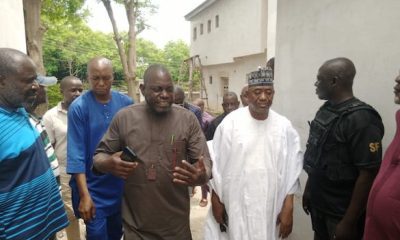

Senate Consultant Scores Benue LG Bureau High on Projects Execution
ShareThe Consultant for Senate Standing Committee on States and Local Government Administration, Engineer Kayode Adegbayo has described the quality of...


Doctor Mark Ogbodo: A Man Destined for Success
ShareBy Paul Ugah Henry Miller once said, “Every man has his own destiny, the only imperative is to follow it,...


Ignore Anti -government Protests, Wike Begs Abuja Residents
ShareBy Laide Akinboade, Abuja Minister of the Federal Capital Territory, Barr. Ezenwo Nyesom Wike has called on residents of the...
Reps Commit to Ensure Legislations for Better Skills Acquisition, Management
ShareBy Ubong Ukpong, Abuja The House of Representatives on Thursday pledged its continuous commitment to ensure legislations that would align...

Economic Sabotage: Senate Summons Petroleum Minister, NNPCl, CBN, NPA, Others for Interrogation
ShareBy Eze Okechukwu, Abuja The Senate is blowing hot over alleged economic sabotage by stakeholders within the petroleum sector, thus...
Dialogue with Organisers of August 1 Protest, AANI Urges FG
ShareBy Johnson Eyiangho, Abuja The Alumni Association of the National Institute (AANI) has advised the Federal Government to dialogue with...


Stigmatization: CSO Urges Kogi Gov to Assent Bill Protecting HIV Patients
ShareFrom Joseph Amedu, Lokoja Civil Society Organisation, Initiative for Grassroot Advancement in Nigeria (INGRA), has called on the Kogi State...