
NEWS
Education Risks Becoming a Privilege of the Super-Rich


By Daniel Nduka Okonkwo
What happens when the price of a university education becomes higher than the annual income of a Nigerian worker earning the statutory minimum wage? That is no longer a theoretical question. With a proposal that public universities should charge at least ₦1 million per student per session for financial independence, Nigeria is being forced to confront a much bigger issue than the cost of running its universities: whether a system designed to expand access to higher education is gradually becoming a system in which access depends on the depth of a family’s pocket.
The university may need the money, but the question the government must answer is who will carry the burden when millions of Nigerian households are already struggling to pay for food, rent, transport, healthcare, and basic education. If the answer is increasingly the parents, then Nigeria may be solving the financial crisis of its public universities by creating an even deeper crisis of educational exclusion.The question has gained fresh attention following comments by Professor Ibiyemi Olatunji-Bello, who completed her five-year tenure as the ninth Vice-Chancellor of Lagos State University on September 19, 2026. In an interview published by The Punch on September 22, she argued that public universities need to charge at least ₦1 million per student per session if they are to achieve genuine financial independence. She said LASU’s monthly payroll exceeded ₦1 billion, its electricity bill ran to about ₦140 million a month, and the university had to provide about ₦240 million in salary augmentation in some months. LASU’s student population, including postgraduate and part-time students, stood at about 85,000.
Her argument deserves serious consideration. Running a modern university is expensive, and staff salaries, electricity, laboratories, infrastructure, technology, research, and maintenance all require substantial, predictable funding. That part of her case is difficult to dispute.
The harder question is whether the answer should be a ₦1 million bill presented to students and their parents, because once the argument leaves the university balance sheet and enters the Nigerian household, the numbers change.
Nigeria’s national minimum wage is ₦70,000 a month, or ₦840,000 a year. A ₦1 million university fee is therefore equivalent to about 14.3 months of the entire gross income of a minimum wage worker. A parent on that wage would need to devote every naira earned for more than one year to pay one child’s fee, with nothing left for food, rent, transport, electricity, healthcare, or clothing, and university fees are never the whole cost. Accommodation, transport, textbooks, data, meals, and departmental charges sit on top of tuition, and for a household with two children at university, the annual bill could reach ₦2 million or even more. The debate cannot be settled by asking whether ₦1 million is a lot of money in the abstract. The relevant question is what it represents against Nigerian household income, and what happens to an academically qualified student whose family cannot raise it.
There is a legitimate argument that public universities cannot keep operating on inadequate government funding while being expected to deliver world-class education. That problem is real. But financial sustainability and financial exclusion are not the same thing. A university can raise its revenue and still create a serious access problem if the burden falls disproportionately on households that cannot absorb it. Public universities have historically expanded access to tertiary education beyond the section of society that can afford private institutions, and that role matters more, not less, when household incomes are under pressure. If public universities provide a service essential to national development, government funding remains part of the government’s responsibility, and the solution cannot be to let that funding decline while tuition fills every gap it leaves behind.
Professor Olatunji-Bello’s own record at LASU is worth setting against her argument rather than treating the fee proposal in isolation. During her tenure, LASU was the most subscribed institution by UTME candidates in both 2025 and 2026, and received a ₦25 million award for compliance with JAMB regulations. The university established four new faculties and two new schools with more than 30 new programmes, of which 17 secured full accreditation in 2026, and its internally generated revenue grew from about ₦3 billion in 2021 to ₦13 billion in 2025. LASU also ranked as the best university in West Africa on the UI GreenMetric sustainability ranking for four consecutive years, from 2022 to 2025. None of this invalidates the argument that universities need more funding. It does raise a broader question: if a public university can expand programmes, attract more students, grow its own revenue, and lift its institutional profile at this pace, what combination of government funding, research income, philanthropy, endowment, commercialisation, and moderate student contributions could close the remaining gap without making higher education accessible mainly to families with substantial disposable income? That is a more useful national conversation than simply asking parents to pay more.
A university’s financial needs do not automatically translate into a household’s ability to meet them. Every naira transferred from a struggling household to an institution is a naira unavailable for another necessity, and the effect is not evenly spread. Affluent families can absorb a large tuition increase, some middle-income families can respond by borrowing or cutting other spending, but for poorer households, the likely outcome is postponement, withdrawal, or exclusion. That makes this a social mobility question as much as an education one. A child from a low-income household who earns admission to a public university should not lose that opportunity because the family cannot raise a fee far beyond its annual disposable income.
The pressure is not confined to universities. Private primary and secondary school operators have cited rising diesel, electricity, salaries, rent, and transport costs as reasons for fee increases, and families already rely on cooperative savings, salary advances, microfinance loans, and Ajo or Esusu arrangements to keep children enrolled. When the cost of education rises faster than household income, parents do not acquire more money. They cut spending elsewhere, borrow, delay other needs, or, in the hardest cases, withdraw their children. That experience among households already struggling with school fees below university level should warn policymakers what a million-naira tuition bill is likely to produce at the tertiary level.
The Academic Staff Union of Universities has argued for years that the answer to underfunded universities cannot be to transfer the cost primarily to students. ASUU president Professor Emmanuel Osodeke has warned that substantial or arbitrary tuition increases could push 40 to 50 percent of current public university students out of the system within two to three years. That warning was made when the minimum wage was ₦30,000, not the current ₦70,000, so it should not be read as a direct prediction of what a ₦1 million fee would produce today, but the underlying concern, that affordability affects access, remains relevant. ASUU has instead proposed stronger government financing, better use of education-related taxation through TETFund, increased research funding, and mechanisms through which universities generate income from research, consultancy, and commercial ventures. Universities should be encouraged to build legitimate internal revenue, but that revenue should complement public funding rather than excuse government from its obligations.
The Nigerian Education Loan Fund offers part of an answer, financing verified institutional fees with repayment beginning after graduation and linked to income through salary deduction. That is a meaningful difference from asking a low-income family to produce ₦1 million before a child can enrol. But a loan is not the same as affordable education. It moves the cost from the present to the future, and if tuition becomes unaffordable and borrowing is the principal solution offered to students, Nigeria risks turning access to education into a long-term financial obligation for an entire generation before they have earned a salary.
There is no single international model for funding higher education, but other countries show that governments can protect access while running strong institutions. Germany and several Nordic countries finance higher education substantially through taxation, with many public institutions charging low or no tuition for eligible domestic students. Australia runs an income-contingent system in which the government finances institutions upfront, and graduates repay through the tax system once their income crosses a set threshold. The United States relies on a mixed model of tuition, public funding, research grants, financial aid, and, at some institutions, large endowments. None of these systems can simply be transplanted into Nigeria, which has its own population, tax base, and labour market. What they demonstrate is that the ability to pay in full at the point of admission does not have to be the sole determinant of access.
Nigeria cannot treat education as though family budgets have unlimited capacity. When the government underfunds public education, and institutions recover more of their costs from students, the household becomes the final adjustment mechanism, and children become the adjustment variable in a funding crisis they did not create. A student admitted on merit should not be pushed out because the family cannot raise the required fee.
Nobody seriously disputes that quality education costs money. The real question is how that cost should be shared. Government can increase funding through better budgetary allocation and stronger, more accountable education tax mechanisms. Universities can grow legitimate internally generated revenue through research, consultancy, commercial ventures, and professional programmes.
The private sector, alumni, and philanthropic organisations can contribute through endowments and scholarships, and students who can afford it can reasonably be asked to contribute too. What is required is a financing architecture that does not leave the poorest households to solve the entire structural problem on their own.
There is nothing wrong with universities seeking greater financial independence, and institutional autonomy to manage resources and build sustainable income is worth encouraging. But financial independence must not become financial abandonment. A public university should not be forced into a position where its survival depends primarily on how much it can extract from students, since that would change the meaning of public higher education itself.
Any proposal for dramatically higher tuition should also come with a clear account of what students can expect in return, reliable electricity, functional laboratories, adequate accommodation, qualified lecturers, timely examinations, and transparent reporting on how the additional revenue is spent. Parents should not be asked to pay substantially more without that accountability attached.
The debate triggered by the ₦1 million proposal should not be reduced to whether Professor Olatunji-Bello is right or wrong about the cost of running a university. Her central point, that public universities need substantially more resources, deserves serious attention.
The equally important question is whether those resources should come primarily from families that are themselves struggling to survive. Nigeria needs to confront the chronic underfunding of public education, strengthen university governance and financial accountability, encourage universities to generate legitimate revenue without losing their public character, and provide targeted support for students from low-income households. Above all, the government must decide what public higher education is meant to achieve.
If public universities are expected to produce the doctors, engineers, teachers, researchers, and other professionals the country needs, then funding them is not simply an institutional expense. It is an investment in the country itself.
The choice before Nigeria is between increasingly transferring the cost of public higher education onto households, or building a diversified financing system in which the government remains a major funder while universities develop responsible revenue streams and students contribute within limits that preserve access.
The country does not have to choose between quality and affordability. If the government continues to retreat from its responsibility while universities recover more of their costs from students, higher education risks becoming accessible according to family wealth rather than academic ability, with consequences for social mobility, the size and quality of Nigeria’s skilled workforce, and the country’s capacity to build the human capital its own future depends on. The question is not whether Nigerian universities need more money. They clearly do.
The question is whether Nigeria is prepared to fund them in a way that protects both institutional quality and the right of ordinary Nigerians to reach higher education, a responsibility the government cannot outsource to parents.
Daniel Nduka Okonkwo is an investigative journalist, human rights advocate, and policy analyst based in Nigeria. He is the founder and publisher of Profiles International Human Rights Advocate (PIHRA), a platform documenting the courage of human rights defenders and examining issues of governance, accountability, security, and fundamental rights.
His reporting on Nigerian governance, security-sector accountability, public finance, and human rights has appeared in Sahara Reporters, Vanguard, Daily Trust, African Defence Forum, Opinion Nigeria, and Daily Intel.
By David Torough, Abuja
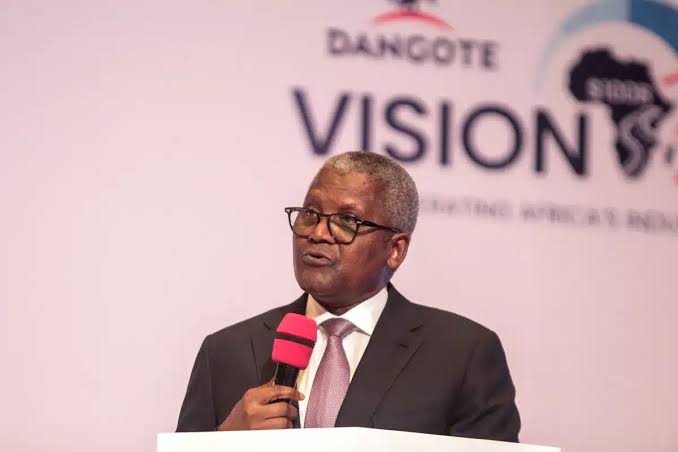
President and Chief Executive of Dangote Industries Limited, Aliko Dangote, has announced plans to support up to two million vulnerable women across Nigeria to participate in the ongoing Initial Public Offering (IPO) of Dangote Petroleum Refinery and Petrochemicals Limited.
Dangote made the disclosure in New York during the 81st United Nations General Assembly, in response to a question from the Secretary to the Yobe State Government, Dr Goje Mohammed, on how public-private partnerships could help communities affected by conflict develop sustainable sources of income.
Under the proposed initiative, the Aliko Dangote Foundation will work with state governments to identify vulnerable women, particularly widows and those affected by conflict, and assist them in acquiring shares in the refinery.
Dangote said the programme would go beyond helping the beneficiaries purchase shares, with the Foundation also providing additional shares that the women could retain as a long-term financial asset.
“We are partnering with state governments to ensure that widows and other vulnerable women are able to buy shares in the refinery,” Dangote said.
He added that women who participate in the IPO would receive additional shares donated by the Foundation, which could serve as a form of savings for the future.
The initiative is expected to reach about two million women nationwide, potentially expanding access to investment opportunities among financially vulnerable groups through one of Nigeria’s major capital-market offerings.
The proposed programme forms part of the broader objectives of the Dangote Refinery’s “People’s IPO”, which seeks to increase Nigerian participation in the ownership of the $20 billion refinery, according to a statement from Dangote.
By David Torough, Abuja
The Code of Conduct Bureau (CCB) has investigated and verified the assets of more than 20 ministers and 30 permanent secretaries as part of an intensified effort to strengthen accountability among public officers.
CCB Chairman, Abdullahi Bello, disclosed this in Abuja on Wednesday at an anti-corruption and asset-tracing stakeholders’ workshop organised by the Human and Environmental Development Agenda (HEDA) in collaboration with the Platform to Protect Whistleblowers in Africa.
Bello said the bureau had moved beyond simply receiving asset declaration forms and was now examining declarations, investigating suspected breaches and prosecuting offenders.
“We are not submitting forms anymore. Now, we’re examining the forms, we’re also investigating, and we’re also prosecuting,” he said.
He said the bureau’s verification exercise had focused on high-profile public officers, adding that it had interviewed and verified the declarations of more than 20 ministers, 30 permanent secretaries, 32 health agencies and other senior officials.
According to Bello, public officers may be invited to the bureau for face-to-face examination of their records as part of the verification process.
He explained that assets are verified at the beginning of an official’s tenure and again at the end, with unexplained increases potentially triggering further investigation and prosecution.
“If you see any difference between the beginning and the end that can only be explained by your non-social income then we investigate you and prosecute you,” Bello said.
The CCB chairman stressed, however, that the bureau does not have to wait until an official leaves office before commencing an investigation.
He said investigations could begin whenever the bureau receives an allegation or intelligence concerning an official.
“If there is any allegation against you, we can also investigate. Or if there is intelligence against you, we can also investigate,” he said.
Speaking at the workshop, HEDA Executive Secretary, Arigbabu Sulaimon, called for stronger collaboration between government agencies and civil society organisations in the fight against corruption.
Sulaimon said the workshop was designed as a technical working session aimed at improving intelligence sharing, strengthening inter-agency cooperation and enhancing the role of civil society in tackling corruption.
He also urged greater use of the Proceeds of Crime Act and the CCB’s statutory powers to trace and recover illicit assets.
On whistleblower protection, Sulaimon called for stronger safeguards for individuals who provide information on corruption and other crimes, saying improved protection would encourage more people to come forward.
By David Torough, Abuja
Nigeria’s long-delayed Ima Gas Field is set for development after AMNI International Petroleum Development Company Ltd. and TotalEnergies EP Nigeria took the Final Investment Decision (FID) on a project expected to attract more than $600 million in development investment and generate up to $800 million in value.
The shallow-water field, located about eight kilometres offshore in OMLs 112 and 117, was discovered in 1973 but remained undeveloped for more than five decades.
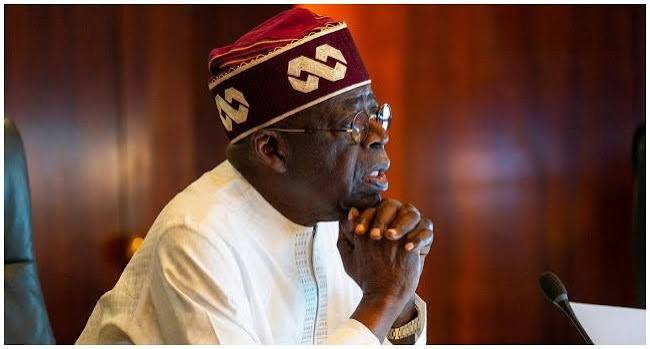
First gas is expected by the end of 2028, with production projected to reach about 350 million cubic feet per day at plateau.President Bola Tinubu, who welcomed the FID on Wednesday, said the project demonstrated the impact of reforms aimed at making Nigeria’s oil and gas sector more competitive and unlocking previously stranded resources.
According to the President, the development will create opportunities for Nigerian engineers, technicians, contractors and businesses, while stimulating economic activity in host communities and increasing gas supplies and export earnings.
The project is expected to supply about one-third of the gas required for the expansion of Nigeria LNG’s Train Seven, supporting the planned increase in the company’s liquefaction capacity from 22 million tonnes to 30 million tonnes per annum.
The development is being led by TotalEnergies as operator with a 40 per cent interest, while Nigerian-owned AMNI holds a 60 per cent interest. Nigerian financial institutions are providing more than 75 per cent of the project financing, highlighting the growing role of domestic capital in major energy developments.
About 60 per cent of the development workforce is expected to come from host communities, including Bonny, Finima and Andoni in Rivers State. The project also targets extensive Nigerian participation, with key contractors expected to be local companies.
TotalEnergies Managing Director, Matthieu Bouyer, described the FID as a vote of confidence in Nigeria’s oil and gas industry, saying the project would combine international technical expertise with Nigerian financing, contractors and workforce.
The company said Ima had been designed as a low-cost, low-emissions development, with electricity supplied from shore, no routine flaring and permanent methane detection and monitoring systems.
President Tinubu said the Ima FID was the fourth major gas project to reach investment decision under his administration, following the Iseni, Ubeta and HI projects.
He attributed the renewed momentum to reforms introduced to improve fiscal competitiveness, shorten contracting timelines, reduce project costs and provide greater certainty for investors, particularly in onshore and shallow-water gas developments.
Special Adviser to the President on Energy, Olu Verheijen, said the Ima development illustrated the transition from gas resources remaining underground to their conversion into jobs, business opportunities, government revenues and industrial growth.
AMNI Chairman and Chief Executive Officer, Tunde Afolabi, said the FID demonstrated that Nigeria could still attract long-term investment when indigenous and international companies combine technical expertise, financial discipline and local knowledge.
He stressed that the FID marked the beginning of the project’s execution phase, with attention now turning to safe delivery, technical integrity, environmental responsibility and meaningful engagement with host communities.
The Ima project is also expected to strengthen Nigeria’s broader gas strategy by providing feedstock for LNG exports and industry, while supporting potential growth in fertiliser, petrochemicals and power generation.
The development comes as Nigeria seeks to convert its large gas reserves into productive assets and increase the contribution of the sector to domestic economic activity and foreign exchange earnings.




Education Risks Becoming a Privilege of the Super-Rich
ShareBy Daniel Nduka Okonkwo What happens when the price of a university education becomes higher than the annual income of...

Dangote Targets 2m Women in Refinery IPO
ShareBy David Torough, Abuja President and Chief Executive of Dangote Industries Limited, Aliko Dangote, has announced plans to support up...

FG Probes Assets of 20 Ministers, 30 Perm Secs
ShareBy David Torough, Abuja The Code of Conduct Bureau (CCB) has investigated and verified the assets of more than 20...

Ima Gas Project: $800m FID Unlocks 53-Year-Old Field
ShareBy David Torough, Abuja Nigeria’s long-delayed Ima Gas Field is set for development after AMNI International Petroleum Development Company Ltd....

Ministry of Regional Devt Fetes 24 Retirees, Urges Continued Service to Nation
ShareBy David Torough, Abuja The Ministry of Regional Development has celebrated 24 retirees, recognising their years of dedication to public...

Tompolo’s Grassroots Movement Unveils 44 Vehicles, Other Campaign Materials in Borno
ShareThe PBAT Door-to-Door Movement has commenced mobilisation in Borno State to rally support for the reelection of President Bola Ahmed...


Customs Recruitment: Nearly 3,000 Candidates Screened Without Casualty
ShareBy Tambaya Julius, Abuja The Nigeria Customs Service (NCS) has concluded the final phase of its 2025 recruitment exercise, with...

NUPRC, Indonesia Open Talks on Oil Investments as Pertamina Eyes 2026 Licensing Round
ShareThe Nigerian Upstream Petroleum Regulatory Commission (NUPRC) has opened discussions with Indonesia on petroleum investments, with Indonesian national oil company...


RMAFC Inaugurates Planning Committee for China Oil & Gas Investment Forum
ShareBy Tony Obiechina, Abuja The Revenue Mobilisation Allocation and Fiscal Commission (RMAFC) has inaugurated a Planning Committee to coordinate preparations...
Advancing Food Security through ONSA AgriShield Initiative
ShareBy Chido Onumah The Federal Government is strengthening the connection between national security and food security through the AgriShield Initiative,...