
Business News
Edun Seeks Liquidity for Power Sector as NDPHC Declares Calabar Best Power Plant


By Eze Okechukwu, Abuja
The Minister of Finance and Coordinating Minister for the Economy, Wale Edun yesterday declared that liquidity was the major hindrance required by the troubled power sector to achieve the desired result of producing steady Power in Nigeria.
This is as the Managing Director of Niger Delta Power Holding Company (NDPHC) Chiedu Ugbo informed the Senate Committee on Power in Abuja yesterday that the Calabar Power Generation Company under its ownership was the best performing power plant in the country.
In his submission to the Committee investigating the controversial Make up Gas (MUG) Reprocessing Deal Involving the Ministry of Finance, NDPHC, Calabar Generation Company Limited and ACUGAS Limited, the Minister of Finance pointed out that the need for liquidity into the Power Sector remained the key to unlocking it.
The Minister who made the submission through his Special Assistant, Mallam Dahiru Moyi said the agreements on Gas supply between NPDHC and ACUGAS Limited was inherited by former President Muhammadu Buhari in 2015, following after the agreement was signed in 2011 during President Goodluck Jonathan’s administration.
According to him, “just as the Ministry of Justice was not aware of the contract agreement, the Ministry of Finance was also not part of it from the beginning but since government is a continuum, the Ministry of Finance later came into it for the purpose of facilitating the required liquidity.
“The issues on ground about contracts agreements being investigated by the Senate Committee on Power is not about restructuring but providing the required liquidity which the Ministry of Finance is doing through collaboration with the Nigerian Liquified Natural Gas (NLNG).
“Since NLNG pays Gas in Dollars, the Ministry is collaborating with it for a practical solution of bringing liquidity into the age long contract agreement through Deed of Transfer.
“Make Up Gas (MUG) belongs to Calabar, Calabar belongs to NDPHC and NDPHC belongs to Federal and State governments with the Federal Government having 52.68%”, he said.
In his own submission before the Committee, the Managing Director of NDPHC, Chiedu Ugbo said the company as a result of the Gas supply agreement with ACUGAS Limited was taking Gas from three out of five units and generating power from Calabar plant to the National Grid which according to him was the best power plant in the entire country.
He said NDPHC went out of its way to construct an 80 kilometres gas pipeline for utilization of MUG in Calabar and Alaoji power plants.
He however lamented that problems relating to systemic transition, frequency and voltage issues have not made the firm achieve the desired results.
In his remarks, the Chairman of the Committee, Senator Enyinnaya Abaribe (APGA, Abia South) thanked the stakeholders for giving the Committee clarity on the issue but added that it was still an ongoing investigation.

By Tony Obiechina, Abuja
The Budget Office of the Federation has reaffirmed the integrity of Nigeria’s newly enacted Tax Reform Acts, cautioning against what it described as governance by speculation and unverified claims following allegations of post-passage alterations.
In a statement on Wednesday, the Budget Office said it had taken note of concerns raised by the Minority Caucus of the House of Representatives, stressing that the sanctity of the law is central to constitutional democracy and not a mere procedural formality.
According to the Office, any suggestion that a law could be altered after debate, passage, authentication, and presidential assent without due process would strike at the core of the Republic and undermine citizens’ right to be governed by transparent and stable laws.
However, it warned that democratic integrity is also endangered by the careless amplification of unverified claims. “A nation cannot be governed by insinuation or sustained on circulating documents of uncertain origin,” the statement noted, adding that public confidence, once shaken by speculation, is often difficult to restore.
The Budget Office emphasized that both government and citizens share a common interest in truth, clarity, and due process, noting that public finance depends heavily on trust in the legality and clarity of fiscal laws. It welcomed the decision of the National Assembly to investigate the allegations, describing institutional inquiry, not conjecture as the appropriate response to claims of illegality.
On public access to the law, the Office agreed that Nigerians and the business community are entitled to clear and authoritative texts of all laws they are required to obey. It clarified, however, that the authenticity of legislation is determined by certified legislative records and official publication processes, not by informal or viral reproductions.
The statement also underscored the importance of separation of powers, warning that claims suggesting Nigeria is being governed by “fake laws,” if not backed by established facts, risk eroding confidence in democratic institutions.
At the same time, it stressed that legislative scrutiny should not be dismissed by the executive, noting that oversight is a constitutional duty, not an act of hostility.
From a fiscal perspective, the Budget Office said legal certainty is essential for revenue projections, macroeconomic stability, budget credibility, and investor confidence. While it is not the custodian of legislative records, it maintained that uncertainty around operative tax provisions directly affects economic planning.
To restore confidence, the Office proposed a set of measures, including the publication of verified reference texts in a single public repository, orderly access to Certified True Copies for stakeholders, clear public explanations where discrepancies are alleged, and strict alignment of all implementing regulations with authenticated legal texts.
Addressing calls for suspension of the tax reforms, the Budget Office cautioned against allowing prudence to slide into paralysis. It argued that properly implemented tax reform is necessary to reduce dependence on borrowing and inflationary financing, while easing indirect burdens on vulnerable citizens.
“Where clarification is required, it must be provided; where correction is required, it must be effected; where investigation is required, it must proceed,” the statement said, adding that governance and reform should not be stalled by unresolved conjecture.
The Office concluded by describing taxation as a democratic covenant that binds citizens and the state, insisting that compliance depends on transparency and trust. It called on political actors to protect institutions as much as positions, urging citizens and businesses to rely on verified sources and resist the spread of unauthenticated information.
The statement was signed by Tanimu Yakubu, Director-General of the Budget Office of the Federation, who reaffirmed the agency’s commitment to fiscal transparency, institutional integrity, and reforms that advance national prosperity while safeguarding citizens’ rights.
By Jennifer Enuma, Abuja
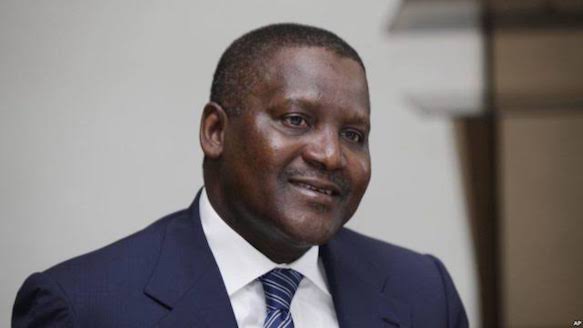
President Bola Tinubu has congratulated Alhaji Aliko Dangote, the President of Dangote Group, on his appointment to the World Bank’s Private Sector Investment Lab, a body tasked with promoting investment and job creation in emerging economies.
In a statement by Special Adviser on Media and Publicity, Bayo Onanauga, the President described the appointment as apt, given Dangote’s rich private sector experience, strategic investments, and many employment opportunities created through his Dangote Group.
The Dangote Group became one of Africa’s leading conglomerates through innovation and continuous investment.
Dangote Group’s business interests span cement, fertiliser, salt, sugar, oil, and gas. However, the $20 billion Dangote Petroleum Refinery and Petrochemicals remains Africa’s most daring project and most significant single private investment.
“President Tinubu urges Dangote to bring to bear on the World Bank appointment his transformative ideas and initiatives to impact the emerging markets across the world fully” the statement said.

The World Bank announced Dangote’s appointment on Wednesday, as part of a broader expansion of its Private Sector Investment Lab. The lab now enters a new phase aimed at scaling up solutions to attract private capital and create jobs in the developing world.
The CEO of Bayer AG, Bill Anderson, the Chair of Bharti Enterprises, Sunil Bharti Mittal, and the President and CEO of Hyatt Hotels Corporation, Mark Hoplamazian, are on the Private Sector Investment Lab with Dangote.
The World Bank said the expanded membership brings together business leaders with proven track records in generating employment in developing economies, supporting the Bank’s focus on job creation as a central pillar of global development.
By Joel Oladele, Abuja
The Nigeria Customs Service (NSC) has generated an impressive N1,751,502,252,298.05 in revenue during the first quarter of 2025.
The Comptroller-General (CG) of the Service, Bashir Adeniyi, disclosed this yesterday, during a press briefing in Abuja.
According to Adeniyi, the achievement not only surpasses the quarterly target but also marks a substantial increase compared to the same period last year, reflecting the effectiveness of recent reforms and the dedication of customs officers across the nation.
“This first quarter of 2025 has seen our officers working tirelessly at borders and ports across the nation.
I’m proud to report we’ve made real progress on multiple fronts—from increasing revenue collections to intercepting dangerous shipments,” Adeniyi stated.He attributed this success to the reforms initiated under President Bola Tinubu’s administration and the guidance of the Honourable Minister of Finance and Coordinating Minister of the Economy, Olawale Edun.
The CG noted that the revenue collection for Q1 2025 exceeded the quarterly benchmark of N1,645,000,000,000.00 by N106.5 billion, achieving 106.47% of the target. This performance represents a remarkable 29.96% increase compared to the N1,347,705,251,658.31 collected in Q1 2024.
Adeniyi highlighted the month-by-month growth, noting that January’s collection of N647,880,245,243.67 surpassed its target by 18.12%, while February and March also showed positive trends.
“I’m pleased to report the Service’s revenue collection for Q1 2025 totaled N1,751,502,252,298.05.
“Against our annual target of N6,580,000,000,000.00, the first quarter’s proportional benchmark stood at N1,645,000,000,000.00. I’m proud to announce we’ve exceeded this target by N106.5 billion, achieving 106.47% of our quarterly projection. This outstanding performance represents a substantial 29.96% increase compared to the same period in 2024, where we collected N1,347,705,251,658.31.
“Our month-by-month analysis reveals even more encouraging details of this growth trajectory,” Adeniyi said.
In addition to revenue collection, Adeniyi said the NCS maintained robust anti-smuggling operations, recording 298 seizures with a total Duty Paid Value (DPV) of ₦7,698,557,347.67.
He stated that rice was the most seized commodity, with 135,474 bags intercepted, followed by petroleum products and narcotics.
“From rice to wildlife, these seizures show our targeted approach,” Adeniyi remarked, noting the NCS’s commitment to combating smuggling and protecting national revenue.
Adeniyi also highlighted key initiatives, including the expansion of the B’Odogwu customs clearance platform and the launch of the Authorized Economic Operators Programme, which aims to streamline processes for compliant businesses. The NCS’s Corporate Social Responsibility Programme, “Customs Cares,” was also launched, focusing on education, health, and environmental sustainability.
Despite these achievements, the CG noted that the NCS faced challenges, including exchange rate volatility and non-compliance issues. Adeniyi acknowledged the need for ongoing adaptation and collaboration with stakeholders to address these challenges effectively.
Looking ahead, the NCS aims to continue its modernization efforts and enhance service delivery, ensuring that it remains a critical institution in Nigeria’s economic and security landscape.
“Results speak louder than plans; faster clearances through B’Odogwu, trusted traders in the AEO program, and measurable food price relief from our exemptions. We’ll keep scaling what works,” he concluded.
 |



Military Operations Are Not Media Scoops, Ikechukwu Warns Journalists
ShareBy David Torough, Abuja Professor Ikechukwu has cautioned media practitioners against the indiscriminate reporting of military activities, warning that the...

Nigeria’s Problems Beyond Tinubu, Ask Governors LG Chairmen
ShareBy Tony Bazim Many Nigerians blame President Tinubu for everything happening in the country, but have we taken time to...
Stakeholders Demand Enforcement of Kogi Urban Planning Law
ShareFrom Joseph Amedu, Lokoja Stakeholders in Kogi State’s built environment sector have called on the state Government to urgently enforce the Kogi State Urban and...
Wrestling: Team Nigeria Wins One Silver, Two Bronze in Mongolia
ShareTeam Nigeria wins one silver and two bronze, concluding its competition at the ongoing Ulaanbaatar 2026 United World Wrestling (UWW) 3rd Ranking Series on Saturday...


South Korea Election Chief Offers to Resign over Ballot Shortages
ShareSouth Korea’s National Election Commission (NEC) chairperson, Roh Tae-ak, on Friday offered to resign following a widespread shortage of ballot papers that disrupted voting in Seoul during this week’s...

JAMB Opens Portal for Printing of 2026 Mop-up UTME Slip
ShareThe Joint Admissions and Matriculation Board has announced that candidates scheduled for the 2026 Mop-Up Unified Tertiary Matriculation Examination can now print their examination notification slips ahead...
Dismisses Admission Exclusion Claims
ShareThe Nigerian Defence Academy (NDA) has dismissed reports claiming prospective candidates were excluded from admission into its 78 Regular Course due to portal closure. The Academy described the...


CBN Updates Forex Rules, Approves $50,000 Limit for Travellers
ShareBy Tony Obiechina, Abuja The Central Bank of Nigeria (CBN) has released revised foreign exchange (FX) guidelines, introducing new rules...
NUPRC, NNRA Partner on Compliance Costs, Safety Oversight
ShareBy Tony Obiechina, Abuja Nigeria’s drive to strengthen its petroleum industry received a boost as the Nigerian Upstream Petroleum Regulatory...


Army Rescues 360 Abducted Women, Children in Borno Operation
ShareBy David Torough, Abuja Nigeria’s security forces recorded a significant breakthrough in the fight against terrorism and kidnapping as troops...