
NEWS
Effective Standby Force’ll Impact ECOWAS Development —Group

The Abuja School of Social and Political Thought (ASSPT) says establishing an ECOWAS Standby Force will have a pragmatic impact on the sub-region’s development.Director of the School, Dr Sam Amadi, stated this at a policy dialogue with the theme, “Peace and Democracy in West Africa: The Need for an Effective Standby Force,’’ on Friday in Abuja.
The proposed standby force that is being formed by ECOWAS is to be made up of military, police and civilian components, to address security threats within the sub-region. Amadi said that the proposal by the ECOWAS Heads of State for the force aimed at reinforcing a stable environment for democracy to continue to thrive in West Africa.“For us, the standby force or dealing with the state of coup in West Africa has pragmatic impact for development.“If you look at the West African region, it is probably the poorest region in the world, in terms of Gross Domestic Products (GDP) growth, income-poverty, vulnerability and all levels of multidimensional poverty.”If you factor that to our high standing in terms of terrorism index and state failure index, it’s really a dangerous mix of poverty, instability, and endemic fragility.“That’s why the Abuja School has taken the idea of thinking on how to look for ideas that can constitute the trigger for a much more pragmatic policy for them,’’ he said.Amadi said that the dialogue was to examine the effectiveness of the ECOWAS Standby Force in addressing regional security challenges such as terrorism, internal conflict, and regime instability.He said that the choice of the topic was important, considering recent developments in West Africa, especially cases of coups in the sub-region.He noted that some were successful, while others were unsuccessful, with Mali, Niger and Burkina Faso no longer operating democracy. A professor of Political Science, Nasarawa State University, Keffi, Jideofor Adibe, in his presentation, said that the standby force was not a new concept, as it was initiated in 2001 by African Union in five regions.He said the aim at that time was to have 25,000 personnel from three regional economic communities, and two regional mechanisms.“At that time, it was expected to be multidisciplinary, comprising the military, the police and civilian contingents that act under the direction of the African Union,” he said.Adibe said that globally, different regions have their different attempts at establishing a standby force, but no nation had been able to have an effective standby force.He identified corruption, inadequate equipment and technology, peculiar interests by past colonial masters as some of the challenges confronting the effectiveness of the force.On his part, retired Maj.-Gen. Nicholas Rogers, former Commander of Operation Safe Haven, said it would take time for the ECOWAS Standby Force to materialise.He said the force was meant to be deployed whenever there is a crisis between ECOWAS member states.He said they were meant to be deployed in a situation of internal conflict leading to humanitarian catastrophes that could also jeopardise the ECOWAS region’s peace.“It was also meant to challenge the issue of regime change by force and when there is a major violation of human rights issues.“But if you ask me today, I will tell you none of these reasons can hold fast,’’ he said.Rogers identified loopholes in the operational framework of ECOWAS, inadequate funding, instability and language barrier as some of the challenges facing the operation of the force.He said the issue of a standby force could only work when countries have similar identities and technology, peace in about 75 per cent of the countries involved.“It is difficult for a region that is economically poor to have a standby force, because you’re talking about equipment, technology, troops on the ground, allowance for the troops, medical programmes and air support.“You don’t do standby forces with just paperwork; you must have the financial capability and technology to be able to say you want to have a standby force,’’ he said.Rogers also stressed the need to review the operational framework of ECOWAS, if the standby force must work.Speaking on the security situation in the country, Rogers urged the Nigeria government to continue to support the security agencies.He said the support should be in terms of recruiting and training more personnel, acquiring more modern technology and equipment.He also stressed the need for Nigerians to give the needed support to the security agencies, while calling for attitudinal change among Nigerians and security officers, especially police officers. (NAN)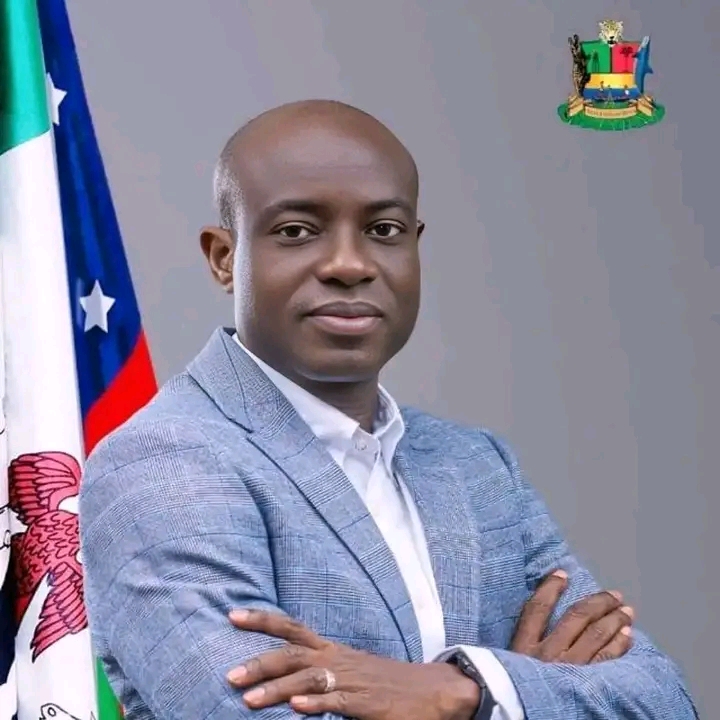
From Mike Tayese, Yenagoa
Bayelsa State Government has asked Bayelsans to stop wasting money on Medical Tourism when the state can boast of high quality healthcare services across the state.
The improvement of health facilities and health services are not limited to Yenagoa the state capital alone but also to the hinterland where the most vulnerable can easily access healthcare.
Speaking with newsmen in his office in Yenagoa after the official inauguration of the pioneer Management Team of the Bayelsa State Medical University Teaching Hospital (BMUTH), the state commissioner of Health Prof.
Seiyefa Brisibe said, the administration of governor Douye Diri has invested massively in health sector.According to Prof. Seiyefa Brisibe, the dream of the founding fathers and that of the first civilian governor of the state late Chief DSP Alamieyeseigha has come to pass. “The vision of governor Douye Diri, the bishop of prosperity is that healthcare should be robust and the vision is also to increase life expectancy and quality healthcare services”.
Talking about Bayelsa @30 the commissioner said the scorecard cannot just be this administration alone. “But for governor Douye Diri, there is no projects that is ongoing that will be abandoned. At creation, the only hospital available in Bayelsa was just the Yenagoa General Hospital which is now the Federal Medical Center (FMC), if you look at where we are coming from, the whole hospitals found in this bayelsa was not more than ten, but today in this same Bayelsa the Primary Healthcare alone has increased to 250.
“We have over 10 secondary healthcare facilities, it means that there is progress. For what the governor has done in this last six years, for me is of geometric progression, for the first time, the insurance scheme was expanded and consolidated and the structure was built within this period.
” Recently he built the hemodialysis center, commissioned at BMU, which was initially 500 bed hospital which was later restructure to 350 beds, the PHC has been strengthen in a way that just within this two years of me being commissioner, we have been able to renovate over 30 PHC hospitals, leverage on partnership from a lot of International Bodies to see that we provides quality healthcare services. And at the Secondary level, he has approved the upgrading of the over 10 secondary facilities across the state.
“It means that a lot is happening, he is being able to sign into law very significant milestone documents that will enhance efficient healthcare delivery, signing of Bayelsa Medical University bill into law, the amendment of the Bayelsa Medical University law, executive order of having every child presenting immunization card in school to get admitted and other policies put in place to deepen the health system.
“He has done a lot, and a lot has happened. Within this period, we have provided equipments and facilities in this infrastructure. Presently we have over 30 incubators for paediatric care in the government owned hospitals, well equip laboratories, ultrasound machines even at oporoma referral hospital, that is to say that government is also taking quality healthcare to the most vulnerable people.
“The partnership between the government and private sectors have improved significantly because today we have three functional CT scans in the state. One by private institution and two by government, we are getting reformed to get the private sector involved in the healthcare delivery. We are reforming Ambulances,so that anywhere there is an emergency, an ambulance will be there to convey the patient to hospital. All this reforms can only happens because of the commitment of the governor.
” Understanding that prosperity cannot happened without health, health is prosperity. The power sector has also helped the private sectors to be more involved , the present government has upgraded the School of Nursing to College of Nursing and invested in the infrastructure and facilities, also the College of Health Technology courses has been expanded from 3 to 15 courses and fully accredited.
“That is the type of progress we have made, today we have established the BMU which means that we are going to get more doctors, more nurses, more pharmacists, more lab scientist and in that we will export and we will also have enough to run our system. That is the type of progression we have made as a state, we are not there yet but with time we will definitely get there, is a work in progress and we are doing very well.
“Any Bayelsans that is still going out of the state to do CT scans probably must have been wrongly informed, we have invested in 5D ultra scan at okolobiri Niger Delta teaching hospital, Bayelsa Medical University, this hospitals have high quality 5D ultra scan, that is to say soft tissue are as close as when using MIR. We have ventilators in the state both at FMC and Niger Delta university teaching hospital, we have the critical infrastructures in the health sector, we also want to see that the Bayelsa diagnostic center is been revamped and used effectively.
” We have one of the biggest hemodialysis equipment in the country. Bayelsa diagnostic center was one of the foremost in this country, services are still being provided there efficiently and the center is owned by Bayelsa state government , however there is a private partner that is running it. For 800 workers to be employed into the PHC space, it has never happened in the history of bayelsa state for that much numbers at a time. That is clearly shows the commitment of the governor by strengthening healthcare system and also the introduction of midwives and nurses into that space and also medical officers of health for effective and efficient service delivery”.
The National Bureau of Statistics (NBS) has reported that the 36 states and the Federal Capital Territory (FCT) collectively generated N5.15 trillion as Internally Generated Revenue (IGR) in 2025.
This was contained in the NBS report on IGR at State Level for 2025 released on Thursday in Abuja.
The report said the 2025 IGR grew by 40.
93 per cent when compared to the N3.65 trillion recorded in 2024.According to NBS, the 2025 IGR had two major revenue sources – taxes and Ministries, Departments and Agencies (MDAs)’ revenue.
The bureau said the taxes sub-category recorded in the period are Pay As You Earn (PAYE), Direct Assessment, Road taxes, Stamp duties, Capital gain tax, Withholding taxes, Other taxes and LGAs revenue.
According to the report, the leading states in total IGR in 2025 were Lagos, Rivers and Enugu with N1.77 trillion, N428.42 billion and N406.77 billion, respectively.
“The least three performing states during the year are Yobe, Ebonyi and Sokoto with the value of N16.01 billion, N17.18 billion and N20.48 billion, respectively.”
The report said PAYE was the most tax revenue source in 2025 at N2.64 trillion, which represented 69.51 per cent of the total tax revenue collected.
The bureau said capital gains tax generated the least in 2025 with N12.40 billion.
The report said the share of total tax revenue to total IGR stood at 73.64 per cent nationally. (NAN)
From Dan Amasingha, Minna
The National Examinations Council (NECO) has released the results of the 2026 Senior School Certificate Examination (SSCE) Internal, with 804,948 candidates, representing 58.67 per cent of those who sat for the examination, obtaining at least five credits including English Language and Mathematics.
The figure represents a 1.
59 percentage-point decline from the 60.26 per cent recorded in 2025, when 818,492 candidates met the same benchmark.Announcing the results yesterday at the council’s headquarters in Minna, Niger State, NECO Registrar and Chief Executive, Prof.
Dantani Ibrahim Wushishi, said 1,378,048 candidates registered for the 2026 examination, comprising 682,352 males and 695,696 females.He said 1,371,992 candidates eventually sat for the examination, including 678,903 males and 693,089 females.
Wushishi, however, disclosed that the overall five-credit performance improved slightly, with 1,162,118 candidates, representing about 84.67 per cent, obtaining five credits and above irrespective of English Language and Mathematics.
The figure compares with 1,144,496 candidates, or 84.26 per cent, recorded under the same benchmark in 2025.
In absolute terms, the number of candidates who secured five credits including the two core subjects fell by 13,544, from 818,492 in 2025 to 804,948 in 2026. By contrast, the number who obtained five credits irrespective of English and Mathematics increased by 17,622.
The number of candidates who sat for the examination also rose by 13,653, from 1,358,339 in 2025 to 1,371,992 in 2026.
Malpractice records sharp decline
The council also reported a substantial reduction in examination malpractice, with 1,406 candidates implicated in various forms of malpractice in 2026, compared with 3,878 candidates in 2025.
The latest figure represents a 63.74 per cent decline from the previous year’s record. NECO had recorded 10,094 malpractice cases in 2024.
Wushishi attributed the reduction to improved examination processes, strengthened monitoring and collaboration with security agencies and other stakeholders.
He specifically acknowledged the support of the Nigeria Security and Civil Defence Corps and the Department of State Services, saying their involvement helped reinforce discipline, deter malpractice and safeguard the examination process.
Kano leads state figures
Kano State recorded the highest number of candidates who obtained five credits and above, including English Language and Mathematics, with 74,413 candidates.
Lagos followed with 72,496, while Oyo recorded 55,543 candidates under the same benchmark.
At the geopolitical-zone level, the Southwest accounted for the largest share of candidates with five credits and above irrespective of English and Mathematics, at 24.60 per cent. It was followed by the Northwest with 22.10 per cent, North Central with 19.00 per cent, Northeast with 14.70 per cent, South-South with 10.53 per cent and Southeast with 9.07 per cent.
The council also released separate state, geopolitical-zone and gender rankings based on the different performance benchmarks.
In the North Central, Benue led with 3.82 per cent, followed by Nasarawa with 3.66 per cent. Anambra led the Southeast with 2.92 per cent, ahead of Enugu with 2.14 per cent.
Rivers topped the South-South ranking with 3.03 per cent, followed by Edo with 2.17 per cent, Delta with 1.84 per cent, Akwa Ibom with 1.61 per cent and Cross River with 1.30 per cent.
Wushishi also disclosed that candidates at NECO examination centres in Saudi Arabia and Niger Republic recorded no candidate with five credits and above under the stated benchmark.
Exam held in Nigeria, six countries
The 2026 SSCE Internal examination was conducted from June 15 to July 23 across the 36 states, the Federal Capital Territory and six foreign countries—Benin Republic, Equatorial Guinea, Niger Republic, Côte d’Ivoire, Togo and Saudi Arabia.
The nationwide marking exercise was conducted between August 17 and September 4.
A total of 1,334 candidates with special needs participated in the examination, with the council maintaining that measures were put in place to promote inclusiveness.
Wushishi thanked the Federal Government, education authorities, the NECO Governing Board, National Assembly, security agencies, state governments, schools and other stakeholders for their support.
He declared the results released and said candidates could access them through the NECO website using their examination registration numbers.
The registrar urged candidates to remain focused on their academic pursuits, assuring stakeholders that the council would continue to uphold the credibility, fairness and integrity of its examinations.



Stop wasting money on Medical Tourism. Prof. Advice Bayelsans
ShareFrom Mike Tayese, Yenagoa Bayelsa State Government has asked Bayelsans to stop wasting money on Medical Tourism when the state...


Pete Edochie Pays Tribute to Olu Jacobs, Celebrates His Life, Legacy
ShareLegendary Nollywood actor, Pete Edochie, has paid glowing tribute to late colleague, Olu Jacobs, describing him as a peaceful and...


NIPCO Plans $3bn Floating LNG Project
ShareNIPCO Group plans to develop a more than $3 billion Floating Liquefied Natural Gas (FLNG) project to boost gas monetisation...

Tinubu, Shettima and the United Nations Assembly
ShareBy Reuben Abati The high-level meetings and debates of the UN General Assembly (UNGA) open today at the UN Headquarters...

2027: INEC Raises the Alarm over Smear Campaigns among Political Parties
ShareThe Independent National Electoral Commission (INEC) has raised an alarm over smear campaigns among political parties and threatened to sanction...


NOA Urges Nigerians to Promote Respect for National Symbols
ShareThe National Orientation Agency (NOA) has called on Nigerians to take the lead in promoting love, respect and positive disposition...

Late Former Kogi Gov, Ibrahim Idris for Burial Today in Abuja
ShareFrom Joseph Amedu, Lokoja Abdullahi Ibrahim Idris, son of the Late Ex- Kogi Governor Ibrahim Idris has announced that the...

States, FCT Generate N5.15trn IGR in 2025 – NBS
ShareThe National Bureau of Statistics (NBS) has reported that the 36 states and the Federal Capital Territory (FCT) collectively generated...

NECO Releases 2026 SSCE Results as Core-Subject Pass Rate Falls
ShareFrom Dan Amasingha, Minna The National Examinations Council (NECO) has released the results of the 2026 Senior School Certificate Examination...

Nigeria at 66: FG Shifts Focus from Reforms to Growth
ShareBy David Torough, Abuja The Federal Government has declared that Nigeria is moving from a period of difficult economic reforms...