
Foreign News
Egyptian Foreign Minister Elected COP27 President

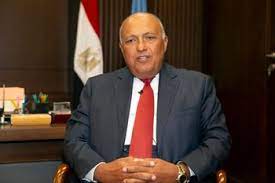
Egyptian Foreign Minister, Sameh Shoukry, has been elected President of the Conference of Parties (COP) 27 of the United Nations Framework Convention on Climate Change (UNFCCC).
Shoukry was elected by the parties during the opening plenary on Sunday in the city of Sharm El Sheikh, Egypt.
COP27 began in the Egyptian city on Sunday and would last until Nov.
18, where issues bordering on how to address the impact of climate change take a front burner.In his address after the election, the newly-elected president called on countries to show faith in multilateralism over the next two weeks as they negotiate to deliver on the goals of the Climate Convention and the Paris Agreement.
“It comes as no surprise to anyone that the COP is being held this year in a world which is witnessing political turmoil that cast a long shadow on all our nations and has resulted in energy and food crises.
“However, these challenges should be no reason for delaying our collective effort to fight climate change.
“It is inherent on us all in Sharm El Sheikh to demonstrate our recognition of the magnitude of the challenges we face and our steadfast resolve to overcome it,” Shoukry said to climate envoys and delegates at what is considered to be one of the largest COPs ever in terms of attendance.
The Egyptian minister asserted that the host country made sure that COP27 would provide the optimum setting to align and converge multiple views, as well as facilitate transparent, inclusive and fruitful discussion, to ensure the most positive outcome achievable.
He acknowledged the challenging economic and geopolitical factors, but noted, however, that external circumstances should not be allowed to negatively affect the negotiating process.
The president added that as a COP hosted in Africa, it must consider the needs of the developing countries and ensure climate justice through availing the appropriate finance and other means of implementation.
This, he said, is necessary as African countries are the most affected by climate change.
The new COP president acknowledged the tireless efforts of his predecessor, COP26 President, Alok Sharma, and commended him and his team for their efforts and dedication with everything they achieved in hosting COP26.
He commended the outcomes and agreements their work helped to secure, reiterating the commitment of the Egyptian Presidency to deliver on an impactful and inclusive COP.
Newsmen report that the conference of the parties adopted its agenda, and for the first time since the adoption of the UN climate convention, parties agreed to introduce loss and damage funding as an agenda item at the climate conference.
Loss and damage refer to the destructive impacts of climate change that cannot be avoided either by mitigation or adaptation. (NAN)




Researchers with the Pan American Health Organisation (PAHO), a sub-agency of the World Health Organisation (WHO) said nearly 470 million people across North and South America have at least one neurological disorder,
According to a new study published in The Lancet Regional Health Americas, the figure represents two in five people living in the Americas and includes conditions such as migraine, stroke, epilepsy and Alzheimer’s disease
PAHO, in a statement on Wednesday stated that neurological disorders affect the brain, spinal cord and peripheral nerves and can impair movement, memory, learning, communication and behaviour,
The study also found that age-adjusted death rates have declined since 1990, meaning more people now survive these conditions and require access to long-term care and support services.
However, not all people living in the Americas can access this care.
They found nearly a fourfold difference between countries with the highest and lowest burden – based on a measure of years of life lost to disease.
Countries with the highest burden included Haiti, Guyana and Suriname, while countries with the lowest burden included Colombia, Peru and Argentina.
The disparities in care access reflect differences in exposure to risk factors as well as persistent gaps in access to prevention, diagnosis, treatment, rehabilitation and long-term care.
In terms of risk factors, PAHO said a significant share of neurological health loss can be prevented by controlling or avoiding high blood pressure, diabetes, obesity, tobacco use and harmful environmental exposures.
In 2023, these conditions were responsible for an estimated 1.1 million deaths and 37.5 million disability-adjusted life years (DALYs), a measure that combines years of life lost due to premature death and years lived with illness or disability.
Together, they accounted for about 12 per cent of the total burden from no communicable diseases and injuries in the Americas.
The study found that a substantial share of neurological health loss in the Americas could be prevented by reducing exposure to modifiable risk factors.
High blood pressure was the leading risk factor for stroke, while elevated blood glucose levels contributed significantly to the burden of Alzheimer’s disease and other dementias.
Researchers also identified environmental exposures, particularly lead and air pollution, as important contributors to several neurological conditions.
“Many neurological disorders share risk factors with other noncommunicable diseases,” Dr. Anselm Hennis, Director of PAHO’s Department of Noncommunicable Diseases and Mental Health and co-author of the study, said.
“Improving prevention and control of high blood pressure, diabetes, obesity, tobacco use, and harmful environmental exposures could deliver major benefits for brain health across the region.”
“Protecting brain health starts long before the first symptoms appear,” Renato Oliveira, Chief of PAHO’s Mental Health Unit and co-author of the study, added.
“Investing in prevention and risk-factor control can help reduce the burden of neurological disorders while also lowering the risk of other non-communicable diseases that share the same determinants.”
The authors conclude that addressing the growing burden of neurological disorders will require stronger prevention efforts, integrating neurological care into primary health care, and expanding access to rehabilitation, long-term care, and disability support services.
With populations across the Americas aging rapidly, these investments will be critical to reducing disability and improving quality of life in the decades ahead.

A 13-year-old boy was killed after part of a fountain collapsed in Salamanca province, northwestern Spain, during the country’s World Cup victory celebrations.
Two other young people were injured, emergency services said, including one child who was taken to hospital with a possible broken bone in his leg.
People were celebrating Spain’s victory inside the Árbol Gordo fountain in Salamanca’s Ciudad Rodrigo, when it partially collapsed around 00:30 local time (23:30 BST).
“What was supposed to be a celebration for the victory in the Spanish National Football Team’s World Cup has turned into a tragedy,” Ciudad Rodrigo’s town hall posted on social media.
Emergency services for Castilla y León said it had received several calls about the collapse of the fountain. Part of the structure gave way after several people climbed on it to celebrate Spain’s win, local media reported.
The emergency service said it had notified the city’s local police, as well as Salamanca’s Civil Guard, its fire brigade and the local emergency medical service – which dispatched a mobile intensive care unit and a basic life support ambulance to the scene.
The emergency medical service later requested the presence of the Civil Guard at the local health centre to investigate the death of the boy who was treated there, the Castilla y León’s regional government’s website said.
It also requested the Civil Guard activate psychological support for the family.
The city’s council said it “hopes for a speedy recovery of the others who have been affected by the incident”.
Spain beat Argentina 1-0 in the World Cup final on Sunday after Ferran Torres scored in extra time.
It is the country’s second ever World Cup win, after their last victory in 2010.
Earlier this month, three people died from suffocation during World Cup celebrations in Mexico City, while a 30-year-old man also died in an epileptic crisis.

Older teenagers in the UK will face an overnight social media curfew, the government has announced – though they will be able to opt out of it by changing their account settings.
It would mean apps such as Instagram, TikTok and YouTube being set to be unavailable by default to 16 and 17-year-olds between midnight and 06:00.
The government also wants “addictive” features such as auto-play and infinite scroll to be set to be disabled, saying – combined with the curfew – the measures will improve teenagers’ focus, sleep quality and family life.
However, campaigners such as Ellen Roome, who believes her 14-year-old son Jools Sweeney died in an online challenge gone wrong in 2022, does not think the plan goes far enough as teenagers can switch the setting off.
The new plans follow the announcement in June that under-16s in the UK would be banned entirely from a range of platforms.
It adds to a complex – and potentially confusing – mix of policies and measures from the government and tech firms intended to keep young people safe online.
They include optional parental controls over children’s devices and child-only versions of popular sites such as YouTube.
Lorna Woods, professor of internet law at Essex University, said she felt the measure was designed to target apprehensions from parents and child safety groups.
“There have been concerns about the way services keep children and young people engaged on their phones for long periods, and that this can impact their sleep, amongst other effects,” she said.
Meta, which owns Facebook, Instagram and WhatsApp, has previously said it wants age verification to be handled by manufacturers of devices themselves, rather than the onus being entirely on platforms.
Apple recently introduced such “device level” age checks, meaning anyone using iPhone and iPads with the latest version of their operating software will be asked to verify their ages.
Baroness Kidron, who has strongly campaigned for safety and age assurance measures to be at a device rather than app level, was critical of the government’s approach.
She said it should not be about “banning children from tech” but “banning tech from putting toxic products in the hands of children”.
Online safety minister Kanishka Narayan defended the action the government had taken, said the combination of the curfew and limiting auto-play features meant that “Britain is already going to be the most robust place in the world when it comes to regulating” tech companies.
In an earlier statement, Technology Secretary Liz Kendall said the measures would be “crucial in helping young people get the sleep they need, focus on school and college, and spend more quality time with family and friends, all of which are fundamental to building a happy, healthy and fulfilling adult life”.
Laura Trott, the Conservative shadow education secretary, described the plans as a “dog’s dinner”.
The government said further measures would be aimed at helping children use AI chatbots safely including by making providers introduce regular breaks for under-18s.
It said it will aim to lay its new proposed measures in front of Parliament by the end of 2026, with the aim that they take effect alongside its social media ban for under-16s next spring.
But some child safety charities and experts have cast doubt on the effectiveness or promise of a midnight curfew for older UK teens.
He added that Prime Minister Sir Keir Starmer “leaves office having announced a social media ban without a plan” with his likely successor Andy Burnham to “inherit a series of missed opportunities”.
Prof Sonia Livingstone, an expert in children’s digital rights at the London School of Economics, said a curfew could harm vulnerable children by limiting their access to social media when they might need it most.
Dame Rachel de Souza, children’s commissioner for England, said: “We have to listen to young people. They don’t want a ban, but they do want to be protected from addictive, infinite scrolling.”
Meanwhile, social media analyst Matt Navarra said the measure was “not a curfew” but a “mildly annoying settings prompt with a government press release attached”.
Previous attempts to restrict what young people can see online – for example Australia’s social media ban – have been hampered by VPNs, which can hide the true location of an internet user.
But the government said it would not be taking any action to restrict them in the UK for now, saying they were useful for whistle-blowers, minority groups and family privacy.
It cued findings from research it commissioned which indicated there was little to show VPNs were being used by many children to get around age checks.
In a report published on Tuesday, the government said it had trialled a selection of different options with 300 teens, and found an overnight curfew showed sleep benefits.
But Pete Etchells, professor of science communication at Bath Spa University, cautioned against the results – saying it was merely “one part of the puzzle” in restricting tech use.




Gov Otu Reshuffles Cabinet, Charges Exco on Performance
ShareFrom Ene Asuquo, Calabar Cross River State Governor, Sen. Prince Bassey Edet Otu, has reshuffled his cabinet in a strategic...


WHO Donates Vehicles, Medical Equipment to Kaduna Nursing Colleges
ShareThe World Health Organisation (WHO) on Monday donated two vehicles and other medical equipment to Kaduna State College of Nursing...


Supreme Court Upholds Death Sentence of Man Convicted for killing Another
ShareThe Supreme Court affirmed the conviction and death sentence of Abu Umar, for stabbing a man to death during a...


Petroleum Minister Commends NCDMB for Community-focused Interventions
ShareFrom Mike Tayese, Yenagoa The Minister of State for Petroleum Resources (Gas), Obongemem Ekperikpe Ekpo, on Saturday commended the Nigerian...


Super Falcons Suffer Racist Abuse Ahead of WAFCON Title Defence in Morocco
ShareNigeria’s Super Falcons have been subjected to racist abuse on social media ahead of the 2026 Women’s Africa Cup of...


Businesses Split over High Borrowing Costs, Credit Access
ShareBy Tambaya Julius, Abuja Nigerian businesses are divided over whether high borrowing costs or limited access to credit remains the...

Amachree Challenges Al-Mustapha for Real Evidence Over Abacha Memoir Claims
ShareBy Tambaya Julius, Abuja Former Assistant Director of the Department of State Services (DSS), Dennis Amachree, has challenged Major Hamza...


Xenophobia: Tinubu Rejects Ramaphosa’s Special Envoy, Demands Action
ShareBy Tambaya Julius, Abuja President Bola Ahmed Tinubu has declined to receive a special envoy sent by South African President,...


Lekki LCDA Brokers Peace Over Onise Of Ise Succession, Urges Stakeholders To Respect Court Process
ShareBy David Torough, Abuja The Lekki Local Council Development Area (LCDA) has intervened in the lingering dispute over the vacant...

FG, Access Bank Push AI to Grow MSMEs
ShareThe Federal Government and Access Bank Plc have emphasised the strategic role of Artificial Intelligence and digital financial infrastructure in...