
NEWS
Ekweremadu to Remain in London Prison Till Oct 31


By Idris Umar, Abuja
Respite is not yet in sight as Senator Ike Ekweremadu will have to remain in London prison till October 31, next adjourned date of his trial in the United Kingdom (UK).
His wife Beatrice Ekweremadu, on Thursday made an appearance at the Old Bailey for a plea and directions hearing, while her husband, Senator Ekweremadu and Obinna Obeta attended via virtual from Wandsworth and Belmarsh prisons.
At today’s proceeding, the judge allowed Mrs Ekweremadu to continued to enjoy the conditional bail but remanded Senator Ekweremadu and Obeta, a 50-year-old London doctor involved in the case in custody.
Ekweremadu had pleaded “not guilty” to the charges brought against him.
Ekwewmadu’s lawyer, Martin Hicks, QC, told the court that “We deny that there was any exploitation or any intent to do so. The argument will be factual denial”.
Ekweremadu, his wife and Obeta are facing trial for allegedly plotting to traffic a Nigerian man to the UK and harvest his kidney for transplant to to the senator’s ailing young daughter.
According to the prosecutors, the suspects were charged for planning to remove the kidney of an underaged boy at the Royal Free Hospital in Hampstead, North West London, for transplant to their daughter who suffers from kidney failure.
The complainant had refused to accept to the procedure after undergoing tests. The alleged offences were said to have taken place between between August 1 last year and May 5.
The complainant who had turned out not to be underaged, having attained 21 years on 5 May 2022, presented himself at Staines Police Station and alleged that he was flown from Nigeria to the United Kingdom for the purpose of having his kidney transplanted to the daughter of the defendants.
“He arrived on 20th February 2022 and was taken to Royal Free Hospital where tests were conducted. For the purpose he was there he did not consent to the taking of his kidney.
“He returned to the house he was staying and his treatment changed dramatically and claimed being treated as a slave,” Prosecutor Tim Probert-Wood said.


NEWS
BTOCARES: Ondo Families, Students, Farmers Celebrate as Tunji-Ojo’s Intervention Eases Hardship
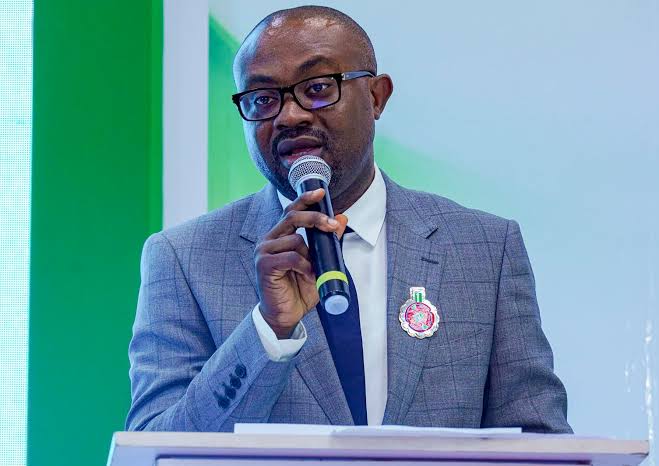
By David Torough, Abuja
Beneficiaries of the BTOCARES humanitarian initiative in Ondo State have expressed gratitude to the Minister of Interior, Dr Olubunmi Tunji-Ojo, for providing financial support that has helped them overcome pressing challenges in healthcare, education and agriculture.
The intervention, which has touched the lives of individuals and families facing financial difficulties, has enabled beneficiaries to settle hospital bills, pay outstanding school fees and sustain their farming businesses.
For some beneficiaries, the assistance came at a critical moment when hope was beginning to fade, turning months of anxiety and uncertainty into relief and renewed optimism.
One of the beneficiaries, Mrs Sade Babatunde, recounted her ordeal after giving birth prematurely to twins who spent approximately two months in incubators.
Although the babies eventually recovered sufficiently to be discharged, accumulated hospital bills prevented her from taking them home.
Her situation changed on November 5 when BTOCARES intervened, cleared the outstanding medical expenses and reunited her with her children.
Another beneficiary, Mrs Michael Opeyemi, received financial assistance to undergo shoulder surgery. Expressing appreciation after the successful operation, she thanked Tunji-Ojo for facilitating the support.
“I appreciate God for using BTO for me to pay this surgery bill. May God bless him greatly. No evil shall befall him,” she said.
Similarly, the programme settled the outstanding medical bills of Mr Tokimi, a trader from Alagbado, Akure South, who sustained a leg fracture in an accident in 2024.
Other beneficiaries have received assistance for eye treatment, corrective glasses, hernia operations, tumour treatment and other medical conditions.
In another humanitarian intervention, BTOCARES facilitated medical attention and appropriate care for a newborn whose mother is living with mental health challenges.
The programme’s education intervention has equally brought relief to parents and students struggling to meet their academic financial obligations.
Ms Abubakr Rodiyah, a student of the University of Abuja, was among those who benefited after her outstanding tuition fee of N113,000 was fully settled.
Her father, Mr Muhammad Abubakr Garba, said the assistance had removed a major financial obstacle that threatened his daughter’s education.
“I applied for financial intervention to pay my child’s tuition fees. The school fees is N113,000 and it has been paid. I want to specially thank our minister, BTO, and the people working with him. May God bless them abundantly,” he said.
Another beneficiary, Ajijola Precious of Bamidele Olumilua University of Education, Science and Technology, also had an outstanding tuition fee of N335,550 cleared.
For Joseph, a 300-level second-semester student of the Federal University Oye-Ekiti (FUOYE), the intervention arrived when his family could no longer cope with the financial demands of his education.
His mother, Mrs Kemi Joseph, a widow, said she had been emotionally distressed over her inability to pay her children’s tuition and accommodation fees.
She described the moment she received confirmation of the payment as an unforgettable experience for the family.
“I’m a widow in need of my children’s tuition fees and hostel fees. I wasn’t myself again; I was disturbed and crying until this intervention. When I received the alert, myself and my children started dancing,” she said.
Other students who benefited include Kolawole Opeyemi of the Federal University of Technology, Akure (FUTA), whose N281,000 tuition fee was paid; Ekunnusi Rofiat Morolade of Olusegun Agagu University of Science and Technology, who received N117,500; and Olayiwola Ayomide of FUOYE, whose outstanding N260,000 bill was settled.
The initiative also contributed N400,000 towards the N495,000 outstanding tuition fee of Adedayo Samuel Ayodeji, a student of Ekiti State University.
Ajayi Tolulola of Sam Maris received N400,000 towards an outstanding school bill of N815,000.
At the primary and secondary school levels, three children from Ireakari Community Primary School and CAC Grammar School also received support.
BTOCARES paid N10,000 each for Isaac and Lucky Clement, while Precious Clement received N29,800.
Beyond healthcare and education, the humanitarian programme has extended its reach to agriculture, supporting farmers whose livelihoods are threatened by financial constraints.
Four farmers in Akure South Local Government Area received N100,000 each following an inspection and verification of their farms by the programme’s team.
The beneficiaries were Oye Johnson, a yam farmer; Awe Ayodeji, a tomato farmer; Rotimi Jacob, a cassava farmer; and Aregbesola Kolade, a pig farmer.
Johnson said the financial support would strengthen his farming activities and improve his ability to sustain his livelihood.
“I’m a farmer. I want to appreciate Hon. Olubunmi Tunji-Ojo for his role in making life better for the masses. I pray for God’s absolute protection upon him and his family. For wiping away the tears of the poor, God will keep lifting him,” he said.
Providing an update on the initiative, Coordinator of Ondo Community Connect (OCC) and BTOCARES, Mrs Iretidola Akinrowo Ojekhoa, disclosed that the programme had fully completed 86 cases, while 70 others were still receiving attention.
She added that another 107 applicants had undergone profiling for payment and empowerment, noting that the initiative had recorded 1,600 registrations since its launch on October 1.
According to her, more than 263 applicants had also received invitations for biometric capturing, with beneficiaries receiving assistance across six intervention areas: healthcare, education, agriculture, business, elderly care, and support for widows and widowers.
Ojekhoa further revealed that the education component had completed 55 tuition fee cases in its first batch, while 71 farmers had benefited from the agricultural intervention.
She explained that BTOCARES was established to complement community infrastructure projects by addressing the personal and immediate challenges confronting vulnerable residents.
“The truth is this. Infrastructure serves the community, but it does not save the individual. Behind every completed project, there is still a mother who cannot afford surgery, a father who cannot walk to provide, a student about to drop out even with electricity in his community, and a farmer with no seed to plant despite a solar-powered borehole now accessible to him,” she said.
She clarified that BTOCARES had not replaced OCC’s original infrastructure development mandate, stressing that both initiatives would continue to operate side by side.
Among OCC’s recent achievements is the delivery of a 33kV, 300kVA transformer to Ishakumi community in Ikare-Akoko, Akoko North-East Local Government Area.
The organisation is also nearing completion of the Imo Arigidi and Okegbe bridges in Akoko North-West and Akoko North-East respectively.
Other projects include solar-powered boreholes at Oso Ajowa and Okeruwa, while similar facilities at Isara and Imeri-Erikari in Ose Local Government Area are approaching completion.
OCC has also equipped the Federal Road Safety Corps formation at Ibaka-Oka, Akoko South-West, with a 2.5kVA lithium battery solar inverter system to improve electricity supply for its operations.
A separate 5kVA inverter system has also been provided for Saboge community in Ward 2, Ose Local Government Area.
On the programme’s registration process, Ojekhoa disclosed that general registration had been temporarily suspended following an overwhelming response during its first week.
She, however, clarified that applications involving critical medical emergencies and other urgent humanitarian needs remained open.
“We remain committed to supporting students, easing the burden on families, and investing in the future of our community, one life at a time,” she said.
Ojekhoa assured residents that ongoing applications and cases would continue to receive attention, adding that the programme remained committed to reaching more vulnerable individuals and families across Ondo State.
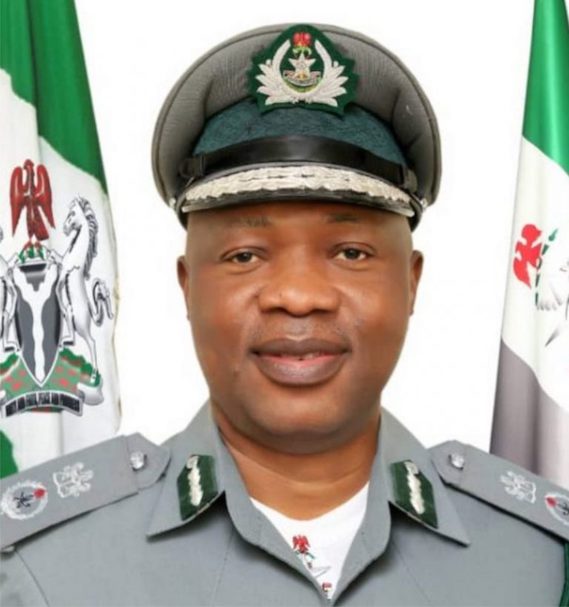
By Tambaya Julius, Abuja
The Comptroller-General of the Nigeria Customs Service (NCS), Adewale Adeniyi, has said delegates attending the World Public Relations Forum (WPRF) in Abuja are leaving Nigeria with positive impressions, despite the fears and concerns some had before arriving in the country.
Adeniyi said the delegates’ personal experiences and interactions in Nigeria were helping to change their perceptions, particularly against the backdrop of negative reports about insecurity, kidnapping and banditry.
He spoke during an interview on the opening day of the conference recently, noting that several international delegates arrived with concerns about the security situation in the country.
According to him, such concerns had shaped the expectations of some participants and might have discouraged others from attending the conference.
He explained that some prospective delegates could have feared being kidnapped immediately after arriving at the airport, reflecting how much negative reports had influenced their perception of Nigeria.
“What they want is to see or know about a country. So most of the time, a good number of them are always much more reasoned in terms of the insecurities in Nigeria, kidnapping, and banditry,” he said.
However, Adeniyi said the feedback from delegates who had arrived was encouraging, noting that those he had spoken with shared positive experiences.
“All the delegates that I’ve spoken to, their experience has been very amazing,” he said.
To illustrate how firsthand experiences could change people’s perceptions, the Customs chief recalled a conversation with a delegate from Paris, who shared his experience after arriving in the French capital.
He said the delegate had checked for a protest route but was told it was not a major concern, even though the protest had lasted for five days.
Adeniyi observed that such incidents do not stop people from visiting Paris, which remains one of the world’s most visited destinations despite the challenges it faces.
He said Nigeria and other African countries should also be seen beyond their challenges, pointing out that no country is entirely free from security and other social concerns.
“So it’s also the same story with us in Nigeria, with us in Africa, that despite the challenges that we confront, everybody has this kind of challenge,” he said.
The Comptroller-General stressed that negative reports should not be the only basis for judging Nigeria, adding that international visitors should also have the opportunity to experience the country’s hospitality, opportunities and other positive attributes.
He said the positive feedback from WPRF delegates presented an opportunity to give the international community a broader picture of Nigeria, shaped by personal encounters rather than reports and perceptions from afar.
Adeniyi added that the delegates’ experiences at the forum could contribute to changing the country’s image internationally and encouraging a more balanced understanding of Nigeria.
No one disputes it: the security of the President of the Federal Republic of Nigeria cannot be compromised. Not for a second. Not for politics. Not for convenience.
But security is not the same thing as siege. And twice in one week, Abuja residents were made to feel like they were under siege in their own city.
The first instance was on Friday, November 13, when President Bola Tinubu attended Jumu’at prayers at the Shehu Shagari Central Mosque, Area 1, Garki.
According to eyewitness accounts reported in the press, roads leading to the mosque were blocked, worshippers were prevented from entering after the President arrived, and worse, they were prevented from leaving until he had departed.
Security operatives were even reported to have mounted the Mosque’s perimeter fences.The result was predictable: anger, frustration, and the booing of the President’s convoy as it left the Mosque. A place of worship became a place of confrontation. That should worry the presidency far more than any opposition criticism.
The second instance came six days later, when the President attended the public presentation of a six-volume publication by Chief Wole Olanipekun, SAN, at the Body of Benchers in Jabi.
Again, Abuja paid the price. Commuters on the Lugbe/Airport Road axis — one of the busiest corridors in the capital, serving workers, schoolchildren, business owners and air travelers — were forced to spend several hours in traffic following road closures by security operatives.
A commuter travelling from Lugbe to Jabi for work said a journey that ordinarily takes less than 30 minutes took over three hours. Another, travelling from Airport Junction to Jabi, said his 20-minute journey lasted nearly three hours, while his fare doubled from N1,500 to N3,000.
Another driver, captured the helplessness of it all: motorists were stranded for more than three hours without being told when the road would be reopened.
Let us be clear: This is not about a few minutes of delay. This is about hours of productive time lost, fuel wasted, vehicles overheating, medical appointments missed, flights missed, businesses disrupted, and ordinary citizens humiliated on roads built with their own taxes.
And for what? A book launch. A Friday prayer. Events that, with proper planning, should not have shut down a capital city.
The Presidency must understand a simple truth: Every time a presidential movement brings Abuja to a standstill, it does not project power. It projects distance. It tells the citizen that his time does not matter, his work does not matter, his health does not matter. Only the movement of one-man matters.
That is dangerous; politically, morally, and for national security itself. A President who is seen as the cause of daily suffering loses the goodwill he needs to govern. The booing at the Mosque was not just about a road closure. It was a symptom of accumulated frustration.
DAILY ASSET is not in any way against the President moving unprotected. We are demanding that his protection be professional, modern, and humane. Other countries do it every day. Nigeria can do the same too.
Consequently, Nigeria can adopt ‘Rolling Closures’ and not total blockades to achieve maximum security for the president. The road should not be closed for hours before and after the convoy passes. Close only the lane and the minutes needed for the convoy to pass, then reopen immediately. In London, Washington, and Paris, presidential movements use rolling closures. The city keeps moving.
The presidency and relevant authorities can give advance public notice. The FCT Administration, the Police and the FRSC should announce, at least 24 hours ahead, the routes to be affected, the expected time window, and the alternative routes. Citizens cannot plan if they are kept in the dark. Information is also security.
Authorities can publish and enforce alternative routes.
For every closure on Airport Road or in Garki, there must be a clearly signposted, manned alternative route. Traffic officers should be deployed to move traffic, not merely to stop it and completely lock down the road.
Additionally, authorities can create emergency lanes and exemptions. Ambulances, vehicles carrying pregnant women, the sick, and those heading to the airport must be allowed through. No security protocol should condemn a patient to die in traffic because a VIP is coming. Life must come before protocol.
It is important for the presidency to reduce the convoy for Non-State events.
A Friday prayer and a book launch are not state emergencies. The presidency should review the size of the convoy and the duration of closures for such social and private engagements. The fewer vehicles and the shorter the closure, the lower the disruption and the lower the cost and the risk.
They should also fix a maximum closure time. The presidency and security agencies should adopt a standing rule: No total closure of a major Abuja artery should exceed 30 minutes, except in a genuine security emergency. If operatives cannot execute a movement within that window, the planning has failed — not the citizens.
The security outfits should deploy technology, not just manpower. They should deploy social media updates, Google Map, and waze alerts to guide motorists in real time. A citizen stuck for three hours without information if a citizen is being punished for any good reason.
When citizens suffer as they did on those two occasions, the presidency should acknowledge it. An apology does not weaken the president. It humanises him. Silence only deepens resentment, especially at an electioneering period like this.
President Tinubu is the father of all Nigerians, not just of his convoy. His security is vital, but so is the dignity, time, and livelihood of the millions who must use Abuja’s roads every day.
Protect the President, yes. But do not subject the people to such a pernicious punishment.



BTOCARES: Ondo Families, Students, Farmers Celebrate as Tunji-Ojo’s Intervention Eases Hardship
ShareBy David Torough, Abuja Beneficiaries of the BTOCARES humanitarian initiative in Ondo State have expressed gratitude to the Minister of...


WPRF Delegates Leaving Nigeria with Positive Impressions, Says Customs CG
ShareBy Tambaya Julius, Abuja The Comptroller-General of the Nigeria Customs Service (NCS), Adewale Adeniyi, has said delegates attending the World...

Customs Suspends Training at Two Colleges over Recruitment Concerns
ShareBy Tambaya Julius, Abuja The Nigeria Customs Service (NCS) has temporarily suspended training activities at its two training colleges to...


INEC Shelves Comprehensive Voters’ Register Clean-Up
ShareBy Orjime Moses, Abuja The Independent National Electoral Commission (INEC) has said it will no longer conduct a comprehensive clean-up...
Protect The President, But Do Not Punish the People
ShareNo one disputes it: the security of the President of the Federal Republic of Nigeria cannot be compromised. Not for...

Shettima to Moniepoint: Provide Affordable Loans for Businesses
ShareBy Tony Obiechina, Abuja Vice-President Kashim Shettima has tasked Moniepoint Microfinance Bank to expand access to affordable loans for farmers,...

NDC Expresses Deep Sorrow over Bayelsa Boat Mishap
ShareFrom Mike Tayese, Yenagoa The Bayelsa State Chapter of the Nigeria Democratic Congress (NDC) has expressed deep sorrow over the...


INEC Releases 86,931 New PVCs for Collection in Kogi
ShareFrom Joseph Amedu, Lokoja A total of 86,931 PVCs for eligible registrants during the second phase registration exercise by the...

Ododo Approves Extension of Retirement Age for Health Professionals
ShareFrom Joseph Amedu, Lokoja Kogi state Governor, Ahmed Ododo has approved extension of the retirement age for eligible skilled clinical...

CBN Seeks Fair Representation in ECOWAS Monetary Union
ShareBy Tony Obiechina, Abuja The Governor of the Central Bank of Nigeria (CBN), Olayemi Cardoso, has called for equity, fairness...