
Health
Expert Urges FG to Domicile Medical Doctors’ Internship Fund in MDCN

By Laide Akinboade
The Chairman, Medical and Dental Council of Nigeria (MDCN), Prof. Abba Waziri Hassan, urged the Federal Government to domicile the central internship fund for medical doctors in the MDCN.
Prof.
Hassan who gave the advice at the induction ceremony of 412 foreign-trained Nigerian medical doctors in Abuja, noted that this will enable the MDCN centralize internship project in 2019.Among the 412 doctors, 407 are medical doctors while 5 are dental practitioners.
In all, 893 foreign trained medical and dental students sat for the examination that will qualify them to practice in Nigeria.
However, only 412 representing 46 per cent passed.While disclosing that the fund has been captured in the 2019 budget, Prof. Hassan argued that, the MDCN is the only body that has the capacity to manage the fund and ensure that it is used for the training of medical practitioners in the country.
He also appealed to state governments to upgrade at least, three hospitals to standards suitable for internship and to also recruit the required number of consultants to supervise them. This, he said, will create enough spaces for internship every year.
Speaking, the Registrar of the Council, Dr Tajudeen Sanusi, disclosed that 120 practicing doctors are currently under investigations over alleged professional misconduct, while 60 are awaiting trails at the MDCN Tribunal.
Sanusi further revealed that the MDCN code of ethics and the Act establishing the Council are currently under review.
He, however, warned the newly inducted medical doctors against actions that are contrary to the Code of Ethics of the profession.
Sanusi reiterated that if any doctor is suspected to be a threat to the medical practice and public health in the cause of carrying out his duties, he would be investigated and if found guilty, will be suspended from practicing.
“Doctors shoulder a lot of responsibilities and the MDCN will not tolerate ethical misconduct,” he vowed.
The guest lecturer of the occasion, Dr. Shehu Sule, on his part further, reechoed the need for a review of the medical and dental council’s code of ethics.
This, according to him, has become necessary as a result of emerging trends in medical practice across the world.
Dr Sule charged the inductees to face the future with boldness, curiosity, compassionate, creative, consultative and above all, be caring to their patients.







By Eze Okechukwu, Abuja
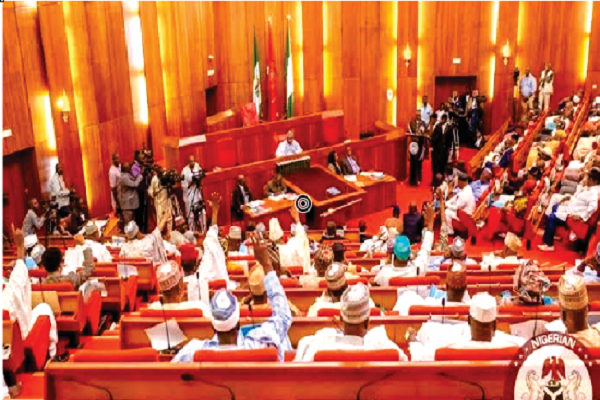
The Senate yesterday ordered mandatory health screening for every international passenger arriving Nigeria airports, seaports, land borders as Ebola resurfaces in the Democratic Republic of Congo with a scare case reported in the FCT.
The resolution followed an urgent motion by Senator Francis Fadahunsi, who warned that with Lassa fever already ravaging states, Nigeria cannot afford another outbreak.
“Protecting our entry points is far cheaper than managing Ebola,” Fadahunsi told the chamber.
Lawmakers insisted screening must be total and indiscriminate — no exemptions based on nationality or departure country because infected travellers can transit through safe-listed nations.
Senator Diket Plang raised the stakes further, demanding immediate funding for NCDC and Port Health Services, including release of withheld funds and emergency budget.
Senate President Godswill Akpabio said the Federal Government has started releasing Ebola response funds but ordered relevant committees to track every kobo.
“Ascertain whether the funds were released and judiciously utilised. Any outstanding debt must be released by the Finance Ministry without delay,” Akpabio directed.
By Laide Akinboade, Abuja
The Federal Government (FG), on yesterday confirmed one case of Ebola disease in the Federal Capital Territory (FCT), following laboratory confirmation.
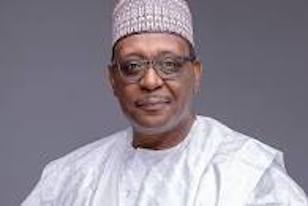
Minister of Health and Social Welfare, Prof.
Muhammad Ali Pate, stated this while briefing journalists in Abuja.He said the patient, a woman, who was from Uganda, was admitted in Abuja and the diagnosis has been confirmed.
The statement reads, “The patient, a woman who recently arrived in Nigeria on an international flight from Uganda, was admitted to a private hospital in the FCT, where she received care for several days before the diagnosis was confirmed.
She is currently in isolation and receiving medical care.“The Federal Minister of Health and Social Welfare and NCDC are working closely with the FCT Health Services Secretariat and other relevant authorities to contain the infection and prevent further spread..
“Contact tracing has commenced with 44 close contacts identified presently, with public health teams identifying and monitoring people who may have been exposed, including healthcare workers, patients, caregivers and travel contacts. Surveillance has been intensified, and the hospital is receiving immediate support to strengthen infection prevention and control measures.
“The FG calls on all public and private healthcare facilities nationwide to be on high alert. Healthcare workers must maintain a high index of suspicion, promptly identify and isolate suspected cases, observe strict infection prevention and control measures, and immediately report suspected cases to public health authorities.
“What Nigerians Should Know and Do
Ebola spreads through direct contact with the blood or body fluids of someone who is sick with the disease or has died from it, or through contact with contaminated materials. A person with Ebola cannot spread the disease before symptoms begin”.
The Federal Government therefore advised residents to remain calm but vigilant.
“Remain calm but vigilant. There is no need for panic. Practise regular hand hygiene and avoid contact with the body fluids of anyone suspected to have Ebola.
Watch for symptoms, including fever, severe weakness, headache, vomiting and diarrhoea, particularly following possible exposure.
“Report any possible exposure immediately, even if you feel well. If you develop symptoms, avoid close contact with others and call public health authorities for guidance before visiting a healthcare facility.
” Cooperate with public health teams. Anyone contacted during contact tracing, including relevant airline passengers, should provide the necessary information and follow public health advice.
“Avoid rumours and stigma. Share only verified information from official health authorities” .
The Minister recalled, “Our Assurance to Nigerians. Nigeria successfully contained Ebola in 2014, and we have the experience and public health systems to respond to this case. However, containing Ebola requires everyone to play their part.
“The Federal Government, FCT authorities and other partners are working together to protect healthcare workers, patients and the wider public. Investigations are ongoing, and we will continue to provide accurate and timely information.
” We urge Nigerians to remain calm, stay vigilant and cooperate with public health authorities. Early detection, prompt reporting and everyone’s cooperation are critical to preventing further spread.
“The Government of Nigeria through the Presidential Taskforce on EVD and NCDC will continue to provide updates.
NCDC free call centre is available 24 hours a day, seven days a week. For information or to report a suspected case, please call NCDC toll-free number 6232″.

By Laide Akinboade, Abuja
The Benue State House of Assembly has passed into law a landmark legislation aimed at eliminating tuberculosis (TB) and protecting persons affected by the disease from discrimination and human-rights violations.
The legislation, known as the Tuberculosis Elimination, Human Rights Protection and Anti-Discrimination Law of Benue State, 2026, was passed into Law during Thursday plenary presided over by Speaker, Rt.
Hon.Berger Alfred Emberga, MNIQS, RQS, following consideration of the report of the House Standing Committee on Health and Human Services.The committee, chaired by Hon. Matthew Damkor, Ph.D., said the legislation was necessary to provide a comprehensive legal framework for tuberculosis prevention, diagnosis, treatment, care and control across the state.
The law also seeks to safeguard the rights of persons affected by Tuberculosis (TB), including their rights to dignity, healthcare, privacy, information, employment, education and social protection.
In its report, the committee identified several areas of the original Bill that required amendment, particularly provisions relating to federal laws and institutions, implementation responsibilities, screening and isolation, enforcement mechanisms, offences and penalties.
The committee recommended the removal of provisions purporting to amend federal legislation, particularly the Employees’ Compensation Act, 2010, noting that such amendments were inappropriate for state legislation.
It also recommended that references to federal institutions as implementing authorities be replaced with relevant Benue State institutions, while allowing for lawful collaboration with federal authorities.
The committee further recommended that the Commissioner for Health and Human Services, through the Ministry of Health and relevant state agencies, be clearly designated to coordinate the implementation of the law.
On the protection of fundamental rights, the House called for clearer safeguards in provisions dealing with TB screening, isolation and restriction of movement, including informed consent, confidentiality, medical necessity, proportionality and the use of the least restrictive measures.
It also recommended the establishment of an accessible mechanism for receiving complaints, addressing discrimination and providing remedies to persons whose rights may have been violated under the law.
The House further urged relevant agencies to ensure that offences and penalties under the legislation are clearly defined, proportionate and enforceable.
After considering and adopting the committee’s recommendations clause-by-clause, the bill was read for the third time and subsequently passed into law by the Speaker, Rt. Hon. Emberga following a unanimous consideration and adoption by members.
The Tuberculosis Law which was sponsored by Hon. Dr. Simon Gabo of Mata State Constituency and others, is expected to strengthen Benue State’s response to tuberculosis and provide a stronger legal framework for protecting persons affected by the disease from stigmatization, discrimination and other rights violations.
Meanwhile, Civil Society Organisations, Lawyers Alert and Media Health and Rights Initiative of Nigeria, MHR, have commended the Benue State House of Assembly for taking steps to strengthen the state’s response to tuberculosis, and protect the rights of persons affected by the disease.
In a joint statement, the President of Lawyers Alert, Rommy Mom and the Executive of MHR, Alu Azege said the Bill brings health and human rights dimensions of TB into legislative conversation in the state.



2027: Benue People Are Not ‘Shenanigans’, Alia Owes You No Apology, Ex-Ambassador Tells Ortom
ShareFrom Attah Ede, Makurdi A former Nigerian Ambassador to Namibia, Terhemen Tarzoor, has criticized former Benue State Governor Samuel Ortom...


JPMorgan’s Entry into Nigeria: Turning Global Finance into a National Development Opportunity
ShareBy Uche Joe Uwaleke The proposed establishment of JPMorgan Merchant Bank Nigeria Limited presents Nigeria with an important opportunity to...


WAHO Steps Up Regional Health Surveillance After Ebola Case Confirmed in Abuja
ShareBy David Torough, Abuja The West African Health Organisation (WAHO) has intensified regional health surveillance following the confirmation of an...


2027: Don’t Call Benue People Shenanigans, Alia not answerable to you- Ex- Amb, Tarzoor Tells Ortom, Wike.
ShareFrom Attah Ede, Makurdi Ex -Nigeria’s Ambassador to Namibia, Terhemen Tarzoor, has warned the immediate past Governor of Benue State...

DBN Signs $61m Credit Deal With AfDB, Unveils Support Initiative Report
ShareBy Tony Obiechina, Abuja The Development Bank of Nigeria Plc (DBN) has launched DAWN: DBN Action for Women in Nigeria,...


NLC Threatens Nationwide Action as Talks With FG Collapse
ShareBy Tambaya Julius, Abuja The Nigeria Labour Congress (NLC) has threatened possible nationwide industrial action following the failure of talks...

Top10 Magazine Names Umaru Kwairanga as Man of the Year 2026
ShareAlh. (Dr) Umaru Kwairanga, Group Chairman, Nigerian Exchange Group (NGX Group), has been named as the Top10 Magazine’s Man of...


UK, Nigeria to Deepen Defence, Security Cooperation
ShareThe United Kingdom has reaffirmed its commitment to deepening defence and security cooperation with Nigeria, with emphasis on military training,...


2027: INEC Steps Up Preparations, Completes Nine Activities
ShareBy Tambaya Julius, Abuja The Independent National Electoral Commission (INEC) has completed nine of the 14 activities on its timetable...


2027: Tinubu Accords Benue Security Top Priority, Tompolo Tells Supporters
ShareLeader of the PBAT Door-to-Door Movement, Government Tompolo, has called on the people of Benue state to come out enmasse...