
Economy
FAAC Disburses N1.95tn in Q1 -NEITI


The Nigerian Extractive Industries Transparency Initiative (NEITI) says the Federation Accounts Allocation Committee (FAAC) disbursed N1.95 trillion to the federal, state, local governments and other statutory agencies in the first quarter of 2020.
NEITI disclosed this in its quarterly report released in Abuja, on Monday.
It said the disbursements showed that N791.
4 billion went to the federal government, N669 billion was shared by the states and about N395 billion was shared by the 774 local government areas.It noted that the balance went to the North East Development Commission, the Excess Crude Account, Federal Inland Revenue Service (FIRS), Nigeria Custom Service (NCS) and the Department of Petroleum Resources.
The report also noted that the first quarter 2020 FAAC disbursements were the highest first quarter disbursements since 2014.
“Total disbursements were N1.648 trillion in Q1, 2015, N1.132 trillion in Q2 2016, N1.411 trillion in Q1 of 2017, N1.938 trillion in Q1 2018, and N1.929 trillion in Q1 2019,” it said.
The report also examined FAAC disbursements in the Q1 of this year and made projections on the possible impacts of COVID-19 on government revenues.
“While total disbursements in Q1 2020 were slightly higher than Q1 2019 and Q1 2018, disbursements to the three tiers of government in Q1 2020 were slightly lower than Q1 2019 and Q1 2018.
“This is due to transfers to other accounts in Q1 2020 which were not done in either Q1 2019 or Q1 2018.
“These include allocations to the North East Development Commission and transfer to Excess Crude Account,” the report revealed.
It also explained that total FAAC allocations during the period under review comprised gross disbursements to the federal government, states, local government councils and 13 per cent derivation.
It also covered cost of collections by the Nigerian Customs Service, the Federal Inland Revenue Service, the Department of Petroleum Resources and other allied handling charges.
The report noted that from the previous years, with the exception of 2018, the general trend since 2015 had been that total disbursements fell in the second quarters, before rising in the third quarters.
It also noted that with the COVID-19- pandemic, it was almost certain that total disbursements would fall in the second quarter of 2020.
On FAAC disbursements to states between January and March, it said that there was a wide disparity between states as Osun State with the lowest allocation received N6.44 billion and Delta State with the highest disbursement received N52.03 billion, a difference of 708 per cent.
The report also disclosed that Delta State’s net FAAC disbursements were higher than the combined total net disbursements of N50.67 billion of the six lowest receiving states.
It named the states to include Osun, Cross River, Plateau, Ogun, Ekiti and Gombe.
“Further analysis revealed that combined disbursements to four states of Delta, Akwa Ibom, Rivers and Bayelsa with the highest net FAAC disbursements were higher than the combined net disbursements for the 17 states with the lowest disbursements.
“The combined total net disbursement to these four states was N167.76 billion.
“This figure is higher than the combined total of N159.99 billion received by the 17 lowest receiving states.
“The states are Osun, Cross River, Plateau, Ogun, Ekiti, Gombe, Zamfara, Kwara, Nassarawa, Ebonyi, Taraba, Benue, Adamawa, Bauchi, Abia, and Kogi),” the report said.
It added that 31 states received less than N20 billion as total net FAAC disbursements in the first quarter of this year while only five states received more than N20 billion.
The states, it said, are Lagos (N26.23 billion), Bayelsa (N35.14 billion), Rivers (N39.99 billion), Akwa Ibom (N40.61 billion), and Delta (N52.03 billion) respectively.
Furthermore, the report disclosed a wide disparity in the amounts deducted from the states as their debt obligations.
“For instance, Lagos State had the highest deductions of N14.92 billion, while Yobe State had the lowest deductions of N820.18 million,” it said.
On prospects of FAAC disbursements for the rest of the year as a result of the impact of COVID-19, it said, “In light of the ‘double whammy’ of declining oil demand and oil prices as a result of the COVID-19 pandemic, government revenue would likely continue to fall in subsequent months.
“As global crude oil prices plummet in the midst of the global oil supply glut arising from lockdown of economic activities in many countries of the world, all tiers of government will struggle to fund their 2020 budgets.”
It added that the projected revenue for the federal government for the year stands at N8.42 trillion, comprising oil revenue of N2.64 trillion, non-oil revenue of N1.81 trillion, and revenue from other sources of N3.97 trillion.
It noted that oil revenue remained the dominant single source of revenue, with the figure of N2.64 trillion making up 31.35 per cent of total projected revenue.
“The interesting point to note is that while the share of oil revenue represents the direct revenue, there are also indirect sources of revenue from oil.
“These include signature bonus and renewals and share of dividend from NLNG. In addition, taxes and customs duties, which are based on economic activities will suffer in the light of the lockdown of the major activity hubs of the country,” it said.
The NEITI report called for innovative and concerted actions on the part of government at all levels to mitigate the impact of COVID-19, not just on revenues but also on the economy as a whole.
It welcomed the proactive measures already been taken by the federal government in this direction.
According to the report, the measures include the approval to withdraw 150 million dollars from the Stabilisation Fund to supplement FAAC disbursements. (NAN)







Seplat Energy, an independent indigenous energy company, on Tuesday, said it had paid two billion dollars tax contribution to the Federal Government of Nigeria since its listing on the Nigerian Exchange Ltd.(NGX) in 2014.
Mr Roger Brown, Chief Executive Officer(CEO), Seplat Energy, revealed this while delivering a speech at the Closing Gong ceremony in Lagos.
The event was to commemorate the company’s 10 years anniversary of dual listing on the Premium Board of the Nigerian EExchange Ltd.
(NGX) and the Main Market of the London Stock Exchange (LSE).Brown stated that the oil and gas company, Seplat, also contributed 2.8 billion dollars as tax to the federal government over the past 13 years, after its establishment in 2009.
He explained that the company paid 1.54 billion dollars as royalty to the government, 329 million dollars as Petroleum Profits Tax, 273 million dollars as Value Added Tax, and 259 million dollars as Witholding Tax.
According to him, the energy firm also paid a tax of 276 million dollars to the Nigerian Delta Development Commission (NDDC) and others as well as 126 million dollars as Pay-As-You-Earn(PAYE).
The CEO stated that at post Initial Public Offering(IPO) of the firm, it generated 1.7 billion dollars in Free Cash Flow(FCF) and invested 1.6 billion dollars in Capex.
He also said that the company had paid dividends worth 575 million dollars between 2014 when it became listed and the financial year ended 2023.
Brown noted that the business of the energy firm continued to generate strong cashflows, reflected in its strong FCF and NCFO generation.
He said: “Similarly, we have generated a cumulative 3.3 billion dollars in net operating cash flow post IPO.
“Our strong cash flow generation has supported our ambitions to expand our business, which has seen us spend an aggregate of 1.6 billion dollars in capital expenditure.
“In over 10 years, we invested 57 million dollars in community projects on health, education and empowerment as strong commitment to community development.
“As a leading supplier of gas to Nigeria’s domestic Gas-To-Power Market, at times Seplat gas powered 20 to 30 of Nigeria’s domestic grid in 2023.”
He expressed delight over the feat, reiterating Seplat Energy’s commitment to leading Nigeria’s energy transition.
According to him, the power of indigenous companies is to bring growth and prosperity to their home countries and the people.
“One example of how Seplat Energy is making an enduring difference to Nigeria and host communities where we operate is that nearly 50 million dollars had been invested by our Joint Venture partnerships in communities since our inception to date,” Brown said.
“Truly, Seplat Energy has delivered significant value by enhancing strategic, operational and financial achievements in 10 years as a listed company,” he added.
In his comments, Mr Temi Popoola, Chief Executive Officer (CEO), NGX Group, emphasised the significance of Seplat Energy’s decade of dual listing.
He said, “If we were to look back to our market and tried to find landmarks, the last major landmark you will find in the last ten years is this transaction that we are celebrating today, and the market is very grateful for that.”
Congratulating Seplat Energy on this milestone, in his welcoming remarks, Alhaji Umaru Kwairanga, NGX Group Chairman, highlighted the importance of partnerships between the NGX and companies like Seplat Energy in driving economic growth and development.
He stated that “Seplat’s journey symbolises resilience, innovation, and a commitment to excellence, making them a beacon of corporate governance and operational expertise.
“Seplat Energy has emerged as a leading indigenous energy company, deeply integrated into Nigeria’s economic landscape and the NGX Group remains committed to supporting companies like Seplat Energy as they drive economic growth and contribute to our nation’s prosperity.”
Reflecting on the significance of the decade of dual listing, Mr Udoma Udo Udoma, Board Chairman, Seplat Energy, remarked, “Seplat Energy is committed to driving Nigeria’s transition to sustainable and affordable energy, harnessing its power to improve lives by transforming the economy.
“We have ambitious goals. We are investing in Nigeria. We will support the federal government’s energy transition policy, and we will partner with FG in whatever area they want us to do.
“That is our commitment. We will grow Seplat while also maintaining the highest standard of corporate governance.”
Also commending Seplat Energy on the decade of listing, Mr Jude Chiemeka, Acting CEO, NGX, stressed the importance of the capital market in helping companies raise funds and create wealth for all.
Chiemeka said, “Seplat Energy was listed at N576 at listing and yesterday it closed at 3,370, which is an increase of over 484 per cent.
“The figures show that in the last 10 years, the company has paid out 575 million dollars in dividend payments to shareholders in Nigeria and London where they are also listed.
“So, this company has given investors a huge opportunity to really participate in wealth creation.
“Reports show that Nigeria would be among the top 20 countries in the next 25 years, and I think Seplat is poised to be one of the institutions driving growth, prosperity, and inclusion in our nation.”
Also, gracing the Closing Gong ceremony was Sen. Heineken Lokpobiri, Minister of State, Petroleum Resources (Oil), who commended the company on it laudable achievements.
“I am happy to be part of today’s celebration and Seplat’s exceptional performance in the last ten years and as Minister of State, Petroleum Resources,
“I assure you that we will partner with Seplat to expand their investments, not only for the benefit of its shareholders, but also for Nigeria.
“The least the government can do anywhere in the world is to create an environment where companies like Seplat continue to thrive.”(NAN)
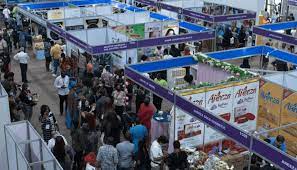
No Fewer than 34 states in the country failed to honour invitation to attend the just-concluded 35th Enugu International Trade Fair.
Reports says that only the Federal Capital Territory (FCT), Abuja; Ebonyi State and the host state, Enugu State, graced the 11-day international goods, services and idea showcasing fiesta.
The fair, which began on April 5 and ended on Monday, April 15, was themed: “Promoting made-in-Nigeria products for global competitiveness.
”Reacting, the Director-General of Enugu Chamber of Commerce, Mr Uche Mbah, said that the chamber followed due diligence in the invitation of all states to the fair.
Mbah noted that official letters were sent and official follow-up on the letters were made to ensure their presence and availability.
According to him, “we did everything to get them to add colour and increase the showcasing of products from different parts of the country and their investment viability.
“We did put in spirited efforts to see that all states participated, as most of them do previously.
“But it is unfortunate that many did not respond after receiving official letters, phone calls and interpersonal follow-ups were made.
“We got clear assurances from Kano State but they did not show up.
“We pushed harder to get Abia State but in the end, we were told that the governor did not approve,” he said.
Reports says that over 100 organisations were at the fair, which included: over 50 private companies as well as over 45 Federal and State government ministries, agencies and departments. (NAN)

The National Bureau of Statistics (NBS) says Nigeria’s headline inflation rate increased to 33.20 per cent in March 2024.
The NBS said this in its Consumer Price Index (CPI) and Inflation Report for March, which was released in Abuja on Monday.
According to the report, the figure is 1.50 per cent points higher compared to the 31.
It said on a year-on-year basis, the headline inflation rate in March 2024 was 11. 16 per cent higher than the rate recorded in March 2023 at 22.04 per cent.
In addition, the report said, on month-on-month basis, the headline inflation rate in March 2024 was 3.02 per cent, which was 0.10 per cent lower than the rate recorded in February 2024 at 3.12 per cent.
“This means that in March 2024, the rate of increase in the average price level is less than the rate of increase in the average price level in February 2024.”
The report attributed the increase in the headline index for March 2024 on a year-on-year basis and month-on-month basis to increase in some goods and services at the divisional level.
It said these increases were observed in food and non-alcoholic beverages, housing, water, electricity, gas, and other fuel, clothing and footwear, and transport.
Others, it said, were furnishings, household equipment and maintenance, education, health, miscellaneous goods and services, restaurants and hotels, alcoholic beverage, tobacco and kola, recreation and culture, and communication.
It said the percentage change in the average CPI for the 12 months ending March 2024 over the average of the CPI for the previous corresponding 12-month period was 27.13 per cent.
“This indicates a 6.76 per cent increase compared to 20.37 per cent recorded in March 2023”, it said.
The report said the food inflation rate in March 2024 increased to 40.01 per cent on a year-on-year basis, which was 15.56 per cent higher compared to the rate recorded in March 2023 at 24.45 per cent.
“The rise in food inflation on a year-on-year basis is caused by increases in prices of Garri, Millet, Akpu (uncooked fermented, which are under bread and cereals class), Yam Tuber, and Water Yam.
“Others are Dried Fish Sadine, Mudfish Dried, Palm Oil, Vegetable Oil, Beef Feet, Beef Head, Liver, Coconut, Water Melon, Lipton Tea, Bournvita, and Milo”, NBS said.
It said on a month-on-month basis, the food inflation rate in March was 3.62 per cent, which was a 0.17 per cent decrease compared to the rate recorded in February 2024 at 3.79 per cent.
“The fall in food inflation on a month-on-month basis was caused by a decrease in the average prices of Guinea corn flour, Plantain Flour etc (under Bread and Cereals class); Yam, Irish Potato, and CocoYam.
“Others are Titus fish, Mudfish Dried, Lipton, Bournvita, and Ovaltine”, it said.
The report said that “all items less farm produce and energy’’ or core inflation, which excludes the prices of volatile agricultural produce and energy, stood at 25.90 per cent in March on a year-on-year basis.
“This increased by 6.26 per cent compared to 19.63 per cent recorded in March 2023.’’
“The exclusion of the PMS is due to the deregulation of the commodity by removal of subsidy.”
It said the highest increases were recorded in prices of bus journey within the city, actual and imputed rentals for housing, consultation fee of a medical doctor, etc.
The NBS said on a month-on-month basis, the core inflation rate was 2.54 per cent in March 2024.
“This indicates a 0.37 per cent increase compared to what was recorded in February 2024 at 2.17 per cent.”
“The average 12-month annual inflation rate was 22.26 per cent for the 12 months ending March 2024, this was 5.04 per cent points higher than the 17.22 per cent recorded in March 2023”, it said.
The report said on a year-on-year basis in March 2024, the urban inflation rate was 35.18 per cent, 12.11 per cent higher compared to the 23.07 per cent recorded in March 2023.
The report said on a year-on-year basis in March 2024, the rural inflation rate was 31.45 per cent, which was 10.37 per cent higher compared to the 21.09 per cent recorded in March 2023.
“On a month-on-month basis, the rural inflation rate was 2.87 per cent, which decreased by 0.20 per cent compared to February 2024 at 3.07 per cent’’, it said.
On states’ profile analysis, the report showed that in March, all items inflation rate on a year-on-year basis was highest in Kogi at 39.97 per cent, followed by Bauchi at 38.34 per cent, and Kwara at 38.10 per cent.
It, however, said the slowest rise in headline inflation on a year-on-year basis was recorded in Borno at 25.78 per cent, followed by Benue and Taraba at 28.12 per cent, and Katsina at 28.32 per cent.
The report, however, said in March 2024, all items inflation rate on a month-on-month basis was highest in Zamfara at 3.90 per cent, followed by Abia at 3.89 per cent, and Ondo at 3.75 per cent.
“Borno at 1.46 per cent, followed by Yobe at 1.84 per cent and Adamawa at 1.85 per cent recorded the slowest rise in month-on-month inflation”, NBS said.
The report said on a year-on-year basis, food inflation was highest in Kogi at 48.46 per cent, followed by Kwara at 46.18 per cent, and Akwa Ibom at 45.18 per cent.
“Nasarawa at 33.76 per cent, followed by Borno at 34.28 per cent and Bauchi at 34.38 per cent recorded the slowest rise in food inflation on a year-on-year basis’’, it said.
The report, however, said on a month-on-month basis, food inflation was highest in Abia at 5.17 per cent, followed by Cross River at 5.14 per cent, and Bayelsa at 4.75 per cent.
“Cross River stood at 1.59 per cent, followed by Yobe at 2.08 per cent and Adamawa at 2.12 per cent, recorded the slowest rise in inflation on a month-on-month basis”, it said. (NAN)



Disability Act: Stakeholders Worry Over Delayed Domestication in Benue
ShareBy David Torough, Abuja Stakeholders have expressed concern over delay in the domestication of Disability Act in Benue state and...


Enugu Embarks on Inspection of Smart Schools, Healthcare Projects Across State
ShareFrom Sylvia Udegbunam, Enugu Governor of Enugu State, Peter Mbah has charged contractors and the site engineers handling construction of...

Benue Govt Abandoned Foreign Exchange Programme Due to N3mn Bursary – DG BEQA
ShareFrom Attah Ede, Makurdi The Director-General, Benue State Education Quality Assurance Agency, BEQA, Dr. Terna Francis, on Thursday, said the...


Tinubu Establishes National Education Data System
SharePresident Bola Tinubu has approved system-wide policies to comprehensively overhaul the education sector to improve learning and skill development, increase...

ADAS Programmes Set to Establish Digital Structure, Database for Farmers, Farmlands
ShareFrom Yagana Ali, Yola The Adamawa State Agribusiness Support Programme ADAS-P has concluded arrangements to establish standard & digital structure/database...


Absence of Diplomacy Responsible for Secessionist Agitations in Nigeria – INM
ShareFrom Marcel Duru, Owerri Igbo National Movement, a sociopolitical pressure group, has said that absence of diplomacy is responsible for...


N20m Bounty on Kidnappers: Wike Fulfills Promise to FCT Police Command
ShareBy Laide Akinboade, Abuja The Commissioner of Police, FCT, CP Benneth C. Igweh, expresses heartfelt gratitude on behalf of the...

Presidential Amnesty: Bank Accepts Responsibility for Stipends Delay
ShareFrom Mike Tayese, Yenagoa One of the Bank offering services to the Presidential Amnesty Programme (PAP) has explained the reason...


Enugu State Justice Reform Team Commends Mbah, Calls for Enhance Justice System
ShareFrom Sylvia Udegbunam, Enugu The Enugu State Justice Reform Team (ESJRT) has commended the administration of Dr. Peter Ndubuisi Mbah...


I Didn’t Abandon Mandate – LP Candidate
ShareFrom Marcel Duru, Owerri The Labour Party Candidate in the 2023 general elections for Mbaitoli-Ikeduru Federal Constituency, Rt Hon Uche...