
COVER
FAAC Shares Record N900bn to FGN, States, LGAs in June


…FAAC Share in June
By Mathew Dadiya, Abuja
National Economic Council (NEC) has unanimously resolved to do away with the national social register used by former President Muhammadu Buhari’s administration to implement its conditional cash transfer, saying it lacked integrity.
Vice President Kashim Shettima, who presided over the NEC meeting at the Council Chamber of the Presidential Villa yesterday in Abuja, said that the register had integrity issues as the criteria for its compilation was unclear.
Briefing State House correspondents at the end of the meeting, Anambra State governor, Chukwuma Soludo who spoke alongside governor Dapo Abiodun of Ogun State, Bala Mohammed of Bauchi and the Acting governor of Central Bank of Nigeria (CBN) Folashodun Shonubi, said contrary to what the previous administration projected, it is not possible to digitally transfer money to the poorest of the poor the majority of whom are unbankable.
This is even as the Federal Government has announced that it will distribute 252 thousand metric tons of grains to states at a subsidised rate to cushion the effect of hardship occasioned by the petrol subsidy removal.
He said that it was agreed that states should generate registers that are comprehensive and ensures that it will be for the vulnerable people only.
Soludo, flanked by his Bauchi and Ogun State colleagues, Bala Mohammed and Dapo Abiodun, respectively, noted that beneficiaries of the supposedly transfered cash could not be identified in the villages.
Read Also: FAAC Shares N714.629bn March Revenue to FG, States, LGCs
He said NEC resolved that the states should come up with their own registers using formal and informal means to develop it, assuring that all beneficiaries at the subnational level could easily been accessed that way.
“We need to face the problem of the fact that we don’t have a credible register,” he said.
Soludo affirmed that NEC deliberated on ways to cushion the impact of the recent petroleum subsidy removal.
While fielding questions from newsmen, Soludo said, “The first question that was raised is in relation to cost of governance. I think it’s an omnibus concept, and it’s not something you sit down in a meeting to legislate for each and every state.
“But the fact that the council recognizes that this is an issue that each tier of government should now focus on as an area of concern. That we mustn’t live… even the cost of running the state, the way we even live, so,some gave an example of a state governor going with 20 something vehicles in a convoy and all these have to be fueled, and so on and so forth. And the fact that we’re even amongst ourselves almost like in a peer review, kind of setting talking for ourselves.
“We need to be sensitive to the times, we need to live within the average of the people that we’re governing and so on and so forth. And knockoff the waste and the irrelevance so to speak.
“I will like to give you a simple example, When I assumed office, it was costing about N137 million every month to clean up public offices, and so on. Today, in Anambra we’re doing N11 million a month from N137 million on a monthly basis, just an illustration. And it’s a thing that we’re persuading each and every one of us to look into, check into our books and look ourselves in the mirror and move with the times.
“Second thing I’d like to respond is in relation to the social register that has been mentioned. I think at the council today, there was almost near unanimity among members. That there’s a big question mark about the integrity of the so called National Social Register.
“We have questions about how those names in the register were brought about and I’m sure one question I hear asked is where it is for the most vulnerable group, and so on and so forth.
“Let’s talk about a social register. And them distributing things through the social register by digital means, implying that these people already have account numbers and they have phone numbers. Maybe we are talking about some other people and not Nigerians. The poorest 25 percent of Nigerians are likely, if not totally unbanked, and don’t have access to telephone.
“Now in thinking through that, we felt that sitting in Abuja and calling on somebody in Anambra to compile a list and send it to you and then the person depends on who he brings, and the registers are generated and people go to those villages and ask where are those people and they don’t show up. This is stress testing. And we think that we need to go down back to the drawing board.
“If you are delivering any such national or federal programme from Abuja, it needs to be delivered via the governments that are there using their own format and mechanisms to generate the register that is comprehensive.
“That meets certain criteria, that you can stress test and you can call out the people in the village and everyone will confirm that these are the vulnerable people, if you are targeting vulnerable people, as it were.
“So the integrity test is what is missing with that register. Many have just described what is being counted as National Register as bogus, some describe it as phantom, some in all manner of terms. So we need to face the problem, the fact that we don’t have a credible register and get back to work on this.
“And by the way, there’s something that I think my colleagues missed out as part of those recommendations over the medium, longer term, and that is the possibility of negotiating a new minimum wage. That obviously will be on the table. But that has to be negotiated through the appropriate structures for doing that over time.”
Professor Soludo explained packages to serve as palliatives were marshalled out to encourage the tiers of government to implement in accordance with their respective fiscal space and fiscal capacities.
“The federal, state and local governments. I want to highlight as well, but that is quite some fiscal surplus that will be coming to the states and local government and the federal government and we suggested that it will be nice that you can implement cash transfers, subject to your financial capacity based on peculiarities.
“Some might be able to do one, some might be able to do 10. Some might be able to do 20 as the case maybe. It depends on their own capacity. Maybe a state, maybe some that are not even in a position to do that now.
“For example, if you have a state that has been owing salary arrears, workers have been owed for three years, or for four years. The priority now is to even start paying some of the salary arrears or where pensioners have been owed their pension and gratuity for seven years for example, the priority now might be to use part of the surplus to pay them.
“Then, there are also states that are with bumper harvests and that will say you know what I want to deploy a chunk of this to implementing cash transfer and several of the other immediate programs and that is why we couched this point, that this is ultimately still a federation. And the various states and local governments and federal government are at different levels in terms of their fiscal space and fiscal capacity. So states, local government, federal government, depending on the resource if the federal government decides to do the same cash transfers for example, we are recommending that they should do so using the framework of the states and local government that are nearer to the people so to speak. That’s basically that. We didn’t sit down there to begin to say, oh, okay, this one your transfer will be like what is being bandied around in the media, whether it’s 8000 or 10,000, or 1000, or whatever. It will depend on what the state… if the state can afford it, and what they can afford. And I guess it’s very important that we communicate this clearly,” he said.
The Bauchi State governor, Senator Bala Mohammed said that the Federal Government will distribute 252 thousand metric tons of grains to states at a subsidised rate to cushion the effect or subsidy removal.
Mohammed said that the National Emergency Management Agency, NEMA, will also make available to the people its package.
On his side, Governor Dapo Abiodun of Ogun State said that though the hardship the masses are facing as a result of the removal of fuel subsidy was not the doing of the government as the market forces determines the price, efforts were being made to cushion its effect.
Some of the packages include cash transfer to the poorest of the poor by the states, cash award policy for all public servants which should be implemented for six months in first instance, payment to public servants on outstanding liabilities such as pension, allowances among others.
He also said that the government is looking at the possibility of funding Micro Small and Medium Enterprises (MSME), which he said are the engine room of business.
He further said the government plans immediate implementation of energy transition plants, converting mass transit buses to Compressed Natural Gas, CNG, adding that the long term vision was to establish electric automobile plants.
On his part, the acting Governor of Central Bank of Nigeria, CBN, Folashodun Shonubi said the Federal Inland Revenue Service, FIRS, briefed the council and announced that it was ahead of the half year target.
“Chairman of the Federal Inland Revenue making a presentation on what they have done so far, the level of collections. It was nice to know that they are ahead of their target for half year. And we expect that before or by the time the year ends they would exceed.
“They also gave us some idea of what next year should be like from them. And from this year, we hope to make some N10 trillion. It is planning that next year, we should be able working with all the agencies provide N25 trillion as their contribution to the national coffers,” Shonubi said.

By Laide Akinboade, Abuja
As part of efforts to reposition the newspaper for optimum corporate performance, the management of Asset Newspapers Limited, Publishers of DAILY ASSET, has announced the appointment of David Torough as the Editor of the Abuja-based national daily.
A statement by the management said the appointments were part of the company’s new strategy to further penetrate the various states in the country and raise its readership and patronage.
“DAILY ASSET is widely acceptable across the country and to maintain our leadership position, we need to increase management presence, hence the need to create new Bureau offices in some locations outside Abuja and Lagos,” the statement quoted the Publisher/ Editor-in-Chief, Dr Cletus Akwaya to have said.
In a statement yesterday, Publisher and Editor-in-Chief of the fast-growing daily, Dr. Cletus Akwaya said the appointment was part of the new strategy to properly situate the paper for better productivity.
“DAILY ASSET has a commitment with the Nigerian people. We are determined to weather the storm and give Nigerian readers a Newspaper that satisfies their yearnings and reading pleasure and we can only do that with the right set of professionals,” the statement said.
Akwaya, a former Commissioner of Information from Benue State said the difficult times being faced by Nigerians posed a great challenge to the media as the people deserved credible information with which to make choices.
“We have a bond with the people, to offer credible information at all times in the best tradition of the Nigerian Press and on this scale of objectivity, truth and fairness, we pledge to remain steadfast no matter the challenges,” Akwaya was quoted to have said.
He said the newspaper will maiantin its daily print run and circulation to all states of the federation and urged advertisers to take advantage of the deep penetration of the Daily Asset brand to send their messages.
Torough, the new Editor has had a steady rise in the Newspaper in the last five years.
A graduate of Mass communication of the Benue State University, Makurdi, Torough joined the company in 2022 as Benue State Correspondent. He was spotted for his brilliance and redeployed to Abuja the following year and promoted to Deputy News Editor. He was subswuently named Deputy Editor of the paper, a position he held until the recent appointment.
Torough has attended several journalistic workshops and trainings to properly equip himself for the task ahead.
The statement also said the Management named Eze Okechukwu as Deputy Editor.
Before his elevation as Deputy Editor, Eze has been Deputy Politics Editor and DAILY ASSET Newspaper correspondent covering the Senate, having joined the organization in 2021.
Born on March 10, 1975, Eze holds a Masters Degree in Mass Communication from the Enugu State University of Science and Technology.
Eze began his journalism career with Daily Star, Enugu and later worked with Daily Trust Newspaper, Abuja as sports reporter.
Aside from his journalistic excellence, he has a great deal of passion for sports.

From Ngutor Dekera, Kaduna and Aliyu Askira, Kano
Northern governors and traditional rulers yesterday called for the suspension of mining activities across the region for six months, blaming illegal mining for worsening insecurity in many states.
The resolution was contained in a communiqué issued after a joint meeting of the Northern States Governors’ Forum and the Northern Traditional Rulers’ Council held at the Sir Kashim Ibrahim House, Kaduna. The meeting, chaired by the Gombe State Governor and NSGF Chairman, Muhammadu Yahaya, had in attendance the 19 northern governors and chairmen of the 19 states’ traditional councils.The Forum expressed concern over the escalating violence in parts of the North, including the killings and abductions recently recorded in Kebbi, Kwara, Kogi, Niger, Sokoto, Jigawa and Kano states, as well as renewed Boko Haram attacks in Borno and Yobe.“The Forum extends its deepest condolences and solidarity to the governments and good people of the affected states,” the communiqué said, noting that the attacks on schoolchildren and other citizens had become “unacceptable tragedies” that required urgent collective action.It commended President Bola Tinubu for what it described as the Federal Government’s “firm response” to recent abductions and insurgency threats, especially the rescue of some abducted pupils.The governors also saluted security agencies for their sacrifices on the frontlines.“We resolved to renew our support for every step taken by the President and Commander-in-Chief to take the fight to insurgents’ enclaves in order to end the criminality,” the Forum stated.A major highlight of the meeting was the North’s renewed push for the establishment of state police, with governors and traditional rulers insisting that decentralised policing had become inevitable.“The Forum reaffirms its wholehearted support and commitment to the establishment of state police,” the communiqué added, urging federal and state lawmakers from the region to “expedite action for its actualisation.”On illegal mining, the governors said criminal mining networks were fuelling violence and providing resources for armed groups.As a corrective measure, they asked Tinubu to direct the Minister of Solid Minerals to impose a six-month suspension of mining activities in order to allow for a full audit and revalidation of licences.“The Forum observed that illegal mining has become a major contributory factor to the security crises in Northern Nigeria. “We strongly recommend a suspension of mining exploration for six months to allow proper audit and to arrest the menace of artisanal illegal mining,” it said.To strengthen the fight against insecurity, the governors also announced the creation of a regional Security Trust Fund.Under the proposed arrangement, each state and its local governments will contribute ₦1bn monthly, to be deducted at source under an agreed framework.They said the fund would help provide sustainable financing for joint operations, intelligence-driven interventions and coordinated security responses across the region.At the end of the meeting, the Forum reaffirmed its commitment to unity and collective responsibility.“Only through unity, peer review and cooperation can we overcome the pressing challenges before us,” it declared.The Forum agreed to reconvene on a date to be announced.Meanwhile, Nigeria’s worsening security crisis took a grim turn on Monday as bandits launched fresh attacks in Kano State, abducting 25 villagers, even as the Federal Government raced to secure the release of more than 300 Catholic school children kidnapped in Niger State.In the early hours of Monday, armed bandits invaded Unguwar Tsamiya—popularly called Dabawa—in Shanono Local Government Area of Kano State, whisking away nine men and two women after shooting into the air and assaulting residents. The attackers also rustled two cows.A resident lamented the community’s helplessness: “We cannot do otherwise; most of us cannot leave because we have nowhere to go. This is our place, our land and everything is here.”The assault came less than 24 hours after a similar attack on Yan Kamaye in Tsanyawa LGA, a community along the volatile Katsina border.In Niger State, National Security Adviser Nuhu Ribadu has assured distraught families of St. Mary’s Co-Education School, Kontagora that the more than 300 students and staff abducted on November 21 will return home “soon.” Ribadu, who led a high-level federal delegation to the school on Monday, said the abductees are safe, though he offered no specifics on their location or the status of rescue operations.According to Daniel Atori, spokesman for the Catholic bishop overseeing the school, the NSA reassured officials: “The children are where they are and will come back safely.”The St. Mary’s attack is part of a worrying resurgence of mass kidnappings reminiscent of the 2014 Chibok schoolgirls’ abduction. Security analysts warn that banditry has evolved into a “structured, profit-seeking industry,” with hundreds of Nigerians abducted in November alone.The Kontagora school abduction occurred the same week 25 girls were kidnapped in Kebbi State—victims who authorities say have since been rescued through “non-kinetic” means. About 50 of the St. Mary’s hostages have also managed to escape.Ribadu’s delegation, which included the Minister of Humanitarian Affairs and the Director-General of the Department of State Services (DSS), reaffirmed the government’s commitment to securing the freedom of all abducted citizens.As communities from Kano to Niger continue to bear the brunt of these violent incursions, the escalating spate of kidnappings underscores the urgent national demand for a more decisive and coordinated security response.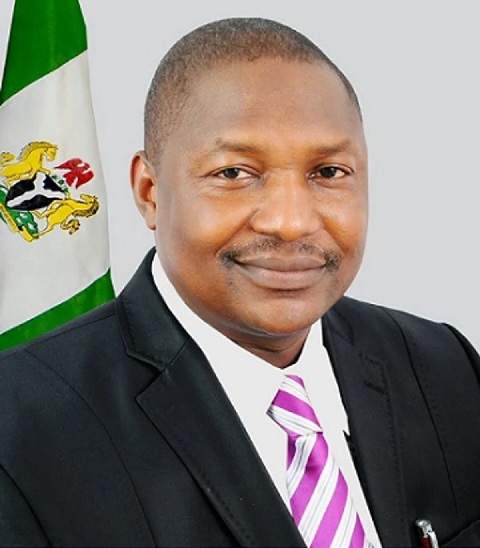
By David Torough, Abuja
The Economic and Financial Crimes Commission (EFCC) said former Attorney‑General of the Federation and Minister of Justice, Abubakar Malami, will face a team of interrogators at its office daily throughout December.
A credible source in the EFCC said on Monday that the daily appearance was part of an ongoing investigation into the whereabouts of an alleged 490 million dollars Abacha loot secured through a Mutual Legal Assistance (MLAT) request. The source said that Malami, who was summoned for interrogation by the EFCC on Saturday, was barred from leaving Nigeria for the next one month.According to the source, one of the conditions for his release on Saturday was that he should report daily to the EFCC Headquarters in Abuja for further interrogation.The source said Malami would have to appear daily at the anti-graft office due to the volume of the investigation and the seriousness of the charges against him.”We seized his passport, it is the normal routine during investigation, but he has to report at the EFCC headquarters in Abuja every day for the next month.”He will be reporting for further investigation throughout December.”He will be reporting every day, starting from Dec. 1st to Dec. 31st.He will appear before the team of investigators for the entire month of December.”He will be reporting to EFCC for investigation for the period because of the volume of the investigation and the seriousness of the charges against him,” the source added.According to the source, a fact sheet on the former minister revealed that Malami had several issues to clarify with the EFCC within the coming weeks.“We have asked him to explain the whereabouts of the $490 million Abacha loot secured through MLAT.“We didn’t say he stole money, but he should account for the loot. This is one of the issues he will clarify to our investigators.”The commission cited the large volume of documents he must review and the need for extensive interviews as reasons for seizing his passport.The source said EFCC would not engage in a war of words but would release its findings after a thorough investigation.Malami, in a statement by his media aide, Mohammed Doka, on Monday in Abuja, however, described the EFCC investigation as a political witch‑hunt.He confirmed he honored an EFCC invitation on Nov. 28, describing the engagement as fruitful and expressing confidence that the probe would vindicate him.Malami described the EFCC’s allegations as baseless, illogical and devoid of substance, insisting they collapse under factual scrutiny.


Nigeria’s Oil Reforms will Unlock $50bn Deep Offshore Investments – Tinubu
SharePresident Bola Tinubu said recent reforms in Nigeria’s oil and gas sector are designed to unlock up to 50 billion...
Ododo Condoles Families of NAF Personnel, Armed Forces Over Ondo Crash
ShareFrom Joseph Amedu, Lokoja Kogi State Governor, Ahmed Ododo has commiserated with the families of the Nigerian Air Force personnel...
WUEDA Tasks Journalists on Verification, Development Reporting
ShareFrom Francis Sadhere, Delta The Warri, Uvwie and Environs Special Area Development Agency (WUEDA) has urged journalists to strengthen investigative...
Dauda Joins FG’s Delegation for Nigeria- Ethiopia Leadership Exchange, Learning Visit
ShareFrom Ifeanyichukwu Nwannah, Gusau President Bola Tinubu has approved a high-level Nigerian delegation to Addis Ababa for a leadership exchange...
Civic Education Vital for Future Leaders – Ekiti Commissioner
ShareThe Ekiti State Government said on Tuesday that exposing students to civic education played a vital role in preparing them...
DSIRS Threatens Prosecution of Fake Tax Collectors, Warns Taxpayers
ShareFrom Francis Sadhere, Delta The Delta State Internal Revenue Service (DSIRS) has warned individuals and groups issuing fake tax demand...
Alabere Urges Corps Members to Preserve Yoruba Culture, Uphold Good Character
ShareFrom Ayinde Akintade, Osogbo A revered traditional ruler in Osun State, the Alabere of Abereland, Oba Obafemi Adelakin Mutalib Abiade...
Nigeria Since 1999: When will the Years Begin to Count?
ShareBy Dakuku Peterside Think of a Nigerian born in 1999, the year civilian rule came back. That person is twenty-seven...

Tinubu’s Return: An Update
ShareBy Reuben Abati Exactly a week ago, President Bola Ahmed Tinubu, now jokingly renamed a citizen of Kano with a...

NDLEA Seizes over 10 Tonnes of Illicit Drugs, Recover Firearms in Kogi
ShareBy Elijah Oguche, Abuja The National Drug Law Enforcement Agency (NDLEA) in Kogi said it has seized more than 10...