
NEWS
FEC Approves N6.2bn for FCT Projects, 40 Scan Devices for NAFDAC

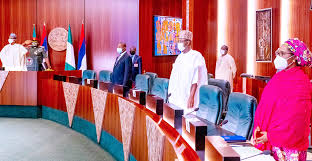
The Federal executive Council (FEC) presided over by President Muhammadu Buhari on Wednesday approved N5.9 billion for execution of three projects by the Federal Capital Territory (FCT).
Minister of the FCT, Malam Mohammed Bello, made this known when he briefed State House correspondents on the outcome of the Council meeting in Abuja.
He said N2.
3billion of the amount was meant for rehabilitation of the road leading to the Federal Integrated Staff Housing Estate in Apo, Abuja, while N3.6billion was approved for the construction of an access road and car park for the Abuja light rail station at ring road II.The minister said: “During today’s Federal Executive Council meeting, I presented three memos, two of which were on infrastructure and the other was for the purchase of needed equipment to make the city safe.
“The first was for a contract to rehabilitate the road leading to the Federal Integrated Staff Housing Estate in Apo, Abuja, and that contract was approved at the sum of N2.3 billion with a completion period of 24 months.
“As you know, the Federal Integrated Staff Housing Estates are being constructed in some locations in Abuja under the office of the Head of civil Service of the Federation and these estates are intended to provide needed accommodation to federal civil servants.
“The second infrastructure project relates to the contract for the construction of an access road and car park for the Abuja light rail station at ring road II otherwise known as Kukwaba station, which you see on the airport expressway immediately after the city gate near the Kukwaba recreation park under the Ministry of Aviation. The contract was approved for N3.6 billion, with a completion period of 18 months.
“The intention is that by the opening of that road, that railway station can be made functional and then commuters can use the station either when they visit the national park there or they want to have access to the Kukwaba district.”
He further revealed that the Council approved N3.07billion for the purchase of two towing vehicles and a crane for use by the Directorate of Road Traffic Services in the FCT.
“The third is for the purchase of two heavy duty tow vehicles with mounted crane for the Directorate of Road Traffic Services otherwise called Vehicle Inspection Officers (VIO), under the FCT and that particular contract was approved at a total sum of N3,072,466,000 with a duration period for the supply put at six weeks,” he said.
On his part, the Minister of Health, Dr Osagie Ehanire, said the two memos for the National Agency for Food and Drug Administration (NAFDAC) he presented at the meeting, were approved by the Council.
According to Ehanire, the memos are procurement memos meant to upgrade and scale up the capacity of NAFDAC to be able to detect fake and substandard drugs and other materials.
He said: “The first memo was for procurement of about 40 scam devices, which are mobile scan devices to be able to recognise fake and substandard drugs brought in either across the border or found within the country.
“These are like rapid diagnostic kits tests, which also relieve the laboratories because normally you have to take samples to the laboratories, it takes a long time, several days and lead to some delays. So having a through scan allows us to have faster access.
“The second memo is about laboratory strengthening, improving and upgrading all of our six laboratories for NAFDAC for for testing materials that are brought into the country.
“Both of these contribute strongly to what we call the bench benchmarks for NAFDAC to be able to allow the manufacture of vaccines in Nigeria.
“It needs what we call the maturity level 3 of the World Health Organisation, to be able to start manufacturing, we have ambitions to start manufacturing vaccines and the federal government owns 49% of shares in the company called Bio-Vaccines that hopes to use technology imported from outside to make vaccines and getting this benchmark maturity level 3 is a condition for it.
“So both of these memos, the upscaling of laboratory capacity and the ability to speed up and make diagnostics more accurate in respective of fake and substandard drugs, will help us to push to apply for maturity level 3 for the health sector.’’
On Nigeria’s access to COVID-19 vaccines, the ministers said the vaccines would be supplied to the country through three sources, namely; the COVAX facility set up by the World Health Organisation and Global Alliance for vaccines and immunization (GAVI); African Vaccine Acquisition Task Team (AVATT) and through bilaterals
He said the vaccines would be provided to Nigerians free-of-charge, saying the COVAX facility would cover about 20 per cent of the nation population with vaccines.
“Now, the COVAX will start delivering to African countries before the end of February, that’s what they told us. But they didn’t tell us which country is first or which is second, which is third.
“So COVAX begins to deliver before the end of February. We hope that before the end of this month it would be our turn or latest by beginning of next month.
“As for us here, we are ready to use vaccination once it arrives, we met all the conditions.
“They have asked us to sign an indemnification form, we have done that. Indemnification means that you do not hold us responsible for anything that happens from using this vaccine. That’s a standard process.
“We have signed that indemnification and so we are waiting for the vaccines to arrive anytime.
“Now, the largest number of vaccines we are getting is AstraZeneca in Africa, and this AstraZeneca is made under the licence. It’s a UK vaccine but is manufactured under licence by the Serum Institute of India.
“So Serum Institute of India is donating all these vaccines,’’ he said. (NAN)









From Attah Ede, Makurdi
Internally Displaced Persons (IDPs) in Benue State have poured praises on the United Nations Children’s Fund (UNICEF) and its funder, the Swedish International Development Cooperation Agency (Sida), for transforming their camps with clean water, toilets, bathrooms, schools, and healthcare.
Speaking during a UNICEF media field work and tour to Ichwa IDPs camp located in Northbank area of Makurdi, some of the beneficiaries attested that, before now, the camp had no good toilets, adding that open defecation was common and children fell sick every day, while the borehole was so bad that residents were allowed to fetch only one bucket each before it broke down.
A beneficiary Mercy Terna said UNICEF had made their environment clean and also, provided detergents and other women items for them, stressing that UNICEF had trained hygiene promoters who permanently take care of the camp.
She said health care delivery is rendered free as well as education of their children.
According to the mother of 5 children, learning materials are distributed to the children freely.
Another beneficiary Simon Kpamegh who is the camp leader collaborated Mercy’s comments stating that hitherto, they had to trek long distance to Asase access medical care.
Before now, for us treatment but UNICEF built a clinic in the camp, provided medications and trained medical personnel to cater for their health needs.
He said UNICEF renovated latrines, ensured that they are cleaned as well as fumigated the entire camp and distributed educational items to the school.
“I have three children and all of them are learning free of charge. UNICEF also give other household items including buckets.
Youth leader of the host community Jacob Ayege said they have been working very hard with UNICEF to peace and protection of the IDPs especially children.
Sectoral intervention
Education
Mrs Mimi Kiva Assistant Head teacher disclosed that there are over 500 children in nursery and primary section.
She said UNICEF supported by Sida provided learning materials such as white board with markers, books and desks, adding that they trained care givers to cater for people with special needs
Health and Nutrition
Dr Asawa Celestine, a medical doctor engaged by UNICEF with support of Sida said the IDPs are treated freely for malaria and back ache for the elderly, while 10 pregnant women in the camp at the moment, receive adequate pre-natal and anti-natal care to ensure safe delivery.
“There is no mortality case. There is also no case of malnutrition amongst children. UNICEF with support of Sida ensure adequate health care delivery to improve the health of the IDPs”, Dr Asawa said.
Similarly, Sandra Terhemba Immunization Assistant working for UNICEF-Sida said 5,000 children have been immunized frequently since 2023, maintaining that there is no outhreak of disease in the camp.
A care giver Judith Anamba, an auxiliary worker with JASPI said the organization in collaboration with UNICEF holds regular meeting with the IDPs to discuss their welbeing, saying that such engagements have been veru helpful
Camp Manager
Mrs Msurshima Apaa, Ichwa camp manager intimated that UNICEF-sida built 1 block of 5 compartment of latrine with sato pans for people with special needs to enhance equity and inclusion.
She said hygiene promoters have been trained by UNICEF to clean the camp daily while two (2) supervisors inspect the sanitary condition of the camp on a daily basis
The camp manager said UNICEF-Sida engaged medical team to handle major and minor illnesses freely to the IDP while also providing dignity kits to the 568 households and 1,586 individuals.
During the field work embarked upon by Journalists to the camp located at North Bank during when they toured UNICEF facilities in different sectors including education, health and nutrition, Water Sanitation and Hygiene, WASH
By Tony Obiechina, Abuja
The Central Bank of Nigeria (CBN), in exercise of powers conferred on it by the
Banks and Other Financial Institutions Act, 2020, has appointed Mr Murtala
Mohammed as Acting Managing Director/Chief Executive Officer of Keystone
Bank Limited.
He succeeded Mr Hassan Imam, with effect from November 26, 2026.
In a statement by CBN Director of Corporate Communications and Investor Relations, Mr Michael Akuka on Thursday night,
the appointment is consistent with the CBN’s mandate to promote a safe,
sound and stable financial system.
According to the statement, “The CBN wishes to reassure depositors, customers and other stakeholders that
Keystone Bank Limited remains fully operational, with banking services
continuing as normal and depositors’ funds remain secure”.
“The CBN remains committed to safeguarding depositors’ interests and ensuring
the continued soundness and stability of Nigeria’s banking sector”, the statement added.

By Tony Obiechina, Abuja
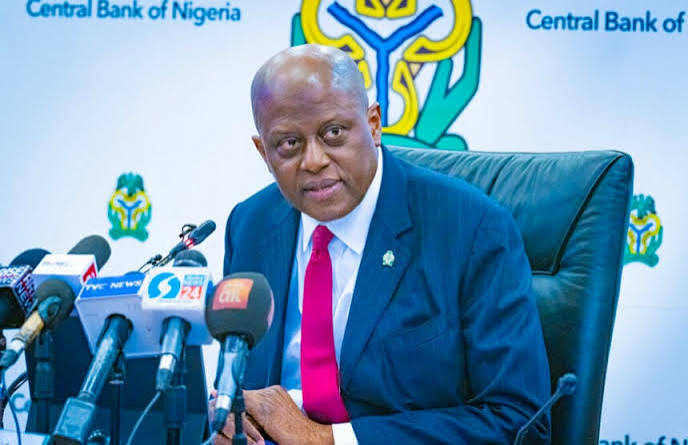
The Monetary Policy Committee (MPC) of the Central Bank of Nigeria (CBN) has retained the benchmark interest rate at 23 per cent, citing the need to consolidate gains in inflation moderation amid emerging risks from election-related spending, increased festive season expenditure and global energy price uncertainties.
The CBN Governor, Olayemi Cardoso, announced the decision on Tuesday at the end of the committee’s 308th meeting, held on November 23 and 24, 2026, in Abuja, with 10 members in attendance.
Cardoso said, “The Committee decided as follows: retain the Monetary Policy Rate at 23 per cent.
”The committee also retained the Standing Facilities Corridor at plus 50 and minus 300 basis points around the Monetary Policy Rate (MPR). It maintained the Cash Reserve Requirement (CRR) for deposit money banks at 45 per cent, merchant banks at 16 per cent and non-Treasury Single Account public sector deposits at 75 per cent.
The decision follows the 350-basis-point reduction in the benchmark interest rate from 26.5 per cent to 23 per cent in September 2026. The apex bank had earlier reduced the rate by 50 basis points in February before retaining it at subsequent meetings ahead of the September adjustment.
Explaining the decision, Cardoso said although headline inflation had moderated for five consecutive months, the committee considered prevailing economic developments and potential inflationary pressures that could undermine the progress recorded.
He said the anticipated increase in spending associated with the end-of-year festive season and election-related activities could stimulate aggregate demand and exert upward pressure on prices.
The committee also expressed concern over the ongoing conflict in the Middle East, which could sustain pressure on global energy prices, as well as adverse weather conditions that could disrupt food production and supply.
According to the latest Consumer Price Index report released by the National Bureau of Statistics (NBS), Nigeria’s headline inflation rate declined to 14.06 per cent in October 2026 from 14.63 per cent in September, representing a reduction of 0.57 percentage points.
Core inflation also fell to 10.78 per cent from 12.95 per cent, while food inflation moderated to 19.13 per cent from 19.59 per cent, reflecting easing price pressures on processed food and farm produce following the commencement of the harvest season.
Cardoso attributed the sustained moderation in inflation to exchange rate stability, improved monetary policy transmission and the impact of the CBN’s restrictive monetary policy stance.
He also disclosed that economic activities had continued to expand, with the Composite Purchasing Managers’ Index rising from 53 points in September to 53.2 points in October, indicating improved performance across the industrial, agricultural and services sectors.
Responding to questions from journalists, the governor said the September interest rate adjustment was yielding the intended results, noting that interbank lending rates were moving closer to the lower band of the Standing Facilities Corridor.
He added that rates on Open Market Operations instruments and Treasury bills had moderated, while the gap between the benchmark interest rate and prevailing market rates had narrowed considerably.
Cardoso also disclosed that credit to the private sector was gradually recovering, expressing satisfaction with the improvement in lending activities.
He explained that the September adjustment was designed to align the benchmark interest rate with prevailing market realities and improve monetary policy transmission, rather than signal a departure from the bank’s restrictive monetary policy stance.
On concerns over recent pressure on the naira and the decline in external reserves, the CBN governor described the developments as temporary and largely seasonal, expressing confidence in the sustainability of exchange rate stability.
Nigeria’s gross external reserves stood at $54.02 billion as of November 17, 2026, providing cover for 10.26 months of imports of goods and services.
Cardoso attributed the recent foreign exchange market volatility to year-end portfolio adjustments by foreign investors, increased demand for foreign exchange by domestic businesses seeking to hedge against future risks and rising election-related expenditure.
He further disclosed that diaspora remittances exceeded $900 million in the preceding month, adding that Nigeria’s current account surplus and sustained remittance inflows would strengthen the country’s external buffers.
The governor assured Nigerians that the apex bank would continue to deploy available policy measures to preserve exchange rate stability.
On the recently signed Memorandum of Understanding between the CBN and the Nigerian National Petroleum Company Limited (NNPCL), Cardoso said the agreement followed months of consultations between both institutions.
He explained that the partnership was designed to improve transparency in the management of oil-related foreign exchange inflows, deepen the foreign exchange market, strengthen external reserves and support the financing of energy projects.
According to him, the CBN would also deploy its advisory expertise and convening power to support the operations of the national oil company.
Looking ahead to 2027, Cardoso reaffirmed the apex bank’s commitment to policy consistency, stronger coordination between fiscal and monetary authorities, sustained banking sector stability and further improvements in monetary policy transmission.
He reiterated that achieving single-digit inflation remained the bank’s overriding objective.
The committee projected a positive outlook for the domestic economy, supported by improved crude oil production and sustained expansion across the agricultural, industrial and services sectors.
However, it cautioned that elevated global energy prices, trade policy uncertainty, supply chain disruptions, cyber threats and diminishing fiscal space remained significant risks to the global economic outlook.
The committee maintained that sustaining the gains in price stability would require continued policy discipline and vigilance against emerging domestic and external inflationary pressures.


Benue IDPs Praise UNICEF over Provision of Facilities
ShareFrom Attah Ede, Makurdi Internally Displaced Persons (IDPs) in Benue State have poured praises on the United Nations Children’s Fund...

CBN Appoints Acting MD/CEO ofKeystone Bank
ShareBy Tony Obiechina, Abuja The Central Bank of Nigeria (CBN), in exercise of powers conferred on it by theBanks and...

3,526 Primary Healthcare Centres Revitalised – FG……… Tasks Health Journalists on Accountability
ShareBy Laide Akinboade Abuja The Federal Government (FG), on Thursday, disclosed that 3,526 primary healthcare centres had been revitalised, while...

Court Nullifies Omo-Agege’s NDC Senatorial Candidacy
ShareFrom Francis Sadhere, Delta The Federal High Court sitting in Warri, Delta State, has nullified the nomination of former Deputy...


APC Mourns 15 Supporters Killed In Zamfara Road Accident
ShareBy Orjime Moses, Abuja The All Progressives Congress (APC) has mourned 15 of its members and supporters reportedly killed in...
Ortom ‘Ranched’ Benue People in IDP Camps Instead of Cattle – Tondo
ShareFrom Attah Ede, Makurdi Former Benue State Commissioner for Lands and Survey, John Tondo, has criticised former Governor Samuel Ortom...


2027: INEC Chairman Seeks Stronger Security Cooperation Ahead Of Elections
ShareBy Orjime Moses, Abuja The Chairman of the Independent National Electoral Commission (INEC), Prof. Joash Ojo Amupitan, SAN, has called...


CBN Retains Interest Rate at 23 Per Cent
ShareBy Tony Obiechina, Abuja The Monetary Policy Committee (MPC) of the Central Bank of Nigeria (CBN) has retained the benchmark...


2027: Emovworho Warns Delta Politicians Against Exploiting Youths
ShareBy Orjime Moses, Abuja A concerned son of the Urhobo Nation, Austin Obule Emovworho, has warned political leaders in Delta...


Katsina Suspends Daura Emir, Orders Probe into Sexual Assault Allegation
ShareBy David Torough, Abuja The Katsina State Government has suspended all official engagements and travels of the Emir of Daura,...