
NEWS
FG Commissions Eye Centre at FNPH in Kaduna


From Ngutor dekera, Kaduna
Nigeria’s Minister of State for Health and Social Welfare Dr. Tunji Alausa yesterday commissioned the Electronic Health Records and Alternative Power Supply at the Lawal Jafaru Isah Emergency Complex and the solarization project at the dialysis unit comprising a solar powered borehole backed by a 10.
2 KVA inverter which comes with a lithium battery at Abdulkareem Jika Yusuf COVID-19 Intervention Centre stressing that the “ministry is working on an executive bill to Mr. President.Alausa who expressed confidence in Dr. Aishatu Yusha’u Armiyau said “The success in the Hospital is a testimony to what our President, President Bola Ahmed Tinubu promised Nigerians during his campaign he said.”At the National Eye Centre, Kaduna the Minister commissioned Dr. Adejor Optical Show Room and Dr. Alhassan Diagnostic and Laser Unit.The Health Minister for State who announced 50% Electricity subsidy for public Hospitals maintained that the warning strike by the Doctors is complicating issues for the release of the kidnapped doctor from the Eye Centre and assured that the Doctor will be back soon.On mass exodus of Medical staff to other nations of the world, he said there was a strategy on engaging medical personnel in the Diaspora assuring that despite the poor structure inherited, the President is a motivator and engaging state governments to expand projects on Health Science Universities to sustain the rise of health sciences enrollment from 24000 annually to 100, 000.In her speech, the Acting Chief Medical Director Dr. Aminatu Abdulrahman said National Eye Centre was established in 1979 with a mandate to provide of specialist eye care services, training of manpower and research for NigeriaAccording to her, the hospital has 300 beds situated on 514 hectares of land and which receive referrals from 36 states of Nigeria and Federal Capital Territory and neighbouring countriesWith a total of 640 staff – 369 (clinical) 281 (non-clinical) Dr. Abdulrahman said about 53,406 out patients have been attended to and 4653 surgeries were performed in the year 2023.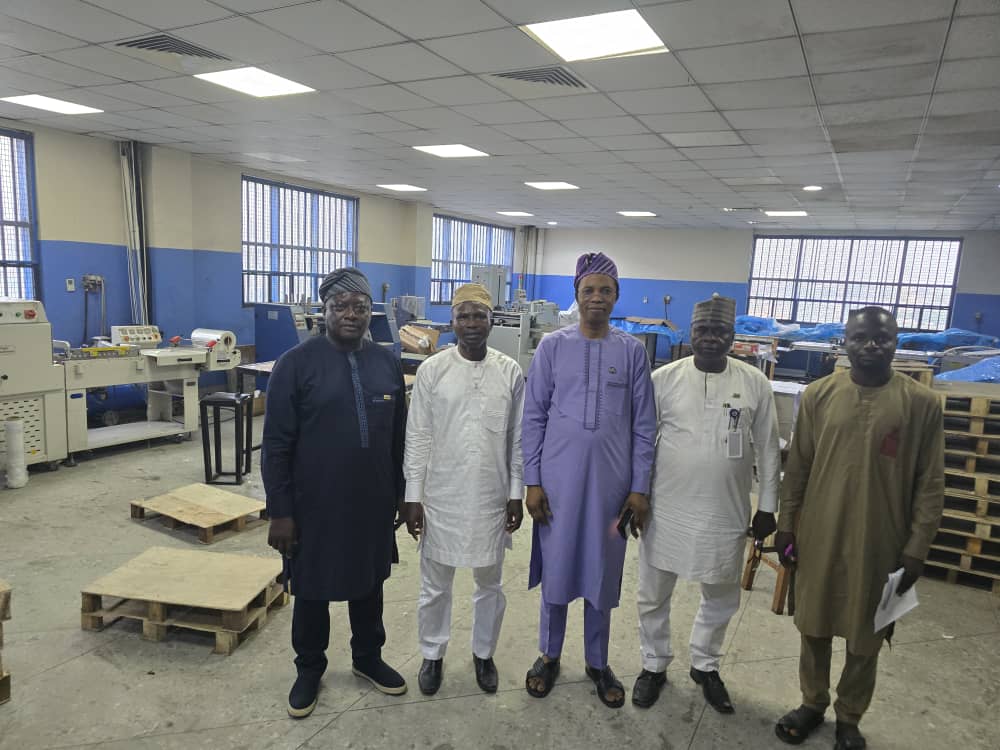
By David Torough, Abuja
The Chartered Institute of Professional Printers of Nigeria (CIPPON) has renewed its call on the Federal Government to introduce targeted incentives for the printing industry, enforce local content policies and establish the Office of the Printer General of the Federation (PGF), following an assessment visit to the state-of-the-art facilities of Marvelous Mike Press Limited in Abuja.
The call followed an inspection tour by the Industrial Development and Export Concessions (IDEC) Committee of CIPPON, led by the Institute’s President, Koko T.
Clement, alongside the Ex-Officio, Dr. Samson Omoniyi Adesoye, and members of the Industry, Trade and Investment Committee, headed by Suleiman Usman Olowoniyi.The visit formed part of CIPPON’s nationwide assessment of printing facilities to determine the industry’s investment capacity and identify operators eligible for available industrial development and export concessions.
At Marvelous Mike Press Limited, the delegation was received by the company’s Managing Director, Printer Michael Akinola, who conducted the team around the facility and showcased its extensive production infrastructure and advanced printing technologies.
The delegation expressed amazement at the scale of investment and technological sophistication deployed by a single Nigerian-owned printing company without significant government incentives.
The facilities inspected demonstrated the industry’s capacity to handle large-scale printing, packaging and security document production to international standards.
Speaking after the inspection, CIPPON President, Koko Clement, described the investment as a strong indication that Nigeria possesses the resources, technology and professional expertise required to meet its domestic printing needs and compete effectively in the international market.
He said the experience had strengthened the Institute’s resolve to intensify its engagement with the Federal Government, particularly on the need to ensure that educational books and other government-related printing jobs are undertaken within Nigeria.
“What we have witnessed at Marvelous Mike Press is beyond imagination. The scale of investment by a single Nigerian entrepreneur, without government incentives, demonstrates the enormous capacity and readiness of our printing industry. If government recognises and supports this capacity, there will be no justification for taking our educational book printing jobs outside the country,” Koko stated.
He expressed concern that despite its enormous economic potential, employment opportunities and contribution to national development, the printing industry has continued to receive inadequate attention in government incentive programmes, concessions and industrial interventions.
According to him, the facilities visited possess modern technologies capable of producing millions of copies of books, packaging materials and security documents while meeting internationally recognised quality standards.
Koko further disclosed that Nigerian printing companies are already undertaking substantial printing and packaging contracts for other African countries, demonstrating their competitiveness and readiness to serve wider regional markets.
“This is not just about printing. We have facilities in Nigeria handling high-volume printing and packaging assignments for other African countries with precision and quality comparable to the best in the world. Nigerian printers are not asking government to create capacity for them.
“We already have the technology, expertise, manpower and investment. What we need is the right policy framework and political will to unlock this potential,” he said.
The CIPPON President explained that retaining printing contracts within Nigeria would generate far-reaching economic benefits beyond the printing companies themselves. Such a policy, he noted, would stimulate demand for locally produced paper, printing inks, finishing materials and packaging products, thereby strengthening several interconnected industries.
He maintained that the initiative would advance the local content objectives of President Bola Ahmed Tinubu’s Renewed Hope Agenda while reducing capital flight, conserving foreign exchange and expanding employment opportunities for Nigerian youths.
In a major policy recommendation, CIPPON urged President Bola Ahmed Tinubu to consider establishing the Office of the Printer General of the Federation (PGF) or the Printers Commission of Nigeria (PCN) to provide institutional leadership, coordination and effective regulation of the country’s printing industry.
The Institute believes that such an institution would provide a dedicated government framework for developing printing policies, promoting local production, protecting domestic printing jobs, coordinating industry stakeholders and strengthening the entire printing value chain.
“The establishment of the Printer General of the Federation will give the Federal Government a focused institutional structure for coordinating printing policies, enforcing local printing requirements, protecting employment and ensuring that printing contracts generated in Nigeria are retained for Nigerian printers. This is the missing link in building a productive and globally competitive printing economy,” Koko added.
CIPPON also called on the Federal Ministry of Education, the Universal Basic Education Commission (UBEC), Tertiary Education Trust Fund (TETFund) and all state governments to immediately strengthen the implementation of local content policies by ensuring that educational books at primary, secondary and tertiary levels are printed in Nigeria.
The Institute stressed that the country stands to save billions of naira in foreign exchange, create hundreds of thousands of employment opportunities, expand the operations of local paper mills, stimulate ink and packaging manufacturing, and accelerate economic growth if printing activities are domiciled within the country.
Koko therefore appealed to the Federal Government to recognise the printing industry as a strategic pillar of national industrialisation and give Nigerian printers the necessary policy support to maximise its potential.
“Printing in Nigeria is a huge economic opportunity. It can save billions of naira in foreign exchange, create jobs for our youths, revive our paper mills, strengthen manufacturing and grow the national economy. It is time for government to believe in Nigerian printers and give them the opportunity to handle the country’s printing needs. Nigerian printing jobs must remain in Nigeria for Nigerians,” he declared.
Meanwhile, CIPPON disclosed that the IDEC assessment exercise would continue across other printing facilities nationwide as part of efforts to identify investments and operators that can benefit from the scheme.
The Institute consequently appealed to printing companies and individual practitioners who have invested in modern printing equipment and machinery to contact the CIPPON President to initiate the necessary IDEC assessment processes and procedures.
The Institute reaffirmed its commitment to promoting investment, strengthening professional standards, expanding local printing capacity and positioning Nigeria as a major printing and packaging hub in Africa.

By David Torough, Abuja
A call has been made on the Nigerian Government to engage prominent Nigerian Christian leaders, including the Founder and Presiding Bishop of Living Faith Church Worldwide, Bishop David Oyedepo, alongside his spiritual sons, Pastor David Ibiyeomie, Dr Paul Enenche and Pastor Korede Komaiya, to explore how their institutions could contribute to addressing some of Nigeria’s development challenges.
The call, contained in an opinion article titled “Why the Nigerian Government Must Invite Bishop David Oyedepo and His Spiritual Sons Immediately,” argues that the churches led by the four clerics have established institutional structures and community-based initiatives that could provide useful lessons for national development.
According to the article, the ministries have made contributions in areas such as education, healthcare, transportation, employment generation, infrastructure development, poverty reduction and human capital development.
It noted that their respective church organisations operate transportation arrangements that enable worshippers and other participants to attend services and programmes without paying transport fares, describing the initiative as an example of organised social support.
The article also highlighted their investments in education, particularly the establishment of primary and secondary schools as well as universities, with modern learning facilities aimed at developing academic excellence and character among young Nigerians.
On healthcare, it cited medical outreaches, financial assistance for patients, support for surgeries and sponsorship of individuals requiring specialised medical treatment outside Nigeria as some of the interventions attributed to the ministries.
The opinion further drew attention to scholarship programmes operated by the churches, arguing that educational support has created opportunities for young people from disadvantaged backgrounds to acquire professional qualifications and improve their economic circumstances.
It also identified electricity generation and infrastructure development as areas where the religious institutions have demonstrated capacity, pointing to their investments in uninterrupted power arrangements, roads, pedestrian bridges and water facilities within their operational environments.
On employment, the article claimed that the four church organisations collectively provide jobs for more than 300,000 people, describing them as significant employers whose activities extend beyond religious services into administration, education, healthcare, hospitality, logistics and other sectors.
It further argued that their large-scale conventions and international conferences attract participants from different parts of the world, creating economic opportunities for hotels, transport operators, traders, food vendors and other businesses in host communities.
Beyond physical infrastructure and economic activities, the article emphasised the role of religious institutions in social transformation, particularly through counselling, moral instruction, family development, entrepreneurship training and programmes aimed at discouraging destructive lifestyles.
It maintained that these activities could offer useful insights into addressing social challenges, strengthening families and promoting responsible citizenship.
The article also acknowledged the importance of resource management, institutional discipline and long-term planning, arguing that the sustainability of large religious organisations could provide useful case studies for public administrators and development practitioners.
It therefore proposed that the Federal Government initiate a structured engagement with Bishop Oyedepo and the other three clerics to examine their institutional experiences, identify transferable practices and explore possible areas of collaboration in national development.
The proposed engagement, according to the article, should not be politically motivated or limited to ceremonial recognition, but should focus on practical discussions around education, healthcare delivery, employment, infrastructure, social welfare, entrepreneurship and community development.
It concluded that Nigeria could benefit from drawing lessons from successful non-governmental institutions, faith-based organisations and private-sector initiatives, particularly where their experiences offer approaches that can complement existing public development programmes.
The proposal comes amid continuing national conversations about the role of religious organisations, private institutions and civil society in supporting government efforts to improve living conditions and expand development opportunities across the country.
By David Torough, Abuja
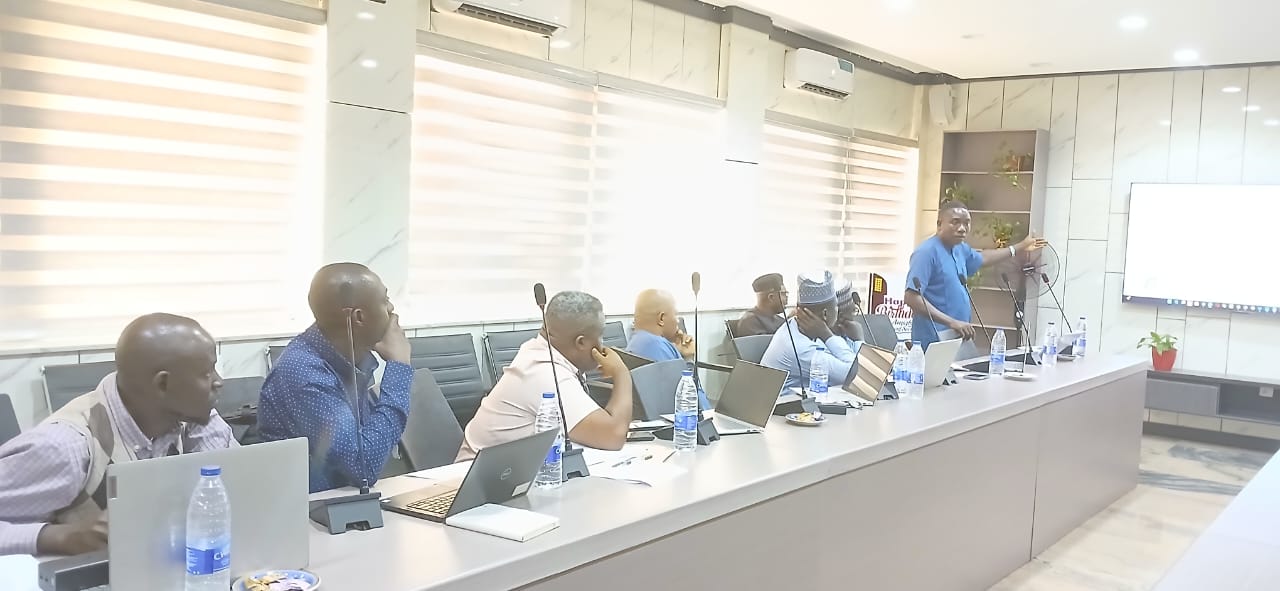
The Ministry of Regional Development has commenced a capacity-building training programme for desk officers from the seven Regional Development Commissions on the revised Quarterly Reporting Template and the newly introduced Regional Development Commissions (RDC) Quarterly Reports Application.
Declaring the training open at the Permanent Secretary’s Conference Room, 10th Floor, Federal Secretariat, Phase I, Abuja, the Permanent Secretary, Dr Mary Ogbe, emphasised the importance of accurate, timely and transparent reporting in strengthening institutional accountability and monitoring the performance of the Regional Development Commissions.
Dr Ogbe noted that the Ministry submits quarterly performance reports to the Central Results Delivery Coordination Unit (CRCDU) of the Office of the Special Adviser to the President on Policy and Coordination, highlighting the Commissions’ contributions to implementing President Bola Ahmed Tinubu’s Renewed Hope Agenda across the regions.
She explained that the revised reporting template was developed to address recurring challenges associated with previous submissions, including inconsistencies in reporting formats, incomplete financial information, inadequate supporting evidence and delays in submission.
According to her, the revised template harmonises the CRCDU reporting requirements with the Commission’s quarterly performance templates and the Harmonised Performance Bond Matrix, thereby ensuring consistency, accuracy and alignment with the Presidential Reporting Blueprint.
The Permanent Secretary further disclosed that the revised template now provides for comprehensive reporting on project and programme implementation, including appropriated funds, contract sums, releases, expenditure, physical progress, percentage of completion, challenges and recommendations, alongside verifiable supporting documents such as geotagged photographs, letters of award and completion certificates.
A major highlight of the initiative is the introduction of the RDC Quarterly Reports App, a digital platform designed to simplify the reporting process, enhance data accuracy and improve the timely submission of quarterly reports by the Commissions.
Dr Ogbe explained that the application will enable each Commission to prepare and submit its reports online, validate financial figures, upload supporting evidence and transmit submissions securely using individual submission keys.
She added that the platform will also enable the Ministry to consolidate submissions into a unified report and provide the Honourable Ministers and the Permanent Secretary with access to a live dashboard to monitor submission status.
She charged the participating desk officers to take full advantage of the training and ensure that the knowledge acquired translates into improved reporting practices within their respective Commissions.
The Permanent Secretary particularly stressed the need for accurate financial reconciliation, credible project documentation, strict adherence to reporting deadlines and effective communication between the Commissions and the Ministry.
She disclosed that the first quarterly returns under the new reporting arrangement would cover the fourth quarter of 2026, urging the desk officers to safeguard their respective submission keys and share the knowledge acquired with their management and colleagues.
Dr Ogbe reiterated that effective reporting goes beyond routine administrative documentation, describing it as a critical instrument for demonstrating the value of public resources, strengthening government decision-making, promoting accountability and showcasing the developmental impact of the Regional Development Commissions across the country.
The training is expected to equip participants with the practical skills required to complete the revised reporting template accurately, reconcile financial information, provide credible supporting evidence and effectively utilise the newly introduced digital application.
The initiative underscores the Ministry of Regional Development’s commitment to strengthening institutional capacity, promoting transparency and accountability, and ensuring effective monitoring and evaluation of development projects and programmes across Nigeria’s regions.



CIPPON Urges FG to Protect Nigerian Printing Industry
ShareBy David Torough, Abuja The Chartered Institute of Professional Printers of Nigeria (CIPPON) has renewed its call on the Federal...


FG Urged to Engage Bishop Oyedepo, Spiritual Sons Leadership Models on National Development
ShareBy David Torough, Abuja A call has been made on the Nigerian Government to engage prominent Nigerian Christian leaders, including...

Regional Devt Ministry Trains Commissions’ Officers on Digital Quarterly Reporting Template
ShareBy David Torough, Abuja The Ministry of Regional Development has commenced a capacity-building training programme for desk officers from the...


Actress Ademoye Rejects Apology over Movie Demonetization
ShareNollywood actress and filmmaker, Bimbo Ademoye, has rejected an apology from a man who filed a copyright claim against her...


Army Rescues 21 Kidnap Victims after Gun Battle with Terrorists in Niger
ShareBy David Torough, Abuja Troops of the Nigerian Army’s 18 Brigade have rescued 21 kidnapped victims following a fierce gun...


CBN Digitalises Fiscal Data Reporting Across 36 States, FCT
ShareBy Tony Obiechina, Abuja The Central Bank of Nigeria (CBN) has commenced the digitalisation of sub-national fiscal data reporting across...


NNPC Audit: Kyari Denies N210trn Missing Funds
ShareBy David Torough, Abuja Former Group Chief Executive Officer of the Nigerian National Petroleum Company Limited (NNPCL), Mele Kyari, has...


2027: APC Bets on Reforms, Unveils Tinubu’s Blueprint
ShareBy Eddy Ochigbo, Abuja The All Progressives Congress (APC) has unveiled an ambitious four-pillar manifesto for President Bola Tinubu’s proposed...


Troops Neutralise over 60 Terrorists, Rescue70 Kidnap Victims in One Week
Share By David Torough, Abuja The Armed Forces of Nigeria (AFN) have neutralised more than 60 terrorists and rescued at...


Accident Victims’ Remembrance Day: FRSC Records 7,156 Crashes, 3,445 Deaths
ShareThe Federal Road Safety Corps (FRSC) has recorded 7,156 road traffic crashes, resulting in 3,445 deaths and 22,292 injuries across...