
Foreign News
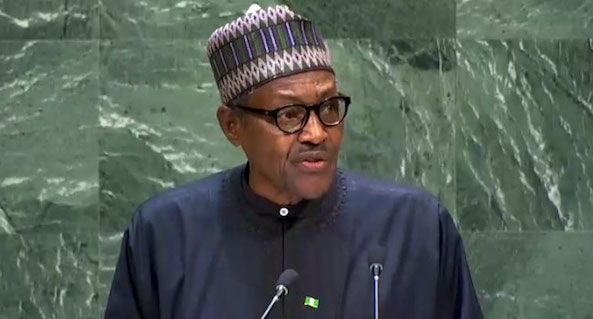
FG Creates 10million Jobs, Buhari Tells UNGA

By Mathew Dadiya, Abuja
President Muhammadu Buhari has told the United Nations General Assembly (UNGA), in New York, United States, that the Federal Government under his administration has created 10 million direct and indirect jobs, financed 2.
5million smallholder farmers to cultivate about 3. 2million hectares of farmland across the federation under the Anchor Borrowers program to boost food security in the country.Buhari expressed delight that the implementation of such programmes has resulted in a significant decline in the country’s large food import bill, from $2.
2billion in 2014 to $5.9million at the end of 2018, disclosing that rice imports alone dropped from $1billion a year to $18.5million dollars.The President spoke in his capacity as the African Union Champion on efforts to eliminate corruption in the continent at a High-Level side event on ”Food Security Response: Combating Illicit Financial Flows and Securing Asset Returns for Sustainable Development’‘, at the weekend on the margins of the 77th Session of the UN General Assembly.
He urged his colleagues to recall the United Nations General Assembly Special Session Against Corruption political declaration of June 2021 and ensure its effective implementation toward global food security and sustainable infrastructural development in the continent.
The Nigerian leader emphasizes the need for African leaders to fight tirelessly to get rid of corruption, lamenting that the continent has remained at the far end of global development index because of its menace.
He also acknowledged programmes initiated by the AU and ECOWAS to address food security, apprising that at the Federal level in Nigeria, the administration is working with state governments through initiatives such as the Anchor Borrowers Programme, to support local production of rice, maize, cotton and cassava.
”Accordingly, we remain committed to improving productivity of small-scale farmers by promoting equal access to land, technology and markets, sustainable food production systems and resilient agricultural practices across the country and beyond,’’ the President said.
The President, however, cautioned that these lofty goals cannot be achieved if corruption, illicit financial flows, serious and organized crimes are not effectively addressed.
”Rice, wheat and fertilizer imports were riddled with gross corrupt practices such as over-invoicing and transfer pricing.
”It is only when these crimes are contained that we can secure the recovery and return of illicitly acquired assets to victim-countries, which will then provide the much-needed resources in the immediate term, to address development requirements,’’ he said.
Providing his perspectives on the effects of corruption in the continent and the way forward at the event co-hosted by African Union Development Agency-New Partnership for Africa’s Development (AUDA-NEPAD) and the Economic and Financial Crimes Commission (EFCC), the Nigerian leader said he was honoured to serve as AU Champion on anti-corruption since 2018:
”As you are all aware, this will be my last official participation at the United Nations General Assembly as President of the Federal Republic of Nigeria.
”I remain honoured and privileged to be President of Nigeria for two terms and I am grateful to the African Union for making me the Continental Organisation’s Champion on efforts to eliminate corruption nationally and continent-wide.
”Over the years, we came to the painful realisation on how deeply embedded corruption has become in our countries and continent, as well as how corrosive it can be.
”Corruption has dwarfed our growth and tainted our nations and continent. Africa remains at the far end of development index and concerted efforts made in the last few years need to be sustained, deepened by good governance and accountability that are guided by the rule of law.
”I have strong faith that Africa and our national governments can do this with strong resolve and commitment to eliminating Illicit Financial Flows.
”We need strong partnerships from our global partners to ensure that these efforts succeed. A developed and stable Africa will not only be a global partner for peace but for sustainable development and progress.”
Buhari, therefore, challenged his colleagues that for the continent to rise to its full potentials, ”we must work tirelessly to get rid of corruption or by fighting it 24/7.”
”Our national resources must not find safe-havens around the world. This fight is a necessity and not a choice to give our citizens a better life through economic prosperity, social peace and security,” he added.
The Nigerian leader recounted that the administration has demonstrated effective utilization of recovered assets with the notable deployment of funds to three major infrastructure projects across the country namely; the Lagos-Ibadan Expressway, Abuja-Kano Expressway and the Second Niger Bridge.
The President, therefore, pledged not to relent in efforts to curb illicit financial flows, engender food security and achieve sustainable economic development.
He added that measures have been instituted based on policy advisories by EFCC to block revenue leakages arising from crude oil theft, tax evasion, pension fraud, foreign exchange manipulations, travel document racketeering and tax evasion:
”Furthermore, the Common African Position on Asset Recovery (CAPAR) 2020 was recognized as taking a broader approach to include resources lost through any and all types of Illicit Financial Flows.
”It is therefore our hope, that the CAPAR can be a model for designing a global framework to address Illicit Financial Flows and I use this opportunity to call on the African Union to ensure effective implementation of the CAPAR in line with the vision encapsulated in the Agenda 2063.”
Commenting on the global food crisis, which the United Nations estimates that nearly a billion people went hungry in 2021, the President described it as ”a collective shame on the world’s conscience,” further exacerbated by increased illicit financial flows.
He expressed concern that criminals are taking advantage of global food crisis to perpetrate illicit financial flows, with the ongoing crisis in Ukraine disrupting energy and food supply chains, thus, negatively impacting the global economy.
”Such developments have been made worse by increased Illicit Financial Flows, arising from a combination of factors, including organized violence and conflict risks, economic downturn, natural hazards and climatic risks, as well as worsening access to humanitarian assistance.
“Such an atmosphere presents criminals and their associates with opportunities to take advantage of information developments that characterize such areas of disruption and conflict.”
He said the crisis in the energy and food supply chains demand urgent response from all leaders in governments, global institutions and businesses to re-think best approaches to address new and old global challenges.
He posited that food crises, illicit financial flows and asset recovery are cross-cutting issues that necessarily need to be addressed holistically through the effective adoption of multilateralism as highlighted in the theme of the 77th United Nations General Assembly: “A Watershed Moment: Transformative Solutions to Interlocking Challenges.”
In her remarks, the Chief Executive Officer of AUDA-NEPAD Nigeria, Princess Gloria Akobundu, said the event “is a continuation of the advocacy on good governance that started in 2017 and was adopted by the Forum in 2018 as an annual event with the objective to promote peer-to-peer learning for best practices and strengthen partnership for good governance.”
She added that, “if Africa’s population and land space are credibly and productively harnessed, it will not only address these challenges but will be a turnaround for world economic boost and sustainable development.”
Nigeria’s Attorney General and Minister of Justice, Abubakar Malami, said that “reports from law enforcement agencies especially the Economic and Financial Crimes Commission (EFCC) show that illicit financial flows (IFFS) undermine efforts to development including food security…the United Nations estimates that $1.6trillion is lost each year due to illicit financial flows, which has a negative impact on global growth and development.”
According to him, however, the Nigerian government is dealing with the situation: “Just this year, Mr President has signed the Money Laundering Prevention and Prohibition Act, (2022), the Proceed of Crimes Act just to mention a few.”
Goodwill messages were delivered by representatives of International Organisations as well as Development Partners.


By Eze Okechukwu, Abuja
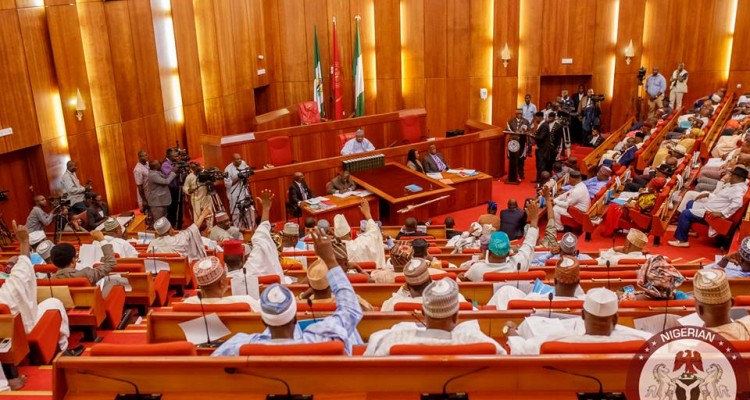
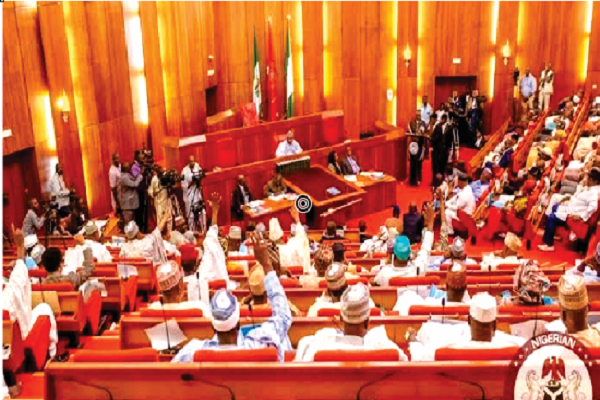
The Senate yesterday ordered mandatory health screening for every international passenger arriving Nigeria airports, seaports, land borders as Ebola resurfaces in the Democratic Republic of Congo with a scare case reported in the FCT.
The resolution followed an urgent motion by Senator Francis Fadahunsi, who warned that with Lassa fever already ravaging states, Nigeria cannot afford another outbreak.
“Protecting our entry points is far cheaper than managing Ebola,” Fadahunsi told the chamber.
Lawmakers insisted screening must be total and indiscriminate — no exemptions based on nationality or departure country because infected travellers can transit through safe-listed nations.
Senator Diket Plang raised the stakes further, demanding immediate funding for NCDC and Port Health Services, including release of withheld funds and emergency budget.
Senate President Godswill Akpabio said the Federal Government has started releasing Ebola response funds but ordered relevant committees to track every kobo.
“Ascertain whether the funds were released and judiciously utilised. Any outstanding debt must be released by the Finance Ministry without delay,” Akpabio directed.
At least 72 civilians who had been prospecting for gold in a border region of Sudan have been killed in air strikes, a regional rights group said.
Emergency Lawyers, based in the Sudanese capital, Khartoum, said jets targeted the so-called artisanal miners at a popular gold mining site on Saturday.
Neither the Egyptian government nor the de facto Sudanese authorities have so far commented.
Cairo has previously faced accusations of deadly strikes on gold prospectors as part of a crackdown on illicit activity along its southern border.
Emergency Lawyers noted the previous alleged attacks and said they represented not only a violation of Sudan’s sovereign territory but demonstrated the government’s lack of control over the region.
“The deliberate targeting of unarmed civilians violates international humanitarian law and the right to life,” it said in a statement on Sunday. “These acts may constitute war crimes.”
It noted that its death toll was provisional and could rise.
The Paris-based Sudan Tribune reported that the death toll could far exceed the number reported by Emergency Lawyers, citing a survivor of Saturday’s attack who said many more people had been injured.
Eyewitnesses said the attack began around 06:00 local time (04:00 GMT), with the aircraft firing more than five missiles directly at the miners’ camps, destroying them and excavation pits with people still inside, the newspaper wrote.
The Sudan Tribune reported claims in June that Egyptian forces had used drones and artillery to target artisanal mining sites in the same region, killing several, after sporadic incidents of Egyptian border guards of burning equipment, torching temporary shelters, and firing live ammunition to disperse mine workers.
Days later, Egypt’s border agency announced that it and the military had begun a sweeping security campaign along the border to foil illegal migration, drug smuggling and illegal mining.
At the same time, Sudan’s de facto leader announced an investigation into the alleged strikes, which were said to have killed dozens.
Gold lies at the core of the border tensions.
Sudan’s ongoing civil war has led to a surge in artisanal mining – and often risky practice conducted by civilians with rudimentary tools and without official permission – particularly in remote areas near its borders.
Gold-rich areas lie along porous borders in terrain historically associated with cross-border smuggling routes, with artisanally mined gold potentially feeding into those channels.
Egypt’s border force said in June that it had seized 86 tonnes of gold ore along with amateur prospecting equipment.
Artisanal mining has also reportedly continued in Sudan’s conflict zones and smuggled gold may be a source of income for armed insurgent groups.
This has raised concerns of illicit Sudanese gold undermining the legitimate Egyptian gold market.
Several German fighter jets will take part in the Northern Atlantic Treaty Organisation (NATO) annual nuclear defence exercise this week as troops from 17 countries take part in the Steadfast Noon drill.
The German Air Force said three Tornado jets will take part in the exercise hosted by Italy, which starts Tuesday and runs for about a week and a half.
The jets are normally stationed in Büchel in the German state of Rhineland-Palatinate.
NATO has not revealed the exercise scenario but said its scale would be comparable to last year’s drill, which involved around 2,000 personnel and more than 70 aircraft.
Last week, NATO’s head of nuclear policy, Nassima Barrows, said the exercise was designed to demonstrate the alliance’s readiness and ability to defend its territory.
No real nuclear weapons will be used, she added.
NATO said the exercise was not linked to current events or directed at any specific country.
Military experts say the drills, held regularly in October, include practising the safe transport of weapons from underground storage facilities to aircraft and mounting them on fighter jets.
Only practice bombs without real nuclear warheads are used during the drills.



WAHO Seeks Uniform Standards for Health Professionals’ Education in ECOWAS
ShareBy David Torough, Abuja The West African Health Organisation (WAHO) has reaffirmed its commitment to harmonising the training, accreditation and...

Firm Promises No Storage Charges On Subscribers’ Wallets
ShareBy David Torough, Abuja A telecommunications firm, ESDIAC Global, has said it does not impose storage charges on subscribers’ wallets,...


GIGM Brings hireX, PASS to Abuja Nov 4
ShareBy Tony Obiechina, Abuja Premium vehicle hire and all-in-one travel booking are coming to Nigeria’s capitalGIG Mobility (GIGM) has announced...

UNIBEN Recruits again after 10-year Employment Freeze
ShareThe Vice-Chancellor of the University of Benin, Prof. Edoba Omoregie, SAN, has said that another set of graduates will be...


Fire Service Responds to Building Collapse, Rescues Five Victims in Osun
ShareFrom Ayinde Akintade, Osogbo The Federal Fire Service, Osun State Command, responded to a distress call on a building collapse...


CAN Raises Concern Over Reported Conviction of Christian Woman in Borno
ShareBy Laide Akinboade, Abuja The Christian Association of Nigeria (CAN), at the weekend has expressed their concern over the reported...

Wike Hails Dunamis Church for Pedestrian Bridge
ShareBy Laide Akinboade, Abuja The Minister of the Federal Capital Territory (FCT), Nyesom Wike, has commended the Dunamis International Gospel...


El Niño: Lagos Urges Residents to Stay Hydrated, Avoid Sunlight
ShareThe Lagos State Government has urged residents to take precautions against possible extreme heat as the dry season approaches and...


INEC Targets Dec 15 for Publication of Final Voters’ Register
ShareThe Independent National Electoral Commission (INEC) has fixed December 15 2026, for final publication of the voters’ register. Professor Joash...

Nigeria, China Sign $30m Deal on Grassroots Development
ShareBy Tony Obiechina, Abuja Nigeria and China have signed a grant agreement worth RMB 200 million (approximately $30 million) to...