
Agriculture
FG Distributes Inputs to Smallholder Farmers in Plateau, Osun States


By Aondowase Kajo, Abuja
Minister of Agriculture and Rural Development, Dr. Mohammad Mahmoud Abubakar has flagged-off the distribution of agricultural inputs and quality seeds to encourage smallholder farmers in Plateau State and boost production, stating that it would stimulate local production of food to achieve self-sufficiency, all season farming, attract investments, create jobs and enhance the livelihood of farming families in the Plateau State.
The minister made this known during the flag-off and distribution of agricultural inputs to smallholder farmers at the ministry’s office in Jos, Plateau State on Thursday February 17, 2022.
Dr. Mohammad Abubakar stated that the Agricultural sector has become one of the major contributors to the country’s economy, contributing about 25 per cent to our Gross Domestic product( GDP) and smallholder farmers accounting for about 70 per cent of national food production.
The Minister pointed out that “This was achieved through the implementation of strategic policies such as the Agriculture for Food and Jobs Plan (AFJP), the Green Imperative, Agricultural Promotion Policy, as well as the Presidential Fertilizer Initiative (PFI) among others”.
He noted that ” the impact of these policies and programmes manifested during the COVID-19 pandemic, which caused a lot of disruptions along the Agricultural Value Chains, leading to global trade disruptions, resulting in heavy economic losses to farmer’s livelihood”.
Dr. Abubakar stated that to cushioned the effect of the pandemic ” the Ministry designed a support programme targeting small-holder farmers to enable them get back to the farms and continue production to sustainably rebuild their production activities and their means of livelihood. This is to enhance farming family income, create jobs and generate wealth”.
He also states that ‘’among the numerous initiatives being implemented by the Ministry and the farmers will be supported with inputs Seeds, Growth Enhancers, Seedlings, Sprayers, Equipment among others. 35% of these items will go to Women Cooperative Groups, 15% to people with Special needs while 50% will go to Farmer Associations in various production clusters”.
The Minister appealed to the beneficiaries of to make judicious use of these inputs in order to enhance food production in our dear country. He also appreciated the resilience of the farmers and urged them to key into the various intervention programmes of the Federal Government.
He also lauded the Plateau State Government and Development Partners at both National and sub-national levels for their continuous support to the present administration in its focus towards achieving food sufficiency.
In his remarks, the governor of Plateau State, Simon Lalong appreciated the Federal Government for the flag-off exercise in the state, stating that it would cushion the effects of the COVID–19 pandemic, promote dry season farming, boost production and generate income for the farmers and the state at large.
Governor Lalong stated that “As a government, we have done so much in addressing the problems of farmers-herder conflicts as well as guaranteeing the safety of our farmers. Plateau State is among few States which is in the process of implementing modern ranching which is encapsulated in the National Livestock Transformation Program (NLTP). We have sent a draft bill to the State House of Assembly which is receiving the desired attention and will hopefully be passed soon”.
He reiterates that ” the Yakubu Gowon Airport has been designated as an international cargo airport, we shall begin the export of exotic farm products such as vegetables, flowers, rice, maize, potato and yam which are unique and peculiar to our weather.”
The agricultural quality seeds distributed are as follows: 99 bags of yam seedlings, 100 bags of samnut, 100 bags of cowpea seeds, 80 bags of samaz seeds, 80 bags of potatoes seedlings; 20 bags of cashew nuts, 100 bags of maize seeds, 1,310 oil palm seedlings.
In equipment are: 100 pineapple peeler, 46 weeders, 27 potato juicer machine, 199 knapack sprayers, 20 bag closer, 833 water pumps, 23 solar water pump, 20 grinding machines, and 44 potato row planter.
Chemicals include: 400 litres of liquid fertilizer and 5,000 litres of relisate ( Glyphosate).
Other are: 10,000 zero fly bags and 5,000 Oil Palm polythene bags.
The Permanent Secretary in the Ministry, Dr. Ernest Umakhihe distributed agricultural inputs for dry season farming to smallholder farmers in Osogbo, Osun State. The items include: 3,000 oil palm seedlings, 1500kg cashew seeds; 20,000 certified seed yams as well as 200 liters of pathaway organic growth enhancers.Other are: 4,000 bundles of orange-fleshed sweet potatoes; 3000 bundles of cassava stems as well as various agricultural equipment and biochemicals.
In other event, the Minister of Agriculture and Rural Development, Dr. Mohammad Mahmood Abubakar commissioned a four Block of Classroom and Demonstration Ground Slaughter at the Federal College of Veterinary and Medical Laboratory Technology, Vom, Jos Plateau State.






Some residents in Lagos State have expressed concern over the recent surge in the price of tomatoes, forcing many households to adopt alternatives.
The residents made their views known in separate interviews on Wednesday in Lagos.
A market survey showed that a 50kg basket of tomatoes now sells between N115,000 and N125,000, compared to between N35,000 and N40,000 recorded last month.
Olachi Igwe, a resident of Ago Palace, said the scarcity and high cost of tomatoes had disrupted her household’s meal plans.
“I contacted my usual vendor, but she said tomatoes were scarce and difficult to source.
“A small bowl we used to buy for between N3,500 and N4,000 now sells for as high as N6,000 to N7,000, when available.
“For now, my family will resort to palm nut stew (ofe akwu) until prices stabilise,” she said.
Another resident, Mercy Okeleye of FESTAC, said although her family prefers fresh tomatoes, rising prices have forced her to consider cheaper options.
“I cannot do without fresh tomatoes because of the taste, but I may have to buy broken ones, popularly called ‘esha’, which are relatively cheaper.
“I do not consider tomato paste a suitable substitute because it is not purely made from tomatoes,” she said.
Also speaking, Tope Babalola from Dopemu, said she might adjust her cooking methods if prices remain high.
“I have not bought tomatoes in over a month, but if the price is still high, I will use more onions and peppers.
“I will not resort to artificial additives; I prefer natural ingredients for my meals,” she said.
Joan Ogugua, another resident, said she had already switched to tomato paste to cope with the situation.
“I asked my son to buy tomato paste for our meals. I cannot justify spending excessively on fresh tomatoes when other basic needs must be met,” she said.
Also, Oge Ugwu, a civil servant at Lekki, said she would resort to cucumber stew with the recent price hike.
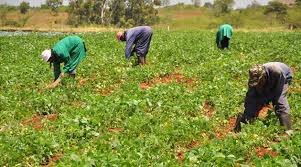
The Tomatoes Growers and Processors Association of Nigeria (TOPAN) has predicted a steady increase in the price of the produce between May and June 2026.
The Kaduna State Chairman TOPAN, Rabiu Zuntu, disclosed this in an interview recently in Lagos.
Zuntu noted that although there is no particular time for tomatoes planting season up north, seasonal weather variations can affect the production of the produce.
“Although we can plant tomatoes all-year-round, we cannot assure quality harvest all-year-round.
“Some farmers are harvesting now, while others are transplanting, and others are harvesting.
“Tomatoes are still available for sale but the price of the produce is gradually on the increase.
“Come May/June, the prices of tomatoes will be very expensive, so now is a good time to stock up the produce. There’s always a scarcity within that period.
“This is because of the nature of the weather in the north around that period, the weather is usually very hot and tomatoes cannot resist such hot temperature,” he said.
Zuntu said the price of tomatoes have started rising up in the north.
“A 50kg rafia basket of tomatoes sells from N20,000 as against N7,000 to N10,000 that was sold earlier in the year.
“While a crate of tomatoes up north is sold between N10,000 and N15,000 as against N5,000 to N6,500 sold earlier in the year.
“In most part of Kano State, where there is bumper harvest, they are rounding off their harvest. So, tomato is not that available there and most buyers have turned to where they can find it now, mostly within Kaduna State and some parts of Plateau State.
“So, that’s why the supply has decreased and the tomato supply and cost is determined by the law of demand and supply,” he said.
A 50kg basket of tomatoes in Lagos, at the moment, sells between N40,000 and N60,000 depending on the size and quality.
The Smallholder Women Farmers Organisation in Nigeria (SWOFON), Oyo State chapter, has said that the lack of irrigation facilities had become a major obstacle to dry season farming in the state.
The Chairperson of SWOFON in Oyo State, Atinuke Akinbade, said this in an interview in Ibadan on Monday.
Akinbade, who shared the experiences of women farmers in the state during the 2025 dry season, said that inadequate access to water for irrigation significantly affected the performance of many farmers during the period.
“It hindered many older farmers from participating in dry season farming and also prevented younger farmers from doing as much as they could in cultivating large acres of land,” she said.
Akinbade explained that farmers who managed to plant during the season struggled to access sufficient water to irrigate their farms, a situation worsened by the effects of climate change.
“Many farmers who depended on streams and wells to water their crops suffered major setbacks because those sources could not provide enough water for irrigation.
“Some farmers had to resort to buying water from commercial water tankers, which increased the cost of production, while at times it was even difficult to get water from the tankers,” she said.
The SWOFON chairperson warned that failure to address the problem could worsen food insecurity in the coming months.
“Even now, rainy season farming has not fully commenced because of the irregular rainfall pattern.
“This is a double burden, and if nothing is done, it may lead to serious hunger later,” she said.
Akinbade, however, acknowledged that the government had organised training for members of the association on home gardening.
She, however, said that little support was provided to address the challenges of dry season farming.
The chairman said that the home garden support package given to members consisted mainly of seedlings and one sprayer.
“They gave us two packs each of maize and pepper seeds, with six seeds in each pack, as well as one sprayer, so that we can grow food for household consumption,” she said.
Earlier, Oluwatoyin Oyedeji, SWOFON Coordinator in Oyo East, explained the severe hardship members of the organisation experienced in sourcing water for irrigation.
“Many farmers are already counting their losses because water was not available to irrigate their farms.
“Those who depended on streams and brooks were badly affected because many of them dried up, while the few that still had water had so little that farmers had to dig deeper into the ground in search of more,” Oyedeji said.
In the same vein, the Women Leader for farmers in Saki East, Musiliu Ashiru, said the absence of irrigation facilities also hampered dry season farming in her area.
According to her, many farmers still engaged in dry season farming have had to pay for water to keep their crops alive.
“Many of them buy water from the dam here to irrigate their crops. It has not been easy for them this year,” Ashiru said.




WAHO, ECOWAS Countries Move to Tackle Health Worker Shortages, Brain Drain Through Regional Retention Plan
ShareBy David Torough, Abuja The West African Health Organization (WAHO) has called for stronger regional collaboration and practical policy interventions...


Ekpo Empowers Women, Supports Hospital Patients at 50
ShareBy Tambaya Julius, Abuja The All Progressives Congress (APC) flag bearer for Karu/Gitata Constituency in the Nasarawa State House of...


Ebola: Bayelsa Activates Emergency Response
ShareFrom Mike Tayese, Yenagoa The Bayelsa state government has intensified disease surveillance and emergency preparedness following reports of an Ebola...


FG Disburses N38.93bn to Tertiary Institutions
ShareBy Tony Obiechina, Abuja The Federal Government has disbursed N38.93 billion to 166 public tertiary institutions nationwide under the Needs...


Mbah Unveils Multi-billion Naira Pharmaceutical Company in Enugu
ShareFrom Sylvia Udegbunam, Enugu Governor Peter Mbah of Enugu State has commissioned Anchorage Pharmaceutical Industries Limited, a multi-billion naira pharmaceutical...

Troops Rescue Three Kidnap Victims in Kebbi
ShareTroops of Sector 2, Operation FANSAN YAMMA, have rescued three kidnapped victims following an operation in Sakaba Local Government Area...


Troops Neutralise Six Terrorists, Arrest 11 Suspected Collaborators in Borno
ShareTroops of the Nigerian Army have neutralised six terrorists, arrested 11 suspected collaborators and received the surrender of a Jama’atu...


JPMorgan’s Entry into Nigeria: Turning Global Finance into a National Development Opportunity
ShareBy Uche Joe Uwaleke The proposed establishment of JPMorgan Merchant Bank Nigeria Limited presents Nigeria with an important opportunity to...


Commissioner Hails Akwa Ibom Governor over Peace Initiatives
ShareVeteran Sports Journalist and Commissioner for Sports Development in Akwa Ibom State, Paul Bassey, has hailed the state Governor, Pastor...

Kogi Probes Mega Electronic Store Inferno
ShareFrom Joseph Amedu, Lokoja The Kogi State Government has commenced investigation into the fire incident that gutted Pee Links, a...