
Agriculture
FG Inaugurates Agribusiness Incubation Centre, Promises Massive Food Production


From Joseph Amedu, Lokoja
The Minister of Agriculture and Food Security, Sen. Abubakar Kyari, on Saturday, inaugurated the newly built Agribusiness Incubation Centre (ABIC) in Federal University Lokoja (FUL), by his Ministry, with an assurance that the Tinubu led-administration will embark on massive food production to end hunger in Nigeria.
The inauguration was part of the activities marking the 6th and 7th Combined Convocation Ceremony of the University which took place on Saturday.
The Minister who was represented by the Permanent Secretary of the Federal Ministry of Agriculture, Dr.
Ernest Umahihe while commissioning the centre, said that the focus of the centre include; enhancing production capacity, value addition, quality control and standards, and opening access to local and international markets for our agricultural produce.The minister explained that “the incubation centre is being established as a Special Centre of Excellence to support and promote food security in Nigeria, and to support youth and women empowerment as well as promote employment generation, wealth creation and poverty reduction.
“This will be through the development of viable agribusiness and entrepreneurship skills in different Agricultural Value Chains across the country.
“The focus of the centre include; enhancing production capacity, value addition, quality control and standards, and opening access to local and international markets for our agricultural produce.
“The project is aimed at facilitating and attracting investments into the agricultural sector, ensuring survival and sustainability of agri-based businesses and increasing domestic food production and exports, ” he said.
Represented by the ministry’s permanent secretary, Dr. Ernest Umakhihe,he said that the centre would serve as practical knowledge hubs where best practical skills, processes and inputs can be acquired on particular commodities.
According to him, these centres will also produce young generation of successor farmers and agricultural entrepreneurs who can adapt new technologies and innovations across the segments of commodities enterprise/value chain of production, processing, storage and marketing.
He added: “The centre is equipped to provide business basics through comprehensive training programmes along commodity Value chains and business start-ups including access to bank loans and other funds and guarantee programmes.”
“The centre will support Market research, linkage to strategic partners, access to investors and the development of business plans and business networking etc.”
The minister expressed satisfaction and appreciation with the support and cooperation of the Vice Chancellor, the academic and management staff of FUL for the successful completion of the centre.
He also expressed the hope that the university would explore the opportunity the centre offers and make the best use of it and prove its support as a formidable institution in the concerted efforts of the government to grow the nation’s economy using the agricultural sector.
In his response, the FUL Vice Chancellor (VC), Prof. Olayemi Akinwumi thanked the federal government for setting up the centre in the institution.
Akinwumi pledged to ensure that the institution make good use of the opportunity offered to it to train the students in to becoming big time agriculturalists that would contribute to the nation’s food production and security.
Our Correspondent reports that the minster also commissioned a six kilometers road the ministry constructed from the university’s Zoo to the main gate.

Some residents in Lagos State have expressed concern over the recent surge in the price of tomatoes, forcing many households to adopt alternatives.
The residents made their views known in separate interviews on Wednesday in Lagos.
A market survey showed that a 50kg basket of tomatoes now sells between N115,000 and N125,000, compared to between N35,000 and N40,000 recorded last month.
Olachi Igwe, a resident of Ago Palace, said the scarcity and high cost of tomatoes had disrupted her household’s meal plans.
“I contacted my usual vendor, but she said tomatoes were scarce and difficult to source.
“A small bowl we used to buy for between N3,500 and N4,000 now sells for as high as N6,000 to N7,000, when available.
“For now, my family will resort to palm nut stew (ofe akwu) until prices stabilise,” she said.
Another resident, Mercy Okeleye of FESTAC, said although her family prefers fresh tomatoes, rising prices have forced her to consider cheaper options.
“I cannot do without fresh tomatoes because of the taste, but I may have to buy broken ones, popularly called ‘esha’, which are relatively cheaper.
“I do not consider tomato paste a suitable substitute because it is not purely made from tomatoes,” she said.
Also speaking, Tope Babalola from Dopemu, said she might adjust her cooking methods if prices remain high.
“I have not bought tomatoes in over a month, but if the price is still high, I will use more onions and peppers.
“I will not resort to artificial additives; I prefer natural ingredients for my meals,” she said.
Joan Ogugua, another resident, said she had already switched to tomato paste to cope with the situation.
“I asked my son to buy tomato paste for our meals. I cannot justify spending excessively on fresh tomatoes when other basic needs must be met,” she said.
Also, Oge Ugwu, a civil servant at Lekki, said she would resort to cucumber stew with the recent price hike.
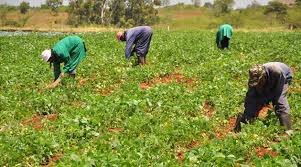
The Tomatoes Growers and Processors Association of Nigeria (TOPAN) has predicted a steady increase in the price of the produce between May and June 2026.
The Kaduna State Chairman TOPAN, Rabiu Zuntu, disclosed this in an interview recently in Lagos.
Zuntu noted that although there is no particular time for tomatoes planting season up north, seasonal weather variations can affect the production of the produce.
“Although we can plant tomatoes all-year-round, we cannot assure quality harvest all-year-round.
“Some farmers are harvesting now, while others are transplanting, and others are harvesting.
“Tomatoes are still available for sale but the price of the produce is gradually on the increase.
“Come May/June, the prices of tomatoes will be very expensive, so now is a good time to stock up the produce. There’s always a scarcity within that period.
“This is because of the nature of the weather in the north around that period, the weather is usually very hot and tomatoes cannot resist such hot temperature,” he said.
Zuntu said the price of tomatoes have started rising up in the north.
“A 50kg rafia basket of tomatoes sells from N20,000 as against N7,000 to N10,000 that was sold earlier in the year.
“While a crate of tomatoes up north is sold between N10,000 and N15,000 as against N5,000 to N6,500 sold earlier in the year.
“In most part of Kano State, where there is bumper harvest, they are rounding off their harvest. So, tomato is not that available there and most buyers have turned to where they can find it now, mostly within Kaduna State and some parts of Plateau State.
“So, that’s why the supply has decreased and the tomato supply and cost is determined by the law of demand and supply,” he said.
A 50kg basket of tomatoes in Lagos, at the moment, sells between N40,000 and N60,000 depending on the size and quality.
The Smallholder Women Farmers Organisation in Nigeria (SWOFON), Oyo State chapter, has said that the lack of irrigation facilities had become a major obstacle to dry season farming in the state.
The Chairperson of SWOFON in Oyo State, Atinuke Akinbade, said this in an interview in Ibadan on Monday.
Akinbade, who shared the experiences of women farmers in the state during the 2025 dry season, said that inadequate access to water for irrigation significantly affected the performance of many farmers during the period.
“It hindered many older farmers from participating in dry season farming and also prevented younger farmers from doing as much as they could in cultivating large acres of land,” she said.
Akinbade explained that farmers who managed to plant during the season struggled to access sufficient water to irrigate their farms, a situation worsened by the effects of climate change.
“Many farmers who depended on streams and wells to water their crops suffered major setbacks because those sources could not provide enough water for irrigation.
“Some farmers had to resort to buying water from commercial water tankers, which increased the cost of production, while at times it was even difficult to get water from the tankers,” she said.
The SWOFON chairperson warned that failure to address the problem could worsen food insecurity in the coming months.
“Even now, rainy season farming has not fully commenced because of the irregular rainfall pattern.
“This is a double burden, and if nothing is done, it may lead to serious hunger later,” she said.
Akinbade, however, acknowledged that the government had organised training for members of the association on home gardening.
She, however, said that little support was provided to address the challenges of dry season farming.
The chairman said that the home garden support package given to members consisted mainly of seedlings and one sprayer.
“They gave us two packs each of maize and pepper seeds, with six seeds in each pack, as well as one sprayer, so that we can grow food for household consumption,” she said.
Earlier, Oluwatoyin Oyedeji, SWOFON Coordinator in Oyo East, explained the severe hardship members of the organisation experienced in sourcing water for irrigation.
“Many farmers are already counting their losses because water was not available to irrigate their farms.
“Those who depended on streams and brooks were badly affected because many of them dried up, while the few that still had water had so little that farmers had to dig deeper into the ground in search of more,” Oyedeji said.
In the same vein, the Women Leader for farmers in Saki East, Musiliu Ashiru, said the absence of irrigation facilities also hampered dry season farming in her area.
According to her, many farmers still engaged in dry season farming have had to pay for water to keep their crops alive.
“Many of them buy water from the dam here to irrigate their crops. It has not been easy for them this year,” Ashiru said.


Security Guard Allegedly Abducts Employer’s Children in Minna
ShareFrom Dan Amasingha, Minna A businessman, Alhaji Danjuma, resident in the Brighter Area of Minna, Niger State, has appealed for prayers and...


Ndidi Leads Eagles for Poland Friendly
ShareSuper Eagles captain Wilfred Ndidi has joined the rest of the squad in Warsaw ahead of Wednesday’s international friendly against Poland. Ndidi and other stars such as Moses...


DR Congo Reopens Bunia Airport after 10-Day Closure amid Ebola Outbreak
ShareAuthorities in the Democratic Republic of Congo (DRC) have reopened the main airport in Ituri Province, the epicentre of the country’s ongoing Ebola outbreak, after a...

Customs, World Bank Group Strengthen Post Clearance Audit Capacity
ShareBy Tambaya Julius, Abuja The Nigeria Customs Service (NCS) has commenced a two-week Technical Assistance Mission on Post Clearance Audit (PCA) in collaboration with the World Bank Group under the...
Civilian Protection Now Central to Air Operations – CAS
ShareChief of the Air Staff (CAS), Air Marshal Sunday Aneke, said civilian protection has become a central consideration in the planning and execution of Nigerian Air Force (NAF) operations. Aneke stated...


Cardoso Re-assigns Deputy Govs, Ikeazor Takes over Policy Directorate
Share Governor of the Central Bank of Nigeria (CBN), Olayemi Cardoso, has re-assigned all four deputy governors of the institution....


Oyo Abduction: Teachers Protest Nationwide, Demand Release of Colleagues
ShareBy Laide Akinboade, Abuja and Ene Asuquo, Calabar A wave of national concern over worsening insecurity swept across Nigeria on Tuesday...


INEC Launches Probe Into Alleged Voter – data Leak
ShareBy David Torough, Abuja The Independent National Electoral Commission has commenced an investigation into allegations of unauthorised access to its...


2027: Voting Dr. Abraham, A Smart Decision For Gitata/Karu Constituency
ShareBy Tambaya Julius, Abuja Every community benefits from individuals who are willing to shoulder responsibility, listen attentively, and work consistently...


Artificial Intelligence: A Threat to Humanity or a Catalyst for Human Growth?
ShareAn Exclusive Interview with Engr. Mazen Kalassina In recent years, Artificial Intelligence has evolved from a specialized technology into a...