
NEWS
Oyo Abduction: Teachers Protest Nationwide, Demand Release of Colleagues


By Laide Akinboade, Abuja and Ene Asuquo, Calabar
A wave of national concern over worsening insecurity swept across Nigeria on Tuesday as teachers under the Nigeria Union of Teachers (NUT), religious leaders and community stakeholders mounted pressure on government authorities to secure the release of abducted teachers and pupils and take decisive action against kidnappers, bandits and terrorists.
The protests, which took place simultaneously across several states including Edo, Abuja, Benue, Ondo, Cross River and Plateau, were triggered by the abduction of teachers and schoolchildren in Oyo and Borno states, as well as the killing of a teacher during a recent attack in Oriire Local Government Area of Oyo State.
Thousands of teachers marched peacefully through major cities, carrying placards and demanding urgent government intervention to rescue their abducted colleagues and students, while condemning what they described as growing insecurity within the nation’s schools.
In Benin City, Edo State NUT Chairman, Lucky Imaruagheru, lamented that some victims had remained in captivity for more than two weeks, accusing authorities of failing to respond decisively to their plight.
The nationwide demonstrations followed reports that families of kidnapped pupils and teachers in Oyo State rejected rice and cash brought by government officials, insisting that only the safe return of their loved ones would be acceptable.
The Baale of Yawota, Emmanuel Alade, disclosed that parents turned down relief materials offered by government representatives, maintaining that rescue efforts should take precedence over humanitarian assistance.
According to community accounts, armed bandits stormed communities in Oriire Local Government Area, killing a teacher and abducting dozens of pupils and school personnel amid sporadic gunfire, deepening fears among residents and raising concerns over security in vulnerable rural communities.
Despite assurances from Governor Seyi Makinde and a high-powered federal delegation led by Chief of Staff to the President, Femi Gbajabiamila, that all available resources were being deployed to secure the victims’ release, anxiety remains high among affected families.
The protests also reignited broader concerns about the safety of schools nationwide, with teachers warning that continued attacks could undermine education and discourage learning.
NUT leaders across the country called on federal and state governments to strengthen school security through improved surveillance, perimeter fencing, deployment of trained security personnel and enhanced protection for teachers and students.
Adding to the growing calls for urgent action, the Christian Association of Nigeria (CAN) urged the Federal Government to declare a state of emergency on security.
Speaking after the association’s National Church Denominational Leaders Summit in Abuja, CAN President, Archbishop Daniel Okoh, said the security situation had deteriorated to a level requiring extraordinary measures, stressing that protecting citizens remained the government’s primary constitutional responsibility.
He also backed international cooperation to combat terrorism and warned that insecurity, once concentrated in parts of Northern Nigeria, was spreading to other regions.
Similarly, the General Overseer of the Redeemed Christian Church of God (RCCG), Pastor Enoch Adeboye, called for stronger accountability in the nation’s security architecture.
The cleric urged the Federal Government to give security chiefs a 90-day deadline to eliminate terrorists or resign, while also calling for the arrest and prosecution of those financing criminal groups.
Adeboye maintained that ending insecurity would require not only confronting armed groups but also dismantling the networks that sustain them.
The developments reflect mounting public frustration over persistent kidnappings, terrorism and attacks on schools, as pressure grows on authorities to restore security and protect lives across the country.
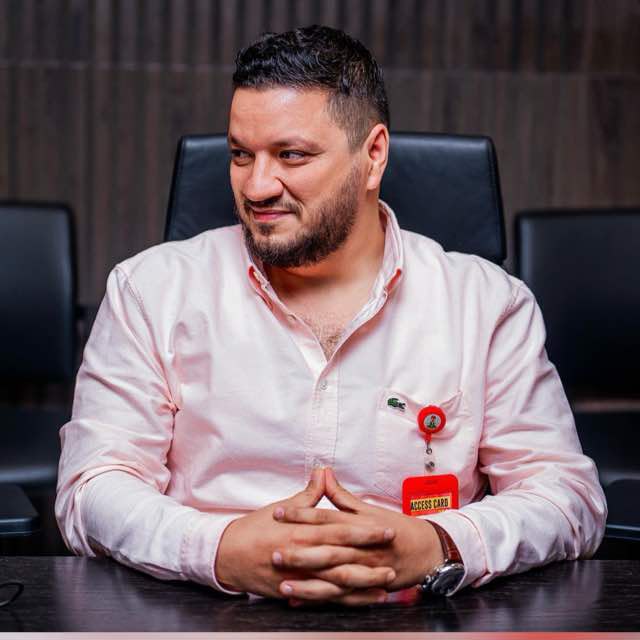
An Exclusive Interview with Engr. Mazen Kalassina
In recent years, Artificial Intelligence has evolved from a specialized technology into a force that is transforming industries, economies, and everyday life.
As AI continues to advance at an unprecedented pace, debates surrounding its impact on jobs, education, business, and society have intensified.While some view AI as a threat capable of disrupting entire professions, others believe it represents one of the greatest opportunities humanity has ever encountered.
To gain a different perspective on this rapidly evolving technology, we spoke with Engr.
Mazen Kalassina the managing director of ARKAN BUILDERS LIMITED and the and chief operating officier of ABA COMMERCIAL SMART CITY advocate for the practical integration of Artificial Intelligence in engineering, project management, and business operations.In this exclusive interview, Kalassina shares his thoughts on the future of AI, its opportunities, its risks, and what it means for humanity.
Artificial Intelligence is advancing at an extraordinary pace, and many people are concerned about its risks. Do you believe these concerns are justified?
Engr. Mazen Kalassina:
Concern is natural whenever humanity faces a major transformation.
People feared machines during the Industrial Revolution.
They feared computers when they entered workplaces.
They feared the Internet when it began connecting the world.
Today, we are witnessing a similar reaction toward Artificial Intelligence.
However, history teaches us that technology itself is rarely the problem. The real challenge has always been humanity’s willingness to adapt, learn, and evolve alongside it.
So you do not see Artificial Intelligence as a threat?
Engr. Mazen Kalassina:
I see it as a challenge more than a threat.
Artificial Intelligence is asking humanity an important question:
Are we willing to evolve as quickly as the world around us is evolving?
In my view, AI is not an enemy of humanity. It is a mirror reflecting both our strengths and our weaknesses. It challenges us to learn more, think deeper, and continuously improve ourselves.
Many people fear losing their jobs because of AI. What is your perspective?
Engr. Mazen Kalassina:
Certain jobs will undoubtedly change, just as they did during every previous technological revolution.
However, I do not believe AI will replace people who continue to develop their skills and adapt to change.
The future belongs to those who embrace learning, innovation, and lifelong improvement.
Technology does not eliminate human value; it redefines the skills that create value.
How do you see AI affecting developing nations such as Nigeria?
Engr. Mazen Kalassina:
I see tremendous opportunity.
Nigeria has one of the youngest and most energetic populations in the world. If Artificial Intelligence is integrated effectively into education, engineering, agriculture, healthcare, and public services, it can accelerate development and unlock enormous economic potential.
We should not view AI as a threat arriving from elsewhere.
We should view it as a tool that can help us build a better future.
What message would you like to share with young people?
Engr. Mazen Kalassina:
My message is simple:
Do not fear Artificial Intelligence.
Learn it. Use it. Master it.
The world is changing rapidly, and those who choose to learn today will be better prepared for tomorrow.
Knowledge is becoming more accessible than ever before, and opportunities are expanding for those willing to embrace change.
What do you consider the greatest risk in the age of Artificial Intelligence?
Engr. Mazen Kalassina:
My answer may surprise some people.
I do not believe the greatest risk is Artificial Intelligence itself.
The greatest risk is human stagnation.
If technology continues advancing every day while people refuse to learn, adapt, and grow, a gap will naturally emerge.
The problem is not that machines are evolving too quickly.
The problem is that some people are evolving too slowly.
Final Thoughts
Engr. Mazen Kalassina:
“I do not see Artificial Intelligence as a competitor to humanity. I see it as an invitation to grow.
Perhaps the greatest achievement of AI is not that it has become more intelligent, but that it has encouraged millions of people to rediscover their own potential and rethink what they are capable of becoming.
The future will not belong to machines alone, nor to humans alone.
It will belong to those who learn how to combine human wisdom with technological capability to become better versions of themselves.”
NEWS
Ooni Hails Adeniyi’s Leadership, Says Tinubu’s Commendation Reflects Confidence in Customs Boss
By Tambaya Julius, Abuja
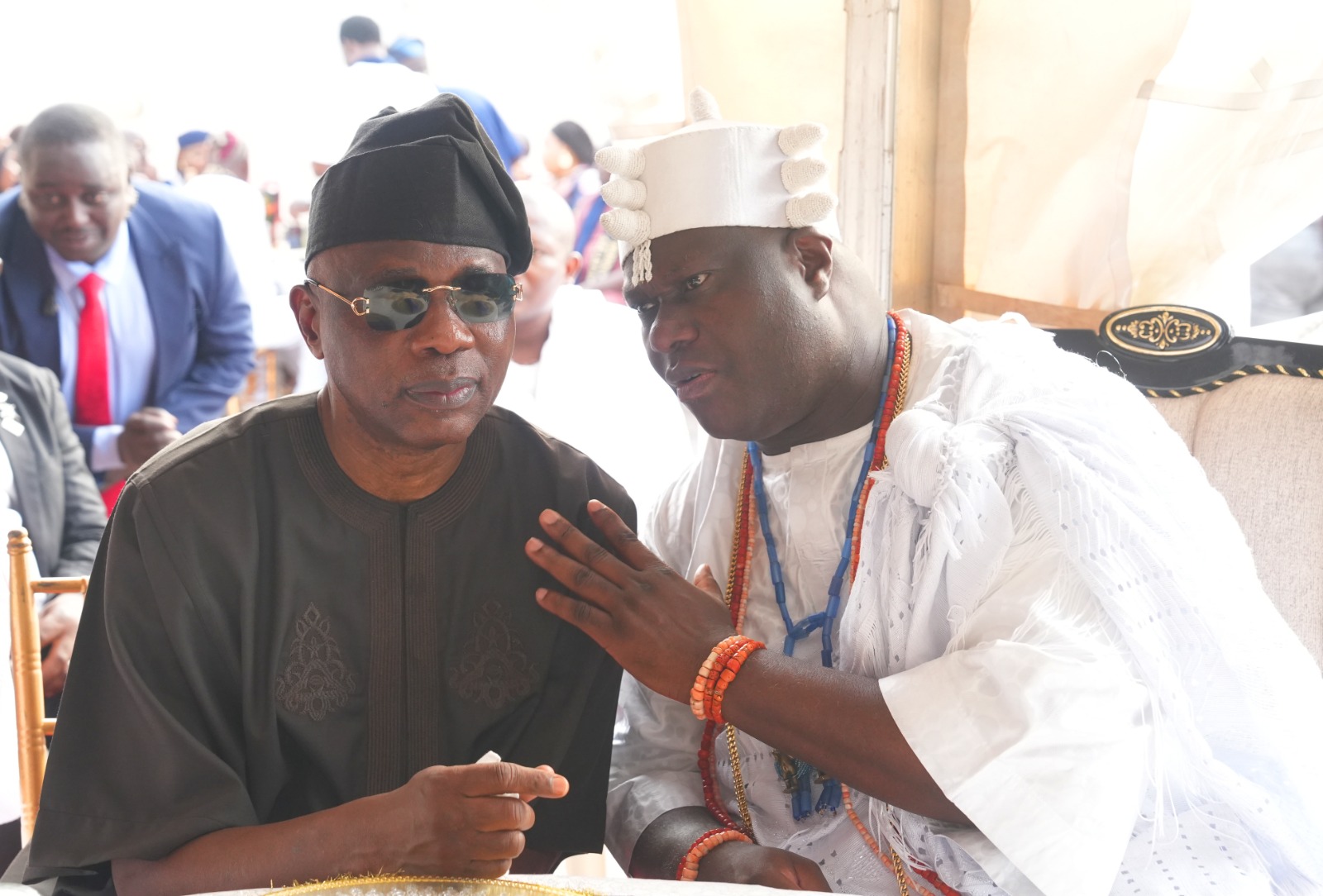
The Ooni of Ife, Oba Adeyeye Ogunwusi II, has described President Bola Ahmed Tinubu’s public commendation of the Comptroller-General of Customs, Adewale Adeniyi, as a clear indication of the confidence and trust reposed in the Customs chief by the Federal Government.
The revered monarch said Adeniyi’s performance at the helm of the Nigeria Customs Service, coupled with his contributions to community development, has brought pride to both the ancient Ife Kingdom and the Modakeke community.
Oba Ogunwusi made the remarks during an annual Eid-el-Kabir gathering hosted by the Comptroller-General at his residence in Modakeke.
The event drew an array of dignitaries, including traditional rulers, political leaders, senior Customs officers, community stakeholders, family members, friends, and associates.
Speaking at the gathering, the Ooni noted that President Tinubu’s public expression of satisfaction with Adeniyi’s performance was significant and underscored the Customs chief’s leadership qualities and achievements.
“We are very proud of him and the work he is doing. When Mr President publicly expressed satisfaction with his performance, it was not a casual statement. It reflects trust in his capacity and the results he is delivering.
What he is doing in the Customs Service and in the community shows that he is a unifier,” the monarch said.
Reaffirming the support of the Ife Kingdom for the Customs boss, Oba Ogunwusi added that Adeniyi’s ability to bring people together exemplifies true leadership.
“He brings people together, and that is what leadership is about. We will continue to stand by him and pray for him,” he stated.
In his remarks, Adeniyi expressed appreciation to the Ooni, community leaders, family members, friends, associates, and other well-wishers for their continued support and goodwill.
He described Eid-el-Kabir as a period that highlights the values of sacrifice, gratitude, obedience, and service to humanity, stressing that such occasions provide an opportunity to strengthen relationships and reflect on the collective responsibility of nation-building.
According to the Customs chief, the Nigeria Customs Service has continued to make notable strides in revenue generation, trade facilitation, anti-smuggling operations, technological innovation, and corporate social responsibility initiatives in line with the economic objectives of the Federal Government.
Adeniyi said the Service remains committed to supporting President Tinubu’s Renewed Hope Agenda through reforms aimed at facilitating legitimate trade, enhancing national security, improving compliance, and creating opportunities for economic growth.
He further disclosed that the Service has expanded community-focused interventions across the country, including educational support programmes, healthcare initiatives, and other projects designed to improve the welfare of Nigerians.
The Comptroller-General assured stakeholders that the Service would continue to pursue reforms that strengthen its operations and deliver greater value to the nation while upholding professionalism, transparency, and excellence in service delivery.
He also expressed gratitude to President Tinubu for the opportunity to serve the country and reaffirmed the commitment of the Nigeria Customs Service to supporting government policies aimed at driving economic prosperity and national development.

Health authorities in the Democratic Republic of Congo are celebrating after five patients, who had Ebola and now recovered, were allowed to leave the hospital.
The current outbreak is suspected to have killed almost 250 people.
But those infected can get better and officials stress that people should seek medical help if they believe they have contracted the virus.On Sunday, there was a ceremony for a group of four nurses who were discharged from a hospital in Bunia, the provincial capital of Ituri, the epicentre of the outbreak.
“We were really demoralised because we knew that at some point… we were going to die. That was it… I’m telling you, if you have never been isolated, you will not know that it’s not easy,” Nurse Etienne Ezo told the Reuters news agency as he reflected on his experience.
The first survivor, a laboratory worker, to have recovered left hospital last week.
Health workers are on the frontline in the battle against the spread of the virus and are often the most at risk.
“This encouraging milestone bears witness to the effectiveness of field interventions: early detection, medical care, contact tracing and community engagement,” DR Congo’s Institute of Public Health wrote on social media.
Its director, Dr. Mwamba Kazadi, described the recoveries as a victory worth celebrating, adding that early detection and strong care make a difference.
Tedros has called on communities to work with medical staff after some residents attacked health centres over strict burial rules. The bodies of those suspected of having died of Ebola are not allowed to be handled by grieving relatives, regulations which clash with local traditions.
In a joint statement with the Congolese government on Sunday, he said local communities are “at the heart of the solution” and that “success” in their response depends on their trust and engagement.
“Persistent challenges include early detection and isolation of cases, contact tracing, safe and dignified burials, robust infection prevention and control in health facilities, and strong community awareness.
“The Government and WHO call on all communities to continue adopting protective behaviours, including regular hand hygiene, early care seeking in health facilities, and sharing accurate information.”
There are now more than 1,000 suspected Ebola cases in the DR Congo, and at least 246 deaths. Neighbouring Uganda has reported nine confirmed cases and one death.
But in some affected areas, there is a sense of normality. In Bunia, schools and markets are open as people continue to go about their daily activities.
The current outbreak – the 17th in DR Cngo’s history – is caused by the Bundibugyo species of Ebola, which has no approved vaccines, though some are being worked on now.
While cases are concentrated in DR Congo’s Ituri, North and South Kivu provinces, and some in Uganda’s capital Kampala, people have also been tested outside of Africa.
Health officials in Brazil said on Saturday that they were investigating two suspected Ebola cases in São Paulo state.
Meanwhile, protests have erupted in the Kenyan town of Nanyuki over US plans to construct an Ebola quarantine facility for American citizens at an air base.
Residents marching through the streets say the facility may expose local people to infection and an outbreak of the virus. There have been no recorded cases of Ebola in the country.




Oyo Abduction: Teachers Protest Nationwide, Demand Release of Colleagues
ShareBy Laide Akinboade, Abuja and Ene Asuquo, Calabar A wave of national concern over worsening insecurity swept across Nigeria on Tuesday...


INEC Launches Probe Into Alleged Voter – data Leak
ShareBy David Torough, Abuja The Independent National Electoral Commission has commenced an investigation into allegations of unauthorised access to its...


2027: Voting Dr. Abraham, A Smart Decision For Gitata/Karu Constituency
ShareBy Tambaya Julius, Abuja Every community benefits from individuals who are willing to shoulder responsibility, listen attentively, and work consistently...


Artificial Intelligence: A Threat to Humanity or a Catalyst for Human Growth?
ShareAn Exclusive Interview with Engr. Mazen Kalassina In recent years, Artificial Intelligence has evolved from a specialized technology into a...

Ooni Hails Adeniyi’s Leadership, Says Tinubu’s Commendation Reflects Confidence in Customs Boss
ShareBy Tambaya Julius, Abuja The Ooni of Ife, Oba Adeyeye Ogunwusi II, has described President Bola Ahmed Tinubu’s public commendation...
Rainstorm Destroys Houses, Health Facilities, Others in Plateau
ShareMore than 100 houses were destroyed and scores of families displaced after a devastating rainstorm ravaged Tom Gangare community in Sopp Ward of Riyom...


Falcons Open Camp for Senegal Double-header
ShareSuper Falcons players are expected to start arriving in camp in Ikenne, Ogun State, ahead of their upcoming pre-WAFCON double-header friendlies against Senegal. The Nigeria Football...

Five Patients Recover from Ebola in DR Congo
ShareHealth authorities in the Democratic Republic of Congo are celebrating after five patients, who had Ebola and now recovered, were allowed to leave the hospital. The...


Multichoice Announces Premiere Date for BBNaija Season 9 Reunion
ShareMultichoice Nigeria, organiser of Big Brother Naija reality TV show has officially announced June 23 for the premiere of its highly anticipated season 9 edition reunion show titled ‘No Loose Guard’...


Wike Begs Abuja Residents for Cattle Roaming FCT Major Roads
ShareBy Laide Akinboade Abuja Minister of the Federal Capital Territory (FCT), Nyesom Wike on Monday took responsibility for the continued presence of cattle on major roads and...