
NEWS
FG Invests Over $450m in CNG – PCNGi

The Presidential Compressed Natural Gas Initiative (PCNGi) on Monday said that it had invested more than 450 million U.S Dollars in the Compressed Natural Gas (CNG) value chain.Mr Michael Oluwagbemi, Project Director and Chief Executive Officer (CEO), PCNGi, disclosed this during the 9th Edition of the Nigeria Energy Forum (NEF2024) Day 2, Virtual Event in Lagos.
The theme of the 9th Edition of NEF is: “Energising Sustainable Industrialisation”. According to the PCNGi CEO, the amount goes into things like mother stations, daughter stations and refueling stations as well as conversion centres which are starting to spring up across the nation.Oluwagbemi, who was represented by Mr Tosin Coker, the Head of Commercial, PCNGi, said the initiative had successfully converted more than 10,000 vehicles from petrol to CNG.“By 2027, the initiative will have converted more than one million vehicles using petrol to CNG,” he said.On incidents of explosion of vehicles using CNG, the CEO assured Nigerians that it had taken precautionary measures with different agencies of government to ensure safety.Mrs Ibironke Olubamise, National Coordinator of the GEF Small Grants Programme (SGP), managed by UNDP, said the SGP was investing in youth energy innovation for economic growth and environmental sustainability.Dr Daniel Adeuyi, NEF Group Chairman, said “the event featured three super sessions on Energising Industrial Revolution, Community Climate Action by GEF-SGP UNDP and Clean Energy Innovations.“The sessions are to share lessons learnt from real life projects and build capacity of young entrepreneurs and cross-industry professionals.”Mr Joseph Osanipin, the Director General, National Automotive Design and Development Council (NADDC), said that the council had trained more than 4,000 auto technicians on how to convert petrol vehicles to CNG.He said the council had started campaigns to sensitise Nigerians on the advantages of using CNG to power their vehicles.“CNG can guarantee cleaner environment, it is cheaper and affordable,” he said.Mr Oluwatobi Ajayi, the Chairman and Managing Director, Nord Automobile Ltd., said the company was established to tackle the growing demand for vehicles in Africa and reduce import dependency.He said that because of the Federal Government’s CNG initiative, the company had incorporated it into their vehicle production to meet up with the government policy.Dr Armstrong Tankan, the Managing Director and Chief Executive Officer, Ministry of Finance Incorporated (MOFI), said that MOFI was set up in 1959 as the statutory vehicle to hold all the assets owned by the federal government.“Today, we’ve been able to identify the assets the federal government owns and we are trying to track them.‘We actually do have assets, not just locally but globally as well and it’s very important that we establish visibility over what the federal government owns before we can start talking about managing them.“So, we want to try to minimise the waste, minimise the overlaps and help to improve output,” he said.Engr. Adekunle Makinde, NEF Co-chair, said, “the 9th Africa Energy Innovation Challenge (AEIC) attracted over 140 entries from 25 different countries across Africa, with over 99% of entries as first-time participants.“The 2024 AEIC has GEF-SGP UNDP as principal supporter, with Afrexim Bank and Oando Clean Energy Ltd. as co-supporters.“The top three winners of the youth innovation contest were awarded grant prizes to upscale and deploy the innovative energy solutions across real life applications.“The first prize of N2 million was awarded to solar-powered dehydrators for agro-processing.“The second prize of N1.5 million was awarded to irrigation loop by Thinpower, while the third prize of N1 million went to solar powered irrigation and cold storage for farmers,” Makinde said. (NAN)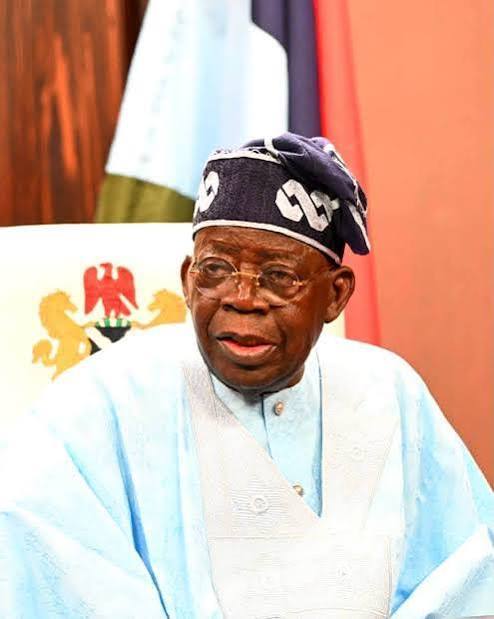
By Reuben Abati
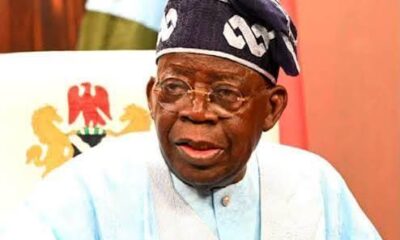
Exactly a week ago, President Bola Ahmed Tinubu, now jokingly renamed a citizen of Kano with a Northern-sounding name Ashiru Bala Ahmadu Tanimu, whatever that means by former Governor Abdullahi Danguje, returned to Nigeria after a controversial 30-day so-called working leave in Europe.
His 30-day working leave was in every sense a violation of the 1999 Constitution, the idea of “a working leave” in itself being a misnomer, the failure to obey the provisions of Sections 145 (1) and (2) an affront, and historically a reminder of similar acts of contempt under the Umar Yar’Adua and Buhari administrations. The bigger scandal is that the President returned and there has been no attempt either on his part or his government, to show remorse or a capacity to learn any lessons from their acts of omission.When the President arrived at the Murtala Muhammad International Airport last Tuesday, a large crowd of political bootlickers and fortune seekers were on hand to welcome him, and in a moment of excitement the President remarked that whatever had been said in his absence was nothing more than mere rumour which should be expected during a political season, but he was back, “ready to kick, ready to work”, and “nothing was wrong”.
He may have been referring to speculations about the state of his health but he was also dismissing concerns about his prolonged absence and accustomed non-appearance at the United Nations General Assembly (UNGA), which fell within the same period. He was literally telling the people, signature style: “e lo fo’kan bale” (don’t worry, everything is under control).
Since then, the President has been kicking, and as predicted, Nigerians have behaved as if their concerns no longer matter, kept aside until the President travels again, and the people begin, all over again to quote the Constitution, the most abused totem in Nigeria’s democracy.
A day after his arrival at his private Ikoyi residence, the President went to the Wole Soyinka Centre for Arts and Culture (formerly known as Nigeria’s National Theatre) to watch the premiere of a documentary on the late Chief MKO Abiola, martyr of the June 12 election struggle.
The movie curated by Ose Oyamendan, ex-Weekend Concord, ex-journalist turned American-based movie-maker is a tribute to the art of remembering, memory as culture and the signification of history. Tinubu’s endorsement and presence evoked afresh the connections between the past and the present at both personal and political levels. MKO Abiola was the other Yoruba man who wanted to be President who was sabotaged, before him was Chief Obafemi Awolowo who was similarly denied, and Tinubu is the kinsman who fulfilled the ambition.
MKO Abiola preached a message of hope, Hope ’93, and Farewell To Poverty. Tinubu is preaching a message of Renewed Hope and Prosperity. His identification with MKO Abiola’s symbolism, in the city of Lagos, before he embarks on a nationwide campaign for his bid for a second term in office is perhaps a fitting invocation and libation to an ancestral spirit that preceded his dance in the complex arena of Nigerian presidential politics.
On Thursday, 1 October, Tinubu at 7 a.m., addressed Nigerians on the occasion of the country’s 66th Independence Anniversary, a customary duty that he needed to perform. It was a well-written, stylishly toned speech, which did the needful, but avoided any drama or long promises. In other words, it was carefully measured.
The president paid tribute to the hopes and aspirations, the background of the country’s independence and “the indomitable spirit” of the people which has kept us together through the thick and thin of “military rule, economic crises, insecurity, and political upheaval”.
He saluted the people’s belief that the country will be better, their enduring faith, the farmer, the trader, the teacher, men and women of the Armed Forces and Security Services.
He spoke about the difficult circumstances in which he met Nigeria when he assumed office in 2023: a sick patient in a diseased state, cancer to be specific which was being treated with morphine and prayers for a miracle. “When this administration assumed office, we resolved to do things differently. We chose to exercise the cancer… Our reforms did not create weaknesses in our economy. They confronted them”, he said.
The President proceeded to list the achievements of his administration in three and a half years, which he said “are not idle claims.” but concrete achievements which have taken Nigeria to “a turning point”. He then promised to take Nigeria from the age of reforms to the “age of prosperity.” He intoned: “We have passed through our own Red Sea…The Promised Land before us is a Nigeria of abundance and opportunity; a nation where prosperity is broadly shared… Our destination is in sight. Our foundations are strong. Our direction is clear…”
Thus, the President spoke in broad, exhortatory terms. There were no specifics, just a reaffirmation of commitment to the Nigerian project. He made no mention of the challenge of insecurity in the land and what he intends to do differently. He spoke about the rising cost of living, and the need to replace poverty with prosperity.
The broadcast studiously avoided the all-important subject of the forthcoming 2027 general elections which would be conducted by the Tinubu administration. Whoever wrote that speech did not consider these or any other concrete policy declarations important enough, not even least of all, the nationwide reduction in transport fares through the deployment of CNG and EV vehicles which the President had earlier directed should come into effect on 1 October.
The speech fed us with an additional dosage of hope and promises. We got a good rhetorical, enjoyable flow, without much substance. Those who expected the President to say more were disappointed. But no one could fault the President’s recognition of “the indomitable spirit” of the Nigerian people, also praised by his spouse, the First Lady, Chief Oluremi Tinubu in a statement as the journey of “a resilient nation”, and by the Chief Justice of the Nation, Justice Kudirat Kekere-Ekun as “the Nigerian spirit” which “has remained a source of strength.”
Like Mrs Tinubu and the CJN, other leaders, especially state Governors, preached the message of unity, love, accountability, patriotism, progress, optimism, peace, and responsible citizenship. This was reflected in the sentiments expressed by the majority of Nigerians at home and the diaspora.
At home, many of us wore the green and white national colours, concert parties were staged, a Chaos in the Ring celebrity boxing event was organised by Balmoral Promotions at the Federal Palace Hotel at which Carter Efe knocked out Speed “Akpi” Darlington and Phyna (Josephina Otabor) pushed breathless, exhausted Nkechi Blessing to the canvas. In the United Kingdom, the Nigeria-Britain Association, the Nigeria High Commission, and First Bank UK held special cultural events. In New York, United States, the Nigerian community held a cultural parade which was attended by the Mayor of New York City, the Uganda-born Zohran Mamdani. Across Canada and Asia, Nigerians celebrated – further underscoring the point made in this column last week, about the capacity of the average Nigerian to forever forage for faith, and embrace hope in the midst of life’s toughest challenges.
But politics, and this is a political season, is also Nigeria’s problem. We play politics with everything. This is a country blessed with great potential and human assets, but when it comes to politics, Nigerians do not know where to draw the line. We do not have thresholds of caution when restraint and modesty are required. We love the game of one-upmanship.
Politics for the average Nigerian office-seeker means selfish interest and not what is best for the nation. While Nigerians celebrated, last weekend, opposition political leaders chose to focus on the negative. They dismissed Tinubu’s reforms as ineffectual, and the promise of prosperity as delusional. Presidential candidate of the African Democratic Congress (ADC), Atiku Abubakar who held a parallel broadcast asked: “Bola, where is this prosperity?” He in fact kept calling the president by his first name, to show his disregard for the incumbent, which was unnecessary. He condemned the ruling government’s removal of petrol subsidies.
The Makinde/Daura leadership of the Allied Peoples Movement (APM) dismissed the President’s speech as a “rhetorical exercise, bereft of solutions”. Ini Ememobong, spokesperson of the Tanimu Turaki-led branch of the People’s Democratic Party (PDP) described the Tinubu administration as the Pharaoh chasing Nigerians, while Nigerians are in the Red Sea of “economic pain”. Atiku says “Bola Tinubu calls it prosperity but Nigerians can hardly afford to live”, a sentiment echoed by other opposition leaders including Mr Peter Obi, presidential candidate of the Nigeria Democratic Congress (NDC), who focused on what he called “worsening poverty, insecurity, unemployment, hunger and other socio-economic challenges facing Nigerians.”
The Nigeria Labour Congress (NLC) through its president, Comrade Joe Ajaero, also complained that Tinubu’s declared “age of prosperity” is yet to reach Nigerian workers. The NLC therefore demanded: a new national minimum wage for workers without further delay, reduction in the pump price of petrol, and transportation costs, as well as the cost of governance, tax relief, and improvement in the living conditions of workers.
On Friday, 2 October, public sector workers under the auspices of the Joint National Public Service Negotiating Council (JNPSNC) embarked on a three-day nationwide warning strike. They want fuel price to be reduced to N500 per litre, salary adjustments and payment of allowances, and action on rising living costs, inflation and electricity tariffs. Thus, President Tinubu may have had a four-week leave from Nigeria’s pressing problems, amid the objections of the opposition, he has now returned to meet the same problems in full force.
A President going on leave does not necessarily eliminate a country’s problems, he will return to carry the same load that he abandoned. Tinubu says he is ready to kick, and ready to work. He will have a lot to worry about as he kicks and works.
Since he returned, the London-based The Economist newspaper has published that despite the proclaimed hardship in Nigeria, growing public discontent and the best efforts of the opposition, he may still likely win the presidential election in 2027 considering the power of incumbency, the likely poor voter turnout, the inability of the opposition parties to forge a coalition, the acceptance of a Muslim-Muslim ticket, and superior financial capacity.
The ADC has pooh-poohed the story, stating that “a forecast is not a verdict” and that in any case, the projection is not based on any scientific poll. Tinubu has also been received by familiar patterns. Prospective NYSC candidates, about 20 of them, have been kidnapped on their way to NYSC Orientation camps in Abia and Akwa Ibom states. A military aircraft, NGR 931, has also crashed near the Naval Airbase in Igbokoda, Ondo State, resulting in the death of all the 32 persons on board.
There have also been worries and speculations about the Presidents’ health, with the opposition watching his every step, looking for ready stuff for propaganda.
Yesterday, he returned to Abuja, after spending six days in Lagos, and five weeks out of Abuja. As he settles down again in his office, one of the first things he needs to do, is to put his party, the APC in order, call his associates to order, restore order in the polity, and not be deceived into thinking that all is well, especially as the Senate President has promised him that the National Assembly will continue to be “worthy partners” of the Federal Executive.
Senate President Godswill Akpabio and his colleagues may make a joke out of the recent violation of the Constitution, thinking that their work is a joke, but the President needs to be reminded that even if the National Assembly forgets, the people will remember his recent abuse of the Constitution.
In Edo State, the APC Party Chairman, Jarret Tenebe has been shown in a video threatening that “AK-47 fire” would be the most appropriate response to anybody who votes or works against the APC. He also warned Atiku and Peter Obi or any other political leader not to take the risk of coming to Edo State for campaigns, without the governor’s permission or else. Or else, what? He and his likes must be restrained.
In parts of the country, the security agencies are also said to be harassing those who wear “Tinubu Must Go” T-shirts. Nobody should be arrested or detained just because they are anti-Tinubu. Democracy is about choice and other basic freedoms.
The President must come out publicly and decry violence. Festus Keyamo, the Minister of Aviation and Aerospace Development has provided some balance by indicating that opposition party members have also been aggressive towards the ruling APC party, pulling down and defacing posters of its members, and pretending to be the ones under siege. It is unfortunate that politicians are not respecting the terms of the Peace Accord that they signed.
The first task before the President is to champion the cause of peace. His own ambition and that of others, To Whom It May Concern, is not worth the threats of violence and mayhem overtaking the on-going 2027 process. Tinubu must lead. Leaders of the opposition parties must also restrain their supporters. Politics must not become war. Nigeria must not implode because of the 2027 elections. Politicians should be made to remember that when the elections are over, won and lost, there must still be a country to govern.
Reuben Abati, a former presidential spokesperson, writes from Lagos.
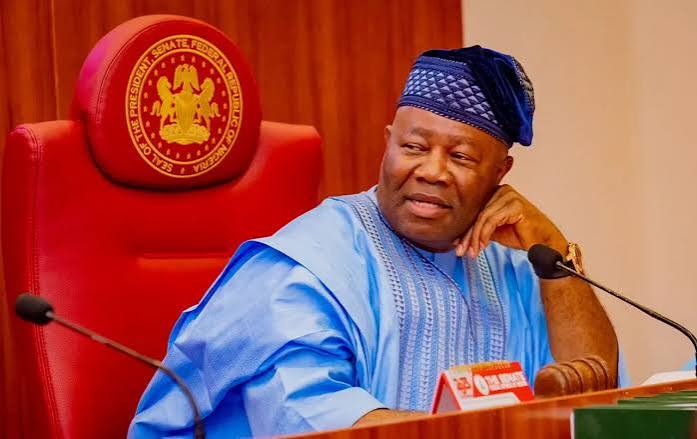
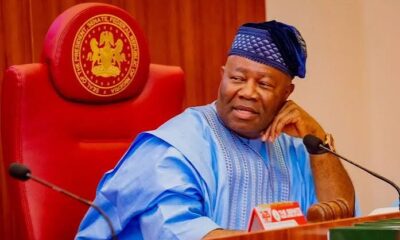
The National Assembly remains the bridge through which the hopes and aspirations of ordinary Nigerians must translate into government decisions, Senate President Godswill Akpabio has said, stressing that democracy can only endure when citizens feel heard, included and confident in their future.
Akpabio said this on Tuesday while addressing the 153rd Assembly of the Inter-Parliamentary Union in Arusha, Tanzania, where he identified inclusion, trust and opportunity as the pillars of a democracy that delivers tangible benefits to citizens.
The Senate President, who is also Chairman of Nigeria’s National Assembly and head of the Nigerian delegation to the global parliamentary gathering, said the success of democracy should not be judged by elections or economic statistics alone, but by its impact on the daily lives of Nigerians.
Akpabio said inclusion, trust and opportunity “are the foundations of a democracy that gives every citizen a voice, every community a place and every generation a reason to hope.”
In his address titled “Inclusion, Trust and Opportunity,” the former Akwa Ibom governor stated that democracy meant more than elections, while development meant more than impressive statistics.
He said, “If progress is not seen in our people, our work is not finished. Trust is the invisible currency of democracy. We cannot command it, demand it or legislate it into existence. We earn it through fairness, transparency and accountability.
Akpabio said Nigeria’s diversity made inclusion both a democratic necessity and a national responsibility, insisting that no citizen or community should be excluded from the country’s common future.
He told the international parliamentary forum that the administration of President Bola Tinubu, working with the 10th National Assembly, was pursuing reforms designed to widen participation and expand opportunities for Nigerians.
Akpabio said expanded regional development institutions were aimed at bringing development closer to communities and responding more directly to their needs.
He also said tax reforms were being pursued to make the system fairer, reduce the burden on low-income earners and small businesses, and strengthen enterprise.
On education, the Senate President highlighted the Nigerian Education Loan Fund as an intervention aimed at ensuring that financial circumstances did not determine the future of young Nigerians.
“Distinguished colleagues, let this Assembly renew our resolve to build Parliaments that listen, governments that serve and institutions that keep faith with their people.
“Let us turn inclusion into participation, trust into partnership and opportunity into shared prosperity. The smallest village must have a stake in the greatest national ambition. When every citizen can say, “I belong, I am heard, and my future matters,” democracy becomes a promise fulfilled.
“That is the future Nigeria seeks. That is the future we must build together. I thank you,” Akpabio said.
By Laide Akinboade Abuja
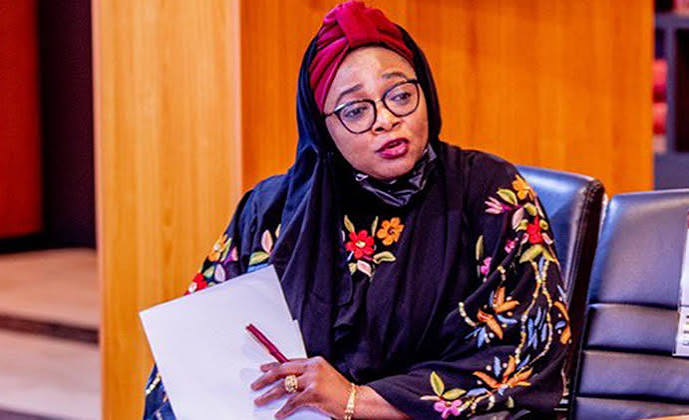
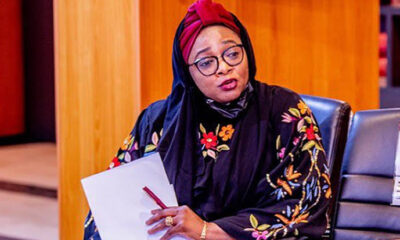
The Minister of Women Affairs and Social Development, Imaan Suleiman-Ibrahim, on Tuesday, tasked Nigerian women to ensure they equip themselves because this would bridge barriers in economic, institutional, social and equal participation in decision-making.
Suleiman-Ibrahim, stated this in Abuja, at the public presentation of a book titled “Rising Beyond Borders” authored by Dame Esther Uduehi, Founder and BOT Chairperson, League of Women Voters of Nigeria (NILOWV).
She praised Nigerian women resilience in business, agriculture, education, public service, politics, science, the professions and community leadership.
The Women Affairs Minister reiterated the commitment of the Federal Government to building policies, institutions and programmes that do not merely speak about women’s advancement, but create practical pathways through which women can acquire skills, access opportunities, build livelihoods, exercise their rights and participate meaningfully in shaping the future of Nigeria.
The Minister said, “The story of Nigerian women is, in many ways, a story of rising beyond borders. Across our communities, women have continuously demonstrated resilience in business, agriculture, education, public service, politics, science, the professions and community leadership. Yet we also recognise that too many barriers remain; economic barriers, institutional barriers, social barriers and barriers to equal participation in decision-making. This is precisely why the mandate of the Federal Ministry of Women Affairs and Social Development is so important.
“We are committed to building policies, institutions and programmes that do not merely speak about women’s advancement, but create practical pathways through which women can acquire skills, access opportunities, build livelihoods, exercise their rights and participate meaningfully in shaping the future of Nigeria”.
She said, 10 million women represent mothers, daughters, entrepreneurs, farmers, professionals, artisans, students, traders, community leaders and caregivers spread across Nigeria.
She stressed that the author used her leadership opportunity not only to occupy positions, but she understands the responsibility that comes with influence and using that influence to widen the space for others.
She therefore urged Nigerian Women to rise beyond the borders that divide us without surrendering the diversity that makes Nigeria strong.
The Minister appealed to legislators, policymakers, development partners, civil society organisations, private-sector leaders and women’s movements, to have renewed commitment of creating an environment in which women can participate fully in Nigeria’s democratic and economic life.
In her address, the President of the League of Women Voters of Nigeria, Irene Awunah Ikyegh, called for action on the Special Skills Bill for Women, saying the proposed legislation was intended to create additional opportunities for women and address persistent gender imbalance in representation.
Awunah expressed concern that the bill had yet to be brought forward for voting and appealed to stakeholders to sustain advocacy for its consideration.
She said the women’s movement must continue to pursue reforms that would open more opportunities for women in education, leadership and public life.
According to her, the presentation of Rising Beyond Borders marked the opening chapter of NILOWV’s 30th anniversary celebration and provided an opportunity to preserve the history of the women’s movement while inspiring a new generation of women to understand and confront the barriers to their participation.
She urged universities, particularly departments of gender studies, political science, development studies, history and government, to consider the book as a supplementary text for teaching and research on women’s leadership, political participation, democracy and social transformation.
Awunah also called on women-led organisations, civil society groups, political women’s groups and development partners to obtain copies of the book and make them available in libraries, offices, training centres and mentorship programmes.
She said the movement’s history must be preserved because future generations needed to understand the sacrifices and struggles that had contributed to the progress recorded by Nigerian women.
“A movement that does not preserve its history risks losing the lessons that made its progress possible,” Awunah said.


Nigeria Since 1999: When will the Years Begin to Count?
ShareBy Dakuku Peterside Think of a Nigerian born in 1999, the year civilian rule came back. That person is twenty-seven...

Tinubu’s Return: An Update
ShareBy Reuben Abati Exactly a week ago, President Bola Ahmed Tinubu, now jokingly renamed a citizen of Kano with a...

NDLEA Seizes over 10 Tonnes of Illicit Drugs, Recover Firearms in Kogi
ShareBy Elijah Oguche, Abuja The National Drug Law Enforcement Agency (NDLEA) in Kogi said it has seized more than 10...


CAN Mourns Victims of NAF Aircraft Crash in Ondo
ShareBy Laide Akinboade, Abuja The Christian Association of Nigeria (CAN) on Tuesday, mourned the crash involving a Nigerian Air Force...

Trust is Democracy’s Invisible Currency, Says Akpabio
ShareThe National Assembly remains the bridge through which the hopes and aspirations of ordinary Nigerians must translate into government decisions,...

Why Women Must Equip Themselves – Minister
ShareBy Laide Akinboade Abuja The Minister of Women Affairs and Social Development, Imaan Suleiman-Ibrahim, on Tuesday, tasked Nigerian women to...

Horrors Must Never be Repeated, Says UN Chief
ShareUN Secretary General António Guterres on Monday called for a peaceful future for Israelis and Palestinians ahead of the third...

Kenya Confirms its First Ebola Death as Outbreak Spreads
ShareKenya has confirmed its first case of Ebola, a Kenyan citizen who has been living in the Democratic Republic of...


NAF Names Crew, Passengers on Board ill-fated Flight
ShareThe Nigeria Air Force (NAF) has released the names of personnel and passengers in the crashed NAF 931 aircraft. This...
SUBEB Begins Training of 75 SMOs in Zamfara
ShareThe Zamfara State Universal Basic Education Board (ZSUBEB) has flagged off the training of 75 State and Local Government Education...