
Science & Tech
FG Launches Simplified Environmental Solar Mini-grid Projects in Nigeria


By Tony Obiechina, Abuja
The Federal Government, with financial and technical support of the European Union (EU) and the German Federal Ministry of Economic Cooperation and Development
(BMZ) within the framework of the Nigerian Energy Support Programme (NESP), has launched the Environmental and Social Management Plan (ESMP) Guidelines for Solar Mini-Grid Projects in Nigeria, 2022.
The ESMP Guideline is a simplified process for carrying out Environmental and Social Impact Assessment (ESIA) for solar mini-grid projects.
The main objectives of the ESMP Guidelines are to save costs for developers and enhance productivity during the development of solar mini-grid projects.The revised general Environmental Impact Assessment (EIA) Procedural Guidelines, 2017, which was made pursuant to the EIA Act, 1992, provides that Category Two (II) Projects, such as solar power projects, may not require full-scale EIA, depending on the project’s perceived level of impact.
The Federal Ministry of Environment, through the technical support from the NESP and in consultation with relevant stakeholders, developed the ESMP Guidelines which specifically applies to the solar mini-grid sector.
Speaking at the launch of the ESMP Guidelines in Abuja on Tuesday, the Minister of State for Environment, represented by the Permanent Secretary, Engr. Hassan Musa said, “Part of the mandate of the Federal Ministry of Environment is to encourage the use of clean sources of energy and ensure environmental protection in Nigeria.
“It is in this vein that the Ministry developed and approved an abridged ESMP Guidelines for solar
mini-grids that will not only encourage more investments into the sector but ensure that our environment is protected in the process”.
In his remarks, the Director, Environmental Assessment Department of the ministry, Mr Abbas Suleiman, elaborated on the key implications of the ESMP Guidelines for the sector and the environment.
He said “Given the exemption of solar power projects from requiring a full EIA process and the peculiarity of solar mini-grids, it became imperative to develop a Guideline that will regulate not just the environmental issues pertaining to these projects but the health and social aspects as well.
“The Guideline is an encompassing document that provides a simplified step-by-step guide for developers and regulators on the activities to be carried out toward the approval of an ESMP, during the lifetime of a solar mini-grid as well as during project decommissioning.”
Also speaking, the Head of Section, Economic Cooperation and Energy at the EU Delegation to Nigeria and ECOWAS, Ms Inga STEFANOWICZ, restated that the EU will continue to strongly support and contribute towards Nigeria’s vision for a clean and sustainable environment.
She noted that, “the EU’s support towards the development of the ESMP Guidelines aims to encourage higher
investments into the solar mini-grid sector, which will ultimately increase access to clean and affordable electricity in rural and peri-urban communities across Nigeria”.
Similarly, the Head of Programme, NESP, Mr Duke Benjamin expressed NESP’s delight to have provided technical assistance to the ministry in developing the ESMP Guidelines.
“We are glad to have supported the Ministry not only in developing the ESMP Guidelines, but in facilitating several stakeholders’ workshops and a public hearing, to collate feedbacks and contributions from key stakeholders and experts in the sector”, he said.
The NESP is a technical assistance programme co-funded by the European Union and the German Federal Ministry for Economic Cooperation and Development (BMZ) and implemented by the Deutsche Gesellschaft für Internationale Zusammenarbeit (GIZ) GmbH in collaboration with the Federal Ministry of Power (FMP). It aims to foster investments for Renewable Energy and Energy Efficiency and to improve access to electricity for disadvantaged, rural communities.
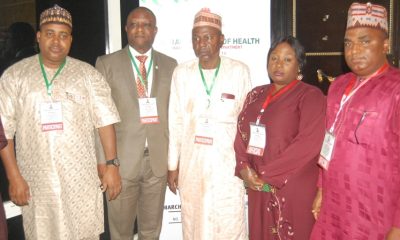






From Mike Tayese, Yenagoa
The Association of Professional Women Engineers of Nigeria (APWEN) Bayelsa Chapter led by their Chairman, Engr. Dr. Amalate Ann-Jonathan Obuebite FNSE, visited St. Judes Girls Secondary School, Yenagoa in commemoration of the 2026 International Day of Women and Girls in Science, donates laboratory equipment.
The donation, which includes pH meters, weighing scales, measuring cylinders, viscometers, volumetric and conical flasks, beakers, and pipettes is meant to support and encourage the study of Science, Technology, Engineering, and Mathematics (STEM) courses.
Presenting the items to the principal, Mrs. Josephine Imbiakpa, Dr. Obuebite emphasized APWEN’s commitment to promoting STEM education among girls.
Mrs. Imbiakpa expressed immense gratitude to APWEN BAYELSA for the donation, stating that it would motivate students to pursue STEM careers.
The event aimed to inspire girls to explore STEM fields and bridge the gender gap in these areas in line with the theme for this year.

NRS chair, Adedej
The Executive Chairman of the Nigerian Revenue Service (NRS), Zacch Adedeji, has described technology as a crucial factor in the implementation of the new tax laws in the country.
Adedeji stated this on Wednesday while delivering the maiden convocation lecture of the Federal Polytechnic, Ayede, Ogo-Oluwa Local Government Area of Oyo State.
In a statement by his Technical Assistant on Print Media, Sikiru Akinola, Adedeji listed some of the most fundamental challenges confronting taxation to include infrastructure, skills, trust and resistance.
In the lecture entitled ‘The Role of Technology in Implementing Nigeria’s New Tax Laws: Challenges, Prospects, and Implications for National Development,’ the NRS chairman said each of these challenges would be addressed with the imminent upgrading of the country’s tax system for a digital environment.
“Nigeria has recently enacted a new set of tax laws, representing the most significant restructuring of our nation’s fiscal legislation in 50 years. While public conversation often frames these changes as legal reforms, and that is true, it is also an incomplete picture.
“These laws are not merely changing rates, definitions, or administrative powers. They are quietly redefining how authority operates within the tax system. This is a complete structural overhaul, signaling the end of tax collection as a manual task and the beginning of tax intelligence.
“If you read the new laws carefully, you will notice a subtle but profound assumption woven throughout their fabric. They presuppose the existence of reliable taxpayer identification, integrated data across institutions, traceable transactions, automated processes, and scalable enforcement.
“In other words, these laws are built for a digital environment. They cannot function properly in a manual, fragmented, paper-based system. The implication is clear: without technology, the laws remain aspirational. With technology, they become operational.
“This transition is central to the mandate of the Nigeria Revenue Service as we implement this new legal framework. Historically, tax administration relied heavily on human discretion over who is registered, who is assessed, who is audited, and who is penalized.
“While discretion is not inherently evil, excessive discretion creates inconsistency, which in turn breeds mistrust and drives non-compliance,” Adedeji said.
Speaking further, he noted that when infrastructure improves, capacity grows, trust is protected, and resistance is managed just as technology begins to do what policy alone cannot.
“One of the most important prospects of a technology-driven tax administration is the ability to expand the tax base without increasing tax rates. This matters deeply in a society where citizens already feel overburdened.
“By improving visibility and bringing previously unseen economic activity into view, technology levels the playing field. When compliance broadens, the pressure on the existing base reduces,
fairness improves, and legitimacy grows. This is how modern tax systems grow revenue sustainably,’ he added.
In his remark, the Speaker of the House of Representatives, Tajudeen Abass, encouraged the graduating students to be good ambassadors of the institution.
Represented by AbdulFatai Buhari, senator representing Oyo North, Abass charged them not to relent in their bid to acquire more knowledge.
He also commended the tax boss for leading the change in tax administration in the country.
The institution’s governing council chair, Yakubu Datti commended Adedeji for leading the re-engineering of Nigeria’s tax architecture.
The Rector of the institution, Dr. Taofeek Adekunle Abdul-Hameed, charged the graduating students to emulate Adedeji who, he said, began his journey from a polytechnic.

The Ministry of Communications, Innovation and Digital Economy has partnered with Meta to launch the Llama Impact Accelerator, promoting impactful AI development in Nigeria.
The Minister, Dr Bosun Tijani, confirmed this in a statement released on Tuesday by Ms Sade Dada, Head of Public Policy for Anglophone West Africa at Meta.
Tijani described the partnership as a significant step in Nigeria’s mission to nurture a thriving AI ecosystem and drive national development through innovation.
He said the government views AI as a key tool for addressing national challenges.
The programme will equip innovators with vital tools and expert guidance.“This initiative forms part of Meta’s broader effort to democratise responsible AI and foster local innovation across Nigeria’s growing technology landscape,” the minister noted.
Tijani added that collaboration with government, academia and civil society will help cultivate a more inclusive, forward-looking AI community in the country.
Dada stated that Meta also partnered with the National Centre for Artificial Intelligence and Robotics (NCAIR) and the National Information Technology Development Agency (NITDA).
She explained that the eight-month programme targets early-stage startups using open-source Llama models to tackle national and regional challenges in four key areas.
The priority sectors include agriculture, security and safety, healthcare, and a ‘wild card’ category for high-impact innovations in any other field.
“The wild card category encourages bold and creative AI applications that could bring substantial impact to underserved sectors,” Dada said.
She added that the programme starts with a six-week incubation phase, offering technical training and mentorship from industry leaders and AI professionals.
This is followed by six months of extended support, including access to further technical resources and relevant opportunities for growth and scaling.
Dada said Meta was thrilled to collaborate with FMCIDE on this initiative, recognising Nigeria’s strong innovation ecosystem and growing pool of AI talent.
She added that Meta aims to empower communities through open-source AI, tailored to address Nigeria’s unique development challenges.
“The accelerator offers local talent the infrastructure, tools and mentorship needed to build responsible solutions using open-source models like Meta’s Llama,” she said. (NAN)




WAHO, ECOWAS Countries Move to Tackle Health Worker Shortages, Brain Drain Through Regional Retention Plan
ShareBy David Torough, Abuja The West African Health Organization (WAHO) has called for stronger regional collaboration and practical policy interventions...


Ekpo Empowers Women, Supports Hospital Patients at 50
ShareBy Tambaya Julius, Abuja The All Progressives Congress (APC) flag bearer for Karu/Gitata Constituency in the Nasarawa State House of...


Ebola: Bayelsa Activates Emergency Response
ShareFrom Mike Tayese, Yenagoa The Bayelsa state government has intensified disease surveillance and emergency preparedness following reports of an Ebola...


FG Disburses N38.93bn to Tertiary Institutions
ShareBy Tony Obiechina, Abuja The Federal Government has disbursed N38.93 billion to 166 public tertiary institutions nationwide under the Needs...


Mbah Unveils Multi-billion Naira Pharmaceutical Company in Enugu
ShareFrom Sylvia Udegbunam, Enugu Governor Peter Mbah of Enugu State has commissioned Anchorage Pharmaceutical Industries Limited, a multi-billion naira pharmaceutical...

Troops Rescue Three Kidnap Victims in Kebbi
ShareTroops of Sector 2, Operation FANSAN YAMMA, have rescued three kidnapped victims following an operation in Sakaba Local Government Area...


Troops Neutralise Six Terrorists, Arrest 11 Suspected Collaborators in Borno
ShareTroops of the Nigerian Army have neutralised six terrorists, arrested 11 suspected collaborators and received the surrender of a Jama’atu...


JPMorgan’s Entry into Nigeria: Turning Global Finance into a National Development Opportunity
ShareBy Uche Joe Uwaleke The proposed establishment of JPMorgan Merchant Bank Nigeria Limited presents Nigeria with an important opportunity to...


Commissioner Hails Akwa Ibom Governor over Peace Initiatives
ShareVeteran Sports Journalist and Commissioner for Sports Development in Akwa Ibom State, Paul Bassey, has hailed the state Governor, Pastor...


Kogi Probes Mega Electronic Store Inferno
ShareFrom Joseph Amedu, Lokoja The Kogi State Government has commenced investigation into the fire incident that gutted Pee Links, a...