
Agriculture
FG Restates Commitment to Develop Livestock Industry

By Joseph Amah, Abuja
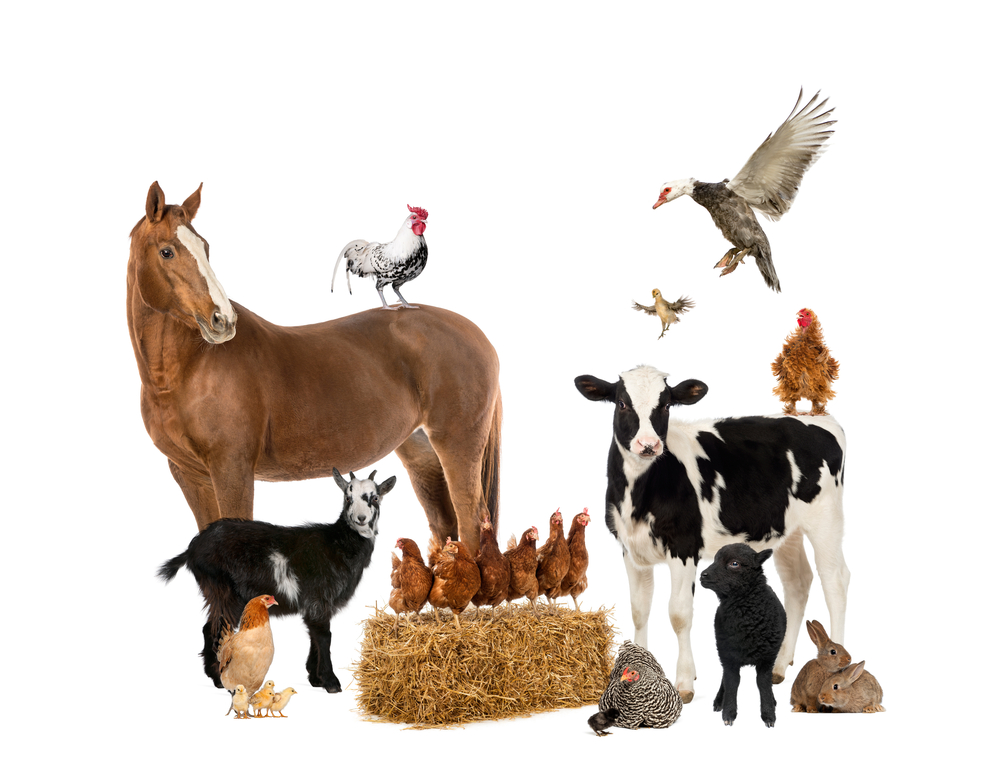
The Federal Government has said it is determined to grow the livestock industry in the country by encouraging investment in the sector.
Minister of Agriculture and Rural Development, Dr.
Mohammed Mahmood Abubarkar made this promise yesterday while declaring open the summit on National Livestock Transformation Plan co-organized by the Federal Ministry of Agriculture and Rural Development and Agriculture Correspondents Association of Nigeria (ACAN) in Abuja yesterday.The minister said it was in view of importance government attaches the livestock industry and the need to address the incessant farmer/herder clashes in the country that led to the initiation of the National Livestock Transformation Plan (NLTP).
According to him, “It is a known fact that the bulk of Nigerian labour force is engaged in various forms of agricultural enterprises especially along the livestock value chain with over 30 per cent women and young adults depending largely on Livestock for their income.
“The challenges of growth in the livestock value chains are multifarious including low breed quality, poor animal Husbandry practices, limited access to inputs and finance, weak animal health and extension services delivery among others.”
The minister also noted that inconsistent government policies, poorly functioning institutional settings, linkages, regulations and standards have failed bring about significant and sustainable transformation in the sector, thus limiting the impact on the livelihood of actors along the sector’s value chains.
President of ACAN, Mr John Oba, said the Summit was borne out of the need to positively contribute to the developmentof the agricultural sector in the country.
According to him, “The special focus on the livestock subsector is because of the important role it plays in sustainable food system. It would interest you to know that the Nigerian Livestock is worth over N33 trillion.”
He said the livestock sector in Nigeria with over 20 million herdes of cattle and several million herdes of goats, sheep, pigs, donkeys and horses can comfortably compete in the over $1.4 trillion global livestock assets.
He said the summit objectives include, enlightening stakeholders, investors and the general public on the inherent investment opportunities that abound in the livestock sub-sector, dispel misconceptions about the real intentions of government for initiating the NLTP.
The country representative of the Food and Agriculture Organisation (FAO), Mr Fred Kaferro, said, despite its implementation challenges, NLTP is still considered as one of the most coherent frameworks which clearly identified the root causes of the conflict and proposed cost effective, realistic and private sector led solutions.
He called on the federal and state governments to review the implementation arrangement with a view to clarifying roles and responsibilities of state and federal level actors, development partners and private sector including on the area of funding and resource mobilisation.
The theme two-day summit which was sponsored by Sahel Agriculture Consulting also saw commissioners of Agriculture from different states giving an update on their implementation of the NLTP in their states.







Some residents in Lagos State have expressed concern over the recent surge in the price of tomatoes, forcing many households to adopt alternatives.
The residents made their views known in separate interviews on Wednesday in Lagos.
A market survey showed that a 50kg basket of tomatoes now sells between N115,000 and N125,000, compared to between N35,000 and N40,000 recorded last month.
Olachi Igwe, a resident of Ago Palace, said the scarcity and high cost of tomatoes had disrupted her household’s meal plans.
“I contacted my usual vendor, but she said tomatoes were scarce and difficult to source.
“A small bowl we used to buy for between N3,500 and N4,000 now sells for as high as N6,000 to N7,000, when available.
“For now, my family will resort to palm nut stew (ofe akwu) until prices stabilise,” she said.
Another resident, Mercy Okeleye of FESTAC, said although her family prefers fresh tomatoes, rising prices have forced her to consider cheaper options.
“I cannot do without fresh tomatoes because of the taste, but I may have to buy broken ones, popularly called ‘esha’, which are relatively cheaper.
“I do not consider tomato paste a suitable substitute because it is not purely made from tomatoes,” she said.
Also speaking, Tope Babalola from Dopemu, said she might adjust her cooking methods if prices remain high.
“I have not bought tomatoes in over a month, but if the price is still high, I will use more onions and peppers.
“I will not resort to artificial additives; I prefer natural ingredients for my meals,” she said.
Joan Ogugua, another resident, said she had already switched to tomato paste to cope with the situation.
“I asked my son to buy tomato paste for our meals. I cannot justify spending excessively on fresh tomatoes when other basic needs must be met,” she said.
Also, Oge Ugwu, a civil servant at Lekki, said she would resort to cucumber stew with the recent price hike.
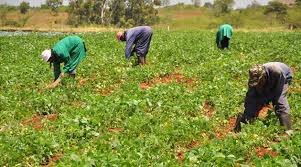
The Tomatoes Growers and Processors Association of Nigeria (TOPAN) has predicted a steady increase in the price of the produce between May and June 2026.
The Kaduna State Chairman TOPAN, Rabiu Zuntu, disclosed this in an interview recently in Lagos.
Zuntu noted that although there is no particular time for tomatoes planting season up north, seasonal weather variations can affect the production of the produce.
“Although we can plant tomatoes all-year-round, we cannot assure quality harvest all-year-round.
“Some farmers are harvesting now, while others are transplanting, and others are harvesting.
“Tomatoes are still available for sale but the price of the produce is gradually on the increase.
“Come May/June, the prices of tomatoes will be very expensive, so now is a good time to stock up the produce. There’s always a scarcity within that period.
“This is because of the nature of the weather in the north around that period, the weather is usually very hot and tomatoes cannot resist such hot temperature,” he said.
Zuntu said the price of tomatoes have started rising up in the north.
“A 50kg rafia basket of tomatoes sells from N20,000 as against N7,000 to N10,000 that was sold earlier in the year.
“While a crate of tomatoes up north is sold between N10,000 and N15,000 as against N5,000 to N6,500 sold earlier in the year.
“In most part of Kano State, where there is bumper harvest, they are rounding off their harvest. So, tomato is not that available there and most buyers have turned to where they can find it now, mostly within Kaduna State and some parts of Plateau State.
“So, that’s why the supply has decreased and the tomato supply and cost is determined by the law of demand and supply,” he said.
A 50kg basket of tomatoes in Lagos, at the moment, sells between N40,000 and N60,000 depending on the size and quality.
The Smallholder Women Farmers Organisation in Nigeria (SWOFON), Oyo State chapter, has said that the lack of irrigation facilities had become a major obstacle to dry season farming in the state.
The Chairperson of SWOFON in Oyo State, Atinuke Akinbade, said this in an interview in Ibadan on Monday.
Akinbade, who shared the experiences of women farmers in the state during the 2025 dry season, said that inadequate access to water for irrigation significantly affected the performance of many farmers during the period.
“It hindered many older farmers from participating in dry season farming and also prevented younger farmers from doing as much as they could in cultivating large acres of land,” she said.
Akinbade explained that farmers who managed to plant during the season struggled to access sufficient water to irrigate their farms, a situation worsened by the effects of climate change.
“Many farmers who depended on streams and wells to water their crops suffered major setbacks because those sources could not provide enough water for irrigation.
“Some farmers had to resort to buying water from commercial water tankers, which increased the cost of production, while at times it was even difficult to get water from the tankers,” she said.
The SWOFON chairperson warned that failure to address the problem could worsen food insecurity in the coming months.
“Even now, rainy season farming has not fully commenced because of the irregular rainfall pattern.
“This is a double burden, and if nothing is done, it may lead to serious hunger later,” she said.
Akinbade, however, acknowledged that the government had organised training for members of the association on home gardening.
She, however, said that little support was provided to address the challenges of dry season farming.
The chairman said that the home garden support package given to members consisted mainly of seedlings and one sprayer.
“They gave us two packs each of maize and pepper seeds, with six seeds in each pack, as well as one sprayer, so that we can grow food for household consumption,” she said.
Earlier, Oluwatoyin Oyedeji, SWOFON Coordinator in Oyo East, explained the severe hardship members of the organisation experienced in sourcing water for irrigation.
“Many farmers are already counting their losses because water was not available to irrigate their farms.
“Those who depended on streams and brooks were badly affected because many of them dried up, while the few that still had water had so little that farmers had to dig deeper into the ground in search of more,” Oyedeji said.
In the same vein, the Women Leader for farmers in Saki East, Musiliu Ashiru, said the absence of irrigation facilities also hampered dry season farming in her area.
According to her, many farmers still engaged in dry season farming have had to pay for water to keep their crops alive.
“Many of them buy water from the dam here to irrigate their crops. It has not been easy for them this year,” Ashiru said.




NDC Eti-Osa Primary: Youths Reject Alleged Imposition, Demand Justice for Akano
Share By Tambaya Julius, Abuja Nigeria Democratic Congress (NDC) candidate, for the Lagos State House of Assembly seat for Eti-Osa...
Cheap Surgery, Costly Injustice
ShareBy Fransiscus Nanga Roka The flourishing market in overseas cosmetic surgery offers you a dream — the promise of a...


NUJ Felicitates Babangida at 85
ShareBy Dan Amasingha, Minna The Nigeria Union of Journalists (NUJ), Niger State Council, has congratulated former Military President, General Ibrahim...


Why I Married My Husband In Our Living Room – Ronaldo’s Wife
ShareGeorgina Rodríguez has disclosed that she chose their everyday family space to get married to Cristiano Ronaldo so that their...

ASUU Approves Strike in 20 Varsities over Breached 2025 Agreement
ShareAcademic Staff Union of Universities (ASUU) has authorised 20 federal and state universities across Nigeria to commence varying degrees of...


Nigeria’s Inflation Rate Drops to 15.43 Per Cent in July – NBA
ShareBy Tony Obiechina, Abuja Nigeria’s headline inflation rate fell to 15.43 per cent in July 2026, down from 15.91 per...


Igbinedion Varsity, EduTech Global Partner On Digital Education, Access
ShareBy Julius Tambaya, Abuja Igbinedion University, Okada, one of Nigeria’s leading private universities, has entered into a strategic partnership with...


Xenophobia: FG Evacuates 83 More Nigerians from South Africa
ShareBy David Torough, Abuja The Federal Government has announced the arrival of another batch of 83 Nigerians evacuated from South...


Kaduna Varsity Lecturers’ Exodus Worsens as ASUU Issues Strike Ultimatum
ShareFrom Agbo Emmanuel, Kaduna More than 200 lecturers, including professors and other experienced academic staff, have left Kaduna State University...


NES 32 to Drive National Dialogue on Jobs, Productivity, Shared Prosperity
ShareBy Ayanyinka Ayanlowo Nigerian Economic Summit to Chart the Next Phase of Nigeria’s Economic TransformationThe Nigerian Economic Summit Group (NESG)...