
Agriculture
FG Set to Tackle Nigeria’s Food Deficit Says Minister


By Tony Obiechina, Abuja
Worried about the huge food deficit due to the neglect of agricultural production, the Federal Government has commenced an integrated approach to solving the challenges of the food eco systems in the country.
Minister of State for Finance, Budget and National Planning, Prince Clem Agba who stated this in Abuja on Tuesday, said food security is indispensable prerequisite for the survival of mankind.
He spoke while addressing a meeting of the Donors/Development Partners on the Implementation of the Food Systems Transformation Pathways in Nigeria.
The Minister lamented that the incidence of food insecurity has been on a steady increase over the past four decades, adding that the Food and Agriculture Organisation (FAO) has projected that about 25.3 million people in Nigeria would face acute food insecurity during the June to August 2023 lean season.
He disclosed that, a quarterly report released by the global organisation shows that the figure projected is higher than the 19.45 million forecasts in 2022, which is attributed to the huge food deficit due to the neglect of agricultural production as well as other areas of food eco system for many decades.
Agba said, “since the initiative on food systems transformation started, the Government has garnered a lot of support from donors and development partners. I wish to take this opportunity to thank you all for your generous support to the country in your different fields.
“We recognized your collaboration with the Government of Nigeria (GoN) on series of exploratory dialogues that took place in the 36 States and the FCT and some communities in 2021 and to the consolidation of the reports, collation of the 78 recommended priorities from the dialogues, prioritization of recommendations, and the commencement of implementation in 2022.
“I also acknowledge your membership of the 2023 Implementation Task Team that is currently working on the development of costed Implementation Strategy for transforming the food systems. Your support, both technical and financial, are very well appreciated.
“The Government is aware that donors have specific states and areas of intervention in all the States in the country as shown by the mapping exercise done by the Implementation Task Team. Our evaluation of the Report of the mapping exercise points to the fact that there is an urgent need for better coordination of our efforts as stakeholders to ensure a balance support by all donors and development partners to enable Nigeria achieve the Transformation pathways.
The Minister added that the Federal Government understood that achieving universal access to safe, nutritious, affordable and sustainable diets is critical to addressing the complexities of malnutrition and food insecurity in Nigeria.
According to him, this is particularly critical to attaining both economic and human capital development and thus requires breaking down silos among different actors in the food and nutrition sphere while adopting a well-coordinated multi-sectoral approach.
The Minister who noted that both the technical and financial support for the implementation of food systems pathway has become a great challenge to the government said the needed funds for this will require the pooling of public and private sector resources, including development partners and donors.
According to him, the prese administration in its determination to ensure that there is an improvement in the food and nutrition situation in the country has adopted a strategic approach towards ensuring that successive governments in Nigeria continue to prioritize food and nutrition interventions in the nation’s development agenda.
“Consequently, the Ministry has been championing the implementation of the presidential directive on the establishment of nutrition departments and the creation of budget line for nutrition in all line Ministries, Departments and Agencies” he added.
Agba said the government appreciates the commitment of every organization represented at the meeting towards implementing the strategy being developed for the implementation of the food systems transformation pathways in the country.
He stated, “the enormous amount of money needed to assure the food security of Nigerians calls for a fundamental review of past approaches and achievements to see what lessons can be learned to re-strategize and develop an approach that will ensure that better progress is made toward achieving better results. We therefore desire your continuous support especially in funding the implementation of the food systems”.

Some residents in Lagos State have expressed concern over the recent surge in the price of tomatoes, forcing many households to adopt alternatives.
The residents made their views known in separate interviews on Wednesday in Lagos.
A market survey showed that a 50kg basket of tomatoes now sells between N115,000 and N125,000, compared to between N35,000 and N40,000 recorded last month.
Olachi Igwe, a resident of Ago Palace, said the scarcity and high cost of tomatoes had disrupted her household’s meal plans.
“I contacted my usual vendor, but she said tomatoes were scarce and difficult to source.
“A small bowl we used to buy for between N3,500 and N4,000 now sells for as high as N6,000 to N7,000, when available.
“For now, my family will resort to palm nut stew (ofe akwu) until prices stabilise,” she said.
Another resident, Mercy Okeleye of FESTAC, said although her family prefers fresh tomatoes, rising prices have forced her to consider cheaper options.
“I cannot do without fresh tomatoes because of the taste, but I may have to buy broken ones, popularly called ‘esha’, which are relatively cheaper.
“I do not consider tomato paste a suitable substitute because it is not purely made from tomatoes,” she said.
Also speaking, Tope Babalola from Dopemu, said she might adjust her cooking methods if prices remain high.
“I have not bought tomatoes in over a month, but if the price is still high, I will use more onions and peppers.
“I will not resort to artificial additives; I prefer natural ingredients for my meals,” she said.
Joan Ogugua, another resident, said she had already switched to tomato paste to cope with the situation.
“I asked my son to buy tomato paste for our meals. I cannot justify spending excessively on fresh tomatoes when other basic needs must be met,” she said.
Also, Oge Ugwu, a civil servant at Lekki, said she would resort to cucumber stew with the recent price hike.
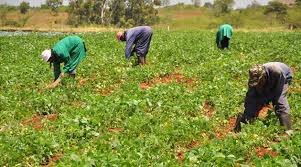
The Tomatoes Growers and Processors Association of Nigeria (TOPAN) has predicted a steady increase in the price of the produce between May and June 2026.
The Kaduna State Chairman TOPAN, Rabiu Zuntu, disclosed this in an interview recently in Lagos.
Zuntu noted that although there is no particular time for tomatoes planting season up north, seasonal weather variations can affect the production of the produce.
“Although we can plant tomatoes all-year-round, we cannot assure quality harvest all-year-round.
“Some farmers are harvesting now, while others are transplanting, and others are harvesting.
“Tomatoes are still available for sale but the price of the produce is gradually on the increase.
“Come May/June, the prices of tomatoes will be very expensive, so now is a good time to stock up the produce. There’s always a scarcity within that period.
“This is because of the nature of the weather in the north around that period, the weather is usually very hot and tomatoes cannot resist such hot temperature,” he said.
Zuntu said the price of tomatoes have started rising up in the north.
“A 50kg rafia basket of tomatoes sells from N20,000 as against N7,000 to N10,000 that was sold earlier in the year.
“While a crate of tomatoes up north is sold between N10,000 and N15,000 as against N5,000 to N6,500 sold earlier in the year.
“In most part of Kano State, where there is bumper harvest, they are rounding off their harvest. So, tomato is not that available there and most buyers have turned to where they can find it now, mostly within Kaduna State and some parts of Plateau State.
“So, that’s why the supply has decreased and the tomato supply and cost is determined by the law of demand and supply,” he said.
A 50kg basket of tomatoes in Lagos, at the moment, sells between N40,000 and N60,000 depending on the size and quality.
The Smallholder Women Farmers Organisation in Nigeria (SWOFON), Oyo State chapter, has said that the lack of irrigation facilities had become a major obstacle to dry season farming in the state.
The Chairperson of SWOFON in Oyo State, Atinuke Akinbade, said this in an interview in Ibadan on Monday.
Akinbade, who shared the experiences of women farmers in the state during the 2025 dry season, said that inadequate access to water for irrigation significantly affected the performance of many farmers during the period.
“It hindered many older farmers from participating in dry season farming and also prevented younger farmers from doing as much as they could in cultivating large acres of land,” she said.
Akinbade explained that farmers who managed to plant during the season struggled to access sufficient water to irrigate their farms, a situation worsened by the effects of climate change.
“Many farmers who depended on streams and wells to water their crops suffered major setbacks because those sources could not provide enough water for irrigation.
“Some farmers had to resort to buying water from commercial water tankers, which increased the cost of production, while at times it was even difficult to get water from the tankers,” she said.
The SWOFON chairperson warned that failure to address the problem could worsen food insecurity in the coming months.
“Even now, rainy season farming has not fully commenced because of the irregular rainfall pattern.
“This is a double burden, and if nothing is done, it may lead to serious hunger later,” she said.
Akinbade, however, acknowledged that the government had organised training for members of the association on home gardening.
She, however, said that little support was provided to address the challenges of dry season farming.
The chairman said that the home garden support package given to members consisted mainly of seedlings and one sprayer.
“They gave us two packs each of maize and pepper seeds, with six seeds in each pack, as well as one sprayer, so that we can grow food for household consumption,” she said.
Earlier, Oluwatoyin Oyedeji, SWOFON Coordinator in Oyo East, explained the severe hardship members of the organisation experienced in sourcing water for irrigation.
“Many farmers are already counting their losses because water was not available to irrigate their farms.
“Those who depended on streams and brooks were badly affected because many of them dried up, while the few that still had water had so little that farmers had to dig deeper into the ground in search of more,” Oyedeji said.
In the same vein, the Women Leader for farmers in Saki East, Musiliu Ashiru, said the absence of irrigation facilities also hampered dry season farming in her area.
According to her, many farmers still engaged in dry season farming have had to pay for water to keep their crops alive.
“Many of them buy water from the dam here to irrigate their crops. It has not been easy for them this year,” Ashiru said.




A Birthday Tribute to His Excellency Senator Kashim Shettima, Vice President of The Federal Republic Of Nigeria
ShareYour Excellency, On behalf of the National Executive Council, National Executive Committee and the entire membership of the Alumni Association...


Tax Reforms: Kaduna IGR Hits N10bn Monthly — Uba Sani
ShareFrom Agbo Emmanuel, Kaduna Kaduna State Governor, Uba Sani, has said recent tax reforms have significantly improved Nigeria’s revenue mobilisation,...


ADC Inaugurates Reconciliation Committee, Seeks Unity Ahead 2027
ShareThe African Democratic Congress (ADC) has inaugurated a national reconciliation and peace committee to strengthen unity, rebuild trust and resolve...


Akpabio Celebrates Shettima at 60
SharePresident of the Senate, Godswill Akpabio has felicitated Vice President Kashim Shettima on the occasion of his 60th birthday. Akpabio...


2027 Election: CAN Warns Politicians, Supporters to Leave ‘Jesus’ out of Political Struggles
ShareBy Laide Akinboade, Abuja The Christian Association of Nigeria (CAN), on Wednesday, warned politicians, and their supporters against dragging the...


NSCDC Arrests Two Armed Suspects for Terrorizing Legitimate Miners in Cross River
Share From Ene Asuquo, Calabar The Nigeria Security and Civil Defence Corps (NSCDC), Cross River State has disclosed that the command...


2027: Wike Raises the Alarm Over APC Govs, Backs Tinubu
ShareBy Laide Akinboade, Abuja The Federal Capital Territory (FCT) Minister, Nyesom Wike, has accused some governors of the All Progressives...


PFIPC Scandal: Reps Trace 58 Accounts to ‘Fake Agency’
ShareBy David Torough, Abuja The House of Representatives ad hoc committee investigating the purported Presidential Foreign Investment Promotion Council (PFIPC)...


10 Years. N1.2bn. 40+ Tertiary Institutions by 2026. OPay Is Here to Stay
ShareFor a Nigerian student, a scholarship can mean more than money. It can mean staying in school when a family...


NCS Sets Physical Screening for 2024/2025 Recruitment, Warns Candidates Against Absence
ShareBy Tambaya Julius, Abuja The Nigeria Customs Service (NCS) has fixed physical screening and documentation for successful candidates shortlisted in...