
Metro
FG Solicits 50 Hectares of Land from states for Renewed Cities


The Federal Government has solicited the release of 50 hectares of land by state governments to enable it actualise its Renewed Cities Agenda in housing delivery for citizens.
The Minister of Housing and Urban Development, Mr Ahmed Dangiwa, made this call when the Governor of Taraba, Dr Agbu Kefas, paid him a courtesy visit on Thursday in Abuja.
He said that the present administration’s plan to deliver the Renewed Hope Agenda for housing needed the support of states in the provision of land.
Dangiwa said that under the first phase of the project, government planned to build 34,500 houses nationwide using FMBN, FHA and Public Private Partnerships (PPP) to achieve this.
He said that decent, quality and affordable housing for all Nigerians was a major priority of the government, adding that the ministry was working with the National Population Commission (NPC) to establish the actual housing deficit.
“Our findings in house estimates show that for us to meet the housing needs of Nigerians, we need to build about 550,000 new homes per annum over the next ten years.
“That is the massive size of our housing challenge. At the average cost of N8 million this will require about N4.4 trillion per annum.
“Records show that over the past decades, the Federal Agencies, and the Ministry of Housing combined produce less than 15,000 housing units per year.
“A key reason for this is, of course, the big elephant in the room: inadequate access to finance.
“While this is true, I also believe that we have not been innovative enough in finding solutions to meet the challenge in a bold and audacious manner,” he said.
Dangiwa said the good news, however, was that President Bola Tinubu was a proven game-changer who had demonstrated this in all of his policy announcements.
“So, as we acknowledge the challenge before us, we are not frightened by it. Rather, we see it as a golden opportunity to make a difference in the history of affordable housing in our country.
“Already, we have written letters to be sent to all the state governors seeking about 50 hectares of land for renewed hope cities.
“I’m sure that your Excellency will be kind and gracious enough to honour our request,” he said.
Earlier, the governor said that he had come to pay a solidarity visit and pledged his support to the minister to move the ministry forward.
Kefas said the minister was not alien to Taraba, adding that “it is a good place to invest.”
He, therefore, called for collaboration with the ministry in infrastructure development, especially in housing development.
“One of the things I want to bring to your notice is that you have a property in Jalingo and it has been there empty and nobody has occupied it and we do not want it to waste.
“So, we are requesting that we want to take over that property so that we will able to provide accommodation for our civil servants.
“Also, we are available to offer you any land in Taraba to be able to build anything that will benefit our people.
“We are also aware that the ministry has made provision to build a new Federal Secretariat in Taraba state.
“We are very happy about that initiative and we want to assure you that we are ready to give you our support whenever you are ready,” Kefas said.
He, therefore, urged the minister to ensure that the secretariat was built to accommodate all the state ministries. (NAN)
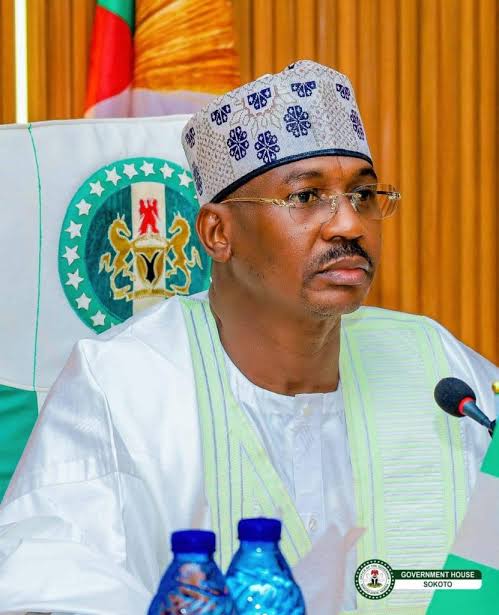
Sokoto State Governor, Ahmed Aliyu has approved the appointment of Hayatu Dallatu and seven others as District Heads to fill vacant positions in the Sultanate Council of Sokoto.
The Secretary to the Sultanate Council, Alhaji Sa’idu Maccido, disclosed this in a statement issued to journalists in Sokoto on Monday.
Maccido said the appointments were based on recommendations of the Sultanate Council.
He added that the formal turbaning ceremony for the new district heads would be performed by the Sultan of Sokoto, Alhaji Sa’ad Abubakar, at a later date.
“His Eminence, the Sultan of Sokoto and the Sultanate Council congratulate the appointees on their well-deserved appointments and wish them a successful tenure and God’s guidance,” he said.
Dallatu, a member of the Nigeria Union of Journalists (NUJ), was appointed district head of Tudun Wada in Sokoto South Local Government Area.
He is a journalist and media administrator who has worked with Rima Television, Sokoto, and the Voice of Nigeria (VON).
Until his appointment, Dallatu was the General Manager of Alu FM, Sokoto.
Other appointees include Salihu Kadadi, district head of Kadadi; Isah Daudu, district head of Gidan Madi; and Gidado Muhammad, district head of Dabagin Ardo.
Others are Abdullahi Muhammed, district head of Danchadi; Umar Shehu, district head of Goronyo; Kabiru Marafa, district head of Tsaki; and Muhammadu Buhari, district head of Wajake.(NAN)
The Director-General of the National Health Insurance Authority (NHIA), Dr Kelechi Ohiri, says Nigeria must take charge of its health financing research agenda to sustain reforms, strengthen evidence-based policymaking and improve health outcomes nationwide.
Ohiri said this at the inaugural Nigeria Health Financing Research and Learning Forum in Abuja, themed: “Evidence and Learning for Nigeria’s Health Financing Future: Building a Locally Led Research and Learning Ecosystem.
”He said the forum was designed to leverage evidence to advance Nigeria’s health financing agenda while addressing limitations associated with episodic research and strengthening institutional capacity for continuous learning and reform.
“For too long, our health financing initiatives in Nigeria have been shaped by well-meant studies designed, commissioned, analysed, reported, synthesised, and presented to us at the finish line,” he said.
Ohiri said although such studies had provided valuable insights, episodic research could not establish the enduring policy foundation needed to sustain reforms and inform long-term decision-making effectively nationwide.
He said research sovereignty did not mean isolating Nigeria from global support but placing the country “in the driver’s seat” in defining questions, commissioning studies and embedding learning implementation.
“International partnerships remain vital, and the work must focus on building domestic capacity and also supporting domestic priorities,” Ohiri said, emphasising the importance of balancing collaboration with national ownership.
He said the NHIA would review five commissioned studies on embedded learning during the two-day forum and examine lessons from Ethiopia, Ghana and India to strengthen policy implementation.
Ohiri said evidence must serve reforms, noting that Nigeria’s health financing agenda focused on mandatory health insurance coverage, equity, quality healthcare delivery and long-term sustainability across the country.
He said Nigeria’s health insurance landscape remained fragmented, comprising 37 government insurance schemes and more than 95 private health insurance schemes operating across different segments of the population.
According to him, the fragmentation raises important questions about sustainability and highlights the need for robust research to generate evidence capable of guiding future reforms effectively nationwide.
Ohiri said the NHIA had identified 15 studies linked to its strategic priorities and was working to build research ecosystems involving national institutions, universities and other stakeholders.
He said the authority was also pursuing a national health financing observatory, 15 research action plans, a national research agenda and regional collaboration frameworks to strengthen evidence generation.
The World Health Organization (WHO) Representative in Nigeria, Dr Pavel Ursu, said health financing remained foundational to Universal Health Coverage and required implementation research to support reforms.
Ursu said global commitments on sustainable health financing and Universal Health Coverage must translate into concrete and transformative actions capable of improving healthcare access and outcomes at country level.
He said establishing the Nigeria Health Financing Research and Learning Forum provided an institutional opportunity to unpack research questions and increasingly drive national policy and implementation processes.
Ursu said WHO hoped the forum would mark the beginning of a sustained and nationally owned health financing research and learning movement capable of influencing future reforms.
Executive Director of the Alliance for Health Policy and Systems Research, WHO, Dr Kumanan Rasanathan, said research and learning should not be treated as luxuries in health systems.
“If you don’t have your own knowledge, if you don’t know your own problems, if that is not preserved for future generations, you cannot be sovereign,” Rasanathan said.
He said many institutions across Africa remained heavily dependent on external funding, warning that shrinking financial support could weaken organisations responsible for generating critical knowledge and evidence.
Rasanathan said countries needed domestically driven learning agendas capable of connecting knowledge, communities and decision-makers while strengthening national ownership of research and policy development processes.
He said researchers should move beyond identifying problems and focus on developing practical solutions that could be implemented effectively within the contexts under investigation and evaluation.
According to him, countries also require domestic institutions that are sustainably financed and linked to national processes while retaining the independence to provide objective advice.
Dr Yetunde Aluko, representing the Nigerian Institute of Social and Economic Research (NISER), said Nigeria needed more locally developed and relevant evidence to guide health financing reforms.
Aluko said Nigeria should establish an enduring national system where policymakers, researchers, implementers, communities and practitioners jointly identify priority questions and continuously learn from implementation experiences.
“Health financing research should therefore not be viewed simply as a production of reports or academic publications,” she said.
She said such research should function as part of a national learning system capable of showing what worked, for whom, under what circumstances and at what cost.
The system, she added, should also generate evidence on implications for equity, sustainability and effectiveness, helping policymakers make informed decisions that improve healthcare financing outcomes nationwide.
Fatima Zannah, Cluster Manager and Head of Programme, German Development Cooperation (GIZ), said locally generated evidence was critical for designing health financing approaches reflecting Nigerians’ realities and needs.
Zannah said health financing decisions could not be made in isolation from factors influencing healthcare-seeking behaviour, including culture, religion, geography, income, education, gender and social networks.
“This is why locally generated evidence matters. It allows us to move beyond assumptions, and better understand the diversity of experiences across Nigeria,” she said.
She said Nigeria could also learn from countries facing similar challenges, adapt relevant lessons and build on their experiences to strengthen health financing reforms and implementation.
Zannah urged participants to view evidence as a tool for decision-making, policy development, transparency, equity and accountability within the health sector and broader governance systems.
She said development partners looked forward to supporting the initiative and seeing evidence generated through the process translated into better decisions and improved health outcomes nationwide.
The forum, which began on Monday, is expected to conclude on Tuesday after deliberations focused on strengthening health financing research, learning systems and evidence-informed reforms across Nigeria.(NAN)
Guaranty Trust Holding Company Plc (GTCO) reported N603.03 billion Profit Before Tax (PBT) for the half year ended June 30.
The financial services group also declared an interim dividend of N1 per share for the period under review.
GTCO disclosed this in its audited consolidated and separate financial statements released to the Nigerian Exchange Ltd.
(NGX) and London Stock Exchange (LSE) on Monday.The PBT represented a marginal 0.4 per cent increase from the N600.6 billion recorded in the corresponding period of 2025.
The group said the performance was driven by growth in interest and trading income, which increased by 7.
5 per cent and 24.7 per cent, respectively.It, however, said a N46.2 billion fair value loss recognised during the first half moderated growth in earnings.
GTCO said its total assets rose to N18.6 trillion, while shareholders’ funds stood at N3.3 trillion at the end of June.
The group’s capital adequacy ratio stood at 34.9 per cent, compared with 29.2 per cent for its banking business.
It also reported improved asset quality, with IFRS 9 Stage 3 loans standing at 3.5 per cent at bank level and 4.6 per cent at group level.
The cost of risk also improved to 0.6 per cent, from 2.2 per cent recorded in the corresponding period.
The group’s net loan book grew marginally by 0.5 per cent to N3.15 trillion, from N3.13 trillion at the end of December 2025.
Deposits, however, recorded stronger growth, rising by 10.3 per cent to N14.19 trillion, from N12.87 trillion during the same period.
Commenting on the results, GTCO Group Chief Executive Officer, Mr Segun Agbaje, said the results reflected the strength of the group’s business.
“Our half-year results speak to the strength of what we have built: a resilient franchise, a strong balance sheet and a business that no longer depends on banking alone.
“Fair value movements weighed on reported earnings, but the core business held firm. Interest and trading income grew, deposits strengthened, and asset quality improved at Group level,” Agbaje said.
He said the group’s priority was to execute with discipline, grow responsibly and use digital technology to scale its businesses.
“Digital is our lever for scaling across Banking, Payments, Pension and Funds Management, and for building a more diversified and resilient financial services group,” he said.
GTCO also reported a pre-tax return on equity of 35.9 per cent, pre-tax return on assets of 6.6 per cent and a cost-to-income ratio of 31.5 per cent.
The holding company operates banking and non-banking financial services across Africa and the United Kingdom. (NAN)




Police Detain Woman for Alleged Killing of Co-wife in Bauchi
ShareThe police command in Bauchi State, said it has apprehended a housewife over alleged killing of her co-wife following a...
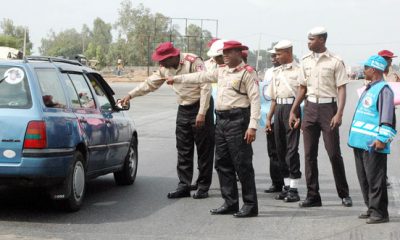

FRSC Deploys 170 Ambulances Nationwide for Emergency Rescue
ShareThe Federal Road Safety Corps (FRSC) has deployed more than 170 ambulances across the country as part of efforts to...


NBA Decries Rising Insecurity in Plateau, Urges Urgent Action
ShareThe Nigerian Bar Association (NBA) has decried the spate of security challenges currently confronting Plateau and other parts of Nigeria....

Benue Begins Compilation of Out-of-school Children
ShareThe Benue Government has begun compilation of out-of-school children as part of efforts to improve child protection and access to...

NAPTIP Uncovers Suspected Baby Trafficking Ring in C’River
ShareThe National Agency for the Prohibition of Trafficking in Persons (NAPTIP) has uncovered an alleged child trafficking operation involving newborn...

Kaduna Pensioners Applaud Uba Sani over N3.65bn Gratuity, Death Benefits
ShareThe Kaduna State Chapter of the Nigeria Union of Pensioners (NUP) has commended Gov. Uba Sani for approving N3.65 billion...

FG Calls for Urgent Action to Protect Nigeria’s Rivers
ShareThe Federal Government has called for integrated management of Nigeria’s rivers, forests, wetlands and watersheds to safeguard water resources, public...
FCCPC Calls for Improved Capacity Building on Competition Reporting, Matters
ShareThe Federal Competition and Consumer Protection Commission (FCCPC) says there is a need for sustained capacity building in competition reporting...
Fire Guts Customs Western Marine Command Office in Lagos
ShareFire gutted the Nigeria Customs Service (NCS) Western Marine Command office in Apapa, Lagos, on Monday, destroying property worth millions...

Fuel Price Hike Reduces Sales, Increases Cost of Doing Business — Traders
ShareSome traders in the Federal Capital Territory (FCT) have expressed concern over the impact of the recent fuel price increase...