
Oil & Gas
FG Tasks Oil Experts on Solutions to Local Industry Challenges

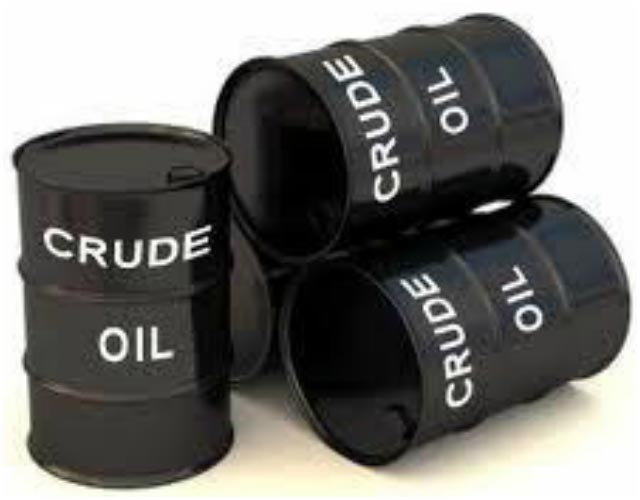
The Federal Government has tasked oil and gas experts to proffer permanent solutions to challenges ranging from low productivity, oil theft, pipeline vandalism and gas flaring in the local oil industry.
Sen. Heineken Lokpobiri, Minister of State for Petroleum Resources (Oil), made the call on Monday in Abuja, at the opening of the third Biennial International Conference on Hydrocarbon Science and Technology (ICHST 2023).
The conference, organised by the Petroleum Training Institute (PTI) and hosted by the Petroleum Technology Development Fund (PTDF), aimed at resuscitating the observable decline in the nation’s oil production and embracing innovative research as practiced by the developed nations.
Lokpobiri said Nigeria had played major roles in the global oil industry and Africa in particular, hence the need to sustain its position.
“Nigeria has been a big player in the oil and gas industry both in Africa and globally. For us to sustain our place globally, we need to tackle challenges and key into what is trending globally.
“My expectations at the end of this conference is for us to come up with home grown solutions to address our problems in the petroleum industry.
“Nigeria have so many problems in the industry, I believe that the conference would come up with solutions to address those challenges and also produce document that will be implementable, ” he said.
Also speaking, Dr Henry Adimula Principal/Chief Executive, PTI, said the conference underscored the need to shape the destiny of Nigeria’s oil/gas industry.
Adimula added that the essence of the conference was to explore, dissect, and contribute to a future teeming with possibilities.
He acknowledged the pioneering research conducted by the PTI which had substantially influenced the discussions.
“PTI’s development of economic models for gas investment, spanning the upstream, midstream, and downstream sectors, and creation of Modified Unit Technical Cost Model for oil and gas investment, ensures precise determination of the cost to produce a standard cubic foot of gas.
“These achievements underscore PTI’s dedication to innovative and environmentally responsible hydrocarbon resource utilisation,” he said.
Adimula said its collaborative research with the Nigerian National Petroleum Corporation Research and Development Division had resulted in steps towards efficient storage system for Compressed Natural Gas (CNG) in powered tricycles.
According to him, this pioneering initiative marks a substantial stride towards sustainable energy solutions and cleaner transportation methods.
He said its strides in research and innovation also yielded results especially in securing a patent for the ‘Method of Improving the Rheological Properties of Potassium-Based Bentonite Clay’ under Nigerian Patent No NG/P/2020/200 as duly registered with the Nigerian Patents and Designs Registry.
These innovations, he said, reflected its steadfast dedication to
sustainable and eco-friendly practices, serving as a testament to our unwavering
commitment to pioneering research and development.
Mr Ahmed Aminu, the Executive Secretary PTDF, represented by Mrs Ifeoma Nwokike, General Manager Projects, in his address said the oil/gas sector, especially in Nigeria, was at an intersection of complex challenges and unprecedented opportunities.
According to Aminu, the industry grapples with a myriad of issues, from technological hurdles, research limitations, and the dwindling landscape of investments and finance.
The situation, he said underscored the importance of bolstering research funding and technological development to boost the sector.
“The imminent commencement of the Dangote Oil Refinery, the completion of pivotal pipeline infrastructure like the AKK, and the production initiatives at Komani oil field in Northern Nigeria, present a hopeful panorama of opportunities that can reinvigorate the industry,” he said.
In his keynote address, Dr Omar Ibrahim, the Secretary-General, African Petroleum Producers’ Organisation (APPO), identified the biggest victims of a speedy energy transition as the developing countries, especially those from Africa.
Ibrahim said the organisation had played major role in the sector by identifying three imminent challenges namely technology, expertise and markets.
“To create this future, the APPO Ministerial Council approved the recommendations of the APPO Long Term Strategy Committee to take three practical steps to address the imminent challenges,” he said.
The theme of the conference is: ‘The Future of the Oil and Gas Industry: Opportunities, Challenges and Development’. (NAN)
The Organization of the Petroleum Exporting Countries (OPEC), has revised downward its 2026 global oil demand growth estimates, citing expected slower consumption growth in advanced economies, where collective demand will rise by only 100,000 barrels per day.
The cartel said it now expects global oil demand growth to reach 1.
2 million barrels per day in 2026, down from its previous forecast of 1. 4 million barrels per day, explaining that the revision would bring total global oil consumption to 106.3 million barrels per day.In Europe, oil demand will decline by 30,000 barrels per day as weaker economic activity weighs on consumption, OPEC, said in its monthly oil market report.
The OPEC also expects some Asian economies, particularly Japan, to record slower demand growth. The organization forecast Japanese oil consumption to fall by 80,000 barrels per day.
However, strong demand from major emerging economies partly offset these weaker signals.
The OPEC said China would add 250,000 barrels per day to global demand, supported by its petrochemical industry. The organization also forecast India to increase demand by 200,000 barrels per day, driven by infrastructure spending and growth in vehicle ownership. Overall, OPEC expects emerging economies and developing countries to contribute an additional 1.1 million barrels per day to global oil consumption in 2026.
The OPEC’s revision aligns with a broader reassessment of global oil demand expectations.
In its May 2026 report, the International Energy Agency projected a much sharper downturn. The agency forecast a contraction of 420,000 barrels per day in global oil demand for the full year rather than a slowdown in growth.
The gap between the two institutions now exceeds 1 million barrels per day, highlighting the uncertainty surrounding the market outlook.
Both reports identified the near-closure of the Strait of Hormuz as a major factor behind market instability. According to the U.S. Energy Information Administration, six Gulf countries collectively reduced production by 10.5 million barrels per day in April, marking what the agency described as an unprecedented contraction outside pandemic periods.
As supply shortages intensified, oil producers outside the Middle East moved to increase production to offset part of the missing volumes. Several African producers, including Nigeria, Libya and Angola, benefited from rising demand for Atlantic Basin crude among Asian and European buyers that lost access to Gulf oil supplies, according to the IEA.
However, not all African producers can fully capitalize on the opportunity. Nigeria, Africa’s largest oil producer and an OPEC member, nonetheless showed encouraging momentum. According to provisional data published on May 15 by the Nigerian Upstream Petroleum Regulatory Commission, the country increased oil production from 1.546 million barrels per day in March to 1.663 million barrels per day in April 2026.

The Nigerian Content Development and Monitoring Board (NCDMB) has reaffirmed that compliance with Nigerian Content regulations in the oil and gas industry remains non-negotiable.
The Executive Secretary of NCDMB, Felix Ogbe, stated this on Tuesday at the 2026 Nigerian Oil and Gas Midstream and Downstream Stakeholders Summit in Lagos.
Ogbe was represented by Austin Uzoka, Head of the Directorate of Planning, Research and Statistics.
He said the midstream and downstream sectors remained vital to Nigeria’s economic expansion, industrialisation and job creation efforts.
The summit focused on the theme, ‘Unlocking, Growing and Sustaining Nigerian Content Development in Nigeria’s Oil and Gas Midstream and Downstream Sectors.’
Ogbe described the gathering as a strategic platform for shaping the future direction of Nigeria’s energy industry and strengthening indigenous participation.
According to him, reforms, improved regulatory clarity and growing investor confidence are repositioning Nigeria as a leading oil and gas investment destination in Africa.
He noted that the Board, established under the Nigerian Oil and Gas Industry Content Development Act 2010, continued promoting local capacity development and technology transfer.
Ogbe added that the Board had also advanced employment opportunities for Nigerians across several segments of the oil and gas industry.
He said Nigerian companies had recorded significant achievements in upstream operations, particularly in exploration, drilling, engineering, fabrication and project management activities.
According to him, the next growth phase lies within the midstream and downstream sectors of the nation’s petroleum industry.
He identified gas processing, transportation infrastructure, storage facilities, LPG and CNG distribution, refining and petrochemical development as major investment opportunities.
Ogbe said Nigeria was gradually reducing dependence on imported refined petroleum products through increased local refining and processing capacity.
He described the Dangote Refinery as a strong symbol of Nigeria’s industrial ambition, energy independence and economic self-sufficiency.
Ogbe stated that modular refineries were equally opening fresh opportunities for indigenous participation, local investment and improved national energy security.
He also highlighted ongoing gas commercialisation projects as important drivers of industrialisation and value addition within the domestic economy.
The NCDMB boss specifically referenced the Nigeria LNG Train 7 project and the Federal Government’s Presidential Initiative on Compressed Natural Gas.
According to him, both initiatives would strengthen domestic gas utilisation and support broader industrial growth across the country.
While emphasising the Board’s regulatory responsibilities, Ogbe insisted that compliance with Nigerian Content requirements remained central to industry operations.
“Compliance remains non-negotiable, but it must also be practical, implementable and supportive of investment and business growth,” he said.
He urged policymakers, investors, operators and service providers to deepen collaboration in order to maximise opportunities within the sector.
Ogbe said stronger partnerships would help drive sustainable economic growth, industrial capacity and long-term competitiveness in Nigeria’s energy industry.
The two-day summit attracted major stakeholders from the oil and gas industry to discuss strategies for expanding local content development.
Participants also examined ways to strengthen industrial capacity and improve Nigeria’s competitiveness within the global energy market.
Dangote Petroleum Refinery has reduced the price of aviation fuel, also known as Jet A1, from N1,750 to N1,650 per litre.
The company said the move is aimed at reducing the financial burden on airline operators and ensuring steady fuel supply across the country.
The development was announced in a statement issued on Tuesday in Lagos by the company’s spokesperson, Anthony Chiejina.
According to him, the refinery also introduced a 30-day interest-free credit facility for marketers and airline operators backed by bank guarantees.
He added that the company had also changed its pricing structure from dollar-based transactions to payments in Naira, a move expected to ease pressure on local operators.
Chiejina stated that the reduction was necessary due growing concerns over the rising operational costs in Nigeria’s aviation sector.
According to him, aviation fuel accounts for a major part of airline expenses.
He said, “Industry stakeholders have repeatedly warned that the increasing cost of Jet A1 fuel was putting serious financial pressure on domestic airlines and threatening smooth flight operations.
“The refinery’s latest decision is expected to provide relief for airline operators by lowering fuel costs, improving operational stability and supporting efforts to reduce airfares for passengers.”




Customs, American Business Council Deepen Trade Collaboration
ShareBy Tambaya Julius, Abuja The Nigeria Customs Service (NCS) and the American Business Council (ABC) have reaffirmed their commitment to...


NCS, UAE Customs Foil Tramadol Smuggling Attempt
ShareBy Tambaya Julius, Abuja In collaboration with international partners, the Nigeria Customs Service (NCS) has foiled an attempt to smuggle...


Police Detain Actor Ugezu Ugezu for Defamatory Facebook Post against Prince Daniel Kanu
ShareBy David Torough, Abuja Actor and social commentator Ugezu J. Ugezu, was detained by the Nigeria Police Force following an...

Tinubu Visits Benue, Commissions Projects Tomorrow
ShareFrom Attah Ede, Makurdi Benue State is set to host the First Lady of the Federal Republic of Nigeria and National...

Fifa to Pay Somali Referee Artan Full World Cup fee
ShareSomali referee Omar Artan, who was denied entry to the United States to officiate at the World Cup, will still receive his full...
Delegates in China Denounce Xenophobic Attacks
ShareAfrican delegates attending seminars in China have condemned reported xenophobic attacks against foreign African nationals in South Africa and called for greater unity across the continent. The delegates made the...

Kogi Targets 240,000 Children for Schistosomiasis Mass Drug Administration
ShareFrom Joseph Amedu, Lokoja The Kogi State Government said it will reach over 240,000 children aged 5–14 years in 39 wards across 15 Local...


Anambra Urges Residents to Provide Information on Fake Pastors, Others
ShareFrom Sylvia Udegbunam, Enugu The Anambra State Government, under the leadership of Prof. Chukwuma Charles Soludo, has extended the “War Against Fake Native Doctors”...


Boat Mishap Kills 11 in Benue River
ShareFrom Attah Ede, Makurdi No fewer than 11 persons were Saturday night feared dead when a boat said to be conveying them...


Terrorism: After Gen Rabe’s Death, Buratai Warns of Darker Days Ahead
ShareBy David Torough, Abuja Nigeria’s deepening insecurity crisis has triggered fresh alarm across military, political and religious circles following the...