
NEWS
FG to Establish Civilian De-mining Teams to Tackle IEDs Threats


The Federal Government is to establish civilian de-mining teams comprising retired military personnel, other security veterans, and civilians, including youths and medical professionals, to tackle threats of Improvised Explosive Devices (IEDs).
The Minister of Defence, retired Gen.
Christopher Musa, made this disclosure on Tuesday at the National Mine Action Stakeholders Workshop held in Abuja.Musa explained that the workshop provides a platform for stakeholders to collectively develop a comprehensive draft mine action bill and define national implementation measures aligned with the Ottawa Convention on the Prohibition of Anti-Personnel Mines.
The minister said the threat posed by anti-personnel mines and IEDs remains a serious humanitarian and security concern.
He highlighted that the proposed model, once operational, offers a practical scenario for knowledge transfer.
“A retired combat engineer working alongside a young civilian trainee can pass on critical field experience, ensuring sustainability of expertise.
“At the same time, the inclusion of civilians fosters trust within affected communities, encouraging them to come forward for assistance and recruitment,” he said.
Musa pointed out that countries that have successfully cleared mined territories have combined community engagement with advanced protection technologies, “an approach we must adapt to our local context.”
He also advocated for mine clearance education, noting that even a simple awareness campaign in a village could mean the difference between life and death.
“When communities understand the risks and know how to respond, clearance operations can be significantly improved.
“Ultimately, our collective effort must restore hope and normalcy.
“We must envision a Nigeria where children can walk to school without fear, where farmers can safely return to their land, and where communities can rebuild without the legal threat of explosive remnants of war,” he added.
The Minister observed that in recent years, non-state actors, particularly in insurgency-affected areas, have deployed improvised mines that continue to endanger lives even after active hostilities have subsided.
He lamented that ordinary citizens, including farmers and children, face life-threatening dangers.
According to him, the farmer who simply wishes to cultivate his land can trigger an explosive device.
“Similarly, children walking to school or playing in open fields unknowingly face grave risks, as highlighted in recent videos. These are not distant possibilities—they are everyday realities for our citizens,” he said.
Musa emphasised that in response to these realities, Nigeria acceded to the Ottawa Convention and established the National Mine Action Centre (NMAC) to coordinate humanitarian demining and relieve the armed forces of purely civilian-focused clearance responsibilities.
He explained that the NMAC is mandated to accredit mine action operators, monitor and ensure quality in clearance operations, develop standard operating procedures, and deliver explosive risk education.
The Centre also supports capacity building for security institutions in IED clearance and maintains a national data management system for mine action.
In his goodwill message, the UNMAS representative, Edwin Faigmane, reiterated the UN’s commitment to support Nigeria in achieving Article 5 of the Anti-Personnel Mine Ban Convention.
He said the UN, along with the British and Japanese governments, has been training Nigeria’s police and NSCDC to conduct search-and-destroy operations for IEDs.
“Right now, we have trained enough officers forming two search teams and two DOD/IED disposal teams from the civil defence and police.
“Once the equipment arrives, we can commence operations,” he said.
Also speaking, the ECOWAS representative, Abayomi Adeomi, said the workshop reflects a strong national commitment to addressing one of the region’s most pressing humanitarian and security challenges.
He observed that the West African region is witnessing an alarming proliferation of explosive hazards, including mines, unexploded ordnance, and improvised war devices, which continue to kill civilians, displace communities, disrupt livelihoods, and impede post-conflict recovery and development.
“The increasing use of improvised war devices, otherwise known as IEDs, by non-state actors in asymmetric conflicts has significantly altered the security landscape in our region.
“Beyond the immediate impact, explosive hazards have long-term effects. They contaminate farmland, limit access to infrastructure, obstruct mining activities, and delay construction efforts.
“Addressing this is not just a security priority—it is a fundamental development and humanitarian imperative,” he said.
Adeomi said ECOWAS is committed to supporting member states, including Nigeria, to achieve a mine-free region.

From Dan Amasingha, Minna
A tragic domestic incident has left a 60-year-old man dead after he was allegedly assaulted by his son in Minna, the Niger State capital.
The deceased, identified as Ali Haruna, was reportedly attacked by his son, Usman, at the Shango area of Chanchaga Local Government Area on Monday.
Sources said the incident occurred behind a primary school in the community during a family dispute.
Usman was said to have intervened during an alleged altercation between his parents, in which his mother was reportedly being maltreated by the deceased.
In the process, the son allegedly struck his father, causing him to collapse and slip into a coma.
Haruna was rushed to the Ibrahim Badamasi Babangida Specialist Hospital, where he was later confirmed dead.
Residents of the area said there had been long standing reports of domestic violence within the family.
When contacted for confirmation, the spokesperson of the Niger State Police Command, SP Wasiu Abiodun, could not be reached as of the time of filing this report.
The incident has thrown the Shango community into shock, while investigations are expected to commence into the circumstances surrounding the death.
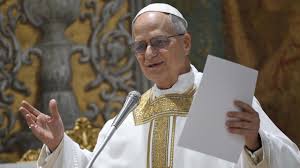
Pope Leo XIV commemorated the first anniversary of the death of his predecessor, Francis, as he addressed worshippers in Equatorial Guinea yesterday.
The pontiff paid tribute to his predecessor’s commitment to the most vulnerable and marginalised groups in society.
As he flew from Angola to Equatorial Guinea, Leo said Francis had given “his witness, his words, and his gestures.
He did so by truly living close to the poorest, to the least, to the sick, to children, and to the elderly.”
In tribute, Leo said, “Let us thank the Lord for the great gift of Francis’ life to the whole Church and to the whole world.
”As Pope, Francis headed the Catholic Church from 2013 to 2025. He died at the age of 88.
The current pope, who was the curia cardinal Robert Francis Prevost, a U.S. and Peruvian citizen, was then elected to succeed him.
Equatorial Guinea is the final stop on the pope’s 11-day tour.
Africa is one of the regions of the world where the Catholic Church is growing.
There are currently around 290 million Catholics living on the continent, and this could rise to more than 700 million by the end of this century, forecasts suggest.

From Ene Asuquo, Calabar
The Cross River State Government has confirmed a case of COVID-19 and swiftly activated its public health emergency response mechanisms to contain any potential spread, health authorities announced.
Making the disclosure in Calabar, The State Commissioner for Health, Dr.
Henry Egbe Ayuk, Tuesday at a press briefing assured residents that the situation is under control and that there is no need for panic, he saidHe said the confirmed case involves a 53-year-old Chinese expatriate who arrived Nigeria about a month ago and works in a company at Akamkpa Local Government Area.
The patient, who initially presented mild symptoms, was later admitted to the University of Calabar Teaching Hospital, where samples were collected and the infection confirmed.“The patient is currently receiving care at the state’s designated isolation and treatment centre and is responding well to treatment,” the commissioner said.
He emphasized that the government deliberately delayed public announcement until all diagnostic protocols were completed to avoid misinformation, adding that the state remains vigilant in disease surveillance and response.
Ayuk noted that global interconnectedness continues to expose populations to infectious diseases, stressing that COVID-19, like other outbreaks, is not peculiar to Nigeria.
“We are living in a world of mobile populations, and public health threats can easily cross borders. What matters is the capacity to detect and contain them promptly, and that is what we are doing.
“The state is safe. There is no cause for alarm, but we must all play our part in preventing the spread,” Ayuk reiterated.
The State Epidemiologist, Dr. Inyang Ekpenyong, confirmed that this is the first officially recorded COVID-19 case in Cross River since 2022, attributing the low visibility of recent cases to widespread vaccination and the prevalence of mild or unreported infections.
She explained that COVID-19 symptoms, such as fever, cough, sore throat, and respiratory distress in severe cases often resemble malaria, which may contribute to underreporting.
“With even a single confirmed case, it qualifies as an outbreak, and that is why we immediately activated the Emergency Operations Centre (EOC),” Ekpenyong said.
She disclosed that rapid response teams have been deployed to Akamkpa LGA, while contact tracing and line-listing of exposed individuals are ongoing. Identified contacts are being monitored daily within the virus’ incubation period of two to 14 days.
WHO State Coordinator, Dr. Olatunde Rebecca, highlighted the importance of sustained surveillance, risk communication, and provision of testing materials. She also warned against misinformation, describing it as a key factor that can worsen outbreak outcomes.
“COVID-19 spreads through respiratory droplets and contaminated surfaces. Preventive measures such as hand hygiene, use of face masks, and physical distancing remain critical,” she said.
Rebecca added that efforts are underway, in collaboration with national health authorities, to determine the specific strain involved in the current case.



Son Kills Father While Defending Mother in Niger
ShareFrom Dan Amasingha, Minna A tragic domestic incident has left a 60-year-old man dead after he was allegedly assaulted by...


Man City, Inter, Chelsea, Juventus Face Off in Hong Kong for Preseason
ShareEnglish and Italian football giants Manchester City, Chelsea, Inter Milan and Juventus will square up for pre-season friendlies in Hong Kong in August, the clubs...

Pope Leo XIV Pays Tribute to Predecessor on Anniversary of His Death
SharePope Leo XIV commemorated the first anniversary of the death of his predecessor, Francis, as he addressed worshippers in Equatorial Guinea yesterday. The pontiff paid tribute to his...


Labour Party Fixes National Convention April 28
ShareThe Labour Party has fixed its national convention for April 28 in Umuahia, Abia. The party also officially released the list of chairmen and members of its electoral sub-committees for the forthcoming...

Cross River Confirms Case of COVID-19
ShareFrom Ene Asuquo, Calabar The Cross River State Government has confirmed a case of COVID-19 and swiftly activated its public health emergency response mechanisms to contain any potential...


Nigeria Imports 61.7m Barrels US Crude In Two Years
ShareNigeria imported about 61.7 million barrels of crude oil from the United States between January 2024 and January 2026, underscoring...

FG Slams 13-Count Charge against Alleged Coup Plotters
ShareBy David Torough, Abuja The Federal Government has filed a 13-count charge before the Federal High Court in Abuja against...


Tinubu Restructures Economic Team, Drops Wale Edun, Dangiwa
ShareBy Tony Obiechina and Raphael Atuu, Abuja President Bola Tinubu has approved a minor reshuffle of the Federal Executive Council,...


Nasarawa Lawmaker Supports Wadada Endorsement
ShareBy Tambaya Julius, Abuja The Nasarawa State House of Assembly Member Representing Keffi West Hon. Ibrahim Aliyu Nana has pledged...
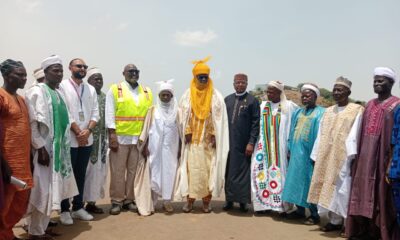

Centenary City Access Road Reaches 35 Per Cent Completion as Community Backing Drives Progress
ShareBy David Torough, Abuja Construction of the 4.3-kilometre access road within Abuja’s Centenary City development has reached 35 per cent...