
Agriculture
FG Vows to Establish Agricultural Hubs Nationwide


…Agricultural Hubs
By Ateed Yusuf, Abuja
The Federal Government has made a commitment to create agricultural hubs across the country through the implementation of the Special Agro-Industrial Processing Zones (SAPZ) program and the Value Chain Development Program (VCDP).
This decision was announced in a communiqué issued at the conclusion of the Nigeria high-level event at the UN Food Systems Summit in Rome, Italy.
During the event, Vice President Kashim Shettima affirmed that the Federal Government would continue to focus on mobilizing innovative financing to address critical challenges related to food systems priorities. This commitment aligns with the Nigeria Food Systems Transformation Pathways.
“Considering the substantial food finance gap in Nigeria, at both regional and global levels, Nigeria is calling for the mobilization of key national and international stakeholders from formal sectors to build win-win partnerships. This will catalyze transformative and substantial funding for achieving sustainable, resilient, and inclusive food systems,” said Shettima.
Read Also: 10th Reps Rollout Six-Point Agenda, Vow to Prioritize Citizens’ Needs
President of IFAD, Alvaro Lario, emphasized the need for governments and development agencies to lead the way with their own investments to stimulate private investment. He stressed the importance of ensuring that these investments empower smallholder farmers, improve their access to markets, increase their production, and enhance their resilience.
Dr. Muhammad Al Jasser, President of the Islamic Development Bank, and Dr. Akinwumi Adesina, President of the African Development Bank, reconfirmed their commitment to supporting Nigeria in achieving its development aspirations. They were represented by Mrs. Hassatou N’Sele, Vice-President of AfDB.
These banks pledged to support the country in implementing its future national development plans.
Mr. Reji George, Vice-President of OLAM, a private partner of IFAD-supported VCDP, highlighted the partnership agreement between the organizations under the Commodity Alliance Forum (CAF), which offers smallholder rice farmers access to reliable and profitable markets. This collaboration fosters productive investments at the farm level.
Mrs. Ejim Lovelyn, Vice President of CAF, representing farmers at the summit, praised CAF as an outstanding case of Public/Private/Producers Partnership (4Ps) of the VCDP. Through VCDP, smallholder farmers contribute to financing priority actions for food system transformation while benefiting from value chain financing provided by the private sector, which leads to increased sales and productivity.
The communiqué presented two case studies with a high-level panel discussion to showcase innovative finance models aimed at transforming Nigeria’s food system.
The first case study was the SAPZ program, launched in 2022, with a budget of US$521.00 million. The goal is to promote inclusive agribusiness development and rural transformation through the establishment of agricultural-specific economic zones. The program targets 100,000 direct beneficiaries, with 90% being smallholders and 10% small processors/traders/service providers.
The second case study focused on the VCDP launched in 2016, a US$329.00 million program of the Government of Nigeria funded by IFAD. It aims to improve the income and food security of poor rural households engaged in the production, processing, and marketing of rice and cassava on a sustainable basis. The program targets approximately 135,000 direct beneficiaries, consisting of 121,000 smallholder farmers and 14,000 processors/marketers.
The communiqué recommended that governments develop visions with the right policies, strategies, and enabling environment to stimulate innovative food investments by all actors. It emphasized the need for accelerated and coordinated implementation of the National Pathways for Food System Transformation.
Furthermore, it called on the private sector to scale up its innovative investments to support the country’s food systems priorities. It also highlighted the importance of integrating social, environmental, and health costs into funding decisions and fostering Public-Private Partnerships among international development partners.

Some residents in Lagos State have expressed concern over the recent surge in the price of tomatoes, forcing many households to adopt alternatives.
The residents made their views known in separate interviews on Wednesday in Lagos.
A market survey showed that a 50kg basket of tomatoes now sells between N115,000 and N125,000, compared to between N35,000 and N40,000 recorded last month.
Olachi Igwe, a resident of Ago Palace, said the scarcity and high cost of tomatoes had disrupted her household’s meal plans.
“I contacted my usual vendor, but she said tomatoes were scarce and difficult to source.
“A small bowl we used to buy for between N3,500 and N4,000 now sells for as high as N6,000 to N7,000, when available.
“For now, my family will resort to palm nut stew (ofe akwu) until prices stabilise,” she said.
Another resident, Mercy Okeleye of FESTAC, said although her family prefers fresh tomatoes, rising prices have forced her to consider cheaper options.
“I cannot do without fresh tomatoes because of the taste, but I may have to buy broken ones, popularly called ‘esha’, which are relatively cheaper.
“I do not consider tomato paste a suitable substitute because it is not purely made from tomatoes,” she said.
Also speaking, Tope Babalola from Dopemu, said she might adjust her cooking methods if prices remain high.
“I have not bought tomatoes in over a month, but if the price is still high, I will use more onions and peppers.
“I will not resort to artificial additives; I prefer natural ingredients for my meals,” she said.
Joan Ogugua, another resident, said she had already switched to tomato paste to cope with the situation.
“I asked my son to buy tomato paste for our meals. I cannot justify spending excessively on fresh tomatoes when other basic needs must be met,” she said.
Also, Oge Ugwu, a civil servant at Lekki, said she would resort to cucumber stew with the recent price hike.
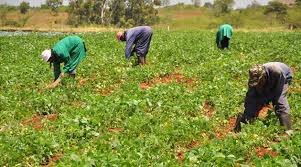
The Tomatoes Growers and Processors Association of Nigeria (TOPAN) has predicted a steady increase in the price of the produce between May and June 2026.
The Kaduna State Chairman TOPAN, Rabiu Zuntu, disclosed this in an interview recently in Lagos.
Zuntu noted that although there is no particular time for tomatoes planting season up north, seasonal weather variations can affect the production of the produce.
“Although we can plant tomatoes all-year-round, we cannot assure quality harvest all-year-round.
“Some farmers are harvesting now, while others are transplanting, and others are harvesting.
“Tomatoes are still available for sale but the price of the produce is gradually on the increase.
“Come May/June, the prices of tomatoes will be very expensive, so now is a good time to stock up the produce. There’s always a scarcity within that period.
“This is because of the nature of the weather in the north around that period, the weather is usually very hot and tomatoes cannot resist such hot temperature,” he said.
Zuntu said the price of tomatoes have started rising up in the north.
“A 50kg rafia basket of tomatoes sells from N20,000 as against N7,000 to N10,000 that was sold earlier in the year.
“While a crate of tomatoes up north is sold between N10,000 and N15,000 as against N5,000 to N6,500 sold earlier in the year.
“In most part of Kano State, where there is bumper harvest, they are rounding off their harvest. So, tomato is not that available there and most buyers have turned to where they can find it now, mostly within Kaduna State and some parts of Plateau State.
“So, that’s why the supply has decreased and the tomato supply and cost is determined by the law of demand and supply,” he said.
A 50kg basket of tomatoes in Lagos, at the moment, sells between N40,000 and N60,000 depending on the size and quality.
The Smallholder Women Farmers Organisation in Nigeria (SWOFON), Oyo State chapter, has said that the lack of irrigation facilities had become a major obstacle to dry season farming in the state.
The Chairperson of SWOFON in Oyo State, Atinuke Akinbade, said this in an interview in Ibadan on Monday.
Akinbade, who shared the experiences of women farmers in the state during the 2025 dry season, said that inadequate access to water for irrigation significantly affected the performance of many farmers during the period.
“It hindered many older farmers from participating in dry season farming and also prevented younger farmers from doing as much as they could in cultivating large acres of land,” she said.
Akinbade explained that farmers who managed to plant during the season struggled to access sufficient water to irrigate their farms, a situation worsened by the effects of climate change.
“Many farmers who depended on streams and wells to water their crops suffered major setbacks because those sources could not provide enough water for irrigation.
“Some farmers had to resort to buying water from commercial water tankers, which increased the cost of production, while at times it was even difficult to get water from the tankers,” she said.
The SWOFON chairperson warned that failure to address the problem could worsen food insecurity in the coming months.
“Even now, rainy season farming has not fully commenced because of the irregular rainfall pattern.
“This is a double burden, and if nothing is done, it may lead to serious hunger later,” she said.
Akinbade, however, acknowledged that the government had organised training for members of the association on home gardening.
She, however, said that little support was provided to address the challenges of dry season farming.
The chairman said that the home garden support package given to members consisted mainly of seedlings and one sprayer.
“They gave us two packs each of maize and pepper seeds, with six seeds in each pack, as well as one sprayer, so that we can grow food for household consumption,” she said.
Earlier, Oluwatoyin Oyedeji, SWOFON Coordinator in Oyo East, explained the severe hardship members of the organisation experienced in sourcing water for irrigation.
“Many farmers are already counting their losses because water was not available to irrigate their farms.
“Those who depended on streams and brooks were badly affected because many of them dried up, while the few that still had water had so little that farmers had to dig deeper into the ground in search of more,” Oyedeji said.
In the same vein, the Women Leader for farmers in Saki East, Musiliu Ashiru, said the absence of irrigation facilities also hampered dry season farming in her area.
According to her, many farmers still engaged in dry season farming have had to pay for water to keep their crops alive.
“Many of them buy water from the dam here to irrigate their crops. It has not been easy for them this year,” Ashiru said.




Attempted Suicide in Nigeria: Legislative Reform, Economic Hardship and the Right to Human Dignity
ShareBy Oluwaleye Adedoyin Grace Should a person who survives a suicide attempt be punished or helped? This question challenges Nigeria’s...

UBA Scores Legal Victory in N156bn Stallion Debt Case
ShareBy Tambaya Julius, Abuja United Bank for Africa (UBA) Plc has secured a favourable judgment in its N156 billion debt...


Nigeria Customs, Afreximbank Push Regional Border Modernisation
ShareBy Tambaya Julius, Abuja The Nigeria Customs Service (NCS) and the Customs administrations of Benin and Cameroon are working with...


NCDMB Heritage Energy Train 48 Nigerians in Subsea Engineering
ShareFrom Mike Tayese, Yenagoa The Nigerian Content Development and Monitoring Board (NCDMB), in partnership with Heritage Energy Operational Services Limited...

CAN: Tinubu Tasks Christians for Greater Unity
ShareBy Laide Akinboade, Abuja The first lady Senator Oluremi Tinubu, at the weekend urged all Nigerian Christians to ensure they...
Maka Oganiru Begins Operations, Pledges Africa’s Investment-ready Projects
ShareBy Tony Obiechina, Abuja New Africa-focused advisory firm aims to connect high-potential opportunities with global capital, institutional investors and strategic...


FG Tadks Varsities on Specialised Health Degree Programmes
ShareBy Tambaya Julius, Abuja The Federal Government has urged vice-chancellors of Nigerian universities to introduce degree programmes that address critical...


Presidency, Makinde Clash Over Alleged ₦250bn NLNG Fund for States
ShareBy Tambaya Julius, Abuja The Presidency has dismissed claims by Oyo State Governor Seyi Makinde that the Federal Government is...


UBA Wins N156bn Debt Recovery Case Against Stallion Group
ShareThe Court on Friday ruled in the Bank’s favour on all issues and granted all its prayers. United Bank for...


Senator Abba Moro: It is Time to Go Home
ShareBy Cleopas Agada For seven years in the National Assembly, what has Benue South actually felt? For a man who...