
Metro
Five LGAs in Kwara at risk Of Flooding, NEMA Warns


The National Emergency Management Agency (NEMA) has warned that five Local Government Areas (LGAs) in Kwara State would experience high flood risk.
The LGAs include Edu, Baruten, Kaiama, Moro and Patigi.
The Director-General of NEMA, Zubaida Umar stated this on Tuesday in Ilorin, while speaking at the 2026 stakeholders’ engagement on National Disaster Preparedness and Response Campaign (NPRC).
The programme themed: “Strengthening Disaster Risk Governance for a Resilient Nigeria”, was organised by NEMA in collaboration with Sahel Consulting.
Umar, represented by Hussaini Isah, the Head of Operations for the NEMA Minna Operations Office, Niger State, also warned that several other LGAs areas within Kwara were projected to experience moderate flooding during the 2026 rainy seasons.
“In response, NEMA convened an expert review meeting on March 31 and April 1, to assess the implications of these forecasts.
“The analysis indicates potential challenges including delayed or erratic rainfall onset, shorter growing seasons, above-normal rainfall in some areas, prolonged dry spells, and higher temperatures,” she said.
According to her, these factors are expected to affect key sectors such as agriculture, healthcare, transportation, energy, water supply, education, and overall public wellbeing.
She said that agency had developed the 2026 Climate-Related Risk Management, Preparedness, and Mitigation framework.
Umar stated that the campaign is designed to drive early and coordinated action to protect lives and livelihoods during the rainy season
She noted that the theme is apt and underscored the need for stronger institutions, clearer responsibilities, and proactive collaboration across all levels.
“The recurrent impact of flooding in Nigeria demands an urgent and collective response.
“Each year, lives are lost, livelihoods are disrupted and public and private infrastructure worth billions of Naira is damaged.
“Communities also bear the burden of injuries, displacement, and the loss of life savings due to unmitigated flood events and their secondary effects,” she said
The D-G quoted the 2026 Seasonal Climate Prediction and Annual Flood Outlook released by the Nigerian Meteorological Agency and the Nigeria Hydrological Services Agency, that 23 states including the FCT, covering 132 LGAs, fall within high flood risk zones.
“A further 14 states, with 148 local government areas, are classified as moderate risk areas,” she said.
Umar explained that NEMA had identified risk profiles and tailored mitigation measures for communication to at-risk communities.
According to her, the agency is deploying technical teams to all states of the federation for direct community outreach.
She appealed to all stakeholders to support NEMA in amplifying early warning messages to help prevent avoidable flood disasters requiring a “whole-of-society” approach.
Also speaking, Jide Aina, the General Manager (GM) of the Kwara State Environmental Protection Agency (KWEPA) observed that the reality of climate change cannot be underestimated.
Aina called on all stakeholders to show responsibility in building resilience in the grassroots, adding that no community should be caught unaware when faced with disaster.
He explained that the agency collaborated with the Ministry of Environment on proper waste management to protect the environment and in the area of capacity building and compliance.
In his presentation, a Meteorologist with Nigeria Meteorological Agency (NIMET), Mr Desmond Onyilo, disclosed that the Kwara rainy season is dynamic.
He added that “the 2026 Seasonal Climate Prediction showed that the state will also experience a dry spell, which will be moderate to severe”.
He advised farmers to be watchful, adding that “after July 15, farmers should employ caution in cultivating their crops”.
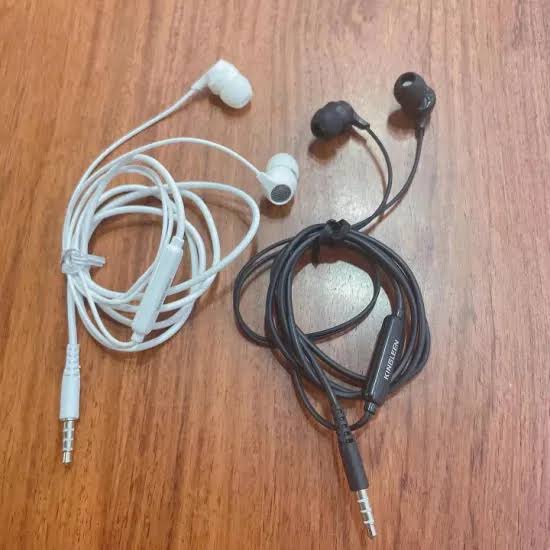
An audiologist at Capital Healthcare, Akanchawa Emmanuel, has warned Nigerians against prolonged use of earphones at high volumes, saying the habit could cause permanent hearing damage and other long-term auditory health complications.
Emmanuel gave the warning in an interview on Tuesday in Benin City, urging Nigerians to adopt safer listening habits and undergo regular hearing assessments.
She explained that hearing depended on delicate hair cells in the inner ear, which converted sound waves into electrical signals transmitted to the brain, noting that damaged cells could not regenerate.
According to her, normal hearing ranges between zero and 25 decibels, while prolonged exposure to sounds above safe levels through earphones can gradually cause irreversible hearing impairment.
“The number one thing that damages these hair cells is loud sound. Once they are destroyed, they are gone permanently,” she said.
Emmanuel said that many earphone users gradually increased volume levels over time, exposing themselves to cumulative hearing damage without recognising the long-term effects of their listening habits.
She warned that prolonged exposure to loud sounds could also trigger tinnitus, a persistent ringing or buzzing sensation in the ears that might become permanent in severe cases.
The audiologist identified teenagers and young adults between 15 and 35 years as the largest group of earphone users, driven largely by smartphone-based music streaming, gaming and communication.
She said that many people increased volume levels while commuting or staying in noisy environments to block background sounds, thereby exposing themselves to potentially harmful listening conditions.
“The devices themselves are not harmful. The problem lies in how they are used,” she said.
Emmanuel advised users to reduce volume whenever people nearby could hear sounds from their earphones, warning that prolonged listening sessions might cause temporary hearing difficulties after use.
She recommended adherence to the 60/60 rule, which encouraged listening at about 60 per cent volume for no more than 60 minutes at a stretch.
The audiologist also cautioned against sleeping with earphones, explaining that doing so prevented the ears from resting and unnecessarily increased exposure to potentially damaging sound levels.
According to her, prolonged use of in-ear devices may trap moisture within the ear canal, increasing the likelihood of irritation, infections and excessive wax accumulation.
Emmanuel further explained simple ear-pressure relief techniques, including the Valsalva manoeuvre, commonly used to relieve blocked ears during air travel and sudden atmospheric pressure changes.
She said the technique involved gently closing the mouth, pinching the nostrils and blowing softly through the nose until a slight “pop” is felt in the ears.
The audiologist, however, warned that the manoeuvre must be performed carefully to avoid damaging the eardrum, adding that swallowing, yawning or chewing gum might also provide relief.
She advised users to clean earphones regularly, avoid sharing them and consider noise-cancelling headphones, which helped reduce background noise and enabled safer listening at lower volumes.
Emmanuel said that hearing problems often developed gradually, with early warning signs including muffled hearing, difficulty following conversations and persistent ringing sensations after earphone use.
A Benin resident, Ben Ukachi, said he frequently used earphones for privacy and to block environmental noise but intended to reduce usage following the audiologist’s warning.
“I may not stop using it completely, but I will reduce the amount of time I spend using it,” he said.

President Bola Tinubu on Monday swore in six newly appointed Federal Commissioners of the National Population Commission (NPC) and two Federal Commissioners of the Revenue Mobilisation Allocation and Fiscal Commission (RMAFC).
The commissioners were inaugurated at the State House, Abuja, following their confirmation by the National Assembly.
The ceremony took place shortly before the commencement of the Federal Executive Council (FEC) meeting presided over by the President.
The six NPC commissioners inaugurated are Kolawole Alabi (Ekiti), Nasiru Mu’azu (Zamfara), Dr Isaka Yahaya (Kwara), Prof.
Sadiq Radda (Katsina), Chiso Dattijo (Sokoto) and Suleiman Umar (Jigawa).The two RMAFC commissioners sworn in are Hajiya Amina Gamawa, representing Bauchi State, and Abdullahi Mukhtar, representing Kaduna State.
The commissioners took their oaths of office before officially assuming their responsibilities.
Present at the ceremony were Vice President Kashim Shettima, Chief of Staff to the President, Femi Gbajabiamila, Secretary to the Government of the Federation, George Akume, Head of the Civil Service of the Federation, Didi Walson-Jack, among other top government officials.

WhatsApp says it has started rolling out username reservations, a new privacy feature that will allow users to connect without sharing their phone numbers.
WhatsApp made this known in a statement on Monday.
The messaging platform said username reservations commenced on Monday, June 29, ahead of the full launch of the feature later this year, with users to be notified in the app once the option becomes available to them.
According to WhatsApp, the feature is designed to give users greater control over their privacy by allowing them to communicate with new contacts using a unique username instead of their personal phone number.
The platform said there would be no public directory or username suggestions, adding that anyone wishing to contact a user for the first time must know the person’s exact username.
It also introduced an optional “username key”, an additional security feature that requires a first-time contact to enter a unique key before they can send a message, providing another layer of protection against unwanted messages.
“Starting this week, you can reserve a username to use later this year when we launch this feature.
“With over three billion people on WhatsApp, a lot of names overlap, which is why we’re opening reservations early so everyone has the opportunity to select the username that matters to them.
“For most people, choosing a WhatsApp username should be something unique that only people you want to contact you will know,” the company said.
WhatsApp explained that the feature addressed situations where users want to communicate with new acquaintances or participate in group conversations without revealing their phone numbers.
It said creators, small businesses and organisations would also have the option of claiming the same usernames they already use on Instagram or Facebook to maintain a consistent online identity across Meta’s platforms.
The company added that users who preferred not to create a username could use a built-in username generator to suggest available options.
According to WhatsApp, once usernames are fully launched and enabled by users, people or businesses they contact for the first time will no longer see their phone numbers.
It said reserving a username takes only a few seconds through Settings > Account > Username on the latest version of WhatsApp.
The company said the feature would be rolled out gradually over the coming months and users would receive in-app notifications when it becomes available in their respective countries.




FCDA Indigenous Contractors Protest Over Unpaid Contracts
ShareBy Tambaya Julius, Abuja A group of concerned indigenous contractors of the Federal Capital Development Authority (FCDA) on Tuesday staged...


Karu Councillor Organises Thanksgiving after APC Primaries
ShareBy Tambaya Julius, Abuja The Councillor representing Tattara/Kondoro Ward in Karu Local Government Area of Nasarawa State, Hon. Barr. Ninda...


Five LGAs in Kwara at risk Of Flooding, NEMA Warns
ShareThe National Emergency Management Agency (NEMA) has warned that five Local Government Areas (LGAs) in Kwara State would experience high flood risk. The LGAs include Edu, Baruten, Kaiama,...
FCDA Indigenous Contractors Protest over Unpaid Contracts
ShareBy Tambaya Julius, Abuja A group of concerned indigenous contractors of the Federal Capital Development Authority (FCDA) on Tuesday staged a fresh protest at the national secretariat of the All Progressives...

Audiologist Warns against Excessive Earphone Use
ShareAn audiologist at Capital Healthcare, Akanchawa Emmanuel, has warned Nigerians against prolonged use of earphones at high volumes, saying the habit could cause permanent...
Activist Threatens to Sue FG, UK Govts, Sultanate over Insecurity
ShareBy Raphael Atuu, Abuja International activist and founder of the Hold the Bull by the Horns Initiative, Manuel Moyeoka, has threatened to institute legal...

DMO Unveils N4trn FG Bond Auction Plan for Q3
ShareBy Tony Obiechina, Abuja The Debt Management Office (DMO) has unveiled plans to raise about N4 trillion through Federal Government...


FG Scraps JSS–SSS Separation to Tackle 20m Dropout Crisis
ShareBy Tony Obiechina, Abuja The Federal Government has announced plans to phase out the policy separating Junior Secondary Schools (JSS)...


World Bank Hands States $27m for Meeting Reform Targets
ShareBy David Torough, Abuja The World Bank has approved the disbursement of $27 million in performance-based incentives to Nigerian states...


Tinubu Swears in New NPC, RMAFC Commissioners
SharePresident Bola Tinubu on Monday swore in six newly appointed Federal Commissioners of the National Population Commission (NPC) and two Federal Commissioners of the Revenue Mobilisation Allocation and...