
NEWS
Floods, Erosion Leave Trail of Destruction across North-Central

From Abel Leonard, Lafia
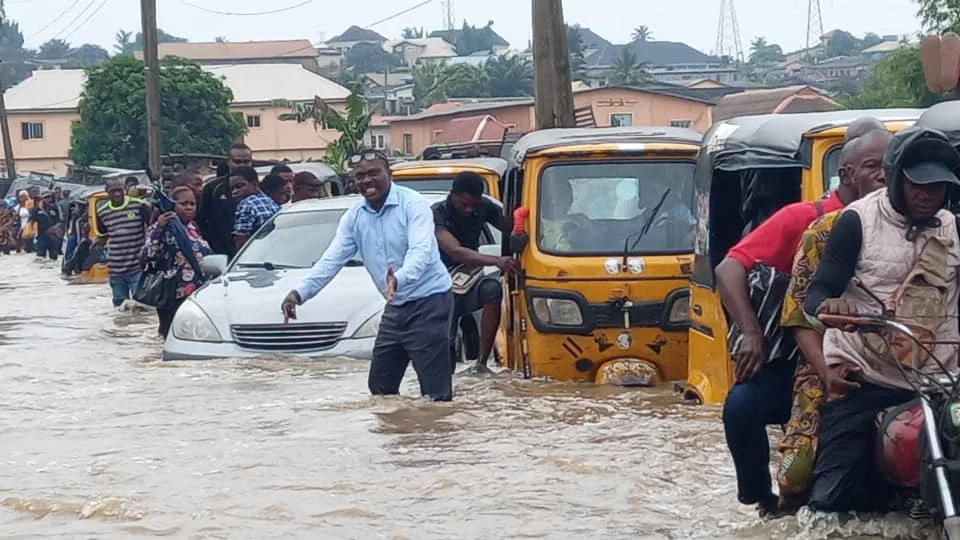
Communities across North-Central Nigeria are facing mounting threats from flooding and erosion, with residents reporting the destruction of homes, roads, farmlands and other critical infrastructure, even as state governments and development partners intensify efforts to control the environmental crisis.
From Kogi and Nasarawa to Niger, Bauchi, Gombe and Jigawa, expanding gullies, overflowing waterways and inadequate drainage systems have displaced residents, disrupted farming and trade, and in some cases cut communities off from markets and neighbouring settlements.
The scale of the challenge has prompted governments to initiate or support projects running into tens of billions of naira, involving drainage construction, gully stabilisation, land reclamation, tree planting, watershed restoration and other measures.
In Kogi, residents of Idah and Egbe described erosion as a persistent threat that has progressively eaten into roads, houses and access routes.
At a settlement behind the Government Technical College towards Oga Memorial Grammar School in Igalaogba Ward, Idah Local Government Area, residents said erosion had worsened over the past five years, forcing some people to abandon their homes.
A resident, Hadizat Umoru, said buildings and fences around her residence had been damaged, while access had become increasingly difficult.
“Some people can no longer gain entry into their houses because the erosion has eaten up everywhere,” she said, adding that residents could no longer conveniently use motorcycles or vehicles along parts of the affected road.
Another resident, Jibrin James, said residents had previously contributed money to repair a section of the access road after erosion nearly severed the route.
He said officials of the World Bank had visited the area twice to assess the damage, including with drone cameras, but remedial work had yet to begin.
James said the expanding gully had reached a stage where proper drainage was needed to channel stormwater rather than attempting to simply block its path.
In Egbe, civil engineer Ayokunle Gbadebo-Olajide said the town’s location among mountains and hills made it particularly vulnerable to flooding and erosion during the rainy season.
He said the major road linking the community to neighbouring areas was frequently affected, disrupting the movement of farm produce and cutting off smaller communities.
According to him, erosion and floods had washed away streets, exposed building foundations and caused some houses to collapse.
He blamed the recurring damage partly on inadequate preventive measures, insufficient funding and construction on natural watercourses and flood paths.
Kogi government officials, however, said significant interventions were underway across the state.
Bode Adeyemi, Special Adviser to Gov. Ahmed Ododo on Energy Matters and Chairman, Forum of Special Advisers, said the government had undertaken erosion-control projects in several parts of the state, including Kabba.
He said Kogi remained particularly vulnerable because of its location at the confluence of the Rivers Niger and Benue, leaving farmlands, homes, schools and health facilities exposed to flooding and erosion.
He also reaffirmed the state’s commitment to the Nigeria Erosion and Watershed Management Project (NEWMAP) and the European Investment Bank-supported intervention targeting erosion, flooding and environmental degradation.
In Nasarawa, residents acknowledged the impact of ongoing government and development-partner interventions but urged authorities to extend them to communities still facing severe erosion.
Mallam Suleiman Abdullahi of Doma Local Government Area said intervention work had protected homes, roads and farmlands previously threatened by gully erosion.
But Grace Ezekiel of Angwan Nungu in Lafia said communities including Ombi One and Bukan Sidi were still suffering from severe erosion that had cut off roads and destroyed livelihoods.
Nasarawa Commissioner for Environment, Natural Resources and Mining, Princess Margaret Elayo, said the state government had invested heavily in erosion control through drainage construction and other measures.
She said the World Bank-assisted Agro-Climatic Resilience in Semi-Arid Landscapes (ACReSAL) project had implemented erosion-control activities in severely affected local government areas.
Elayo disclosed that the state had awarded a N10 billion erosion-control contract covering Lafia, Doma and Toto, involving drainage construction, gully stabilisation and rehabilitation of degraded land.
She added that compensation payments had reached N2.4 billion in Lafia and Doma and N744 million in Toto for people affected by the projects.
In Niger, the collapse of the Yinti Bridge in Katcha Local Government Area has exposed another dimension of the crisis, cutting several farming communities off from Katcha market and other parts of the state.
Residents said the bridge, a critical link for farmers transporting produce, had deteriorated for years before recent flooding worsened its condition.
Mallam Baba Yinti said the bridge had been neglected despite its importance to surrounding farming communities.
Another resident, Yahaya Abubakar, said its collapse had severely disrupted movement and raised concerns about access to markets, essential goods and services.
Although an older bridge remained in use, he said it was also in poor condition.
Residents urged the Niger State Government and relevant authorities to urgently restore access and provide a durable solution rather than allowing the area to remain dependent on deteriorating infrastructure.
The Niger State Emergency Management Agency said it was increasingly focusing on prevention and mitigation.
Dr Ibrahim Hussaini, Director of Information and Linkages at NSEMA, said the agency conducts hazard identification, risk assessments and public sensitisation on activities that could worsen erosion.
The environmental crisis extends further east across Bauchi, Gombe and Jigawa, where governments have launched projects valued at more than N35 billion to address flooding, erosion and land degradation.
In Bauchi, a N29.7 billion flood and gully erosion-control project is being implemented in collaboration with ACReSAL. The 15.2-kilometre intervention, funded by the World Bank with a 40 per cent state contribution, targets degraded land and stormwater and gully erosion in communities including Tsohon Kamfani, Sabon Kaura, Wunti Dada, Abubakar Tatari Ali Polytechnic, Tambari Housing Estate, Yelwa Bridge and the Bauchi State College of Agriculture.
The state has also distributed one million tree seedlings for planting in schools, offices, strategic locations and places of worship.
In Gombe, Commissioner for Environment and Forest Resources Yusuf Jalingo said erosion-control interventions implemented with ACReSAL and NEWMAP had improved the lives of about 1.6 million people across different corridors.
He said more than 400,000 residents living along gully corridors in Gombe metropolis had benefited, while projects were also ongoing in communities across Funakaye, Dukku, Nafada, Kwami and Akko local government areas.
The government has combined channelisation and water-diversion outlets with ecological restoration and afforestation under its Gombe Goes Green initiative.
Residents said the interventions had brought relief after years of devastation.
Haruna Musa, a resident of Hayin Kwarin Misau, recalled that erosion had destroyed houses in his neighbourhood, saying many structures that stood there a decade ago had been washed away.
In Jigawa, the state government has spent about N3 billion on the Kila erosion-control project in Gwaram Local Government Area, according to Commissioner for Information Sagir Musa.
The state is also collaborating with federal agencies on drainage and erosion-control projects, including an intervention in Jahun Local Government Area designed to address perennial flooding and erosion.
Experts and civil society stakeholders, however, warned that construction alone would not solve the problem.
Lecturer Mansur Ahmad of Hussaini Adamu Federal Polytechnic, Kazaure, called for stronger land-use planning and monitoring of communities located along river channels and waterways.
He identified several erosion-prone areas requiring close monitoring, including Dutse, Gwaram, Kiyawa, Buji, Birnin Kudu, Kafin Hausa, Jahun, Miga, Malam Madori, Ringim and Taura.
Shittu Kabiru, Executive Director of the Youth Aid and Development Association of Nigeria, said excessive rainfall, flooding, poor drainage, exposed soils and vegetation removal were aggravating erosion in Jigawa.
The consequences, he said, included expanding gullies, loss of agricultural land and livelihoods, and damage to roads and culverts.
Across the affected states, residents and experts agreed that emergency repairs must be matched with long-term preventive measures, including better drainage, enforcement of land-use regulations, protection of natural waterways, reforestation and improved maintenance of public infrastructure.
For communities already living on the edge of expanding gullies and flood channels, however, the demand remains immediate: intervention must reach them before the next major rainfall turns environmental vulnerability into another human disaster.
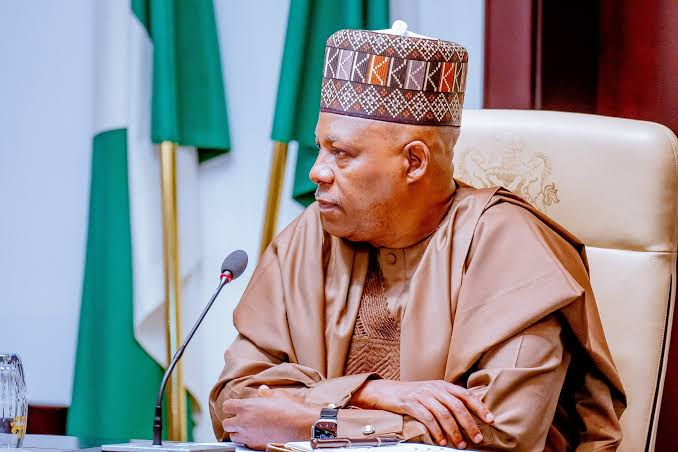
President Bola Tinubu said recent reforms in Nigeria’s oil and gas sector are designed to unlock up to 50 billion dollars in new deep offshore investments.
Tinubu, who was represented by Vice-President Kashim Shettima, said this on Tuesday in Abuja at the fifth anniversary of the Nigerian Upstream Petroleum Regulatory Commission (NUPRC), established under the Petroleum Industry Act (PIA) 2021.
The President said the Deep Offshore Oil and Gas Projects Incentive Tax Order 2026 had replaced uncertainty with clear and published investment criteria.
“The order replaces that uncertainty with clear, published criteria and requires projects to be executed in Nigeria wherever applicable.
“It is designed to unlock up to 50 billion dollars in new investment, beginning with the Bonga South-West project.
“The message to the world is simple: Nigeria is open for long-term investment and the terms are clear,” Tinubu said.
He said the measure was particularly important because some of Nigeria’s largest oil prospects were located deep offshore but had remained undeveloped for years.
According to him, the incentive is expected to unlock as much as 50 billion dollars in new investment, beginning with the Bonga South-West project.
Tinubu said the development reinforced the Federal Government’s message that Nigeria was open to long-term investment and committed to providing clear and predictable terms.
He said the PIA had provided a strong foundation for investment by establishing clear rules, a predictable regulatory framework and mechanisms for greater participation of host communities.
The President said Nigeria had also recorded progress in restoring security in oil-producing areas, attracting investors and improving upstream investment opportunities through open and competitive processes.
He said investors who previously looked elsewhere were returning to Nigeria, which had become Africa’s leading destination for upstream investment for two consecutive years.
Tinubu also highlighted the Host Communities Development Trusts, saying more than 170 host-community trusts had been funded to support projects in education, healthcare and other areas.
He said the development of host communities was particularly significant because sustainable peace in oil-producing areas depended on fairness, inclusion and shared benefits.
The President said the administration was determined to use petroleum resources to support a broader economy driven by agriculture, manufacturing, digital and creative industries.
He said the oil and gas sector would continue to provide gas for power, industries and factories while creating opportunities for Nigerian engineers, fabricators and indigenous service companies.
He said policy reforms would only deliver results when effectively implemented, placing a major responsibility on NUPRC to ensure predictable, transparent and reliable regulatory processes.
Tinubu charged the commission to work closely with sister agencies to ensure investors were not subjected to conflicting requirements or unnecessary delays.
He also urged operators to comply with their work programmes, local-content obligations, environmental standards and commitments to host communities in return for government incentives.
The President said the government would uphold the rule of law, sanctity of contracts and accountability as key pillars for sustaining investor confidence in the sector.
He said the administration would also pursue an energy transition strategy suited to Nigeria’s needs, with greater gas supply for power, industry and clean cooking, alongside expansion of renewable energy.
Tinubu congratulated the NUPRC on its fifth anniversary, urging its management and staff to sustain the commitment, integrity and sense of purpose required to consolidate gains in the upstream sector. (NAN)
From Joseph Amedu, Lokoja
Kogi State Governor, Ahmed Ododo has commiserated with the families of the Nigerian Air Force personnel who lost their lives in the tragic aircraft crash in the Igbokoda area of Ondo State.
The condolence message signed by Special Adviser on Media to the Governor, Ismaila Isah, was made available to DAILY ASSET on Tuesday.
Governor Ododo also extended his condolences to President Bola Tinubu, the Chief of Air Staff, Air Marshal Sunday Kelvin Aneke, and the Nigerian Armed Forces over the painful loss.
The Governor described the incident as a sad moment for the nation, particularly the Nigerian Air Force, whose personnel continue to make sacrifices in combating insecurity on different fronts of military operations across the country and in the service of the nation.
GovernmentGovernor Ododo also commended the Nigerian Air Force, the Ondo State Government, federal and state emergency services and other first responders for their swift response following the incident.
He assured families of the fallen officers of the Nigeria Airforce, President Tinubu and the Nigerian Armed Forces of the solidarity and prayers of the Government and people of Kogi State at this difficult time.
He prayed for the repose of the souls of the departed and asked Almighty God to grant their families, colleagues and loved ones the strength and fortitude to bear the loss.
From Francis Sadhere, Delta
The Warri, Uvwie and Environs Special Area Development Agency (WUEDA) has urged journalists to strengthen investigative and verification practices in their reportage to prevent misinformation and promote sustainable development in Warri, Uvwie and adjoining communities.
The Director General of WUEDA, Hon.
Prince Okakuro Godwin Eguriase Ejinyere, gave the charge on Monday when the newly inaugurated executives of the Warri Correspondents Chapel of the Nigeria Union of Journalists (NUJ) paid a courtesy visit to the agency at its headquarters within the Delta State Development and Property Authority (DDPA), Effurun.Ejinyere said journalists had a critical responsibility to verify allegations and facts before publication, noting that inaccurate reports could mislead members of the public, damage the reputation of institutions and undermine confidence in government programmes.
He called on members of the Correspondents Chapel to see themselves as partners in development while maintaining the independence and ethical standards of the journalism profession.
According to him, journalists should go beyond reporting announcements by examining government projects, their objectives, implementation challenges and the extent to which they are improving the lives of residents.
The WUEDA boss said the agency was committed to executing quality infrastructure projects in accordance with approved engineering specifications, assuring that contractors engaged by the agency would be properly supervised to ensure compliance with required standards.
He said WUEDA’s interventions in drainage construction, road development and other infrastructure were designed to address some of the critical challenges confronting residents of Warri, Uvwie and their environs.
Ejinyere also reaffirmed the commitment of Governor Sheriff Oborevwori’s administration to restoring the lost glory of Warri and its adjoining areas, saying WUEDA’s interventions formed part of the broader effort to tackle infrastructural deficits in the Oil City.
Earlier, the Chairman of the Warri Correspondents Chapel, Comrade Akpokona Omafuaire, said the visit was aimed at formally introducing the new executive to the WUEDA management and strengthening the relationship between the media and the agency.
Omafuaire said the chapel would give professional attention to WUEDA’s activities, particularly its intervention projects, while ensuring that such reportage remained objective and guided by journalistic ethics.
He described WUEDA as a performing interventionist agency whose activities had become increasingly visible across Warri, Uvwie and neighbouring communities.
The former Chairman of the Delta State Council of the NUJ, Comrade Michael Ikogwu, commended Ejinyere and his team of engineers for their efforts, but stressed the need for sustained monitoring and supervision of projects to ensure contractors delivered quality work and value for public funds.
Similarly, the immediate past Chairman of the Warri Correspondents Chapel, Comrade Okakuro Okies Victor Okpomor, urged WUEDA to maintain close supervision of its ongoing projects to guarantee their quality and durability.
The visit was also attended by the Vice Chairman of the Chapel, Comrade Francis Sadhere; Secretary, Comrade Edeki Igafe; Assistant Secretary, Comrade Samuel Ogude; Treasurer, Comrade Onyekachukwu Menuwa; Financial Secretary, Comrade Success Okuchemiya; and Auditor, Comrade Odeya Ogbetuo.
Also present were the immediate past Chairman of the Chapel, Okies Victor Okpomor, and former Delta NUJ Chairman, Michael Ikogwu.
WUEDA’s Director of Administration and Finance, Ochuko Mofe-Ojeke, and Chief Accountant, Mrs. Roseline Okorigba, were among the management officials present.
The engagement highlighted the need for closer interaction between development agencies and the media, particularly as government interventions increasingly attract public attention.
While WUEDA requires effective communication of its projects and achievements, the media also has a responsibility to independently assess the quality, impact and challenges associated with such interventions.
For residents, the value of such a relationship lies not merely in publicity but in ensuring that accurate information is available about projects that directly affect their communities.
The engagement therefore provides an opportunity for WUEDA and the media to maintain an open channel through which facts can be obtained, concerns can be raised and shortcomings identified without compromising the independence of journalists.
At a time when unverified claims can spread rapidly through social media, Ejinyere’s call for proper verification also underscores the need for journalists to rely on facts and credible sources before publishing reports capable of shaping public opinion.
The partnership, if sustained on the basis of transparency and professional independence, could strengthen development reporting in Warri and its environs while ensuring that government interventions receive both the publicity and scrutiny required to deliver lasting benefits to the people



Nigeria’s Oil Reforms will Unlock $50bn Deep Offshore Investments – Tinubu
SharePresident Bola Tinubu said recent reforms in Nigeria’s oil and gas sector are designed to unlock up to 50 billion...
Ododo Condoles Families of NAF Personnel, Armed Forces Over Ondo Crash
ShareFrom Joseph Amedu, Lokoja Kogi State Governor, Ahmed Ododo has commiserated with the families of the Nigerian Air Force personnel...
WUEDA Tasks Journalists on Verification, Development Reporting
ShareFrom Francis Sadhere, Delta The Warri, Uvwie and Environs Special Area Development Agency (WUEDA) has urged journalists to strengthen investigative...
Dauda Joins FG’s Delegation for Nigeria- Ethiopia Leadership Exchange, Learning Visit
ShareFrom Ifeanyichukwu Nwannah, Gusau President Bola Tinubu has approved a high-level Nigerian delegation to Addis Ababa for a leadership exchange...
Civic Education Vital for Future Leaders – Ekiti Commissioner
ShareThe Ekiti State Government said on Tuesday that exposing students to civic education played a vital role in preparing them...
DSIRS Threatens Prosecution of Fake Tax Collectors, Warns Taxpayers
ShareFrom Francis Sadhere, Delta The Delta State Internal Revenue Service (DSIRS) has warned individuals and groups issuing fake tax demand...
Alabere Urges Corps Members to Preserve Yoruba Culture, Uphold Good Character
ShareFrom Ayinde Akintade, Osogbo A revered traditional ruler in Osun State, the Alabere of Abereland, Oba Obafemi Adelakin Mutalib Abiade...
Nigeria Since 1999: When will the Years Begin to Count?
ShareBy Dakuku Peterside Think of a Nigerian born in 1999, the year civilian rule came back. That person is twenty-seven...

Tinubu’s Return: An Update
ShareBy Reuben Abati Exactly a week ago, President Bola Ahmed Tinubu, now jokingly renamed a citizen of Kano with a...

NDLEA Seizes over 10 Tonnes of Illicit Drugs, Recover Firearms in Kogi
ShareBy Elijah Oguche, Abuja The National Drug Law Enforcement Agency (NDLEA) in Kogi said it has seized more than 10...