
Business News
Forex Market Needs Restructuring—Tinubu’s Aide


The Special Adviser to the President on Economic Affairs, Dr Tope Fasua, has called for a structural reform of Nigeria’s foreign exchange market.
Fasua made the call at a roundtable organised by the National Policy Advocacy Centre (NPAC) of the Abuja Chamber of Commerce and Industry (ACCI) on Tuesday in Abuja.
The theme of the event was “Unification of Foreign Exchange and the Effect of Fuel Subsidy Removal on the Business Community.
Fasua said that Nigeria spends over $45 billion annually importing refined petroleum products, milk, chemicals and fish, among others.
He said: “I hear things like scarcity of forex. What is scarcity of forex, as if the world owes us any forex.
“The world does not owe us any forex. The forex you get is depending on the trade that you do.
“If you look at Nigeria’s import and export profile, over 20 items that we import in Nigeria are in the billions of dollar range.
“Our biggest import, fuel and diesel take about $25 billion to $30 billion every year.
“We have things like cars, which is about four billion every year; sugar, fish, milk one billion each; wheat four billion; chemicals, three billion dollars; pharmaceuticals two billion dollars.”
Fasua listed crude oil and fertiliser as two things that Nigeria exports in the billion dollar range.
“The first is petroleum and gas, you will see a figure like $57 billion, but out of that only 30 per cent is ours, according to Nigeria Extractive Industries Transparency Initiative (NEITI).
“The international oil companies that have the technology that do production own most of that money,’’ he said.
The Director, Policy Advocacy Centre, ACCI, Mr Chidiebere Onwumere, said that foreign exchange unification held promises of increased transparency, improved access to forex and reduced market distortions.
He, however, said that it raises questions about exchange rate stability, inflationary pressures and the cost of imports.
Mr Oscar Onyema, Managing Director, Nigerian Exchange Group (NEG) PLC, said collaborative dialogue was essential in formulating policies that balance short-term challenges with long-term benefits.
Highlighting the effects of both policies on the economy, Onyema said that immediate transition could disrupt businesses and the economy in several ways.
Represented by Mrs Cordelia Ihedioha, Onyema said that businesses that were heavily reliant on imports may face short-term disruptions due to the sudden shift in exchange rates.
According to him, this could result in increased costs for imported raw materials, leading to potential price adjustments for end consumers.
Mr Dele Alimi, Director General, Institute of Directors of Nigeria appealed to the Federal Government to take total control of the mineral sector.
He said: “The mineral sector over the years has been poorly handled by previous governments as host communities have been left impoverished by illegal mining activities.”
Dr Chijioke Ekechukwu, Vice President of ACCI, urged the Federal Government to fix the refineries and advocated alternative sources of energy for cars to cushion the effect of the petrol subsidy removal.
According to him, 60 per cent of cars in the United States run on electricity, adding, “that is where we should be headed for.”
He expressed concern that while the unification of foreign exchange rate brought checks and balances and better accountability, saying, “the high exchange has affected prices of goods and services.
“The inflation rate continues to coast upwards and there is a high cost of production, criminality, low standard of living and unemployment has risen above 33 per cent to 35 per cent.’’
Mr Asishana Okauru, the Director General of the Nigerian Governors’ Forum, represented by Olarenwaju Ajibasile said the cost of governance needed to be channelled to the local sector.
Olasupo Agbaje, General Manager Economic Regulations, Nigeria Midstream and Downstream Petroleum Regulatory Authority (NMDPRA) said that efficiency in the downstream operations was key in sustaining the petrol subsidy removal. (NAN)

Sunbeth Treenuts and Sesame Limited, a subsidiary of Sunbeth Agro HoldCo, announces the completion of its acquisition of UAC of Nigeria Plc’s 73.29% shareholding in Livestock Feeds Plc, following approval from Nigeria’s Securities and Exchange Commission.
The completion establishes Sunbeth as the majority shareholder of Livestock Feeds Plc and marks the beginning of a new phase focused on preserving the company’s heritage, strengthening its operations and supporting its long-term growth.
Sunbeth’s immediate priority is to support business continuity, working closely with the Board, management and employees to strengthen operations and maintain dependable service to customers and partners.
Commenting on the completion, Peeyush Karnani, Chief Strategy Officer of Sunbeth Agro HoldCo, said:
“Livestock Feeds is an established business with a proud heritage, trusted brands and longstanding relationships across Nigeria’s livestock industry. We recognise the responsibility that comes with becoming its majority shareholder.
“Our approach is to build on these foundations. Our immediate focus is continuity, operational stability and supporting the people and partnerships behind the business. We intend to combine Sunbeth’s strength in sourcing soya and other key feed ingredients with Livestock Feeds’ manufacturing expertise and established distribution network to improve supply reliability, strengthen competitiveness and create sustainable value for all shareholders.
“This acquisition also provides an important foundation for Sunbeth’s long-term strategy to build an integrated protein business spanning animal nutrition, poultry and cattle production, and meat processing. We will pursue this strategy through disciplined, phased investment, with a clear focus on strengthening Livestock Feeds and supporting the growth of Nigeria’s livestock industry.”
Sunbeth has also announced the appointment of five new directors to the Board of Livestock Feeds Plc, effective 17 November 2026.
The newly appointed directors are Mr Sam Okuwlehi, Mr Seyi Ebenezer, Professor Franklin Nnaemeka Ngwu, PhD, Mrs Mary Mulili, and Mr Farrukh Siddiqui. They will join three existing directors who will continue to serve on the Board: Mr Joseph I.D. Dada, Mr Adegboyega Adedeji, and Mr Abayomi Adeyemi.
Employees remain central to the company’s future. Sunbeth intends to work collaboratively with the Livestock Feeds team, drawing on its experience and knowledge as the business enters its next phase.
For customers, distributors and suppliers, the priority is to sustain trusted relationships, maintain product quality and strengthen supply reliability. Future improvements will be introduced through a structured and carefully managed process.
As majority shareholder, Sunbeth is committed to supporting sound governance, operational resilience and disciplined investment to build lasting value for Livestock Feeds Plc and all its shareholders.
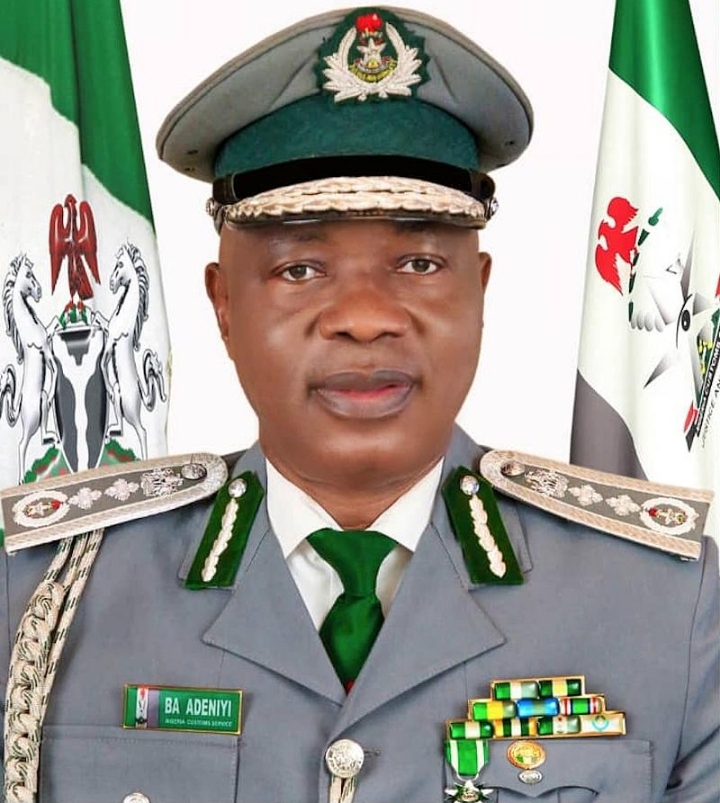
By Tambaya Julius, Abuja
The Comptroller-General of the Nigeria Customs Service (NCS), Bashir Adewale Adeniyi, has called on officers and men of the Customs Police Unit (CPU) to uphold discipline, professionalism and integrity, stressing that accountability must begin within the Service.
Adeniyi made the call while delivering the keynote address at the inaugural Customs Police Summit 2026, held at the NAF Conference Centre and Suites, Abuja.
The summit, with the theme, “Reimagining Customs Policing: Learning From the Past, Responding to the Present, and Preparing for the Future,” brought together customs personnel and representatives of security and law enforcement agencies to discuss ways of strengthening the unit and preparing it for emerging enforcement challenges.
The Customs boss, who is also the Chairperson of the World Customs Organization (WCO) Council, said the Service must first demonstrate the discipline and integrity it expects from traders and members of the public.
He described the Customs Police Unit as a critical part of the Service’s internal control system, noting that its responsibility goes beyond investigating misconduct to ensuring that officers exercise their powers within the confines of the law.
According to him, the unit, formally inaugurated in July 2019, was established to investigate erring personnel, prevent crime and promote compliance, guided by the principle that no officer is above the law.
He said the experience of the Service over the years had reinforced three important lessons: integrity must begin at home, enforcement powers must be exercised responsibly, and effective policing requires cooperation among relevant institutions.
The Comptroller-General expressed concern over the growing sophistication of criminal networks, which he said were increasingly exploiting legitimate trade routes and digital platforms to move illicit goods, including firearm components, narcotics, counterfeit medicines, protected wildlife and proceeds of illegal activities.
He maintained that tackling these threats required more than aggressive enforcement, calling instead for smarter, intelligence-driven operations supported by technology and international best practices.
Adeniyi pointed to several World Customs Organization instruments, including the SAFE Framework, Authorised Economic Operator (AEO) Programme, advance rulings, Time Release Study and Revised Kyoto Convention, as important tools for promoting compliance, facilitating legitimate trade and reducing opportunities for corruption.
He also highlighted the role of technology and data management in strengthening customs operations, citing the B’Odogwu platform, which integrates declarations, valuation, risk management and AEO processes.
He added that the INTERPOL Data Centre at Customs Headquarters had provided the Service with access to global criminal databases, while the Nigeria Customs Service Act 2023 had strengthened the legal foundation for intelligence-led operations, joint border activities and mutual administrative assistance.
The CGC identified Consolidation, Collaboration and Innovation as the three pillars that must shape the future of customs policing.
He explained that consolidation would require stronger operational procedures, improved investigations, properly documented cases for prosecution and continuous professional development of personnel.
He called for closer working relationships with the Nigeria Police Force, Armed Forces, National Drug Law Enforcement Agency (NDLEA), National Agency for Food and Drug Administration and Control (NAFDAC), Department of State Services (DSS), Independent Corrupt Practices and Other Related Offences Commission (ICPC), Nigeria Agricultural Quarantine Service (NAQS), neighbouring countries and border communities.
He also encouraged the Service to take advantage of emerging technologies, including artificial intelligence, advanced scanners, geospatial tools and electronic cargo tracking, to improve investigations and strengthen enforcement operations.
Adeniyi urged participants to use the summit to develop practical recommendations, including a Customs Police doctrine based on the NCS Act 2023 and Revised Arusha Declaration, improved protocols for joint operations and evidence management, guidelines for the responsible use of artificial intelligence in investigations, and better training and welfare for CPU personnel.
Addressing officers of the unit, he reminded them that their red berets represented the confidence Nigerians placed in the Service and must therefore be worn with discipline, restraint and pride.
He stressed that integrity remained the greatest badge of honour for every customs officer.
The Acting Provost Marshal of the NCS, Deputy Comptroller TS Sanusi, described the summit as an important step towards strengthening the institutional capacity and repositioning the Customs Police Unit.
Sanusi said the unit was established to provide a dedicated structure for maintaining discipline, investigating misconduct and ensuring compliance with professional standards among personnel and stakeholders.
He observed that the Service could not effectively enforce laws and regulate international trade without having strong mechanisms to promote discipline and accountability within its own ranks.
He added that the increasing challenges of transnational organised crime, illicit financial flows, corruption and emerging security threats had made the work of the Customs Police Unit more important.
The Acting Provost Marshal expressed appreciation to the Comptroller-General for his leadership, support and approval of funds for the inaugural summit, noting that the gesture reflected management’s commitment to strengthening the unit.
He also recognised the contributions of former Provost Marshals and personnel who helped establish the unit’s operational structures and professional standards.
Sanusi urged serving personnel to lead by example, insisting that discipline must begin with them if they were to earn the respect and confidence required to enforce it among others.
In his remarks, Assistant Comptroller-General of Customs at Headquarters, MS Shuaibu, called for a renewed approach to customs policing, with greater emphasis on professionalism, intelligence gathering and institutional accountability.
Shuaibu said the summit provided an opportunity to reflect on the unit’s achievements, address existing challenges and develop strategies to respond to changing global trade patterns and security threats.
He acknowledged the unit’s contributions to internal discipline, investigation of infractions and the protection of the Service’s interests, but stressed the need to continually improve its operational capacity.
He identified intelligence gathering, surveillance, risk analysis, inter-agency cooperation and modern investigative techniques as key areas requiring attention.
The ACG further emphasised that the exercise of police powers must be guided by respect for human rights and due process, warning that enforcement must never become an excuse for unjust treatment.
He urged officers to remain firm but lawful, courageous but responsible, and impartial in carrying out their responsibilities.

A graduate of the University of Maiduguri, Shianya Ebwaseh, said the Nigerian Education Loan Fund (NELFUND) helped improve her Grade Point Average (GPA) to 3.50 through financial support that enabled her to concentrate on her studies.
Ebwaseh, who graduated from the Department of Zoology, Faculty of Life Sciences, said this in an interview on Monday in Maiduguri.
She said financial difficulties had previously affected her academic performance, as she struggled to meet her daily needs while pursuing her degree.
The graduate said she resorted to selling fried chips and groundnuts on campus to support herself, sometimes missing lectures because of the time and energy required to run the business.
According to her, the introduction of NELFUND’s student loan scheme relieved her financial burden through tuition support and a monthly N20,000 upkeep allowance.
“Before NELFUND, I struggled with my GPA because of financial challenges. I sometimes missed lectures after spending hours frying and packaging chips for sale.
“But when NELFUND came, I stopped the business and concentrated on my studies. My GPA improved to 3.50, which is Second Class Upper,” she said.
Ebwaseh said the financial support also enabled her to attend lectures regularly, purchase learning materials and prepare adequately for tests and examinations without constant worries about money.
She added that her examination scores improved significantly after she began receiving the support, attributing the change to increased concentration and financial stability.
The graduate, who said she accessed the scheme in her third year, described the application process as simple and encouraged other eligible students to apply.
She also said the programme had helped financially disadvantaged students remain in school, particularly those whose parents could not afford tuition fees and upkeep.
Ebwaseh appealed to the Federal Government to sustain the initiative, emphasising that withdrawing the support could expose many students to financial difficulties and possible dropout.
She said the scheme had given beneficiaries an opportunity to pursue their academic ambitions with fewer financial distractions.(NAN)


Afe Babalola Send Education Reform Proposals to Tinubu
ShareThe Founder and Chancellor of the Afe Babalola University Ado-Ekiti (ABUAD), Aare Afe Babalola has announced plans to forward proposals...


Sunbeth Treenuts & Sesame Acquires 73.29 Per Cent of Livestocks Feeds Plc
ShareSunbeth Treenuts and Sesame Limited, a subsidiary of Sunbeth Agro HoldCo, announces the completion of its acquisition of UAC of...

How Tinubu’s Reforms Halted Nigeria’s Economic Collapse – Mbah
ShareFrom Sylvia Udegbunam, Enugu Enugu State Governor, Dr. Peter Mbah, says Nigeria would have suffered total economic collapse but for...


Oborevwori Presents N1.23trn 2027 Budget
ShareFrom Francis Sadhere, Delta Delta State Governor, Rt. Hon. Sheriff Oborevwori, on Monday presented a proposed N1.23 trillion 2027 budget...

Sanwo-Olu Gifts Flamingos N10m Each over World Cup Triumph
ShareLagos State Governor, Babajide Sanwo-Olu, has rewarded each member of Nigeria’s Flamingos with ₦10 million and an iPhone 18 Pro...

UniAbuja Land Tussle: Wike Only Implemented What His Predecessor Approved – FCTA
ShareBy Laide Akinboade, Abuja The Federal Capital Territory Administration (FCTA) has described today’s protest by the Joint Action Committee (JAC)...

Obi to Publish Anambra Achievements in 10-day Series
ShareThe 2027 presidential candidate of the Nigeria Democratic Congress, Peter Obi, has announced plans to publish a 10-day account of...


NiMet Predicts Dust Haze, Thunderstorms Nationwide
ShareThe Nigerian Meteorological Agency (NiMet) has predicted dust haze and thunderstorms across the country from Monday to Wednesday. NiMet’s weather...


INEC Debunks Claims of Remote BVAS Log-Out, Lost Election Results
ShareBy Orjime Moses, Abuja The Independent National Electoral Commission (INEC) has dismissed claims that presiding officers can be remotely logged...
Needless Diplomatic Brawl
ShareNigeria and South Africa do not need another quarrel. They have had too many already — xenophobic attacks, trade disputes,...