
NEWS
Akpabio, Oborevwori, Ogbuku to grace 13th Extraordinary General Assembly of South–South Monarchs Forum

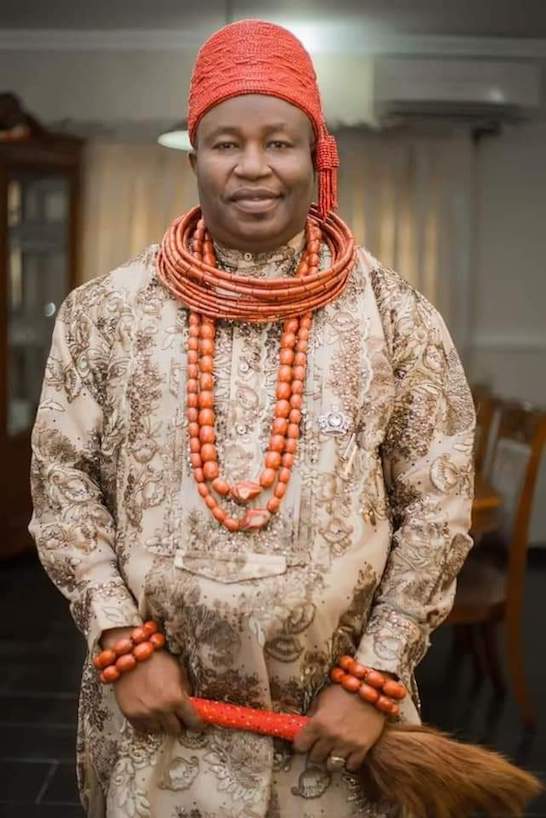
The 13th Extraordinary General Assembly of the Forum of South–South Monarchs is scheduled to hold in Asaba from May 21 – 22 May, with the President of the Senate and Chairman of the National Assembly, Senator (Dr) Godswill Obot Akpabio CON as Special Guest of Honour and the Executive Governor of Delta State, Excellency Rt Hon Elder Sheriff FO Oborevwori as the Chief Host.
A statement issued in Abuja on Sunday by the Chairman, Planning Committee, HRM Pere Stanley Perediegha Luke – Kalanama VIII (JP) – Pere of Akugbene – Mein Kingdom, and 1st Vice Chairman, Delta State Council of Traditional Rulers, said the event will hold at the Unity Hall, Government House, Asaba, on the theme: “Strengthening Stakeholder Collaboration for Development of the South – South Region: The Role of the Traditional Institution. ”
According to the statement, the Managing Director of the Niger Delta Development Commission (NDDC), Chief Dr Samuel Ogbuku, is expected to be the Guest Speaker, while the keynote address will be presented by Adele L. Jinadu, former Executive Director, Centre for Advanced Social Sciences (CASS) Port Harcourt and Adjunct Professor, Department of Political Science, University of Lagos.
Membership of the Forum consists of all First-Class Traditional Rulers and Members of the State Councils of Traditional Rulers of the six States of the South – South geopolitical zone: Akwa Ibom, Bayelsa, Cross River, Delta, Edo and Rivers States.
The statement also explained that the 13th Extraordinary General Assembly of the Forum is being organized in partnership with the Ashcraft Centre for Social Science Research to intensify collaboration, deepen synergy and articulate a common front among the diverse Stakeholders in the Region and beyond towards achieving the strategic imperatives of security and sustainable socio-economic development for the Region.
“The Forum is consciously aware that emerging national realities require the collective and deliberate action of all the gatekeepers to achieve the aspirations of the founding fathers and people of the Region,” it added.
Giving a background to the meeting, the statement noted that the Asaba event was in consonance with the fact that sustainable development, peace and security are major factors in nation building and national security, which constitute the fundamental underpinnings in the existence and survival of any society or nation.
“Therefore, the traditional institution must be alive to its responsibilities in achieving its natural mandate of promoting peaceful co-existence, peace and security in their domains, and also fostering national security which is fundamental in national development,” it said.
It expressed the firm belief of the South – South Monarchs Forum believes that by building Stakeholder synergy, the meeting shall engender shared responsibilities towards achieving the institutionalization of the road map and priorities of the policy frameworks crafted to boost economic revival, security and stability of the Region.
“It is also the expectation of the Forum that the derivatives from the meeting shall regenerate confidence in securing Foreign Direct Investment into the Region’s productive Sectors as canvassed by His Excellency President Bola Ahmed Tinubu, GCFR, at different international fora; and also boost capital growth and turnkey business startups and development,” it said.
While lamenting the palpable security challenges in the South-South Region, especially the unfortunate killing of 17 military personnel in Okuama community in Ughelli South LGA on 14th March, 2024, the said it was expected that the Asaba meeting would provide the avenue to extensively deliberate on how to avoid recurrence in any community within the Region.
It expressed appreciation to the Senate President, Senator Godswill Obot Akpabio; the Executive Governor of Delta State, Rt Hon Sheriff FO Oborevwori; the Managing Director of NDDC, Chief Dr Samuel Ogbuku and; all political leaders from the zone for their support geared towards making the forthcoming meeting a success.
“The subject matter is very sensitive to the aspirations of the Region. It is hoped that the proceedings from this General Assembly shall also inject fresh ideas and initiatives into the overall architecture of the Forum to reinforce a systemized and collective framework in actualizing its mandate.
“We also look forward to the robust participation and inputs of all Stakeholders, both in the public and private circles towards achieving the strategic imperatives of this event. The Forum is hopeful that all Stakeholders will consider this as a patriotic duty to our fatherland and contribute to the success of this event,” the statement said.
By Uche Uwaleke
The decision of the National Economic Council (NEC) to approve the refinancing of the US$3.3 billion Project Gazelle Pre-Export Finance Facility through a new US$4.5 billion facility, christened Project Gazelle 2, marks an important development in Nigeria’s public finance management.
If properly implemented, the restructuring has the potential to reduce financing costs, improve liquidity, strengthen the country’s external reserves and create additional fiscal space for government priorities. These are commendable objectives.However, while the improved financial terms deserve recognition, they should not overshadow the equally important issues of transparency, accountability and legislative oversight that have trailed Project Gazelle since its inception.
Refinancing an opaque arrangement on better commercial terms is certainly an improvement, but it is not a substitute for full public disclosure. A better deal must also be a more transparent deal.
To appreciate the significance of the recent decision, it is necessary to understand what Project Gazelle represents.
Project Gazelle is a crude oil pre-export finance facility originally arranged by the Nigerian National Petroleum Company Limited (NNPCL) in 2022 and concluded in 2023. Under the arrangement, NNPCL secured a US$3.3 billion loan from Afreximbank backed by future crude oil production. To repay the facility, Nigeria committed 90,000 barrels of crude oil per day between 2024 and 2029, amounting to 164.25 million barrels over the repayment period.
The loan reportedly carried an annual interest rate of about 11.85 percent and was collateralized by future crude oil sales.
From the outset, the transaction generated widespread concerns not least because of the structure of the transaction itself.
One of the major issues was the limited public disclosure surrounding the agreement. Important details regarding the loan documentation, repayment structure, crude oil collateral arrangements, revenue flows and the precise obligations assumed by the country were not readily available for public scrutiny.
The involvement of an offshore Special Purpose Vehicle (SPV), Project Gazelle Funding Limited, reportedly incorporated in the Bahamas, further heightened concerns regarding transparency, accountability and the possibility of revenue leakages.
These concerns were reinforced by the Central Bank of Nigeria’s Q4 2023 Economic Report, which indicated that NNPCL’s remittances to the Federation Account had declined significantly due to prior financial obligations, including crude-backed financing arrangements.
Since revenues accruing to the Federation Account belong to the Federal Government, the thirty-six states and the 774 local governments, any financing arrangement that directly affects those inflows inevitably raises important constitutional and fiscal questions.
Against this backdrop, the recent announcement by the Federal Government that the refinancing has been negotiated on considerably more favourable terms represents a significant improvement.
According to the FG, the volume of pledged crude oil has been reduced from 90,000 barrels per day to 78,750 barrels per day- a reduction of 12.5 percent. Consequently, an additional 11,250 barrels per day will now be available to the Federation, thereby improving future revenue inflows while still providing access to an additional US$3 billion in liquidity.
This is a sensible and pragmatic outcome. Reducing the amount of future crude production tied up as collateral while simultaneously lowering financing costs reflects stronger financial negotiation.
It demonstrates that the present administration recognizes the importance of balancing immediate financing needs with the long-term protection of Nigeria’s oil revenues.
Nevertheless, better pricing alone cannot resolve the fundamental governance issues associated with crude-backed borrowing.
The first and perhaps most urgent requirement is complete transparency. Nigerians deserve to know the full details of Project Gazelle 2. The FG should publish the principal terms of the refinancing arrangement, including the loan agreements, crude oil collateral schedules, repayment timelines, interest obligations, security arrangements, revenue flow mechanisms and the identities of all entities involved in the transaction.
Transparency strengthens public confidence, improves investor credibility and reduces unnecessary speculation.
Secondly, the FG should commission an independent forensic audit of Project Gazelle and all other crude-backed financing arrangements entered into over the years. Such an audit should determine the actual proceeds received, the utilization of the funds, the outstanding obligations, compliance with contractual terms and the overall fiscal impact on the Federation Account.
Independent verification would provide clarity and help establish stronger standards for future resource-backed financing.
Thirdly, NNPCL should institute regular monthly public reporting on the utilization of proceeds and the current repayment status of all crude-backed loans. Such reporting should disclose the volume of crude delivered, outstanding balances, repayments made and the impact on Federation Account inflows. Continuous disclosure is essential for accountability and prudent fiscal management.
Equally important is the constitutional role of the National Assembly. It goes without saying that any borrowing arrangement that commits future national oil production and materially affects revenues accruing to the Federation Account should be subjected to legislative scrutiny and approval.
The National Assembly must have the opportunity to examine the repayment obligations, evaluate the fiscal implications for all three tiers of government and ensure that the transaction represents value for money.
Such oversight is not an unnecessary bureaucratic hurdle; it is an essential safeguard against excessive encumbrance of national assets and future public revenues.
Finally, Nigeria must address the underlying challenge that makes crude-backed borrowing a recurring financing option in the first place notably inadequate crude oil production.
The country’s oil reserves are substantial. Nigeria possesses about 37 billion barrels of proven crude oil reserves compared to the United States’ estimated 50 billion barrels.
Yet while the United States currently produces about 13 million barrels per day, Nigeria’s production has hovered around 1.5 million barrels per day, often below its OPEC allocation. In effect, Nigeria possesses roughly three-quarters of America’s proven reserves but produces only about one-eighth of America’s daily output.
This striking disparity underscores the urgent need to increase crude oil production. Tackling oil theft, securing critical infrastructure, attracting fresh upstream investment, streamlining regulatory processes and improving operational efficiency should remain national priorities.
It is a no-brainer that higher production would generate additional revenues, reduce pressure to rely on crude-backed borrowing and strengthen the country’s overall fiscal resilience.
Undoubtedly, Project Gazelle 2 represents an improvement over its predecessor. Lower pledged crude volumes, improved financing terms and additional liquidity constitute meaningful gains for the Nigerian economy. These achievements deserve recognition.
However, the true measure of success will not be the size of the facility or the attractiveness of its commercial terms alone.
It will depend on whether the Government seizes this opportunity to institutionalize transparency, strengthen legislative oversight, improve public accountability and ensure that Nigeria’s petroleum resources are managed openly and prudently for the benefit of all citizens.
All said, a better deal should also be a more transparent deal. Only then can Project Gazelle 2 become not merely a refinancing exercise, but a defining example of responsible and accountable resource-backed financing in Nigeria.
Prof Uche Uwaleke, a Financial Economist, is the Director of the Institute of Capital Market Studies at the Nasarawa State University Keffi and President of the Capital Market Academics of Nigeria
By Isaac Asabor
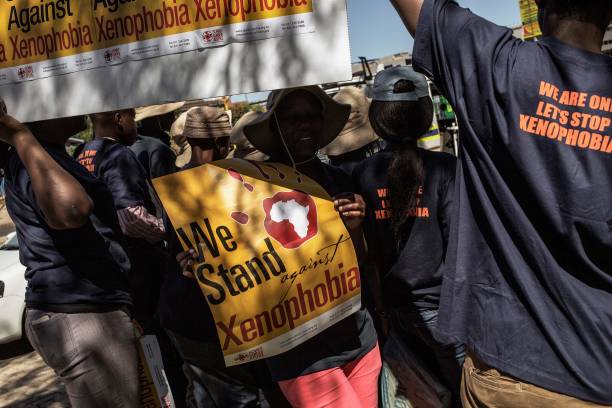
One cannot examine the evolution of xenophobia in South Africa without looking beyond the obvious perpetrators on the streets to the words and actions, or in some instances, the inaction, of those who have occupied positions of authority.
The issue did not begin with today’s politicians.
As far back as the late 1990s, then Minister of Home Affairs, Mangosuthu Buthelezi, repeatedly argued openly that undocumented migrants were placing enormous pressure on South Africa’s economy, public services, and employment opportunities. While concerns over illegal immigration were legitimate policy matters, critics argued that the language used often painted migrants broadly as burdens rather than distinguishing between law-abiding foreign residents and those violating immigration laws. Such messaging gradually seeped into public consciousness, reinforcing the belief that foreigners were responsible for many of the country’s social and economic difficulties.The administration of President Thabo Mbeki was similarly criticized for failing to appreciate the growing threat posed by anti-foreigner sentiment before the devastating xenophobic violence of 2008. Although Mbeki consistently promoted African unity on the continental stage through initiatives such as the African Renaissance and the New Partnership for Africa’s Development (NEPAD), his government was faulted for underestimating the depth of anti-immigrant resentment within South African communities. When violence erupted in 2008, many observers argued that the government had been caught flat-footed despite years of warning signs.
The attacks left more than 60 people dead, hundreds injured, and tens of thousands displaced. For many Africans, it was a shocking contradiction that the nation once celebrated as the “Rainbow Nation” had become the scene of brutal attacks against fellow Africans seeking nothing more than safety and economic opportunity.
During Jacob Zuma’s presidency, xenophobic tensions resurfaced repeatedly. While Zuma publicly condemned attacks whenever they occurred, critics maintained that his administration struggled to dismantle the social and political narratives that portrayed migrants as competitors for scarce jobs and public services. It was during this period that anti-immigrant rhetoric became increasingly mainstream in local politics, creating fertile ground for populist movements that openly campaigned against foreign nationals.
More recently, President Cyril Ramaphosa has repeatedly condemned xenophobic violence and affirmed that foreign nationals deserve protection under South African law. Those statements deserve recognition. Yet, words alone have done little to reassure African neighbours who have watched attacks recur with disturbing regularity under his administration.
Indeed, one of the greatest criticisms of Ramaphosa’s presidency on this issue is not what he has said, but what many perceive as what he has failed to do. His government’s response has often appeared reactive rather than preventive. Condemnations typically come after lives have been lost, businesses destroyed, and diplomatic damage inflicted. Rarely has there been evidence of a sustained national campaign aimed at dismantling anti-foreigner stereotypes, prosecuting perpetrators swiftly, or addressing the misinformation that fuels mob violence.
To many observers across Africa, including countless Nigerians who have repeatedly borne the brunt of xenophobic attacks, Ramaphosa’s approach has appeared unacceptably lackadaisical. Each outbreak has been followed by familiar promises, official visits to affected communities, and assurances that perpetrators would face justice. Yet the recurrence of similar attacks suggests that the underlying conditions enabling xenophobia have remained largely intact.
Leadership is measured not merely by condemning wrongdoing after it occurs but by preventing it from becoming a recurring national embarrassment. In that regard, successive South African administrations, including the current one, must accept a measure of responsibility. A government cannot indefinitely describe recurring xenophobic violence as isolated criminality when similar attacks continue to occur across different provinces over many years.
This is not to suggest that every South African shares xenophobic attitudes or that every leader has actively encouraged them. Far from it. South Africa remains home to millions of citizens who embrace African solidarity and reject violence against foreigners. Nevertheless, history demonstrates that inflammatory rhetoric by some leaders, insufficient action by others, and prolonged official complacency have collectively created an environment in which xenophobia has repeatedly found fertile ground.
On a final word, as South Africa continues to grapple with unemployment, inequality, poverty and the socioeconomic frustrations that have become fertile ground for anti-foreigner sentiment, one truth must never be lost: leaders shape societies through the power of their words. History has repeatedly shown that reckless rhetoric, whether deliberate or careless, can ignite passions that later spiral beyond control.
This is why South African leaders across every sphere of influence must exercise greater restraint and responsibility. Those in government, corporate boardrooms, traditional institutions, religious organizations, civil society, academia, the media, and the entertainment industry, as well as elder statesmen, monarchs, and other public figures whose voices command respect, must consciously refrain from making statements that directly or indirectly demonize foreign nationals or portray them as the architects of South Africa’s socioeconomic challenges.
South Africa’s immigration challenges are real and deserve lawful, well-thought-out policy responses. However, they should never become an excuse for scapegoating millions of law-abiding Africans who have come to the country in search of safety, opportunity, or a better life. To reduce complex governance failures, unemployment, crime, or economic stagnation to the mere presence of foreign nationals is not only intellectually dishonest but also dangerously irresponsible.
Indeed, every careless remark made by a respected leader has the potential to be interpreted by desperate or angry citizens as a licence to intimidate, attack, or even kill innocent people. Conversely, every message that promotes tolerance, coexistence, and the rule of law strengthens social cohesion and reinforces South Africa’s constitutional ideals.
South Africa earned global admiration by defeating apartheid and embracing reconciliation under leaders who preached unity rather than division. It must not now allow the scourge of xenophobia to erode that hard-earned moral standing or diminish its leadership role on the African continent.
The choice before South African leaders is therefore clear. They can continue to employ language that fuels suspicion, resentment, and hostility towards fellow Africans, or they can rise above short-term political expediency and champion a vision of a South Africa that is secure, lawful, inclusive, and worthy of the sacrifices that secured its freedom.
History will remember not only those who incited hatred but also those who possessed the influence to stop it and chose instead to speak the language of unity. It is time for South Africa’s leaders, in government, business, traditional institutions, and every other sphere of national life, to choose wisely, because their words will continue to shape not only the destiny of their country but also its relationship with the rest of Africa.
Youths in Borno South have commended the Borno State Government’s vocational training and starter packs distribution programme, describing it as a vital economic lifeline.
The beneficiaries spoke in separate interviews on Monday at the Borno State Vocational Enterprise Institute in Biu.
They said the initiative was bridging skills gaps, tackling unemployment and empowering young people to become self-reliant and economically productive.
Usman Haruna, a 17-year-old graduate from Hawul Local Government Area, said the training and starter pack would transform his future.
Haruna, the fifth of 11 children, said he arrived in Biu without knowing anyone but was admitted to study tailoring.
“This will change my life and help me fund my education to higher institutions while supporting my siblings’ educational aspirations,” he said.
He thanked Gov. Babagana Zulum and the Ministry of Education for providing training opportunities and starter packs for youths.
“I had lost hope because my parents have 11 children. I thought secondary school would be my highest educational achievement.
“Now my hope has been rekindled because I can work, earn income and fund my education up to university level,” Haruna said.
Another graduate, 23-year-old Jagila Chinampi from Askira Uba, said the programme would enable her to establish a business and earn income.
“Soon I will get married. This training is my biggest empowerment because I will not depend entirely on my husband,” she said.
Chinampi described the initiative as a major empowerment tool for girls, helping them become financially independent and less vulnerable to abuse.
Bintu Ali, a Computer Studies trainee, said she had acquired valuable knowledge in graphic design and other digital skills over six months.
Ali said the training would enable her to start a business before pursuing higher education and reduce financial pressure on her parents.
“I am grateful Zulum provided this platform. It is helping youths and reducing truancy and involvement in social vices,” she said.
Umar Hassan from Kwaya Kusar Local Government Area said learning carpentry would make him more valuable to his community.
“We have nobody making furniture in my community, so there is already a market for the skills I have acquired,” Hassan said.
The 18-year-old said he had been uncertain about his future after secondary school before gaining admission into the programme.
“I thank the state government, Zulum and everyone who contributed to the success of this programme,” he said.
The beneficiaries appealed to the government to sustain and expand the initiative to accommodate more youths across the state.
They stressed that vocational education and entrepreneurship support remained effective tools for reducing unemployment, poverty and crime in communities.




Project Gazelle 2: Commending Better Terms; Demanding Greater Transparency
ShareBy Uche Uwaleke The decision of the National Economic Council (NEC) to approve the refinancing of the US$3.3 billion Project...

How South African Leaders throughout History Have Openly and Tacitly Promoted Xenophobia
ShareBy Isaac Asabor One cannot examine the evolution of xenophobia in South Africa without looking beyond the obvious perpetrators on...
Youths Laud Borno Skills Programme
ShareYouths in Borno South have commended the Borno State Government’s vocational training and starter packs distribution programme, describing it as...
FG Empowers Jigawa Women, Youth with 100 Bullocks Heifers, Others
ShareBy Raphael Atuu, Abuja The Federal Ministry of Livestock Development, has distributed 100 bullocks, heifers and livestock production ancillaries to...


FCTA Set to Upgrade Life Camp Recreation Park
ShareBy Laide Akinboade, Abuja The Federal Capital Territory Administration (FCTA), on Monday, said it has concluded an arrangement to transform...
Viral Hepatitis: A Silent Threat Nigeria Cannot Ignore
ShareBy Abiemwense Moru For millions of Nigerians, viral hepatitis remains a silent health threat, progressing unnoticed for years without obvious...
M’East Crises: Egyptian FM Discusses De-escalation Efforts with U.S. Envoy
ShareEgyptian Foreign Minister Badr Abdelatty has held talks with U.S. Special Envoy Steve Witkoff and other foreign ministers as Cairo...
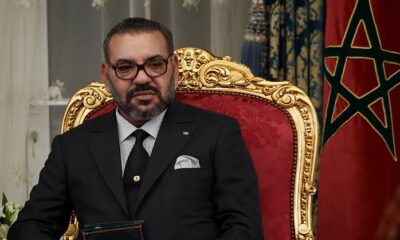

Moroccan king’s Letter Confirms Naming of Major Highway in Honour of Trump
Share A letter from Morocco’s King Mohammed VI has confirmed that the country has named a major highway after US...


Blanche Withdraws Trump Fund Plan Ahead of AG Confirmation Vote
ShareActing US Attorney General Todd Blanche has formally withdrawn President Donald Trump’s plan for a fund that could have been...


CSOs Urge NASS to Reject Bills Threatening Civic Space, Democratic Freedoms
ShareSome civil society organisations (CSOs) have urged the National Assembly to reject bills capable of threatening civic space, constitutional freedoms...