
OPINION
From Missile Tests to Nuclear Rivalry: How North Korea Is Undermining Global Arms Control

By Ayesha Qayyum Baig
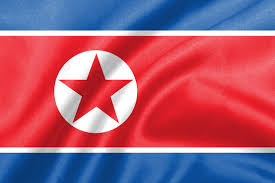
Recently, North Korea has done missile tests and that has gain global attention. It became the highlight everywhere, international world condemns this action. This is considered as the demonstrations of Pyongyang’s technological capabilities.
But everyone knows this is not only the demonstration of technological capabilities but it poses a challenges to the stability with in the region. This can easily disrupt the power balance in Northeast Asia.This is not just anything new but it something that regimes prioritizes. The leadership in Pyongyang is not simple as missiles are not considered as weapons but they are considered as the symbol of power, strength, sovereignty, defensive posture, and it also provides diplomatic influence.
Each launch, has left some impact whether the short range missiles or a more sophisticated intercontinental ballistic missile (ICBM), tells one thing very clearly that North Korea is declaring its power and autonomy and giving world a signal that it cannot be ignored. What is this? This is nothing but a security threat for a neighboring countries like Japan and South Korea and these missile tests are just compelling neighbours to rethink their defense strategies.Unpredictability of North Korea:
The unpredictability of North Korean behavior heightens global anxieties. International diplomatic talks, sanctions, and global treaties have been efforts to contain this threat for several decades, but a single missile test can reverse all the hard work of several years of careful diplomacy. In 2017, for example, the North Korean government’s testing of several ICBMs heightened tensions to a degree not witnessed since the Korean War, with the threat of miscalculation and even conflict on the horizon. The truth that emerges from these experiences is that the international system, as strong as it purports to be, sometimes finds it difficult to cope with the challenge of a regime that lives by its unpredictability.
In addition to the security concerns, the global implications of North Korea’s missile tests cannot be underestimated. The tests are fueling militarization in the region, prompting other nations such as Japan and South Korea to improve their missile defense capabilities. In other instances, the tests have reignited discussions on nuclear sharing and preemptive defense policies, further increasing the prospects of an arms race in the region. On the other hand, the tests by North Korea are undermining the global fight against proliferation. The tests are a clear indication to other countries that nuclear and missile programs are still viable tools of foreign policy, and this could trigger similar programs in other regions of the world that are prone to instability.
Undermining of global arms control:
North Korea is undermining the global arms control, it can create a lot of problems in the region. There is a risk of arms race in region that can risk the strategic stability. Arms control treaties help to manage the nuclear weapons.
These treaties increased transparency and build trust among nations. But now political mistrust has deescalate treaties like these and the mutual cooperation among states having nuclear weapons also lessen.
Now nations are in competition with each other secretly. The greatest example we have is North Korea. Most recent is north Korean multiple ballistic missile launch has disturbed the international peace this test has violated the resolution passed by united nation security council that bans the north Korean from conducting ballistic missile.
However, North Korea is still expanding its nuclear weapons and performing different tests to show the world that they are expanding their strength. This is a clear risk to the regional stability. Now states are not focused on reducing the nuclear weapons but they are modernizing the nuclear arsenals.
Everyone needs to understand that Arms control is necessary for stability and peace. It prevents sudden military advantage by any country. Arms control treaty also gives predictability that what rival has. They are aware of what rival possessed.
Psychological effects:
Furthermore, the psychological effects of such tests should not be overlooked. In a world that is interconnected through immediate news and social media, a single launch can cause panic and uncertainty not only in the surrounding area but also in the global community.
Markets fluctuate, governments convene emergency meetings, and people live with the uncertainty of knowing that conflict can escalate at any moment. It is in this atmosphere of uncertainty that the important issue of global security is not only a function of weapons and strategies but also one of perception, trust, and confidence in the ability to resolve conflict through peaceful means.
However, despite these difficulties, the missile tests of North Korea also offer a chance for the international community to reassess its strategy. As history has shown, it is often the case that sanctions and criticism are not enough to alter a country’s policy.
Engagement, if done correctly, could offer a better long-term solution. By using a combination of diplomatic efforts and effective defense strategies, the world’s great powers can address the security issues that are fueling the actions of North Korea while not escalating the situation. Negotiation is not the same thing as appeasement; it is simply the recognition that sometimes stability takes time and requires a certain amount of creativity.
Question of responsibility:
At the end of the day, the question of North Korea’s missile program is not simply a matter of missiles and technology it is a question of responsibility. It is a reminder that the world is forced to grapple with difficult questions about deterrence, diplomacy, and the tools we use to preserve peace. It is a reminder that even in the modern age of nuclear weapons and sophisticated missile defense systems, the vulnerability of security must not be forgotten. Every missile test is an opportunity to remember that peace is not a guarantee and that international cooperation and strategic thinking are more important than ever.
In conclusion, the missile tests conducted by North Korea are a wake-up call. They show the limitations of traditional diplomacy, the effects of insecurity in the region, and the need for careful and creative responses. While the news headlines are focused on the details of a missile test, the story is much deeper. It is a story of power, perception, and the human element of international security. As the world watches, it is clear that the challenges posed by North Korea are not simply a regional issue, but a test of our collective capacity to maintain stability in an increasingly unstable world.
By Uji Wilfred
Right from the foundations of the Independence struggle that led to self-rule, political party formations in Nigeria were crafted majorly for the capture of political power through periodic elections.
Political Parties never had ideological foundations that defined the boundaries of political recruitment and participation.
Political parties in their formation, leadership structure and ownership, belonged more to the ruling oligarchs than the people or the masses.In the First Republic, political parties had little ideological bent, framed along regional and ethnic sentiments, but little of rallying the entire nation along in a unified polity.
In the general elections of 1954 – 1956, each of the ruling political party, the Northern People’s Congress, the Action Group and the National Council of Nigerian Citizens emerged as regional parties in terms of the demographic voting pattern as well as the control of political seats.The First Republic suffered from a contradiction of centripetal and centrifugal forces within the framework of the tripartite system which eventually led to the collapse of that republic.
Political parties as well as the leadership recruitment reflected a regional and ethnic bias more than the need for the national integration of Nigeria.
Decamping across political lines, irrespective of ideological leanings, were the basic norms of the First Republic with political parties splitting out from the major political party. Formation of new political parties to fragment the dominant hold of ruling political parties were common political vices of the political class at that time. For example, Chief Akintola, despite the ideological soundness of the Action Group, splitted up the party with the formation of a new political party.
Chief Akintola’s desire was fired more by ambition than the issues of ideology and national interest.
In Northern Nigeria, the ruling Northern People’s Congress waged a war of suppression and dominance against other minority political parties with strong ideological bent that inspired minority ethnic nationalism.
The NPC through its slogan of One North, One Destiny, suppressed minority political parties such as the United Middle Belt Congress led by Joseph Tarkaa.
The point is that Nigeria from her foundations inherited a political culture where political parties have weak ideological roots as well as party and leadership recruitment.
Since 1999, Nigeria has witnessed the recycling of bourgeoisie Political Party Formation and leadership recruitment through a process of metamorphosis that defiles ideological lines and national interest.
Political participation and leadership recruitment has been centered on the urgent need to capture power at the center using political parties owned by a few powerful oligarchs.
The People’s Democratic Party in its formation and foundation was a fraternity of past and serving military generals and their civilian equivalent.
The PDP since its inception has been led by past military officers like David Mark and Atiku Abubakar, the civilian equivalent of the military.
The dream of the PDP led by these retired military generals under the leadership of former President Olusegun Obasanjo was the enthronement of Africa’s biggest political party that was to last for a century.
As good as the dream of the party was, the PDP, like the experience of the First and Second Republics lacked deep ideological roots that defined the boundaries of political recruitment and participation.
The triumph of the People’s Democratic Party forced the rival All People’s Party and the Action Congress of Nigeria into a state of collapse and submission leading up to the bourgeoisie metamorphosis that resulted to the formation of the All Progressive Congress on the eve of 2015 with the sole objective to unseat President Good luck Jonathan.
The APC was a metamorphosis and amalgamation of opposition parties including some dissenting faction of the PDP to reclaim the so called birth right of the far right North in Nigeria to produce the President of Nigeria.
Political recruitment and leadership struggle in Nigeria has never been defined by ideological needs to salvage or emancipate Nigeria as a nation. Political struggle has always been a recycling of that section of the bourgeoisie, through a process of metamorphosis, whose objective is to capture political power at the center.
The present protest and political struggle by the African Democratic Congress, the faction led by David Mark and Atiku Abubakar, is a recycling of bourgeoisie metamorphosis not too different from the experience of 2015.
At best, the David Mark and Atiku Abubakar led protest represents that desperate struggle entrenched in the thinking of the Far Right of Far Northern Nigeria, that political leadership resides in the ancestral birth right of the aristocratic ruling political class of the North.
David Mark and Atiku Abubakar perhaps are suffering from a dementia that has made them forget that they were the agents that destroyed the foundations of democracy in Nigeria through the sacking of former President Good luck Jonathan of the People’s Democratic Party.
These men formed the All Progressive Congress and wrestled power from a democratic government exploiting the dynamics of national security and developmental challenges.
In 2015, Nigerians believed their opinions and through the ballot removed Good luck Jonathan.
However, since then, has Nigeria fared better under the APC that was enthroned by oligarchs leading in the present protest under the auspices of the ADC.
Perhaps, David Mark and Atiku Abubakar may assume that Nigeria suffers from a collective dementia that has forgotten the past so soon.
There is an adage that says, he who comes to justice and equity must come with clean hands. The same forces that enthroned bad governance in Nigeria factored in the APC, through a metamorphosis, want to rebirth another Nigeria through the ADC.
In ideological terms, this does not make sense, the ADC Protest is the same old thing of old wine in a new wine bottle.
If Nigeria must experience a change, let it come through some revolutionary medium that will not exploit the people’s trust and betray them once in power.
Over the past decades, the betrayal of public trust, exploiting the innocence of the people, perhaps the naivety of the people, is what we have seen and experienced through the circles of bourgeoisie metamorphosis and political leadership recruitment.
By Raphael Atuu
Benue State, fondly referred to as the “Food Basket of the Nation,” was created on February 3, 1976, by the military administration, carved out of the old Plateau State. From its inception, the state was administered by a succession of military administrators, followed by civilian governors in Nigeria’s evolving political landscape.
Over the decades, leadership passed through several hands each leaving varying degrees of impact on the state’s trajectory.
In its early years, Benue was widely regarded as a peaceful and united society. Communities coexisted in harmony, bound by shared values, cultural pride, and a strong sense of collective identity.
The economy was largely driven by agriculture, with fertile lands producing yams, rice, cassava, and other staple crops. Institutions like the Benue Cement Company also contributed to economic activity and employment.In those days, the government was distant from the daily struggle of the average citizen. Few people concerned themselves with the affairs of Government House. Wealth and dignity were derived from hard work, farming, trading, and craftsmanship not political patronage.
The people spoke with one voice, celebrated their traditions with pride, and upheld communal respect as a guiding principle.
However, the return of democracy in 1999 marked a significant turning point, one that would reshape the state’s social and political fabric in ways few anticipated.
With democratic governance came new opportunities, but also new challenges. Politics gradually became the most attractive path to wealth and influence.
For many, Government House transformed from a symbol of public service into a gateway to personal enrichment.
The perception of politics shifted from service to self-interest.
As political competition intensified, unity began to erode. Divisions along ethnic, local government, and party lines deepened. The once cohesive voice of the Benue people became fragmented, often drowned in partisan conflicts and power struggles.
Perhaps more troubling was the subtle transformation in societal values.
The Benue man, once admired for courage, resilience, and industry, began though not universally to exhibit tendencies toward dependency and political loyalty over merit.
Sycophancy started to replace integrity, and the dignity of labor was gradually overshadowed by the allure of quick gains through political connections.
Elected officials rose to positions of authority and influence, becoming key decision-makers in society.
Yet, for many citizens, the dividends of democracy remained elusive. Infrastructure development lagged, agricultural potential remained underutilized, and poverty persisted despite abundant natural resources.
The irony is striking: a state so richly endowed, yet struggling to translate its potential into tangible progress.
Beyond economics, insecurity and communal clashes in recent years have further strained the social fabric.
The peace that once defined Benue has been challenged, forcing many communities to confront displacement and uncertainty.
While these issues are complex and multifaceted, the role of political leadership in addressing or failing to address them cannot be ignored.
So, where did the politicians get it wrong?
They lost sight of the essence of leadership service to the people. Governance became more about control than development, more about personal gain than collective good.
Long term planning gave way to short term political calculations. Investments in agriculture, which should have remained the backbone of the state’s economy, were neglected in favor of less sustainable ventures.
Moreover, the failure to foster unity and inclusive governance widened the gap between leaders and the led. Politics became a tool for division rather than a platform for progress.
Yet, all hope is not lost.
Benue still possesses immense potential, fertile land, vibrant culture, and resilient people, what is needed is a return to the values that once defined the state: hard work, unity, integrity, and community driven development.
Leadership must be reimagined, not as an avenue for wealth, but as a responsibility to uplift the people.
The story of Benue State is not just one of decline it is also one of possibility.
With the right vision, commitment, and collective will, the state can reclaim its place as a model of peace, productivity, and progress.
The question remains: will its leaders and its people rise to the occasion?
If you want, I can.

By Tanimu Yakubu
Nigeria is not collapsing; it is confronting long-avoided economic realities. The current hardship, though undeniable, reflects a deliberate process of correcting structural imbalances that have persisted for years. Distress is evident, but it must not be mistaken for systemic failure.
Countries in true economic collapse do not unify exchange rates, rebuild external reserves, regain access to international capital markets, or improve fiscal performance.
Nigeria, despite significant pressures, is making measurable progress across these indicators.Ending a Distorted Economic Order
For years, Nigeria operated under an economic framework that projected stability while masking deep inefficiencies.
Artificially suppressed fuel prices, multiple exchange rate windows, and expansionary fiscal practices incentivized arbitrage over productivity.These distortions disproportionately benefited a narrow segment of the population while imposing hidden costs on the broader economy.
Their removal has revealed the true cost structure of the system. While this transition has triggered inflationary pressures, it has also restored policy transparency and enhanced the credibility of economic management.
Strengthening the Fiscal Base
Recent fiscal data indicates a strengthening foundation. Distributable revenues to the Federation Account have risen by over 40 percent following subsidy removal, reflecting improved remittance discipline and reduced leakages.
Nigeria’s public debt remains below 30 percent of GDP, a relatively moderate level compared to peer emerging markets, according to the International Monetary Fund. Meanwhile, external reserves have surpassed $40 billion, based on figures from the Central Bank of Nigeria.
At the subnational level, increased fiscal inflows are enabling more consistent salary payments, with some states introducing inflation adjustments, an indication of gradually expanding fiscal space.
Inflation: A Transitional Challenge
Inflation remains the most immediate and visible consequence of ongoing reforms. It is being driven by exchange rate adjustments, energy price corrections, and longstanding supply-side constraints.
Global experience suggests that such inflationary spikes are often temporary when reforms are sustained. The greater risk lies not in reform itself, but in policy inconsistency or reversal.
Interpreting the Present Moment
Public frustration is both expected and understandable. Nigerians are justified in demanding tangible improvements in living standards. However, it is important to distinguish between short-term hardship and systemic collapse.
Nigeria’s institutional framework remains intact, fiscal capacity is improving, and macroeconomic reforms are actively progressing. This phase represents adjustment, not disintegration.
From Stabilisation to Impact
The next phase of reform must translate macroeconomic gains into measurable improvements in citizens’ welfare.
Strategic investments in healthcare, education, and targeted social protection will be essential to sustaining public confidence.
Ultimately, the credibility of these reforms will be judged not by policy intent, but by their impact on everyday life.
Conclusion: The Imperative of Consistency
Nigeria has long recognised its economic challenges; what has often been lacking is sustained policy execution. The greatest threat at this juncture is not reform fatigue, but reform reversal.
Abandoning the current course would erode credibility, deter investment, and reintroduce the very distortions that hindered growth.
This moment demands patience, discipline, and resolve. Nigeria is not collapsing, it is undertaking a necessary correction and laying the foundation for a more resilient economic future.
Tanimu Yakubu is DG, Budget Office of the Federation.



Nigeria To Host 5th High Level Ministerial Meeting On AMR
ShareBy Laide Akinboade, Abuja Nigeria said it has concluded arrangement to host the 5th high level ministerial meeting on Antimicrobial...

Sule Inaugurates N2.8bn Loko Township Roads
ShareNasarawa State Governor, Abdullahi Sule has inaugurated a 3.2-kilometre Loko Link and Township Roads project worth N2.8 billion in Nasarawa...


2026 Unity Cup: Don’t Exclude NPFL Players from Eagles, Ekpo Tells Chelle
ShareFormer Nigerian international Friday Ekpo has advised Super Eagles head coach Eric Chelle not to exclude players from the Nigeria...

Cameroon Separatists Pause Fighting Ahead Pope Visit
ShareAnglophone separatists in Cameroon have announced a period of “safe travel passage” and halted fighting ahead of Pope Leo XIV’s visit to the conflict‑hit region this week. Leaders...


Over 2,000 PhD Candidates Jostle for PTDF Overseas Scholarship
ShareThe Petroleum Technology Development Fund (PTDF) has commenced the second phase of interviews for the 2026/2027 PhD award under its...
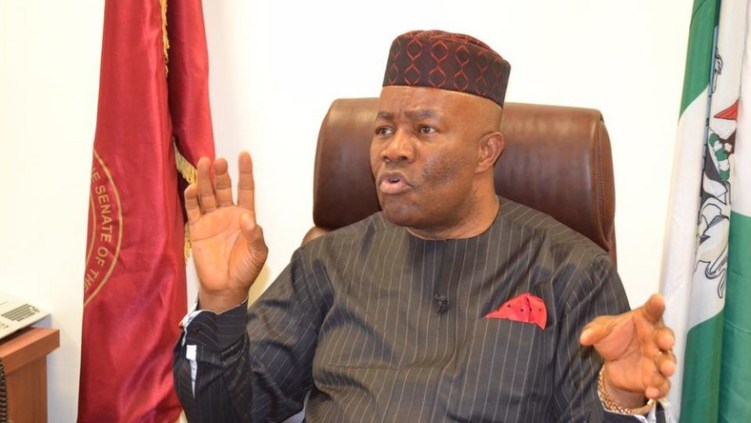
Akpabio Ties Worsening Insecurity to Gang up Against Tinubu
ShareBy Eze Okechukwu, Abuja The Senate President, Godswill Akpabio has linked the worsening insecurity across the country to a gang up by opposition politicians,...

Yobe Hits 100 Per Cent Budget Implementation in Five Years
Share Yobe State Governor, Mai Mala Buni said the state has recorded 100 per cent budget implementation from 2021 to...

ADC Braces Odds, Holds National Convention amid Court Tussle
ShareBy David Torough, Abuja The African Democratic Congress (ADC) on Tuesday held its national convention in Abuja despite ongoing legal...

Tinubu Unveils New Tax Order, Ends ‘Broken’ Revenue System
ShareBy Tony Obiechina, Abuja President Bola Tinubu has declared that Nigeria is charting a new economic course, vowing to abandon...


Otu, Retired Naval Chief Bag UNICAL Honorary Degrees
ShareFrom Ene Asuquo, Calabar The Governor of Cross River State, Prince Bassey Otu, has been conferred with an honorary doctorate...