
BUSINESS
FRSC Records 25 Per Cent Reduction in Road Crashes in Osun


The Gbongan Unit Command of the Federal Road Safety Corps (FRSC) in Osun recorded a 25 per cent reduction in road crashes between January and August, compared with the same period in 2025.
The Unit Commander, Dr.
Jude Odinfono, disclosed this in an interview on Tuesday in Gbongan, Osun.Odinfono also said the unit recorded an 83.
3 per cent reduction in fatalities and a 40 per cent reduction in injuries during the period under review.He said the unit conducted 468 patrol operations during the period, including eight Special Intervention Patrols carried out in collaboration with the Joint Task Force.
According to him, the operations led to the arrest of 3,166 offenders and the booking of 3,226 offences involving various traffic violations.
Odinfono said four reorientation programmes were also conducted, involving 118 offenders and other road users.
“The unit introduced an Offenders’ Reorientation Programme as part of efforts to complement the vision of the Corps Marshal.
“The programme, conducted with transportation stakeholders, exposes selected offenders to road traffic accident videos and pictorial materials showing the consequences of dangerous driving and other traffic violations,” he said.
Odinfono added that the initiative was aimed at helping offenders understand the consequences of unsafe road practices and encouraging them to adopt safer attitudes.
He explained that the reorientation activities formed part of 168 public education programmes conducted by the command, including roadside campaigns, motor park sensitisation and community engagements.
Odinfono, however, urged personnel to remain friendly, firm and fair in the discharge of their duties. (NAN)
The Organization of Petroleum Exporting Countries (OPEC) may most likely be going to pause its output increases for the fourth quarter of this year as analysts expect that the global oil body still has another layer of production cuts in place, covering most members of the 21-country group until the end of 2026.
According to analysts before the group decides how to unwind the cuts and return production to the market, it needs to review members’ oil production capacity to set 2027 output baselines, which form the basis for quotas.
This debate will likely happen later in 2026 and hence OPEC+ is likely to hold on to output increases in the last quarter, sources earlier told Reuters.
Only the seven OPEC+ members who met on Sunday, plus the United Arab Emirates until it left OPEC in May, have been involved in monthly output decisions in recent years.
The seven countries will hold their next meeting on October 4.
Meanwhile, the OPEC+ kept its oil output policy unchanged for October, it said in a statement, as the producer group needs to agree new quotas before deciding its next output steps.
The meeting of seven core OPEC+ members Saudi Arabia, Russia, Iraq, Kuwait, Algeria, Kazakhstan and Oman — comes as the Iran war continues to disrupt oil exports through the Strait of Hormuz, limiting OPEC+’s influence over prices and market share.
In August, OPEC+ agreed its production boost for September, completing a phased rollback of a 1.65 million-barrel-per-day supply cut first agreed in 2023. Despite the agreed production increases, the group made up of the Organization of the Petroleum Exporting Countries and its allies, including Russia, still produces far below its targets because of the war.
“OPEC+ currently has very limited power over the physical oil market,” said Jorge Leon of Rystad Energy. “The group can change production targets on paper, but it cannot guarantee that those barrels will be produced or actually reach the market.”
“The focus now shifts away from monthly production adjustments and towards the much more consequential debate over 2027.”
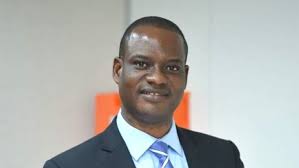
President Bola Tinubu has called on the financial services industry to translate their capital into productive investment and employment opportunities for economic growth and development.
Tinubu said this at the 19th Chartered Institute of Bankers of Nigeria (CIBN) Annual Banking and Finance Conference in Abuja on Tuesday.
The President was represented by Taiwo Oyedele, the Minister of Finance and Coordinating Minister of the Economy.
He said that resilience of the financial system would not be possible where businesses do not have access to affordable credit.
He listed factors that would drive resilience in the financial systems to include growth facilitation, inclusion, technology and long term capital.
Tinubu said that various innovations like Artificial Intelligence (AI), digital and open banking, among others, had impacted the financial system.
The President said that the government would continue to create space for more private sector credit.
”No economy can be more resilient than its financial system,” he said.
The Governor of the Central Bank of Nigeria (CBN), Olayemi Cardoso, said that the benefits of the monetary and fiscal policies reforms would soon start trickling down to impact the common man and their standard of living.
The governor, represented by Philip Ikeazor, CBN’s Deputy Governor, Economic Policies, said the successes of the reforms had been echoed in different platforms.
He said that many citizens had queried the benefits of the reforms, adding that the dividends would soon translate positively in the day to day living of citizens.
”The reforms by the CBN were done in conjunction with other stakeholders,” he said.
The Managing Director of the Nigeria Deposit Insurance Corporation (NDIC), Thompson Sunday, said that the resilience of the financial system exceeded adaptation to shocks.
Sunday, represented by Emily Osuji, the Executive Director, Corporate Services of the NDIC, said that building resilience required strong institutions and shared responsibility.
He urged banks to provide resources required to support agriculture and businesses among others.
In a keynote speech, Dr. Matthew Verghis, the Country Director of the World Bank, commended the country for some of its reforms, adding that they had impacted the inflation rates and built investors’ confidence.
Verghis, represented by Bertine Kamphuis, the World Bank’s Lead Private Sector Development Specialist for Nigeria, said that about three to four million young Nigerians enter the country’s labour force every year.
He said that one in 20 Micro, Small and Medium Enterprises (MSMEs) could access bank credit.
He said the availability of capital was not an issue in the country but the allocation of it.
The Chairman, Body of Banks Chief Executive Officers (CEOs), Oliver Alawuba, said that a resilient economy is one that is designed to adapt to shocks without transferring them to vulnerable citizens.
Alawuba commended the Federal Government, and the CBN for their commitment toward the stability of the economy.
He said the banking sector recapitalisation had better strengthened the capacity of banks to support growth in the country’s economy.
The Chairman called for fiscal and monetary synergy to unlock productivity in the industry.
Sen. Mikhail Abiru, the Chairman, Senate Committee on Banking, Insurance and other Financial Institutions, called on banks to support the real sector and deepen the financial sector.
President/Chairman of Council, CIBN, Dr. Dele Alabi, said that disruption had become a defining feature of the global economy.
Alabi said the war in the Middle East involving Israel, Iran, and the United States, together with disruption to energy and shipping flowing through the Strait of Hormuz, had intensified volatility in oil, freight, and financial markets.
He said that Nigeria was not insulated from these shocks.
According to him, MSMEs are central to employment, enterprise and local value creation, but many remain constrained by high operating costs, unreliable infrastructure, limited access to markets, low productivity, skills gaps and slow digital adoption.
He said the proposed hubs would provide shared infrastructure, business advisory services, capacity building, technology support, market linkages and easier access to finance.
”The good news is that certain policies implemented in the past couple of years are beginning to yield fruit.
”This is precisely why the next phase of reform must focus on transmission, moving stability from national balance sheets to business balance sheets and household budgets.
”The Institute’s advocacy for scalable SME Hubs nationwide is one practical response.
”They would help reduce operating costs, improve bankability, stimulate innovation and connect recapitalised financial institutions more effectively to the real sector.
“In this way, the gains of reform can travel beyond aggregate indicators to stronger businesses, better jobs, higher incomes and more resilient communities,” Alabi said.
The conference brought together stakeholders in the financial system from across the country. (NAN)
By Tony Obiechina, Abuja
The National Bureau of Statistics (NBS) said Nigeria recorded a trade surplus of N12.59trn from the total N41.44trn trade with other countries conducted in the second quarter of 2026.
The NBS, in its Foreign Trade report, stated that the surplus represented a 101.
32% increase compared with the value recorded in the corresponding quarter of 2025.The report noted that Nigeria’s total merchandise trade stood at N41.44trn in Q2 2026, representing an increase of 5.61% from N39.24trn recorded in the corresponding quarter of 2025 and a 19.
13% increase from N34.78trn recorded in the preceding quarter.It further stated that during the quarter, exports accounted for 65.20% of total trade valued at N27trn, an 18.77% increase from the N22.75trn recorded in the corresponding quarter of 2025 and a 27.64% increase from N21.16trn recorded in Q1 2026.
“Analysis shows that crude oil remained Nigeria’s major exported commodity in the second quarter of 2026, valued of N12.91trn and accounting for 47.79% of total exports. Further analysis reveals that non-crude oil exports were valued at N14.10tr, representing 52.21% of total exports, of which non-oil products contributed N3.72trn, or 13.80% of total exports.”
It noted that China remained the leading source of imports in the second quarter of 2026, followed by the United States of America, India, The Netherlands, and Germany.
The most imported commodities during the quarter were Motor Spirit Ordinary, petroleum oils and oils obtained from bituminous minerals (crude), durum wheat, used vehicles with diesel or semi-diesel engines and Motorcycles and cycles fitted with auxiliary motor, petrol fuel, capacity.
Also, the value of agricultural goods imported in Q2 2026 stood at N1.20trn, representing a 1.63% increase compared to N1.18trn recorded in Q2 2025, and a 45.43% increase relative to N827.72 billion recorded in Q1 2026.
“In the same period, the import value of raw material goods was N1.79trn, representing a 4.11% increase from N1.71trn in Q2 2025, and a 13.12% increase compared to N1.582.36trn in the preceding quarter (Q1 2026). Solid mineral imports were valued at N56.99bn, representing a 19.60% decrease from N70.88bn billion in Q2 2025 and 18.30% decrease compared to N69.75bn recorded in Q1 2026.




FRSC Records 25 Per Cent Reduction in Road Crashes in Osun
ShareThe Gbongan Unit Command of the Federal Road Safety Corps (FRSC) in Osun recorded a 25 per cent reduction in...
OPEC May Review Members Production Capacity to Arrive At 2027 Output Baseline
ShareThe Organization of Petroleum Exporting Countries (OPEC) may most likely be going to pause its output increases for the fourth...


First Bank Backs 10th Calabar Entertainment Conference, Festival
ShareFirst Bank has renewed its partnership with the Calabar Entertainment Conference and Festival (CECF) as the event’s official banking partner...

FIFA Yet to Decide on NFF Visit to Nigeria
ShareWorld football governing body FIFA said it is yet to reach a decision on the future of the Nigeria Football...

Adeleke, ASUU Differ over Tenure Extension for UNIOSUN VC
ShareThe Osun State Government has urged members of the Osun State University community to refrain from actions capable of creating...

Translate Capital into Productive Investment, Tinubu Urges Banks
SharePresident Bola Tinubu has called on the financial services industry to translate their capital into productive investment and employment opportunities...
Gunmen Launch Attacks on Kaduna Communities, Kill Five, Abduct 27
ShareFrom Agbo Emmanuel, Kaduna Suspected bandits have launched a fresh wave of attacks across parts of Kaduna State, killing at...

Benue Blockade: Obi, Alia Trade Blame over Disrupted Yelewata Visit
ShareFrom Attah Ede, Makurdi A planned visit by the presidential candidate of the Nigeria Democratic Congress (NDC), Peter Obi, to...

Akume Assures NASENI of FG Support as Agency Unveils Innovations for National Development
ShareBy David Torough, Abuja The Secretary to the Government of the Federation (SGF), Senator George Akume, has commended the National...


ONSA Begins First National Crisis Response Exercise Outside Abuja in Delta
ShareBy David Torough, Abuja The Office of the National Security Adviser (ONSA) has commenced the 2026 Rapid Response 3 (RR3)...