
BUSINESS
Fuel Price Hike Reduces Sales, Increases Cost of Doing Business — Traders


Some traders in the Federal Capital Territory (FCT) have expressed concern over the impact of the recent fuel price increase on their businesses.
The traders on Monday, said the hike had increased transportation costs, reduced their sales and affected their profit margins.
A trader in Suleja, Umar Bayero said the recent increase in fuel prices had significantly increased his overall cost of doing business.
“As a trader, I depend on transportation both to source goods from suppliers and to move them to my place of business.
“From an economic perspective, this has contributed to higher input costs and reduced my profit margin,” he said.
Bayero said the cost of transporting and restocking his goods had increased considerably compared with what obtained before the fuel price increase.
“Depending on the distance and quantity of goods involved, my transportation and logistics expenses have increased by roughly between 30 per cent 50 per cent.
“Suppliers have also increased their prices because they face higher transportation and distribution costs.
“This has forced me to increase my selling prices to partly compensate for the higher cost of restocking and transportation,” he said.
He said he could not pass the entire increase on to his customers, as many now buy smaller quantities and focused only on essential items.
Another trader, Azubuike Okafor, said the situation had negatively affected his sales and profits.
“Higher operating and restocking costs have reduced my profit margin and customers having less money to spend has led to lower sales.
“Compared with the period before the fuel price increase, I am dealing with higher costs, weaker demand, and low profit,” he said.
Okafor said he was comparing suppliers to get better prices, buying items based on demand, and managing his stock more carefully.
He called for stable and affordable energy and transport costs, low-interest business loans, and better roads and transportation.
Another trader in Suleja, said he now spends an additional N70,000 on transportation.
Haneefa Anegbe of Rubis Mart, Suleja, said the cost of transportation had significantly increased, causing the prices of things to go up.
“The impact is not too much, we absorb it, but when an increase is significant, like something selling for N60,000 goes up to N68,000, we have no choice than to increase our price too.”
Anegbe said customers’ purchases had declined, because people were now more conscious that the year was ending and were saving to meet school fees and other expenses.
“The fact that we are not making sales is because our customers do not have so much to spend, so they have to distinguish their needs from their wants and prioritise their needs.
“Another major thing that will help is if income increases because no matter how much goods you purchase, if you are not selling, then you are not doing anything.
“I believe that if the minimum wage increases or customers earn more, spending will increase. They will be able to spend more to afford their basic needs,” she said.
A resident of Kubwa, Auwal Muhammad, said the recent fuel price increase had affected him in many ways.
“Transportation costs have gone up, and the prices of food and other goods have also increased,” he said.
Muhammad said that he now bought in smaller quantities, avoided unnecessary spending, and planned his expenses carefully.
He called for measures that could help reduce the burden of rising living costs.
Another resident, Fauziya Umar, said the fuel price increase had raised transportation fares and the prices of food and other essential commodities.
Unar said she had reduced the quantity of some items she bought.
“My spending ability has been affected, whereas my income remains unchanged,” she added.
She called for measures to reduce transportation costs and the prices of essential goods, as well as support to ease the burden of rising living costs.(NAN)
The central parity rate of the Chinese currency renminbi, or the Yuan, strengthened 90 pips to 6.7399 against the dollar on Monday.
This was according to the China Foreign Exchange Trade System.
In China’s spot foreign exchange market, the Yuan is allowed to rise or fall by two per cent from the central parity rate each trading day.
The central parity rate of the Yuan against the dollar is based on a weighted average of prices offered by market makers before the opening of the interbank market each business day.
(NAN)
President Bola Tinubu says the National Credit Guarantee Company (NCGC) has helped unlock N46.95 billion in loans during its first year of operations.
Tinubu disclosed this on Monday in a post on his official ‘X’ handle, @officialABAT, saying NCGC issued N1.
59 billion in guarantees to participating financial institutions.He said the guarantees enabled the institutions to extend loans to Nigerians, with every N1 in guarantees helping unlock about N2.
17 in credit.The President said the initiative formed part of his administration’s efforts to move Nigeria towards a credit-based economy and broaden access to formal financing for households and small businesses.
“When I sought your mandate, I promised to move Nigeria towards a credit-based economy and to establish a loan guarantee scheme that would help small businesses overcome the barriers that keep them from finance.”
Tinubu said the scheme addressed a major obstacle facing viable businesses, whose access to loans is often constrained by inadequate collateral or limited credit histories.
Under the arrangement, NCGC shares part of the lending risk with participating financial institutions, giving them greater confidence to extend credit to businesses and borrowers they might otherwise decline.
He said NCGC currently operates through 19 financial institutions, comprising 13 commercial banks, three microfinance banks and three development finance institutions.
According to Tinubu, 67,512 borrowers across 25 states and the Federal Capital Territory have received NCGC-backed credit, including 11,374 women.
He added that 33.5 per cent of the beneficiaries were first-time formal borrowers, giving more than 22,000 Nigerians their first entry into the formal credit system.
“Each successful repayment strengthens that record and can make the next loan easier to secure,” he said, highlighting the importance of building credit histories.
Tinubu said access to credit could help traders restock, manufacturers fulfil larger orders and businesses expand, creating opportunities for employment and growth.
NCGC estimates that businesses supported through the scheme account for 661,291 direct and indirect jobs, he said.
The president said the initiative complemented other government-backed financing programmes, including consumer credit through CREDICORP, student loans through NELFUND, and business lending by the Bank of Industry and Development Bank of Nigeria.
“Our reforms laid the foundation. Credit gives Nigerians the means to build on it,” Tinubu said.
The president said the government would continue widening access to credit so that more households and businesses could benefit from opportunities created by its reforms. (NAN)
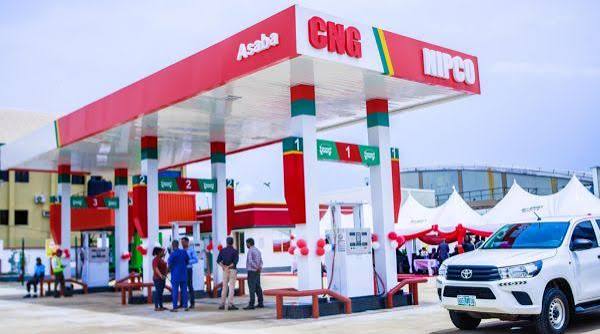
NIPCO Group plans to develop a more than $3 billion Floating Liquefied Natural Gas (FLNG) project to boost gas monetisation and supply.
NIPCO Gas Ltd. Managing Director, Nagendra Verma, disclosed this while briefing newsmen on the project on Thursday in Abuja.
Verma said the project would mark NIPCO Group’s entry into the LNG sector and reinforce its long-term commitment to gas development.
He said the initiative would strengthen the company’s commitment to developing and monetising Nigeria’s abundant natural gas resources.
“The project is expected to require an investment estimated at more than $3 billion.
“The final investment requirement will be determined after feasibility studies, detailed engineering and commercial structuring,” Verma said
He said the proposed floating LNG facility could be located in the Escravos area of Delta or the Akwa Ibom region.
“The final location will be determined after completion of the ongoing feasibility studies,” he said.
Verma said the proposed locations would provide access to upstream gas resources, LNG processing facilities and marine transportation.
He said the project would also facilitate access to international and domestic LNG markets, adding that NIPCO had evaluated it for six to nine months.
The managing director said NIPCO was conducting preliminary assessments covering development concepts, technology solutions and financing structures.
He said the assessment would also examine commercial options to ensure a technically sound and commercially sustainable project.
Verma said the proposed development would comprise an FLNG facility and associated marine and export infrastructure.
He said the project could serve international LNG markets and Nigeria’s growing domestic LNG demand.
“The project is envisaged to have an LNG production capacity of about three million tonnes annually,” he said.
Verma, however, said the proposed capacity remained subject to feasibility studies, technical assessments and project economics.
He added that regulatory approvals and a final investment decision would determine the project’s implementation.
According to him, NIPCO is evaluating the shipping and logistics infrastructure required to support both export and domestic LNG supply.
“NIPCO’s planned expansion into the upstream oil and gas business would complement its existing gas portfolio,” Verma said.
He said the expansion would strengthen the group’s vertical integration across the gas value chain.
Verma said NIPCO had established a strong presence across Nigeria’s downstream oil and gas sector.
He said the group had expertise in developing, financing, constructing and operating energy infrastructure.
According to him, NIPCO operates a nationwide distribution network covering Automotive Gas Oil (AGO), Premium Motor Spirit (PMS), LPG, propane, Piped Natural Gas (PNG) and Compressed Natural Gas (CNG).
He said the network was supported by storage, logistics, transportation and retail infrastructure, adding that NIPCO operates about 30 CNG stations nationwide.
Chairman of NIPCO Group, Chief Bestman Anekwe, said additional LNG capacity would support gas monetisation, industrial growth and energy security.
Anekwe said it would also contribute to foreign exchange generation and employment creation.
“It will leverage its existing relationships with Nigerian National Petroleum Company Ltd. (NNPC Ltd.) and NNGM to secure feed gas,” he said.
He said NIPCO would also form strategic partnerships with international technology providers to advance the project.
Anekwe said NIPCO would continue engaging Nigerian authorities, regulators, upstream and midstream partners, technology providers and financial institutions.
He said the group was one of Nigeria’s leading integrated energy and infrastructure companies, with investments across oil and gas distribution, CNG, LPG, propane and pipeline infrastructure.
Chief Paul Obi, Principal Partner, NIPCO, said the group’s investments also covered logistics, retail and hospitality.
Obi said these investments supported NIPCO’s role in Nigeria’s evolving energy sector.
“The group supports Nigeria’s energy transition by developing domestic gas infrastructure, promoting CNG and LPG adoption, strengthening energy access and contributing to economic growth,” he said. (NAN)
FG Seeks Foreign Investment to Modernise Fisheries Sector
The Federal Government says it is seeking credible international investment to modernise Nigeria’s fisheries value chain while ensuring new investments complement, rather than displace, artisanal fishers and local producers nationwide.
The Minister of Marine and Blue Economy, Adegboyega Oyetola, said this when he received a delegation of Turkish fishing investors, CRD Impex, led by Cem Tarhan, on Thursday in Abuja.
Oyetola said the government remained committed to creating an investment-friendly environment capable of attracting credible local and international investors into the marine and blue economy sector nationwide.
He identified inadequate infrastructure, limited access to modern fishing technology, processing and storage constraints, weak cold-chain systems and poor market access as major challenges affecting the fisheries sector.
According to him, the challenges also represent investment opportunities that can be harnessed to modernise the fisheries value chain, increase productivity and improve livelihoods of local fish producers.
Oyetola said the government’s approach was to transform the identified challenges into opportunities while ensuring that investments remained inclusive, sustainable and beneficial to communities dependent on fisheries.
“We welcome investors who can bring capital, technology, expertise and modern value-chain solutions to the sector.
“However, investment must be inclusive and sustainable,” he said.
The minister said investments in the sector must complement and empower artisanal fish producers rather than undermine their livelihoods and economic activities across fishing communities nationwide.
He emphasised the need to strike a balance between modernisation efforts and the protection of existing livelihoods that depended on fisheries and related economic activities.
He said the government was open to investors capable of bringing capital, technology and expertise to address critical gaps across the fisheries value chain nationwide.
Tarhan said the company was in Nigeria to explore investment opportunities within the fisheries sector and assess areas where its expertise could support industry development.
He said the company had extensive experience in fisheries and aquaculture in Turkey and was interested in bringing its expertise and investment capacity to Nigeria.
The delegation, accompanied by ministry officials, visited selected fisheries and aquaculture facilities to assess investment opportunities and gain first-hand knowledge of sector operations nationwide.
The facilities visited included the Kirikiri Lighter Terminal and Ozumba Mbadiwe Fish Market in Lagos, where investors observed fisheries operations and existing infrastructure firsthand.
The investors also visited the Esuk Nsidung Beach Market, a major waterfront seafood trading hub in Esiere Ebom, Henshaw Town, Cross River.
The visits enabled the investors to examine existing fisheries infrastructure, production and trading activities and identify areas where investment could support value addition and market access.(NAN)
University Press Raises Dividend by 20 Per Cent
University Press Plc has increased its dividend payout to shareholders by 20 per cent, from 15 kobo to 18 kobo per ordinary share, for the financial year ended March 31, 2026.
The company announced the dividend at its 2026 Annual General Meeting (AGM) in Ibadan on Thursday.
The dividend amounts to about N77.65 million and is subject to applicable withholding tax.
The company’s chairman, Obafunso Ogunkeye, said the dividend reflected the company’s commitment to sustaining value for shareholders despite the challenging operating environment.
“The company remained financially stable and had sustained revenue growth despite inflation, higher energy and transportation costs, insecurity and weakened purchasing power.
“In the audited financial statements, revenue increased from N3.402 billion in 2025 to N3.895 billion in 2026, while gross profit rose from N1.957 billion to N2.132 billion,” the chairman said.
Ogunkeye said the company would continue to exercise discipline in operating expenditure, working capital management and cash generation while pursuing sustainable growth.
He said the company would also strengthen its core publishing business and capitalise on opportunities arising from the Federal Government’s revised national curriculum.
The chairman said University Press would review its catalogue, revise affected titles and develop new learning materials in collaboration with authors, editors, teachers, curriculum specialists and relevant education authorities.
The company’s Managing Director (MD)/Chief Executive Officer, Mr Samuel Kolawole, said management would focus on ensuring that revenue growth translated more effectively into sustainable shareholder value.
Kolawole said, “The Company will strengthen its print publishing business while developing e-books, interactive learning resources and other digital products.
“The company remains committed to maintaining the confidence of its shareholders through quality publications, improved access to learning materials and sustainable business growth.”
Responding to shareholders’ questions on piracy, the use of Artificial Intelligence, and digitising educational materials, among others, the MD said the company has been working on the issues raised.
He, however, said actions would be expedited where necessary.
The event featured the re-election of the company’s non-executive directors: Yomi Adewusi, Ayodeji Olorunda, Dr Josephine Diete-Spiff and Maj. General Daniel Kitchener. (NAN)




Fuel Price Hike Reduces Sales, Increases Cost of Doing Business — Traders
ShareSome traders in the Federal Capital Territory (FCT) have expressed concern over the impact of the recent fuel price increase...
Yuan Strengthens 6.7399 against Dollar
ShareThe central parity rate of the Chinese currency renminbi, or the Yuan, strengthened 90 pips to 6.7399 against the dollar...


Credit Guarantee Scheme Unlocked N46.95bn in Loans — Tinubu
SharePresident Bola Tinubu says the National Credit Guarantee Company (NCGC) has helped unlock N46.95 billion in loans during its first...

FG Reaffirms Commitment to Pharmaceutical Manufacturing, Medicine Security
ShareBy Laide Akinboade, Abuja The Federal Government has reaffirmed its commitment to strengthening local pharmaceutical manufacturing as a strategic pathway...


Late DAILY ASSET Deputy Editor-in-Chief, Ocholi Laid to Rest
ShareFrom Joseph Amedu, Lokoja Amid tears and wailing, the remains of Late Deputy Editor-in-chief of DAILY ASSET Newspaper, John Danusa...


Sokoto Gov Appoints Journalist, Seven Others as District Heads
ShareSokoto State Governor, Ahmed Aliyu has approved the appointment of Hayatu Dallatu and seven others as District Heads to fill...


JAMB Restores CAPS, Urges Institutions to Speed up Admissions
ShareThe Joint Admissions and Matriculation Board (JAMB) said its Central Admissions Processing System (CAPS) has been fully restored and is...


Nigeria Must Lead Health Financing Research Agenda — NHIA
ShareThe Director-General of the National Health Insurance Authority (NHIA), Dr Kelechi Ohiri, says Nigeria must take charge of its health...

GTCO Reports N603bn H1 Profit, Declares N1 Interim Dividend
ShareGuaranty Trust Holding Company Plc (GTCO) reported N603.03 billion Profit Before Tax (PBT) for the half year ended June 30....


Spotify Brings Tems, Runtown Closer to Fans at Surround Sound
ShareMusic streaming platform, Spotify, has brought fans closer to Nigerian artistes, Temilade Openiyi, popularly known as Tems, and Douglas Agu,...