
FEATURES
Full Text of Buhari’s Address to the Nation on COVID-19

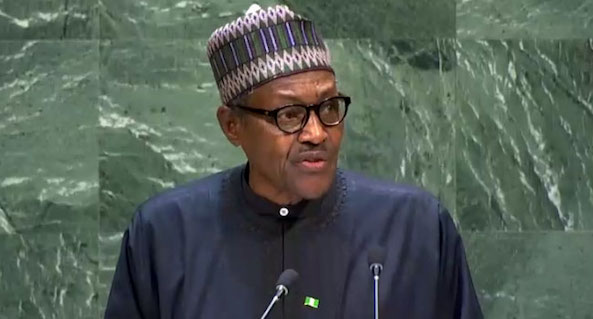
1. Fellow Nigerians,
2. From the first signs that Coronavirus, or COVID-19 was turning into an epidemic and was officially declared a world-wide emergency, the Federal Government started planning preventive, containment and curative measures in the event the disease hits Nigeria.
3.
The whole instruments of government are now mobilized to confront what has now become both a health emergency and an economic crisis.4. Nigeria, unfortunately, confirmed its first case on 27th February 2020.
Since then, we have seen the number of confirmed cases rise slowly.5. By the morning of March 29th, 2020, the total confirmed cases within Nigeria had risen to ninety-seven.
6. Regrettably, we also had our first fatality, a former employee of PPMC, who died on 23rd March 2020. Our thoughts and prayers are with his family in this very difficult time. We also pray for quick recovery for those infected and undergoing treatment.
7. As of today, COVID-19 has no cure. Scientists around the world are working very hard to develop a vaccine.
8. We are in touch with these institutions as they work towards a solution that will be certified by international and local medical authorities within the shortest possible time.
9. For now, the best and most efficient way to avoid getting infected is through regular hygienic and sanitary practices as well as social distancing.
10. As individuals, we remain the greatest weapon to fight this pandemic. By washing our hands regularly with clean water and soap, disinfecting frequently used surfaces and areas, coughing into a tissue or elbow and strictly adhering to infection prevention control measures in health facilities, we can contain this virus.
11. Since the outbreak was reported in China, our Government has been monitoring the situation closely and studying the various responses adopted by other countries.
12. Indeed, the Director General of the Nigeria Centre for Disease Control (NCDC) was one of ten global health leaders invited by the World Health Organisation to visit China and understudy their response approach. I am personally very proud of Dr Ihekweazu for doing this on behalf of all Nigerians.
13. Since his return, the NCDC has been implementing numerous strategies and programs in Nigeria to ensure that the adverse impact of this virus on our country is minimized. We ask all Nigerians to support the work the Federal Ministry of Health and NCDC are doing, led by the Presidential Task Force.
14. Although we have adopted strategies used globally, our implementation programs have been tailored to reflect our local realities.
15. In Nigeria, we are taking a two step approach.
16. First, to protect the lives of our fellow Nigerians and residents living here and second, to preserve the livelihoods of workers and business owners to ensure their families get through this very difficult time in dignity and with hope and peace of mind.
17. To date, we have introduced healthcare measures, border security, fiscal and monetary policies in our response. We shall continue to do so as the situation unfolds.
18. Some of these measures will surely cause major inconveniences to many citizens. But these are sacrifices we should all be willing and ready to make for the greater good of our country.
19. In Nigeria’s fight against COVID-19, there is no such thing as an overreaction or an under reaction. It is all about the right reaction by the right agencies and trained experts.
20. Accordingly, as a Government, we will continue to rely on guidance of our medical professionals and experts at the Ministry of Health, NCDC and other relevant agencies through this difficult time.
21. I therefore urge all citizens to adhere to their guidelines as they are released from time to time.
22. As we are all aware, Lagos and Abuja have the majority of confirmed cases in Nigeria. Our focus therefore remains to urgently and drastically contain these cases, and to support other states and regions in the best way we can.
23. This is why we provided an initial intervention of fifteen billion Naira (N15b) to support the national response as we fight to contain and control the spread.
24. We also created a Presidential Task Force (PTF) to develop a workable National Response Strategy that is being reviewed on a daily basis as the requirements change. This strategy takes international best practices but adopts them to suit our unique local circumstances.
25. Our goal is to ensure all States have the right support and manpower to respond immediately.
26. So far, in Lagos and Abuja, we have recruited hundreds of ad-hoc staff to man our call centers and support our tracing and testing efforts.
27. I also requested, through the Nigeria Governors Forum, for all State Governments to nominate Doctors and Nurses who will be trained by the NCDC and Lagos State Government on tactical and operational response to the virus in case it spreads to other states.
28. This training will also include medical representatives from our armed forces, paramilitary and security and intelligence agencies.
29. As a nation, our response must be guided, systematic and professional. There is a need for consistency across the nation. All inconsistencies in policy guidelines between Federal and State agencies will be eliminated.
30. As I mentioned earlier, as at this morning we had ninety-seven confirmed cases. Majority of these are in Lagos and Abuja. All the confirmed cases are getting the necessary medical care.
31. Our agencies are currently working hard to identify cases and people these patients have been in contact with.
32. The few confirmed cases outside Lagos and Abuja are linked to persons who have travelled from these centres.
33. We are therefore working to ensure such inter state and intercity movements are restricted to prevent further spread.
34. Based on the advice of the Federal Ministry of Health and the NCDC, I am directing the cessation of all movements in Lagos and the FCT for an initial period of 14 days with effect from 11pm on Monday, 30th March 2020. This restriction will also apply to Ogun State due to its close proximity to Lagos and the high traffic between the two States.
35. All citizens in these areas are to stay in their homes. Travel to or from other states should be postponed. All businesses and offices within these locations should be fully closed during this period.
36. The Governors of Lagos and Ogun States as well as the Minister of the FCT have been notified. Furthermore, heads of security and intelligence agencies have also been briefed.
37. We will use this containment period to identify, trace and isolate all individuals that have come into contact with confirmed cases. We will ensure the treatment of confirmed cases while restricting further spread to other States.
38. This order does not apply to hospitals and all related medical establishments as well as organizations in health care related manufacturing and distribution.
39. Furthermore, commercial establishments such as;
a. food processing, distribution and retail companies;
b. petroleum distribution and retail entities,
c. power generation, transmission and distribution companies; and
d. private security companies are also exempted.
40. Although these establishments are exempted, access will be restricted and monitored.
41. Workers in telecommunication companies, broadcasters, print and electronic media staff who can prove they are unable to work from home are also exempted.
42. All seaports in Lagos shall remain operational in accordance with the guidelines I issued earlier. Vehicles and drivers conveying essential cargoes from these Ports to other parts of the country will be screened thoroughly before departure by the Ports Health Authority.
43. Furthermore, all vehicles conveying food and other essential humanitarian items into these locations from other parts of the country will also be screened thoroughly before they are allowed to enter these restricted areas.
44. Accordingly, the Hon. Minister of Health is hereby directed to redeploy all Port Health Authority employees previously stationed in the Lagos and Abuja Airports to key roads that serve as entry and exit points to these restricted zones.
45. Movements of all passenger aircraft, both commercial and private jets, are hereby suspended. Special permits will be issued on a needs basis.
46. We are fully aware that such measures will cause much hardship and inconvenience to many citizens. But this is a matter of life and death, if we look at the dreadful daily toll of deaths in Italy, France and Spain.
47. However, we must all see this as our national and patriotic duty to control and contain the spread of this virus. I will therefore ask all of us affected by this order to put aside our personal comfort to safeguard ourselves and fellow human beings. This common enemy can only be controlled if we all come together and obey scientific and medical advice.
48. As we remain ready to enforce these measures, we should see this as our individual contribution in the war against COVID-19. Many other countries have taken far stricter measures in a bid to control the spread of the virus with positive results.
49. For residents of satellite and commuter towns and communities around Lagos and Abuja whose livelihoods will surely be affected by some of these restrictive measures, we shall deploy relief materials to ease their pains in the coming weeks.
50. Furthermore, although schools are closed, I have instructed the Ministry of Humanitarian Affairs, Disaster Management and Social Development to work with State Governments in developing a strategy on how to sustain the school feeding program during this period without compromising our social distancing policies. The Minister will be contacting the affected States and agree on detailed next steps.
51. Furthermore, I have directed that a three month repayment moratorium for all TraderMoni, MarketMoni and FarmerMoni loans be implemented with immediate effect.
52. I have also directed that a similar moratorium be given to all Federal Government funded loans issued by the Bank of Industry, Bank of Agriculture and the Nigeria Export Import Bank.
53. For on-lending facilities using capital from international and multilateral development partners, I have directed our development financial institutions to engage these development partners and negotiate concessions to ease the pains of the borrowers.
54. For the most vulnerable in our society, I have directed that the conditional cash transfers for the next two months be paid immediately. Our Internally displaced persons will also receive two months of food rations in the coming weeks.
55. We also call on all Nigerians to take personal responsibility to support those who are vulnerable within their communities, helping them with whatever they may need.
56. As we all pray for the best possible outcome, we shall continue planning for all eventualities.
57. This is why I directed that all Federal Government Stadia, Pilgrims camps and other facilities be converted to isolation centers and makeshift hospitals.
58. My fellow Nigerians, as a Government, we will avail all necessary resources to support the response and recovery. We remain committed to do whatever it takes to confront COVID-19 in our country.
59. We are very grateful to see the emerging support of the private sector and individuals to the response as well as our development partners.
60. At this point, I will ask that all contributions and donations be coordinated and centralized to ensure efficient and impactful spending. The Presidential Task Force remains the central coordinating body on the COVID-19 response.
61. I want to assure you all that Government Ministries, Departments and Agencies with a role to play in the outbreak response are working hard to bring this virus under control.
62. Every nation in the world is challenged at this time. But we have seen countries where citizens have come together to reduce the spread of the virus.
63. I will therefore implore you again to strictly comply with the guidelines issued and also do your bit to support Government and the most vulnerable in your communities.
64. I will take this opportunity to thank all our public health workforce, health care workers, port health authorities and other essential staff on the frontlines of the response for their dedication and commitment. You are true heroes.
65. I thank you all for listening. May God continue to bless and protect us all.
President Muhammadu Buhari
29th March 2020.




By Tony Obiechina
At the Nigeria Sovereign Investment Authority NSIA), the mandate to deploy patient capital is anchored in a clear objective: to invest in sectors capable of delivering both long-term commercial returns and measurable national impact.
Few sectors embody this dual imperative more clearly than healthcare.NSIA’s entry into healthcare was therefore guided by a straightforward but ambitious proposition: that high-quality healthcare services—many of which were previously inaccessible in Nigeria or available primarily through overseas treatment—could be made more accessible and affordable within the country.
This ambition led to the establishment of NSIA Advanced Medical Services Limited (“MedServe”), the Authority’s wholly owned healthcare subsidiary, with a strategic focus on advancing oncology, diagnostics and, subsequently, other specialised medical services across Nigeria.
Building on this foundation, Aminu Umar-Sadiq, Managing Director & Chief Executive Officer at NSIA has placed healthcare investment within a broader institutional framework—one that goes beyond the development of individual facilities to building sustainable healthcare capacity, strengthening local expertise, and creating platforms capable of delivering measurable outcomes over the long term.
Through MedServe, NSIA has translated this strategic vision into operational healthcare infrastructure with national significance.
The MedServe–LUTH Cancer Centre (MLCC) in Lagos, commissioned in May 2019, became the first oncology centre in Nigeria to offer 3D Conformal Radiotherapy and today houses the largest concentration of radiotherapy equipment in West Africa.
The centre’s strategic value became particularly evident during the COVID-19 pandemic, when international travel restrictions significantly constrained access to overseas medical treatment. At a critical moment for patients requiring specialised care, MLCC provided continuity of advanced cancer treatment within Nigeria, demonstrating the importance of resilient domestic healthcare capacity.
This investment has been complemented by the MedServe Kano Diagnostic Centre (MKDC) and the MedServe Umuahia Diagnostic Centre (MUDC), which introduced advanced radiology and pathology services to regions where such capabilities had previously been limited or unavailable.
The results are both substantial and measurable. Since inception, MLCC has delivered more than 25,000 radiotherapy sessions and 10,000 chemotherapy treatments to approximately 15,000 unique patients. The centre has also recorded instances of reversed medical tourism, with Nigerians being referred from overseas providers on account of the quality and cost-effectiveness of services available locally.
Treatment costs remain significantly below comparable international services, in many cases at less than half the cost of treatment abroad. It is estimated that these interventions have prevented more than US$200 million in foreign exchange outflows that would otherwise have been associated with overseas treatment and related expenses.
Across Kano and Umuahia, more than 410,000 patients had received pathology and radio diagnostic services by December 2025, supporting earlier detection, contributing to improved clinical decision-making and patient outcomes.
These figures represent more than service volumes. They demonstrate healthcare capacity built locally, specialised skills retained within the country, and tangible value delivered to Nigerians.
Building a Sustainable Oncology Ecosystem
Sustainable healthcare transformation requires more than physical infrastructure. It depends on an ecosystem in which infrastructure is supported by human capital development, clinical research, knowledge transfer and integration with leading international institutions.
Recognising that oncology remains an emerging specialty in Nigeria, NSIA, through MedServe, adopted a holistic approach centred on three priorities: developing a pipeline of skilled oncology professionals; strengthening clinical research and trial capacity tailored to African populations; and establishing partnerships with leading global medical institutions.
As part of this effort, MedServe instituted an annual Oncology Summit to bring together clinicians, researchers, regulators and academics, creating a platform for knowledge exchange, professional development and collaboration.
MedServe has also established partnerships with globally respected institutions, including Memorial Sloan Kettering Cancer Center, the University of Maryland Medical Center and Bio Ventures for Global Health. These collaborations are helping expand access to clinical trials and innovative approaches in oncology, radiology and pathology.
To date, MedServe has participated in two global cancer trials focused on prostate and breast cancer—an important step towards strengthening Nigeria’s role in international clinical research and ensuring that evidence generated through global healthcare innovation is increasingly relevant to African populations.
This ecosystem-led approach reflects the broader investment philosophy championed under Aminu Umar-Sadiq’s leadership: that sustainable impact is achieved not simply by deploying capital into assets, but by creating the institutional, technical and human-capital foundations required for those assets to deliver value over generations.
Expanding National Access: The Next Phase
Building on the outcomes achieved to date, MedServe has embarked on a structured expansion of its healthcare footprint across 13 states.
The expansion is designed to balance established urban centres—including Lagos, the Federal Capital Territory and Kaduna—with other participating states such as Oyo, Sokoto, Delta and Yobe. The objective is to bring specialised diagnostic and treatment capabilities closer to more Nigerians while creating a more geographically diversified healthcare network.
The next phase comprises the development of 13 new diagnostic centres, three additional oncology centres and three cardiac catheterisation laboratories, introducing cardiology as a new service line within the MedServe platform.
Scale, however, must be accompanied by operational resilience. To this end, MedServe has established long-term partnerships with global equipment manufacturers Siemens and GE. These partnerships cover equipment supply, maintenance, training and bulk procurement efficiencies, supporting high service uptime, consistent quality and the long-term sustainability of the expanding network.
The financing structure supporting this expansion is equally significant. In line with NSIA’s mandate to mobilise capital and catalyse foreign investment, MedServe secured up to US$24.3 million in blended financing from the International Finance Corporation (IFC) and the International Development Association (IDA).
The financing represents an innovative approach to healthcare investment, helping to lower the cost of capital while supporting affordability and demonstrating growing multilateral confidence in Nigeria’s healthcare sector.
With the commissioning of new centres scheduled to commence from mid-2026, NSIA, through MedServe, remains focused on expanding equitable access to high-quality healthcare services across Nigeria.
The country’s healthcare narrative must continue to evolve. It should no longer be defined predominantly by outbound medical tourism, but increasingly by domestic resilience, expanding capacity and measurable national capability.
The ambition is not simply to build more healthcare facilities. It is to demonstrate that world-class, dignified and accessible healthcare can be developed, operated and sustained in Nigeria.
The journey remains ongoing, but the direction is clear. Through disciplined capital deployment, strategic partnerships, long-term institutional commitment and strong execution, NSIA will continue to support the development of healthcare infrastructure capable of serving both the current and future generations of Nigerians.
For NSIA, the measure of success ultimately extends beyond the infrastructure delivered. It lies in the capacity created, the patients served, the expertise retained, the investment attracted and the extent to which Nigeria’s healthcare system becomes stronger, more resilient and increasingly capable of meeting the needs of its people at home.
By Rotimi Ijikanmi
For four days, the road into Benue became a moving test of perception, with a presidential media team traversing routes once feared for attacks, without incident.
The Renewed Hope Ambassadors Presidential Media Team, led by Mr Bayo Onanuga, the Special Adviser to the President on Information and Strategy, embarked on the journey on Aug.
5.The mission was to inspect Federal Government and state infrastructure projects across Nasarawa and Benue states, but the journey also offered an opportunity to test prevailing narratives about insecurity.
The journey also unfolded against sustained Federal Government efforts under President Bola Tinubu to strengthen security nationwide through expanded deployments, intelligence, recruitment and inter-agency coordination.
The team travelled from Abuja to Makurdi, then ventured into interior communities and remote locations where reports of attacks by bandits, kidnappers and other criminal elements had previously generated concerns.
No fewer than 40 senior editors,, social media handlers, cameramen, photographers and other support staff members from the Presidential Villa joined the journey, making the convoy a sizeable travelling media contingent.
Among the officials were Mr Tunde Rahman, Senior Special Assistant to the President on Media and Special Duties; Mr Tope Ajayi, Senior Special Assistant on Media and Publicity, Director in the Villa Media Unit, Mr Abiodun Oladunjoye.
Others included Mr Abdulaziz Abdulaziz, Senior Special Assistant on Print Media; Mr Otega Ogra, Senior Special Assistant on Digital Media; and Ms Linda Akhigbe, Senior Special Assistant on Strategic Communication.
The first leg of the journey provided an immediate indication of changing conditions along the Abuja-Makurdi corridor, where improved road infrastructure has transformed travel on sections once associated with delays and hazards.
The reconstructed highway now offers wider lanes, improved shoulders, safer overtaking opportunities and better traffic flow, reducing motorists’ exposure to isolated bottlenecks and prolonged stops.
The road, a major gateway linking the Federal Capital Territory with Benue and the South-East, carries passengers, agricultural produce, fuel, livestock and other goods across the region.
The journey continued beyond Makurdi to Taraku Mill in Gwer East Local Government Area, Otobi Water Works and Treatment Plant, Benue Brewery and other infrastructure sites.
These locations, some situated away from major urban centres, offered another opportunity to assess the security situation beyond the main highways.
The team also inspected the ongoing 258-kilometre Makurdi-Otukpo-Enugu highway and travelled through the Aliade-Oju axis, areas where insecurity had previously affected movement and economic activities.
At Buruku, the team visited the ongoing bridge project across the Katsina-Ala River, a location historically associated with dangerous river crossings and significant loss of lives.
Mr Raymond Aondoakura, Chairman of Buruku Local Government, said almost 200 people had reportedly died in boat mishaps on the river within three years.
The ongoing bridge, therefore, represents more than infrastructure.
It is expected to eliminate a dangerous crossing, improve movement and connect communities previously constrained by geography and inadequate transportation links.
For the presidential media team, however, the significance of the journey extended beyond the projects inspected.
It provided an opportunity to experience directly a security environment often portrayed as uniformly dangerous across Benue and other parts of the North Central.
For four days, the team travelled through several locations without an attack or security incident, an experience that appeared to contrast with perceptions of pervasive insecurity.
The experience does not mean security challenges have disappeared from Benue, but it suggests that the situation may be more nuanced than broad descriptions of the state as entirely unsafe.
Across the North-West, the Tinubu’s administration has sustained Operation Fansan Yamma and intensified joint operations against bandit camps and kidnapping networks in Zamfara, Sokoto, Katsina, Kebbi and neighbouring states.
Gov. Hyacinth Alia has also pointed to improving security as evidence of changing conditions, particularly the gradual return of displaced residents to their ancestral communities.
During a media chat with the team, Alia disclosed plans to close some Internally Displaced Persons’ camps because occupants had voluntarily returned to their homes in order to farm.
The governor said 15 IDP camps had been established following attacks and displacement, but improved security was enabling many residents to return and rebuild their livelihoods.
He said security agencies, traditional institutions and residents were monitoring developments across the state, while the government continued working with international organisations to achieve durable returns.
The changing security picture is also reflected in renewed economic activity, as government revives abandoned industries and improves roads connecting farms, markets and production centres.
At Taraku, the government is reviving a N70 billion mill that had remained moribund for about 40 years, with the facility expected to process soybean, maize and animal feed.
The mill’s General Manager, Mr Terngwu Kyuve, said the facility could create no fewer than 2,000 direct and indirect jobs when fully operational.
Such investments require security because factories cannot thrive where workers, investors, farmers and transporters fear travelling to production locations.
Similarly, improved roads are helping farmers move produce faster, reducing journey times and limiting the prolonged exposure to isolated stretches that can heighten vulnerability.
The evidence from the road journey, therefore, points to a gradual change rather than a complete victory over insecurity.
Benue still faces security challenges, but improved roads, increased movement, government intervention and returning residents suggest that the state’s security narrative is evolving.
For the presidential media team, the four-day journey became an unconventional field test and evidence that the state is moving beyond its troubled past.
The experience also underscored the connection between security and development.
Roads, bridges, industries and economic opportunities can strengthen communities while reducing isolation that often creates vulnerabilities.
As the convoy returned after traversing highways, bridges, industrial sites and interior communities without incident, one conclusion stood out: Benue’s security story may no longer be as bleak as commonly portrayed.(NAN)
By David Torough
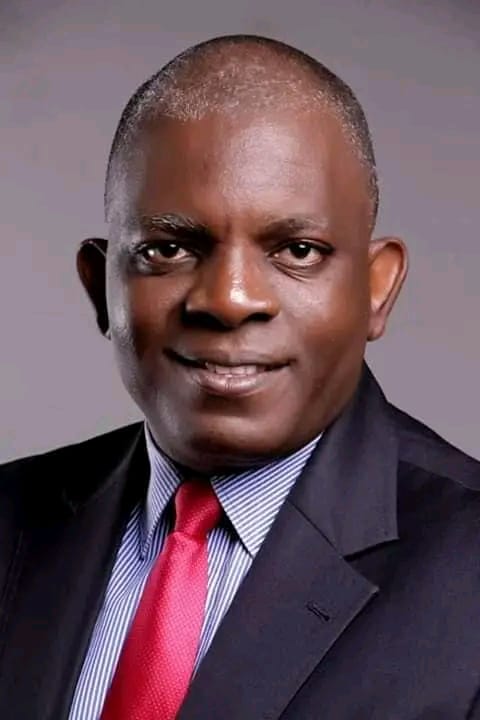
It has become very safe, perhaps, to conclude that the Executive Secretary and Chief Executive Officer(CEO) of Nigerian Shippers’ Council(NSC), Dr. Pius Akutah is the only maritime agency head who has become not only media but stakeholder-friendly.
He is easily accessible and gives ears to complaints while being ready to receive visitors on short notice.
He does not discriminate. It does not presuppose that he is not busy with schedules. It simply means that he understands what leadership entails.In Nigeria, any agency CEO that has bills before the National Assembly, awaiting passage is worth being sympathized with because he has no time of his, and must always be on his or her toes to source unbudgeted or budgeted funds to service the nauseating financial demands of the legislators on both chambers.
Therefore, Dr. Akutah deserves all the sympathy he can get for choky schedules with external and internal office demands.
Navigating the passage of the Council’s Nigerian Port Economic Regulatory Agency(NPERA) Bill at the National Assembly, only is time consuming not to talk of the Minister’s attention and his immediate constituency’s calls.
Surprisingly, with a plane to catch at the airport for an international trip, he found it rewarding to hold a media lunch with Maritime Editors and Reporters, penultimate Saturday in Ikeja, Lagos.
He gives account of his brief stewardship since assuming office, putting paid to the insinuation that the Council has been in comatose as a result of an unfounded story of a political ambition. He presents in financial terms the intervention of the Council in the port industry, while laying bare the future outlook of the agency.
The report is good enough for personal assessment of the agency. We present the full report unabridged. Enjoy it.
Since assuming office in November 2023, the Management of the Nigerian Shippers’ Council (NSC), “Under my leadership, has pursued a focused reform agenda to strengthen the Council’s role as Nigeria’s Port Economic Regulator and reposition it as a modern, efficient and globally competitive institution”.
Guided by the Renewed Hope Agenda of His Excellency, President Bola Ahmed Tinubu, GCFR, and the policy direction of the Honourable Minister of Marine and Blue Economy, His Excellency Adegboyega Oyetola, CON, the Council has delivered measurable progress in economic regulation, consumer protection, trade facilitation, digital transformation, institutional renewal and stakeholder engagement.
Within the period under review, the Council protected over ₦90.60 billion and US$1.348 million in economic value for Nigerian shippers and the national economy.
This includes preventing ₦86.06 billion in unjustified demurrage payments and securing savings of ₦4.54 billion and US$1.348 million through Alternative Dispute Resolution(ADR) and regulatory interventions.
The Council also achieved major institutional milestones, including the passage of the Nigerian Port Economic Regulatory Agency (NPERA) Bill by both Chambers of the National Assembly, approval of its statutory funding mechanism through the 2025 Appropriation Act, active participation in the National Single Window Project and resolution of key issues delaying implementation of the International Cargo Tracking Note (ICTN).
These reforms are improving regulatory certainty, reducing the cost of doing business and supporting the Federal Government’s vision of building a US$1 trillion economy by 2030.
Key Achievements at a glance include: Prevented over ₦86.06 billion in unjustified demurrage payments, Saved Nigerian shippers more than ₦4.54 billion and US$1.348 million through ADR and regulatory interventions, Received 558 complaints and resolved 295 commercial disputes, Harmonised bonded terminal invoice charges from 18 charge categories to six, Facilitated passage of the NPERA Bill, now awaiting Presidential Assent, Secured statutory funding for the Council for the first time since 1978, Advanced implementation of the National Single Window and ICTN, Deployed the Enterprise Content Management System and introduced the Leadership and Succession Planning Project and Substantially concluded preparations for the 18th International Maritime Seminar for Judges.
The passage of the NPERA Bill by both Chambers of the National Assembly represents a landmark reform in Nigeria’s maritime sector.
Once assented to, the legislation will establish an independent Port Economic Regulator with enhanced powers to regulate tariffs, service standards, competition and commercial conduct, thereby strengthening transparency and investor confidence across the port industry.
Another significant milestone is the approval of the Council’s statutory funding mechanism, captured in the 2025 Appropriation Act for the first time since the Council’s establishment in 1978.
This provides a sustainable framework for effective regulation, with collection to be integrated into the National Single Window platform.
The Council has actively supported the National Single Window Project, which is expected to simplify cargo clearance, improve coordination among government agencies and reduce the time and cost of doing business at Nigerian ports.
Similarly, outstanding issues delaying implementation of the ICTN have been resolved. Once operational, the ICTN will strengthen cargo visibility, improve trade intelligence, enhance supply chain security and support regulatory compliance.
As Nigeria’s Port Economic Regulator, the Council has continued to promote fairness, transparency and efficiency in port operations through effective economic regulation and consumer protection.
During the period under review, the Council reviewed and approved tariff requests for shipping companies, terminal operators and Inland Dry Ports after rigorous regulatory assessment.
It also continued to confirm the reasonableness of freight rates, charter party fees and vessel demurrage for foreign exchange transactions, as well as freight charges on export cargoes, thereby supporting transparency and helping to curb capital flight.
To improve pricing transparency, terminal operators were directed to publicly display approved tariffs, while shipping companies were required to establish holding bays outside the ports to facilitate the return of empty containers and reduce congestion along port access roads.
The Council also abolished unauthorised surcharges introduced by some shipping lines, developed minimum service standards for shipping companies and terminal operators, and collaborated with the Nigerian Ports Authority and the Federal Ministry of Marine and Blue Economy to assess compliance with Port Concession Agreements and Key Performance Indicators.
A major achievement was the prevention of over ₦86.06 billion in unjustified demurrage payments through regulatory oversight.
The Council also harmonised bonded terminal invoice charges, reducing charge categories from 18 to 6, thereby eliminating duplication and improving billing transparency.
Through stakeholder engagement and collaboration with key regulatory agencies, including the Federal Competition and Consumer Protection Commission and the Nigeria Customs Service, the Council has deepened compliance and reinforced confidence in Nigeria’s port regulatory framework.
The Council also facilitated a landmark Collective Bargaining Agreement between the Maritime Workers’ Union of Nigeria and employers in the shipping industry, resulting in a new ₦200,000 minimum wage for junior workers after almost two decades of negotiations. Discussions on an agreement for senior staff are at an advanced stage.
Alternative Dispute Resolution(ADR) remains one of the Council’s most effective mechanisms for protecting Nigerian shippers and reducing the cost of doing business.
Between the fourth quarter of 2023 and the second quarter of 2026, the Council received 558 complaints, resolved 295 cases and secured savings exceeding ₦4.54 billion and US$1.348 million.
The disputes covered container deposits, demurrage, detention charges, terminal charges, cargo claims, export fraud and related commercial matters.
The Council also concluded out-of-court settlements involving APM Terminals Nigeria Limited, CMA CGM and Maersk Nigeria Limited in matters arising from charges paid above approved tariffs.
These interventions protected Nigerian shippers, reduced litigation and reinforced confidence in the Council’s dispute resolution framework.
The Council continues to promote an integrated multimodal transport system through the development of Inland Dry Ports, Vehicle Transit Areas and Border Information Centres.
Operational Inland Dry Ports in Kaduna, Kano and Funtua continue to improve cargo movement, support customs operations and stimulate economic activity in inland regions.
Vehicle Transit Areas complement this strategy by supporting orderly movement and temporary storage of imported vehicles outside congested port environments.
The Border Information Centre Programme is also being expanded. Following the completion of the Idiroko Centre in Ogun State, work is advancing on new Centres in Jigawa, Benue, Borno and Kebbi States, while existing Centres along Nigeria’s major border corridors are being upgraded.
Following the destruction of the Jibia Centre by a heavy rainstorm in June 2026, the Council prioritised its reconstruction as part of its infrastructure renewal programme.
To provide more sustainable facilities, the Council has commenced engagement with State Governments for land to develop permanent Border Information Centre complexes.
These facilities will improve trade information services, strengthen regulatory coordination and support legitimate cross-border trade under the African Continental Free Trade Area, while reducing logistics bottlenecks and positioning Nigeria as a preferred maritime and logistics hub in West and Central Africa.
Council has continued to implement internal reforms aimed at building a modern, technology-driven and high-performing regulatory institution.
A major milestone is the deployment of the Enterprise Content Management System, which has transformed records and document management through the digitisation of thousands of legacy files, automation of workflows, improved document security and faster retrieval of official records.
This has reduced dependence on paper-based processes and improved operational efficiency.
The Council has also strengthened its Performance Management System by aligning individual targets with institutional goals, while prioritising local and international training, professional certification, workforce planning and competency-based deployment.
A key initiative introduced during the period is the Leadership and Succession Planning Project, designed to identify and prepare future leaders for critical management positions.
This is supported by the Middle Management Leadership Retreat, which is equipping emerging leaders with strategic, managerial and leadership competencies.
Staff welfare has also been enhanced through timely promotion exercises, confirmation of appointments, career progression, recognition of long-serving officers, retirement appreciation programmes and improved communication between Management and staff.
As part of preparations for the transition to NPERA, Management has undertaken organisational restructuring, reviewed departmental functions, strengthened HR governance, updated HR policies and reinforced compliance with Public Service Rules.
The Nigerian Shippers’ Council remains committed to strengthening maritime jurisprudence as a foundation for a modern, efficient and globally competitive maritime industry.
In July 2024, the Council successfully hosted the 17th International Maritime Seminar for Judges in Abuja under the theme, “Navigating the Intersection of Admiralty Law and Environmental Sustainability: Charting a Course for Nigeria’s Blue Economy.”
The seminar brought together judicial officers, maritime law practitioners, regulators, academics and industry stakeholders to deliberate on emerging legal issues affecting the maritime sector.
Building on that success, the Council is fully prepared to host the 18th International Maritime Seminar for Judges, scheduled to hold from 22 to 24 July 2026 in Abuja.
Organised in collaboration with the National Judicial Institute and the Nigerian Maritime Law Association, the seminar will bring together Justices of the Supreme Court, Court of Appeal, Federal and State High Courts, senior maritime law practitioners, academics, regulators and maritime experts from Nigeria and other African countries.
Invitations have also been extended to the Chief Justices of Ghana, The Gambia, Sierra Leone, Liberia and Kenya.
The seminar will promote legal certainty, support harmonisation of maritime business laws, strengthen investor confidence and advance the implementation of the African Continental Free Trade Area.
Preparations have been substantially concluded, with venue, logistics and faculty arrangements in place.
Going forward, the Nigerian Shippers’ Council will continue to deepen port economic regulation, strengthen consumer protection, accelerate digital transformation, expand trade facilitation infrastructure and promote multimodal transport.
“The Council will support the implementation of the National Single Window and the International Cargo Tracking Note, while consolidating the transition to the Nigerian Port Economic Regulatory Agency once the NPERA Bill receives Presidential Assent.
“Priority will also be given to the development of permanent Border Information Centre facilities, leadership development, succession planning, workforce transformation and stronger collaboration with stakeholders across the maritime value chain.
“Our objective is clear: to build a transparent, efficient and globally competitive port economic regulatory system that protects Nigerian shippers, promotes fair competition, improves port efficiency, attracts investment and supports Nigeria’s emergence as the leading maritime and logistics gateway in West and Central Africa,” Akutah stated.
The achievements recorded since November 2023 demonstrate the Nigerian Shippers’ Council’s commitment to effective regulation, institutional excellence, trade facilitation and national economic development.
“The Council is entering a new phase of institutional growth. Our focus is not only to regulate the port environment, but to help build a more transparent, competitive and investment-friendly maritime economy that delivers measurable value to businesses, consumers and the nation.
“We will continue to work closely with government, industry stakeholders, development partners and the media to sustain these reforms and ensure that Nigeria fully harnesses the enormous opportunities in the Marine and Blue Economy.
“The Council deeply appreciates the enduring partnership of the maritime media. Your role in informing the public, educating stakeholders and promoting accountability remains vital to the growth of the maritime sector.
“We remain committed to transparency, constructive engagement and continued partnership as we work together to build a stronger, more competitive and globally respected maritime economy for Nigeria,” Akutah Concluded.



Trump Escalates Media Fight after Week of Setbacks
SharePresident Donald Trump has infused his ongoing feud with the White House press with a new level of acrimony. Journalists...
Nigeria; a Gen Z Will Soon Be President
ShareBy Prince Charles Dickson Two of my dogs fought with a bitterness I had never seen. The older one carried...

Wike, Performance and the Politics of Cross-Party Influence
ShareBy Raphael Atuu, Abuja Since assuming office as Minister of the Federal Capital Territory in August 2023, former Rivers State...
Niger 37 Tragedy: NSCDC Boss Must Go
ShareThe death of 37 detainees in the Nigeria Security and Civil Defence Corps (NSCDC) detention facility in Minna, Niger State,...

Shettima to Declare Editors’ Conference Open in Enugu Thursday
ShareVice President Kashim Shettima will on Thursday, September 24, 2026, declare open the 22nd All Nigeria Editors Conference (ANEC) of...

Police Raid FCT Crime Hotspots, Arrest 300 Suspects
ShareOperatives of the Federal Capital Territory Police Command have arrested approximately 300 persons, following a raid on identified crime flashpoints,...


Fidelity Bank Deepens Partnership with DAILY ASSET
ShareBy David Torough, Abuja Fidelity Bank Plc has reaffirmed its commitment to strengthening its partnership with DAILY ASSET Newspaper following...

DAILY ASSET Loses Deputy Editor-in-Chief, Danusa Ocholi
ShareBy David Torough, Abuja The Management of Asset Newspapers Limited, Publishers of DAILY ASSET, has announced the passage of the...

Fidelity Bank Deepens Partnership with DAILY ASSET
ShareBy David Torough, Abuja Fidelity Bank Plc has reaffirmed its commitment to strengthening its partnership with DAILY ASSET Newspaper following...


Niger 37: Bago Vows Full Probe as NSCDC Detains 24 Personnel
ShareFrom Dan Amasingha, Minna Niger State Governor, Umaru Bago, has vowed to uncover the circumstances surrounding the deaths of 37...