
Education
GSS Ilorin Class of 91 Presents Office Furniture to Alma Mater

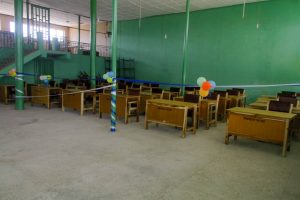
The Government Secondary School (GSS) Ilorin 1991 Set Old Boys Association has donated a 30-set of office tables and chairs worth N750, 000 to the alma mater.
Prof. Tahir Yusuf, a member of the association, while presenting the furniture, said giving back to the school that produced them was a thing of joy.
Yusuf, who was represented Mr Babatunde Adeyemi, the head boy at the time, said the presentation of the furniture was part of the two-day programme to celebrate the 30 Years Reunion Meeting of the set.
The occasion, which was graced by many old students within and outside the country, was also monitored by the News Agency of Nigeria (NAN) via zoom in Abuja.
He said since government cannot do the work alone, it was the responsibility of everyone, especially the old students, to contribute to make things much better for one’s alma mater.
“It is actually a thanksgiving day for everyone of us today because it is neither by our strength nor our wisdom that we are present here.
“Some of our mates are no more today but we will continue to pray for them.
“As old boys, knowing what the school has positively impacted into our lives, we will continue to give back to the school.
“And that is the essence of this particular gathering.
“Our aim is to bring back the lost glory of GSS Ilorin. We want to see it as being the best not only in Kwara State but Nigeria as a whole,” he said.
The medical practitioner and a senior lecturer at the Department of Medicine, Usmanu Danfodiyo University, Sokoto, said that the meeting was also to strengthen the relationship among members after leaving secondary school 30 years ago.
“Quite a number of my school mates, I am meeting them today after 30 years.
“Some, I can recognise them and some I could not.
“That is the essence of this gathering,” he said.
He recalled that members of the association, which started with seven people about a year ago, had increased to about 148.
“We still have a lot of work to do to connect with others because during our set, we had SS3 classrooms, spreading from ‘A’ to ‘H’ with not less than 70 students in a class,” he said.
Yusuf, who noted that members of the set are spread across various professions, thanked the current school Principal, Mr Baba Awodi, for keeping the flag flying.
The National Vice President, GSS Ilorin Old Boys Association, Alhaji Mohammed Adebayo, thanked members of the ’91 Set for their contribution and urged them not to relent in the effort at making the school a centre of excellence.
Elder Philip Ajibola, a Geography Teacher during the period, thanked the old students for the good gesture.
In his goodwill message, the retired teacher urged members of the set to continue to strive to move the union forward.
Corroborating, Mr Gbenga Oroyinyin, who was also a teacher at the time, enjoined members of the association to work in oneness towards achieving the aims and objectives of the organisation.
The Principal, Mr Awodi, while receiving the donation, thanked the old students for their support.
He said GSS Ilorin alumni had done excellently well towards improving the education standard of the school over the years.
“The GSS Ilorin Old Boys Association has been the best in Kwara State. I can say it anywhere.
“If you come to GSS, look at all the classrooms; different sets of old students have done one thing or the other in the school.
“They are really complementing government’s effort. Look at the classrooms, the hall, the science lab, library, dinning hall, the clinic, different sets did all these renovations,” he said.
Awodi informed that the various supports given by the old students had earned the school two commendation letters from the state’s Ministry of Education and Teaching Service Commission.
“I really thank every one of you for a wonderful job,” he said.
NAN reports that GSS Ilorin, the first secondary school in Kwara with the motto: “No Struggle, No Success,” was established in 1914 and the school had produced various leaders in all walks of life.(NAN)






The Joint Admissions and Matriculation Board (JAMB) has warned universities against issuing admission letters to candidates, insisting that only admissions processed through its Central Admissions Processing System (CAPS) are legally recognised.
The Board said universities had no statutory authority to issue official admission letters, warning that candidates who accept admission offers outside the approved system risk obtaining documents that may not be recognised for official purposes, including mobilisation for the National Youth Service Corps (NYSC).
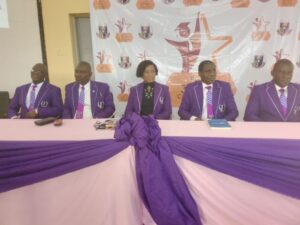
JAMB Registrar, Prof. Segun Aina, gave the warning when he received a delegation from Veritas University, Bwari, Abuja, during a courtesy visit to his office.
Aina said the Federal Ministry of Education had expressly directed that all admissions into tertiary institutions be processed through CAPS, stressing that any admission conducted outside the platform was illegal and invalid.
He explained that JAMB remained the only body statutorily empowered to issue official admission letters to candidates seeking entry into universities, polytechnics and colleges of education across the country.
The registrar expressed concern that candidates often assume admission letters purportedly issued by universities are authentic simply because they carry the institutions’ identities.
He urged universities engaging in the practice to desist, while directing them to ensure that candidates obtain the appropriate admission documents from JAMB.
Aina further stressed that institutions could not substitute their own admission letters for the official documents issued by the Board after candidates had accepted their offers on CAPS.
He warned that admissions not processed through the approved platform would not be recognised for purposes such as NYSC mobilisation, underscoring the need for institutions and candidates to comply with established admission procedures.
Education
Makurdi Old Boys Association Inaugurates BOT October 17, Launches N1bn Secretariat Project Fund
Government College Makurdi Old Boys Association (MOBA) has completed arrangements to inaugurate its Board of Trustees (BOT) October 17, at the school premises.
The high profile event will also witness the launch of N1billion Appeal Fund for the construction of its National Secretariat Project.
A statement by the Association’s National President, Dr Cletus Akwaya and the Central Planning Committee Chairman Cmrd.
Stephen Tadawus, reminded all members of the National Executive Committee (NEC), Board of Trustees Members-designate, invited Guests, and the entire MOBA family to attend the event punctually at Government College Assembly Hall, Makurdi beginning by 10:00AMThe statement said the Governors of Benue state, Rev.
Fr. Dr. Hyacinth Iormem Alia; Plateau state, Barr. Caleb Manasseh Mutwang; Nasarawa, Engr. A. A. Sule and Bauchi, Sen. Bala Abdulkadir Mohammed are expected to grace the occasion as distinguished guests of Honour.Similarly, the Commissioner for Education and Knowledge Management, Benue State, Dr. Adamu Margaret Ijaguwa and Executive Secretary, Teaching Service Board, Benue State, Dr. Bem Tseen have been invited as Special Guests, the statement said.
It named members of the Board of Trustees (BOT) to include Prince Yandev Amaabai, Senator Joshua Chibi Dariye, Senator Gabriel Torwua Suswam, Hon Hassan El Yakub SAN- Hon, Alhaji Abubakar Giza, Prof. Terna Yawe, Chief Rebo Usman, Dr. Dader Mazadu Bako, Engr. Ali Rabiu, Prof. John Wade, Arc. Terseer Dankaro and Titus Ihunduas Secretary of the Board.
This event marks a new chapter in the life of the Association. We request all Old Boys to massively turn out and support the cause of giving back to their Almamater,” the statement further said adding, All concerned are therefore, requested to come together to make this historic event a success and to contribute generously towards the completion of Makurdi Old Boy’s Associations’ National Secretariat Project.”
Maryam Umar, a limb difference student, is set to graduate with a Bachelor of Science degree in Economics from the Gombe State University.
Umar, who successfully completed her Level 400 course work, examinations and project, achieved this feat after overcoming educational and financial challenges.
In an interview on Monday in Gombe, Umar said that the intervention by the Academic Staff Union of the University (ASUU) made her journey to attain university education a reality.
Umar recounted that she started primary education at the age of 11 at Hammadaji Primary School in Gombe metropolis, adding that she could not immediately proceed to secondary school due to challenges.
The foot-writer student later attended Government Day Secondary School, Nasarawo, Gombe, where she obtained a senior school certificate.
“Many people doubted my ability to attend university because of physical and financial challenges.
“Nevertheless; I sat for the Joint Admissions and Matriculation Board (JAMB), and National Examinations Council (NECO) examinations, and passed both, but could not proceed due to lack of sponsorship.
“Apparently, my predicament widely circulated in the national dailies attracted the attention of the ASUU,” she said.
She said that the union visited her family home, verified her educational credentials, and subsequently offered her scholarship.
Umar said that handwriting proved to be a major obstacle because she writes with her toes during lectures, tests and examinations.
“During my first test, I couldn’t finish within the allocated time and reported the matter to the union.
“The ASUU chairman subsequently wrote to my Head of Department, requesting an additional time for me during tests and examinations. The department granted the request and continued to support me throughout my studies,” she said.
Umar also commended her lecturers for their support and understanding.
She recalled that when a journalist visited the university, and inquired about her academic performances, the records rated her as being more punctual than most of the able-bodied students.
Umar also expressed joy over the successful completion of her degree programme without any academic failure.
“I am happy that I am about to graduate. I give God the glory because I have had no problem academically.
“Some students who I started schooling together had withdrawn or dropped out,” she said.
While urging people living with disabilities not to allow their conditions to distract them from pursuing their dreams, Umar enjoined them to shun street begging.
“You should not see begging as the only option. I once begged on the street, but now I am about to achieve my dream of becoming a graduate.” (NAN)




Nigeria, Rwanda Target Regional Security Through Military Partnership
ShareBy Tambaya Julius, Abuja Nigeria and Rwanda are exploring new areas of military cooperation, including personnel exchanges, specialised training and...


NAGAFF Seeks One-Year Extension for Customs Officers Facing Retirement
ShareBy Tambaya Julius, Abuja The National Association of Government Approved Freight Forwarders (NAGAFF) has appealed to President Bola Tinubu to...


“It’s Not Debatable, We Can’t Go Back,” Mbah Backs Tinubu on Fuel Subsidy Removal
ShareFrom Sylvia Udegbunam Enugu Governor of Enug State, Dr. Peter Mbah, has doubled down in his support for the removal...


News Engineering, Indian Firm Partner for Niger State’s 100MW Solar Project
ShareFrom Dan Amasingha, Minna In a major bid to bolster renewable energy infrastructure in North-Central Nigeria, News Engineering Nigeria Limited,...


2027: Over 100 Opposition Members Defect to APC in Kogi
ShareFrom Joseph Amedu, Lokoja More than 100 members of the African Democratic Congress (ADC), Nigeria Democratic Congress (NDC), Peoples Democratic...


Custody Death: NSDC Detention Officer Breaks Down, Apologises over 37 Miners
Share From Dan Amasingha, Minna An Assistant Superintendent of Corps (ASC), Usman Isah Ndamaka, was moved to tears yesterday as...


Uduaghan: Bayelsa, South-South Govs Condole With Delta, Family
ShareBayelsa State Government and the South-South Governors Forum (SSGF) have extended their condolences to the government and people of Delta...


Delta Tops States in Liquidity Rating, Says Tilije
ShareFrom Francis Sadhere, Delta Delta State has emerged as the best-performing state in liquidity rating among Nigeria’s 36 states, Commissioner...


Wasted Years In The Printing Profession: Can Clement Koko’s Bold Leadership Usher In A New Dawn?
ShareAfter Years of Leadership Crises and Missed Opportunities, the New CIPPON President, Clement koko Takes the Battle to Paper Manufacturers...

Adeniyi, JAMB Registrar Seek Operational Synergy
ShareBy Tambaya Julius, Abuja The Nigeria Customs Service (NCS) and the Joint Admissions and Matriculation Board (JAMB) are considering areas...